
QD vs QID: Understand Medication Dosage Schedules for Safer Use
When you see QD, a medical abbreviation meaning "once daily". Also known as qd, it tells you to take your medicine one time every 24 hours. On the other hand, QID, stands for "four times daily". Also known as qid, it means you need to space out doses roughly every six hours. These aren’t just shorthand—they’re safety instructions. Mix them up, and you could overdose, underdose, or trigger dangerous side effects. A single mistake in reading QD vs QID has sent people to the ER for things like low blood pressure, kidney damage, or even heart rhythm problems.
Doctors and pharmacists use these abbreviations because they’re quick, but patients often don’t know what they mean. That’s why so many medication errors happen at home. You might think QD means "take it when you remember," or QID means "take one with each meal." But that’s not how it works. QD means one pill, every 24 hours, same time each day. QID means four separate doses—usually morning, noon, evening, and bedtime—with at least four hours between each. Missing one dose of a QID medication can drop your drug level too low. Taking an extra dose of a QD drug can push your levels into toxic range. Some antibiotics, blood pressure meds, and seizure drugs have narrow safety windows. Take them wrong, and they stop working—or start hurting you.
It’s not just about the number of times. It’s about timing, consistency, and understanding what your body needs. If your doctor says QD for a blood thinner, taking it at night instead of morning might affect how well it works. If your pain med is QID and you skip the afternoon dose because you’re at work, you’ll be in more pain later. And don’t assume all meds with the same name work the same way—some extended-release versions are QD even if the immediate-release version is QID. Always check the label, ask your pharmacist, and write it down. The difference between QD and QID isn’t just letters—it’s your health on the line.
Below, you’ll find real patient stories and clinical insights on how medication timing affects everything from antidepressants to antibiotics, heart drugs to antifungals. These aren’t theoretical guides—they’re based on actual cases where dosing errors led to complications, and how people fixed them. Whether you’re managing a chronic condition or just started a new prescription, knowing QD vs QID could prevent a hospital visit.
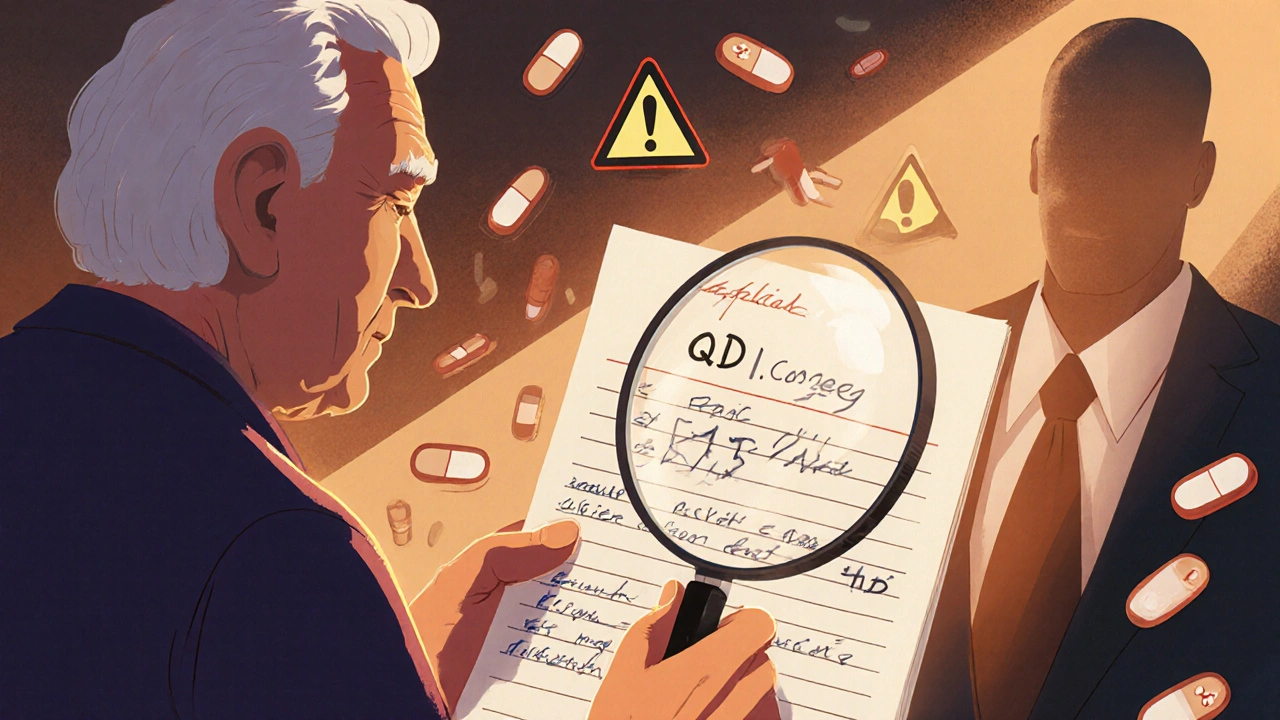
QD vs. QID: How Prescription Abbreviations Cause Dangerous Medication Errors and How to Stop Them
- by Colin Edward Egan
- on 25 Nov 2025
QD and QID are dangerous prescription abbreviations that cause patients to take four times the intended dose. Learn why they're still used, how they lead to deadly errors, and what’s being done to stop them.