
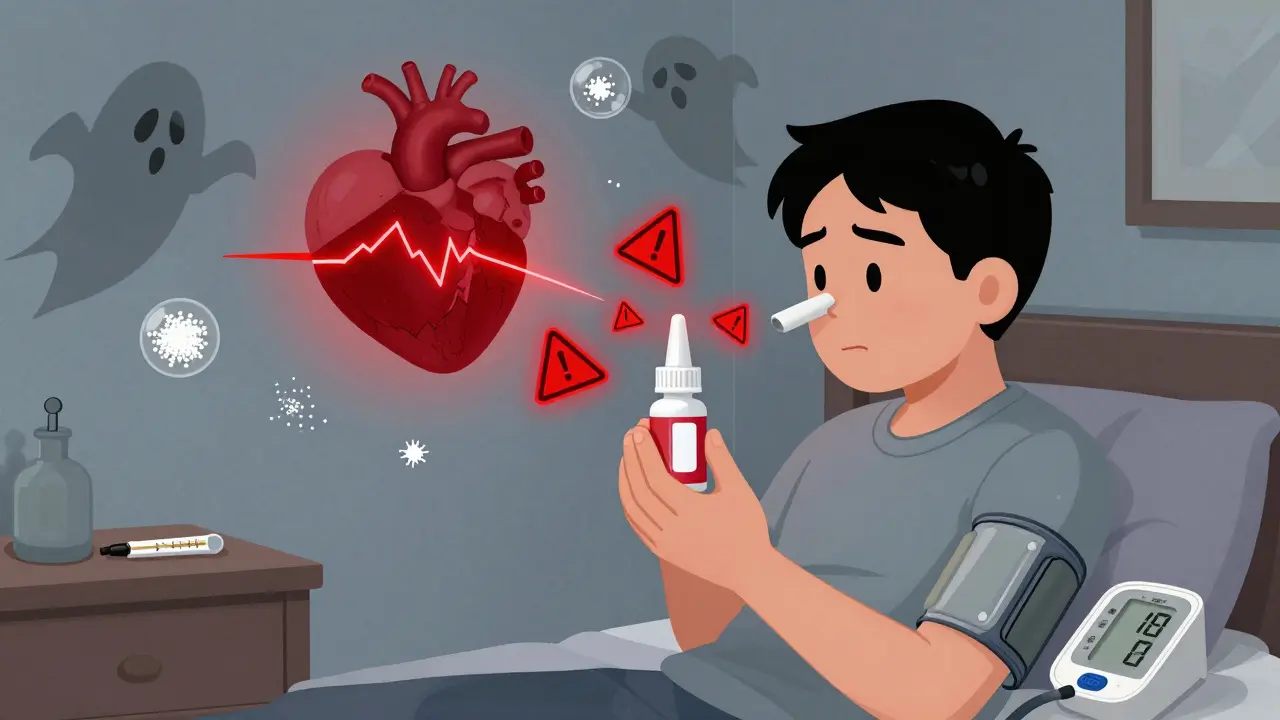
Every winter, millions of people reach for nasal decongestants to clear their sinuses. But if you’re taking medication for high blood pressure, that little bottle might be hiding a serious risk. You might think it’s just a cold remedy, but decongestants can spike your blood pressure - sometimes dangerously. And if you’re already on blood pressure meds, this isn’t just a minor concern. It’s a real threat to your heart. The problem isn’t just about taking the wrong pill. It’s about not knowing what’s in the pill. Many cold and flu products mix decongestants with cough suppressants, pain relievers, or antihistamines. You’re not even looking for a decongestant, but it’s there - hidden in plain sight. Let’s cut through the noise. Here’s what you need to know, straight from the experts.
How Decongestants Raise Your Blood Pressure
Nasal decongestants like pseudoephedrine and phenylephrine work by shrinking swollen blood vessels in your nose. That’s why your stuffy nose clears up. But here’s the catch: they don’t just shrink vessels in your nose. They shrink vessels everywhere. That includes the arteries that carry blood to your heart and brain. This tightens your blood vessels, which forces your heart to pump harder. Your blood pressure rises. Even if your hypertension is under control, a single dose of pseudoephedrine can push systolic pressure up by 5 to 10 mmHg. That might not sound like much, but for someone with heart disease or uncontrolled hypertension, that’s enough to trigger chest pain, irregular heartbeat, or even a stroke. The American Heart Association says it plainly: people with high blood pressure should avoid decongestants unless their doctor says it’s okay.Which Decongestants Are the Biggest Risks?
Not all decongestants are the same. Some are riskier than others. Pseudoephedrine - found in Sudafed and many cold formulas - is the most studied and most dangerous. It’s been linked to emergency room visits for high blood pressure spikes. Even when taken as directed, it can interfere with beta-blockers like metoprolol and calcium channel blockers like nifedipine. Phenylephrine - now the main decongestant in Sudafed PE and most store-brand cold meds - was supposed to be safer. But recent studies show it’s just as bad. A 2024 study in the Journal of Clinical Hypertension found phenylephrine raised blood pressure nearly as much as pseudoephedrine in people with hypertension. Oxymetazoline - the active ingredient in Afrin nasal spray - is often mistaken as "safe" because it’s applied locally. But it doesn’t stay local. Studies show it gets absorbed into the bloodstream. Using it for more than 3 days can cause rebound congestion and dangerous blood pressure spikes. And don’t forget about ephedrine. It’s banned in many OTC products in the U.S., but you might still find it in herbal supplements labeled as "energy boosters" or "weight loss aids." Avoid them completely.How They Interact With Your Blood Pressure Meds
Your blood pressure medications aren’t just sitting there doing nothing. They’re working hard to keep your pressure stable. Decongestants? They’re trying to undo that work. Take beta-blockers like metoprolol. They slow your heart rate and reduce force of contraction. Pseudoephedrine does the opposite - it speeds up your heart and makes it pump harder. The result? Your meds become less effective. Calcium channel blockers like amlodipine or felodipine relax your arteries. Decongestants tighten them. You’re essentially fighting yourself. Even diuretics - the water pills - can be undermined. Some cold medicines contain sodium. A single dose of a decongestant combo product can have over 200 mg of sodium. That’s almost a full teaspoon of salt. For people on sodium-restricted diets (which most hypertensives are), this can undo weeks of progress. The bottom line: if you’re on any blood pressure medication, decongestants can sabotage it. And you might not even know it until your pressure spikes.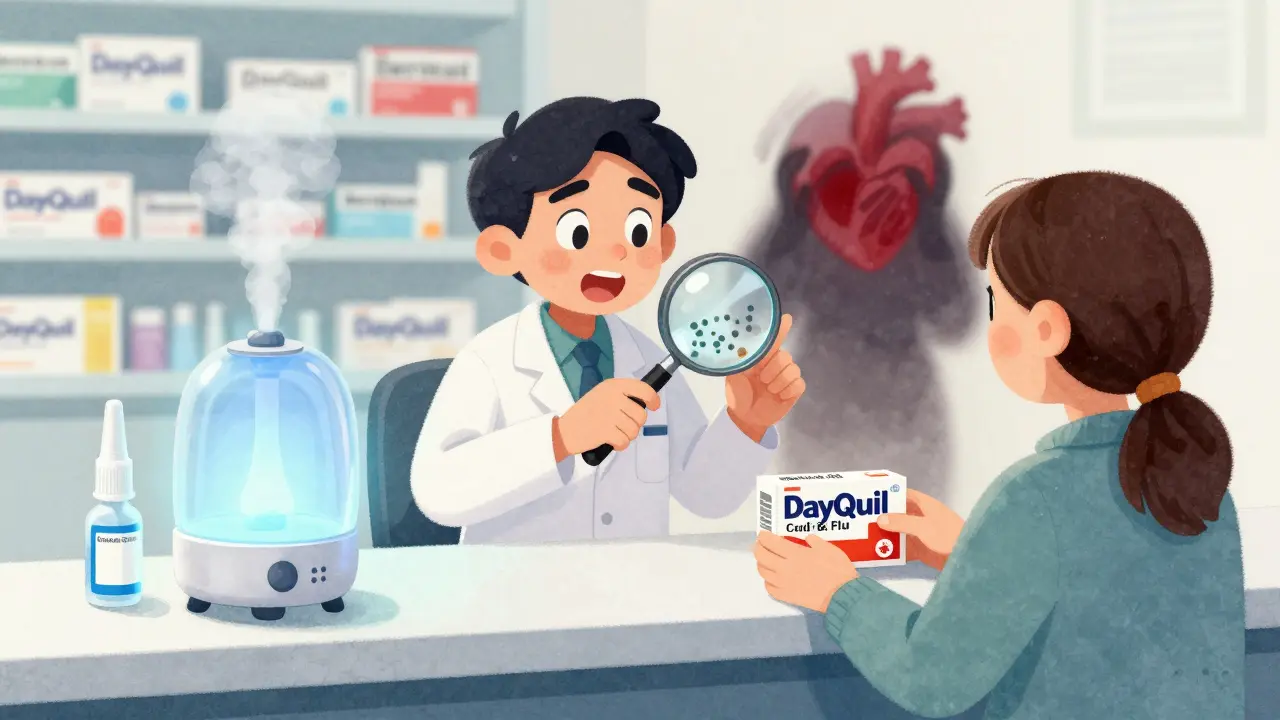
What to Do Instead: Safer Alternatives
You don’t have to suffer through congestion just because you have high blood pressure. There are real, effective alternatives.- Nasal saline spray - plain saltwater sprays (like NeilMed or store brands) are completely safe. They loosen mucus without affecting blood pressure. Use them 3-4 times a day.
- Humidifiers or steam - a hot shower for 10 minutes or a cool-mist humidifier at night can open up your nasal passages. No drugs needed.
- Antihistamines - if your congestion comes from allergies (not a cold), antihistamines like loratadine (Claritin) or cetirizine (Zyrtec) are safe. They don’t raise blood pressure. Just avoid the ones with decongestants in them - look for "D" on the label.
- Neti pots - if you’re comfortable with them, nasal irrigation with distilled water can be very effective. Just make sure you’re using the right water and cleaning the pot properly.
How to Avoid Hidden Decongestants
This is where most people get tripped up. You think you’re buying a cough syrup. But it’s a decongestant in disguise. Look for these active ingredients on the label:- Pseudoephedrine
- Phenylephrine
- Oxymetazoline
- Ephedrine
- DayQuil Cold & Flu
- Robitussin CF
- Tylenol Cold & Sinus
- Advil Cold & Sinus
What to Do If You’ve Already Taken a Decongestant
If you took a decongestant without knowing you had a risk, don’t panic. But do this:- Stop taking it immediately.
- Check your blood pressure. If it’s over 160/100, call your doctor or go to urgent care.
- Don’t take another dose, even if you feel better.
- Write down what you took - name, dose, time - and bring it to your next appointment.
When You Absolutely Must Use a Decongestant
Sometimes, the congestion is so bad you can’t sleep or breathe. In those rare cases, your doctor might say it’s okay - but only under strict conditions. If your doctor approves:- Use the lowest dose possible - never double up.
- Take it for no more than 3 days. Longer than that? Risk goes up fast.
- Monitor your blood pressure twice a day - morning and night.
- Stop immediately if your pressure rises more than 15 points over your usual baseline.
- Uncontrolled high blood pressure (above 140/90)
- Heart disease
- History of stroke or heart attack
- Diabetes
- Thyroid problems
- Enlarged prostate
Why This Problem Is Getting Worse
More than 75 million Americans have high blood pressure. And nearly half of them take over-the-counter cold meds every year. A 2024 study found that 22% of ER visits for uncontrolled hypertension in people over 50 were linked to decongestant use. The FDA requires every decongestant bottle to say: "Ask a doctor before use if you have high blood pressure." But most people don’t read that. Or they assume it’s just a formality. The truth? It’s not. It’s a warning. And here’s the kicker: only 38% of hypertensive patients know decongestants are dangerous. That’s less than 2 in 5 people. Pharmacists can help. Studies show pharmacist-led reviews cut inappropriate decongestant use by 47%. But you have to ask.Final Advice: Your Action Plan
- Always check the active ingredients - not the brand name.
- Use saline sprays or steam as your first line of defense.
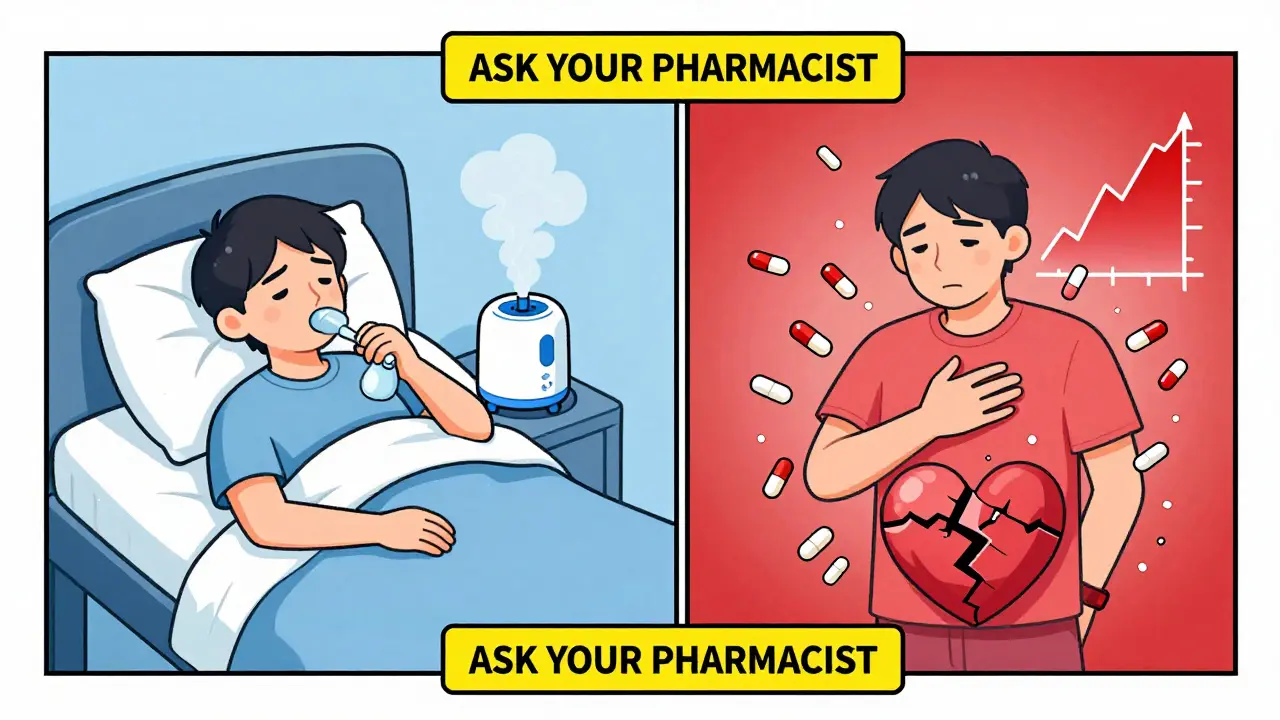
- Ask your pharmacist before buying anything labeled "cold," "flu," or "sinus."
- Keep a list of all your meds - prescription, OTC, and supplements - and bring it to every appointment.
- Don’t assume topical = safe - Afrin and similar sprays enter your bloodstream.
- When in doubt, skip it. Congestion will pass. A stroke won’t.
Sean Callahan
March 8, 2026 AT 11:38phyllis bourassa
March 8, 2026 AT 22:24Ferdinand Aton
March 9, 2026 AT 04:23William Minks
March 11, 2026 AT 02:00just had a cold last month and used saline spray + steam. no meds. no drama. no scary bp spikes. also, humidifier + hot shower = free therapy.
ps: my pharmacist gave me a high five when i asked if my ‘cold medicine’ had decongestants. 🤝
Jeff Mirisola
March 12, 2026 AT 09:25Susan Purney Mark
March 12, 2026 AT 14:05yes. and so is a loaded gun.
please, just read the label. or better yet - ask the pharmacist. they’re trained for this. you’re not.
amber carrillo
March 13, 2026 AT 13:30Joey Pearson
March 14, 2026 AT 17:06Roland Silber
March 15, 2026 AT 16:04