
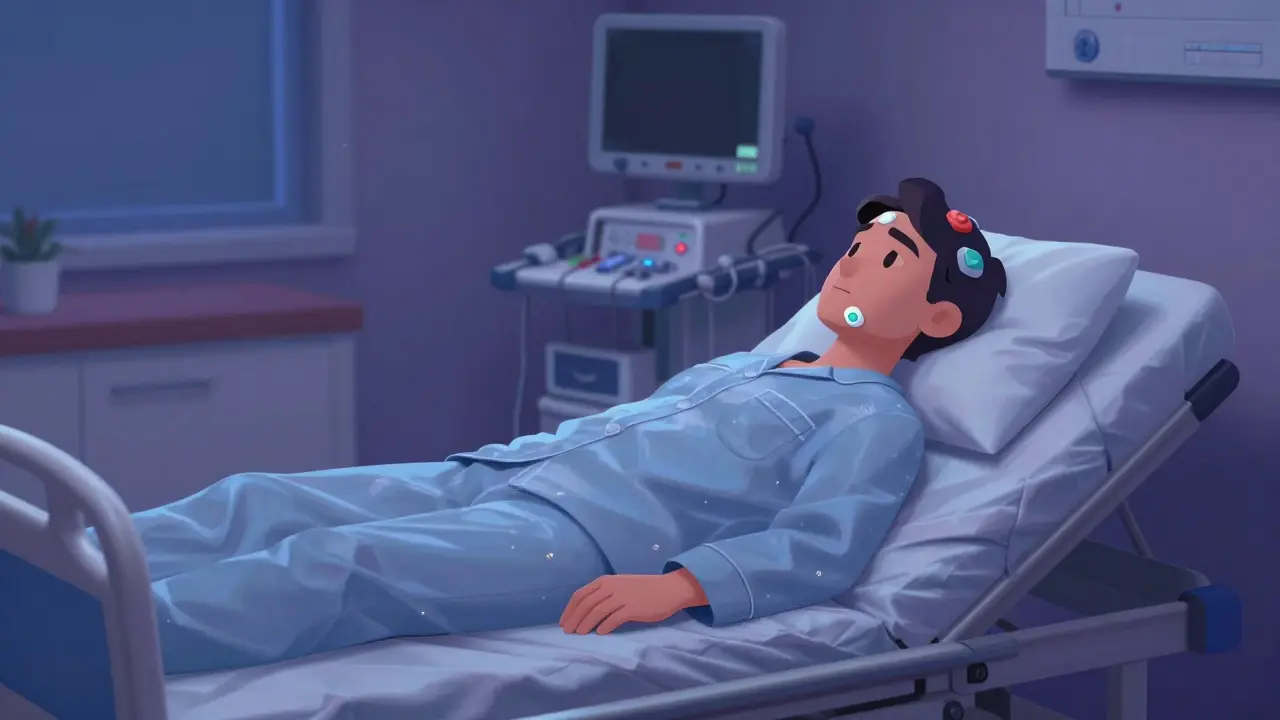
Waking up exhausted despite eight hours of shut-eye is a frustrating experience. You might suspect something is wrong, but how do you actually see what happens when your brain shuts off for the night? That's where polysomnography is a comprehensive diagnostic procedure that records multiple physiological parameters during sleep to identify and evaluate sleep disorders. Commonly known as a sleep study, this process is the gold standard for figuring out why you're not resting, whether it's a breathing issue, a neurological glitch, or a complex sleep disorder.
What exactly happens during a sleep study?
If you've only heard of home sleep tests, you might be surprised by the scale of a full lab study. While a home kit might track a few things, a full polysomnography setup monitors anywhere from seven to sixteen different physiological markers simultaneously. This gives doctors a high-definition picture of your sleep architecture the structural organization of sleep stages, including NREM and REM cycles
, rather than just a snapshot of your breathing.When you arrive at the clinic, a registered sleep technologist will spend about 30 to 45 minutes attaching sensors to your body. You'll likely have around 22 electrodes and sensors. It sounds like a lot, but most people find it non-invasive. The goal is to track everything from the electrical activity in your brain to the movement of your eyes. Because the environment is controlled-usually kept between 68-72°F-the focus is entirely on capturing your natural sleep patterns in a clinical setting.
The technology: What the sensors are tracking
To get a complete diagnosis, the study needs to see how different systems in your body interact. It's not just about whether you're snoring; it's about why the snoring is happening and how your brain is reacting to it. Here is the breakdown of the primary tools used during the session:
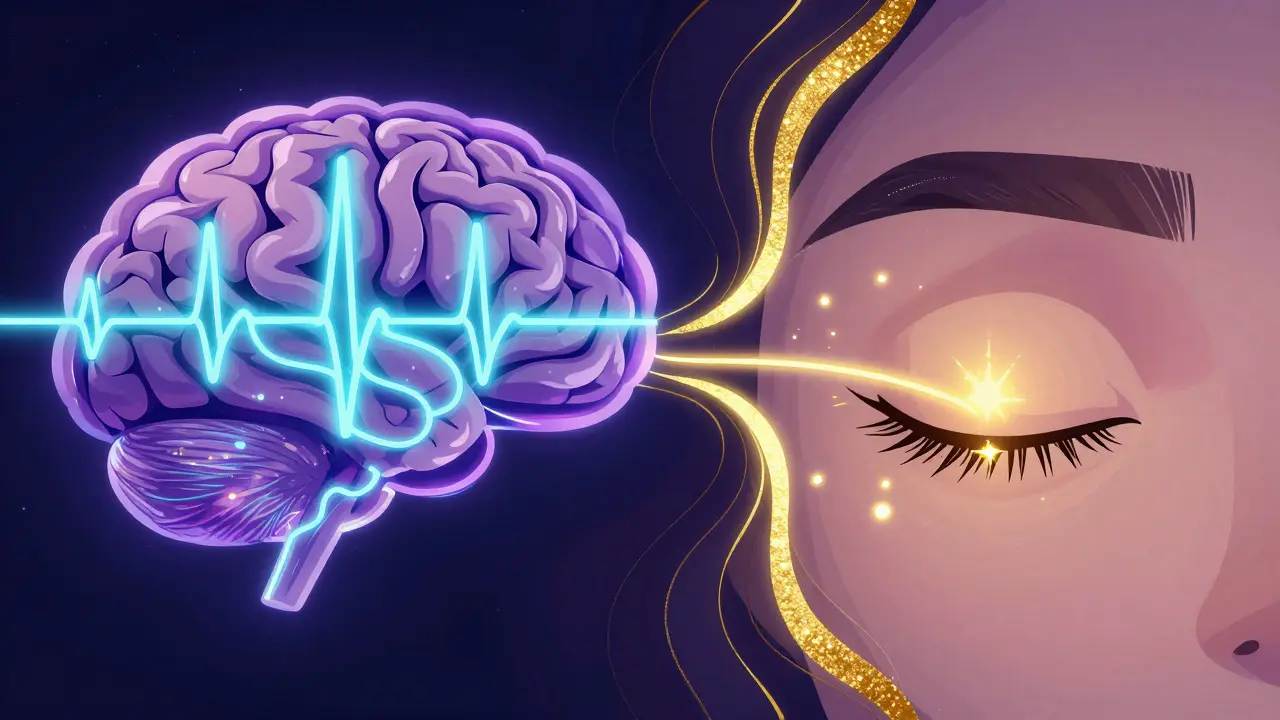
- Brain Waves: Using an electroencephalogram a recording of electrical activity along the scalp to identify sleep stages (EEG), technicians can tell if you are in deep sleep or light sleep.
- Eye Movements: An electrooculogram (EOG) tracks your eyes to confirm when you've entered REM sleep the rapid eye movement stage of sleep associated with dreaming and memory consolidation .
- Muscle Tone: Electromyogram (EMG) sensors on your chin and legs detect if you're twitching or if your muscles go completely limp, which is a hallmark of REM sleep.
- Heart and Breath: An electrocardiogram (ECG) monitors heart rhythm, while belts around your chest and abdomen track respiratory effort. Nasal transducers and thermistors measure the actual airflow in and out of your nose.
- Oxygen Levels: Pulse oximetry tracks how much oxygen is in your blood, which is critical for spotting "desaturation" events where your oxygen drops dangerously low.
| Feature | In-Lab Polysomnography | Home Sleep Test (HST) |
|---|---|---|
| Parameters Monitored | 7 to 16 (Comprehensive) | 3 to 4 (Basic) |
| Sleep Staging (REM/NREM) | Yes | No |
| Failure/Error Rate | Low (2-5%) | Higher (15-20%) |
| Diagnostic Range | Broad (Apnea, Narcolepsy, Parasomnias) | Narrow (Mostly Obstructive Sleep Apnea) |
| Cost | Higher | 30-50% Lower |
Identifying different sleep disorders
The real magic of this test is in the "differential diagnosis." For example, if you stop breathing during the night, a simple home test might just see that you stopped breathing. However, polysomnography allows doctors to distinguish between two very different problems.
In Obstructive Sleep Apnea a disorder where the airway is physically blocked, though the body still tries to breathe , the sensors show that your chest and abdomen are still fighting to move air, but the airflow sensor shows nothing is getting through. In Central Sleep Apnea a disorder where the brain fails to signal the muscles to breathe , the sensors show that the effort to breathe simply stops. These two conditions require entirely different treatments, so getting the diagnosis right the first time is vital.
Beyond breathing, the study is a powerhouse for detecting neurological issues. People with narcolepsy a chronic sleep disorder characterized by overwhelming daytime drowsiness and sudden attacks of sleep often skip the usual 90-minute progression through NREM stages and dive straight into REM sleep. Without the EEG and EOG tracking provided by a full lab study, this pattern would be invisible.
What to expect on the day of your test
Preparing for the test is mostly about making sure your results are authentic. If you sleep for 12 hours the night before because you're nervous, or if you drink four espressos at 4 PM, the data won't reflect your typical night. Most specialists recommend keeping your normal sleep-wake schedule for several days leading up to the appointment and avoiding caffeine after noon.
Once you arrive, the process is pretty straightforward. You'll be given a private room with a standard bed. While it feels strange to sleep in a clinic with wires attached, the sleep technologists are there to help you relax. They monitor you from an adjacent room in real-time. If a sensor peels off or you're struggling to get comfortable, they can jump in and fix it immediately. This is a major advantage over home tests, where a loose sensor can ruin the entire night's data.
Analyzing the results: From raw data to diagnosis
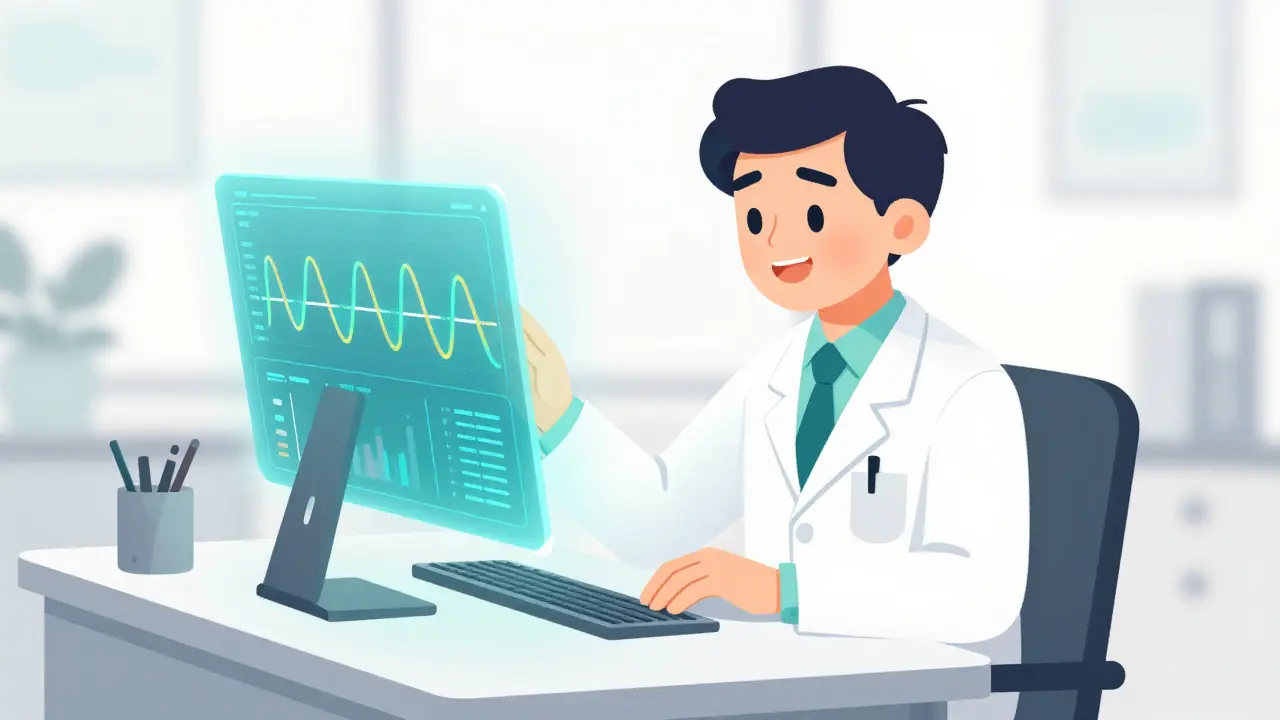
After you wake up and the sensors are removed, the work is only half done. A single night of sleep generates over 1,000 pages of raw data. A board-certified sleep physician then spends two to three hours scrubbing through this data, looking for patterns and anomalies.
They look for things like the Apnea-Hypopnea Index (AHI), which counts how many times per hour your breathing stops or becomes shallow. They also analyze your sleep architecture to see if you're spending enough time in deep sleep or if your REM cycles are being fragmented. This detailed analysis is what allows them to create a personalized treatment plan, whether that's a lifestyle change, a dental appliance, or a CPAP machine.
Specialized versions of the study
Not every sleep study is a standard overnight stay. Depending on your symptoms, your doctor might order a variation:
- Split-Night Study: If the doctor is almost certain you have sleep apnea, they might do a "split night." The first half of the night is used for diagnosis. Once apnea is confirmed, the second half is used for CPAP titration the process of adjusting the air pressure settings of a CPAP machine to find the most effective level for the patient . This saves you from having to come back for a second visit.
- Multiple Sleep Latency Test (MSLT): This is a daytime test. Instead of overnight monitoring, you take 4-5 scheduled naps to see how quickly you fall asleep. This is specifically used to diagnose narcolepsy.
- Video-EEG Monitoring: For people suspected of having nocturnal seizures or complex parasomnias (like sleepwalking), the lab adds high-resolution video to correlate physical movements with brain wave spikes.
Does insurance cover a full sleep study?
Coverage varies, but generally, yes, if it is medically necessary. Medicare typically covers about 80% of the cost when specific clinical criteria-like witnessed apneas or excessive daytime sleepiness-are documented. Private insurers often require a "prior authorization," meaning your doctor must prove that a home test is insufficient or that you have symptoms that require a full lab analysis.
Is the test uncomfortable?
Most patients describe the test as non-invasive. While having electrodes on your scalp and belts around your chest can feel unusual, they aren't painful. The biggest challenge for most people is the "first-night effect," where the unfamiliar environment makes it hard to fall asleep. However, about 85% of patients complete the study successfully regardless of the setting.
How long does it take to get the results?
Because the volume of data is so massive (1,000+ pages), it takes time. A specialist must manually review the recordings, which usually takes several hours of focused analysis. You will typically receive a diagnostic report and a follow-up appointment within a week or two of the study.
Can I take my usual medications during the test?
You should discuss this with your doctor beforehand. Some medications can alter your sleep architecture or suppress REM sleep, which might mask the very problem the doctors are trying to find. In some cases, they may ask you to taper off certain meds, but never stop a prescribed medication without professional guidance.
What is the difference between this and a home test?
A home test is basically a respiratory screen; it tells the doctor if you're stop breathing. Polysomnography is a full neurological and physiological audit. It tracks brain waves, eye movement, and muscle tone, allowing it to diagnose things a home test can't, such as narcolepsy, REM behavior disorder, or central sleep apnea.
Next steps and troubleshooting
If you're struggling to sleep in the lab, don't panic. Tell your technician if the belts feel too tight or if a sensor is itching. They can often make small adjustments that make a huge difference. If you find you absolutely cannot sleep in a clinic, ask your doctor about the latest wireless sensor technology, which reduces the number of wires and can make the experience feel more like sleeping in your own bed.
Once you have your results, don't just look at the AHI number. Schedule a detailed walkthrough with your physician to understand your sleep architecture. Whether you're moving toward a CPAP machine or exploring lifestyle changes, knowing the exact nature of your sleep disruption is the only way to actually wake up feeling refreshed.