
Metformin Kidney Function & Dosing Guide
Guidelines for Your Level:
Enter your eGFR value to see the corresponding safety guidelines.
Quick Reference:
- eGFR > 60: Standard use, check every 6-12 months.
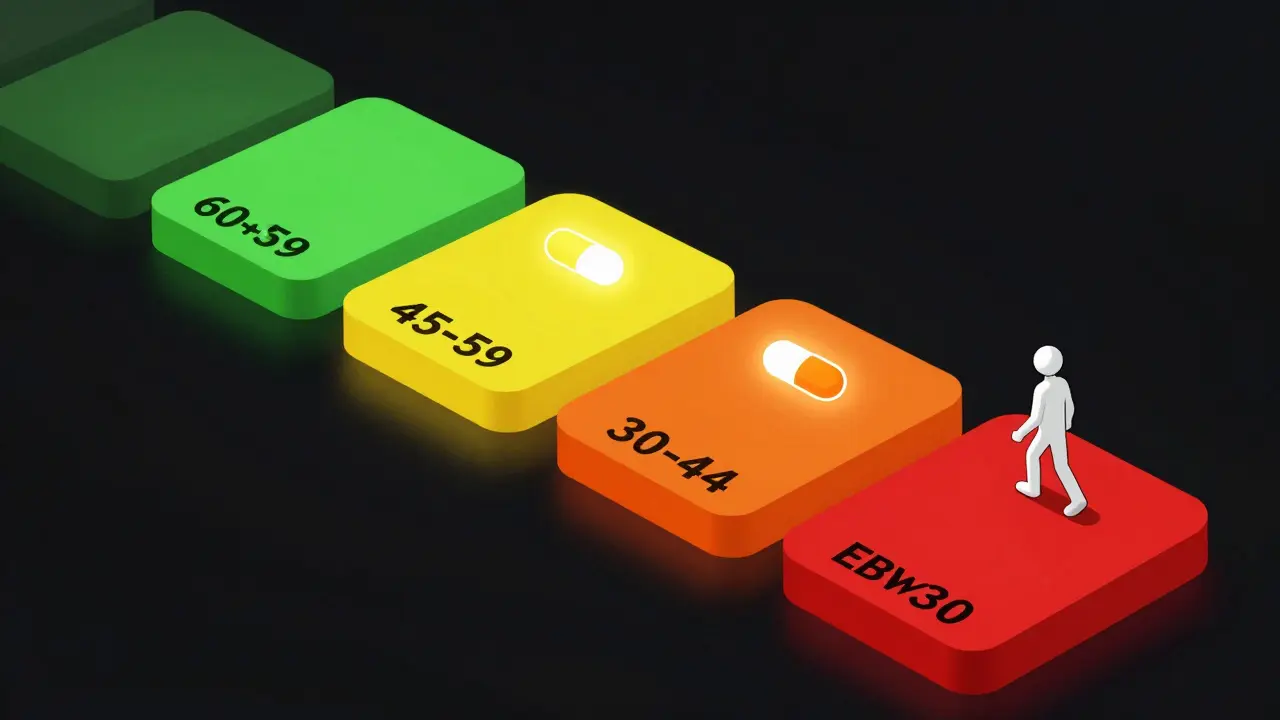
- eGFR 45-59: Continue with caution, check every 3-6 months.
- eGFR 30-44: Low dose only, check every 3 months.
- eGFR < 30: Contraindicated (discontinue use).
The goal is to keep reaping the cardiovascular and blood-sugar benefits of the drug without letting it build up to dangerous levels in your blood. If you or a loved one are navigating this, understanding the shift from old creatinine rules to modern eGFR metrics is key to staying on the right treatment path.
The Shift to eGFR: Why the Numbers Changed
For years, doctors used serum creatinine-a waste product in the blood-to decide if metformin was safe. If the number hit 1.5 mg/dL for men or 1.4 mg/dL for women, the drug was often stopped. This was a blunt instrument that didn't account for muscle mass or age, leading many people to stop a highly effective medication unnecessarily.
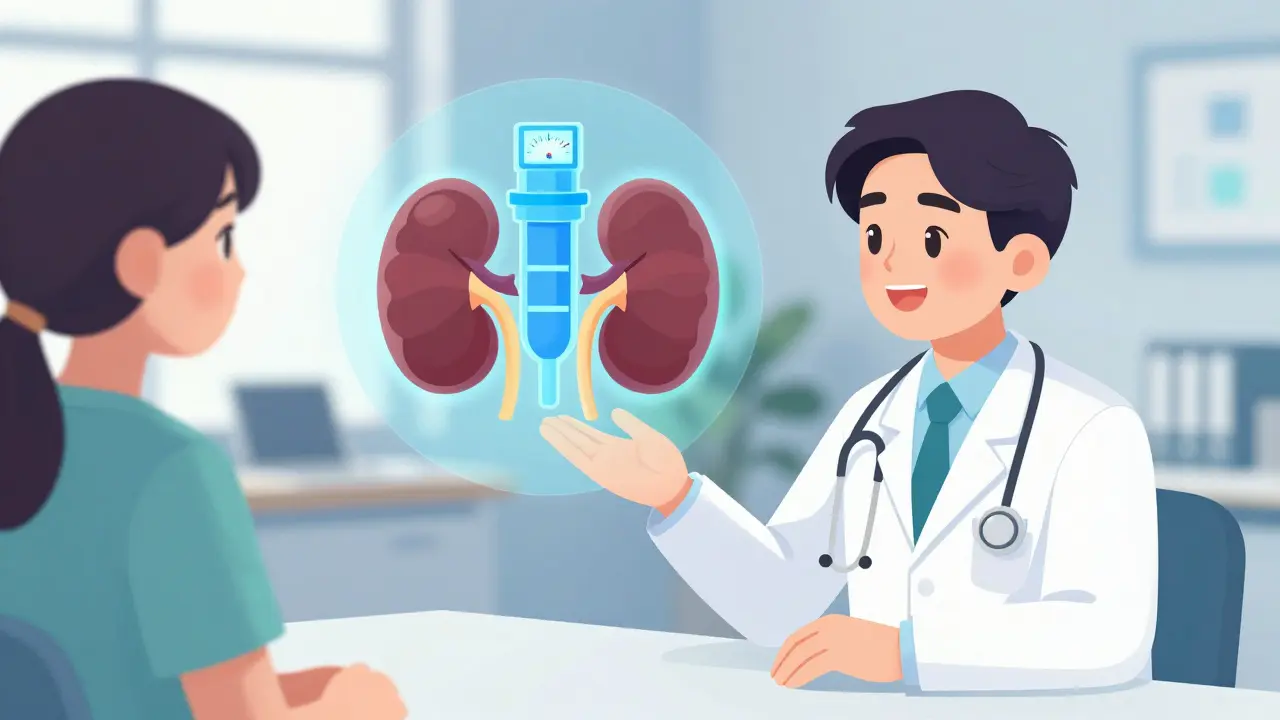
In May 2016, the FDA updated its guidelines to favor estimated Glomerular Filtration Rate (eGFR). Think of eGFR as a speedometer for your kidneys, telling us exactly how many milliliters of blood your kidneys filter per minute. This change allows more people with mild-to-moderate Chronic Kidney Disease (CKD) to stay on metformin safely. Instead of a "yes or no" approach, we now use a "how much" approach based on specific eGFR brackets.
Dosing Brackets and Monitoring Schedules
The most critical part of using metformin with kidney impairment is matching the dose to the current filtration rate. When eGFR drops, the drug stays in the body longer, which increases the risk of a rare but serious condition called Lactic Acidosis-a buildup of lactate in the blood that makes it too acidic.
To prevent this, clinical protocols generally follow these benchmarks:
| eGFR Level (mL/min/1.73 m²) | Maximum Daily Dose | Monitoring Frequency | Action/Guideline |
|---|---|---|---|
| 60 or higher | 2550 mg | Every 6-12 months | Standard use |
| 45 to 59 | 2000 mg | Every 3-6 months | Continue with caution |
| 30 to 44 | 1000 mg | Every 3 months | Avoid starting; continue with low dose |
| Below 30 | Contraindicated | N/A | Discontinue use |
If your eGFR is between 30 and 44, you're in a "grey zone." While the FDA suggests not starting the drug at this level, if you've been taking it for years and your kidneys gradually declined, your doctor might keep you on a reduced dose (like 1000 mg) because the benefits for your heart and blood sugar often outweigh the risks.
Managing High-Risk Scenarios
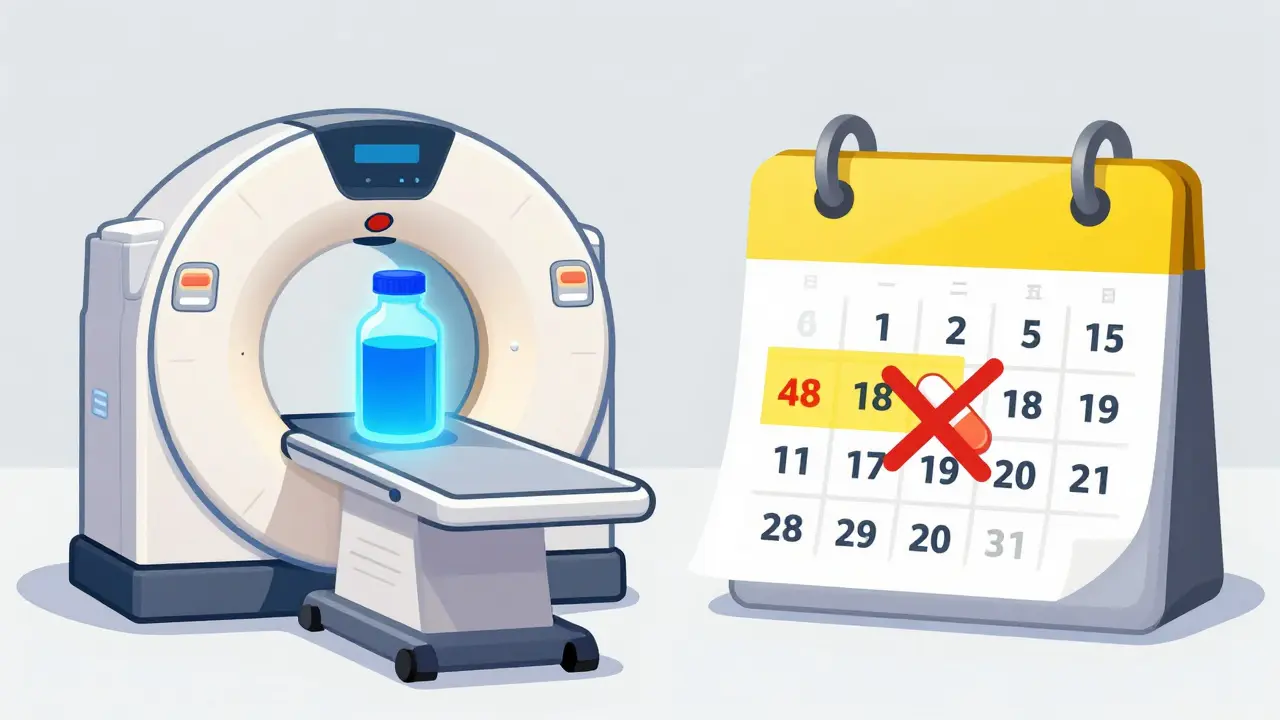
Even if your eGFR is stable, certain events can cause your kidney function to crash temporarily. This is where the risk of drug accumulation becomes real. The most common culprit is Iodinated Contrast used during CT scans or angiograms. Contrast dye can cause a temporary hit to the kidneys, which might trap metformin in your system.
Standard practice for anyone with an eGFR below 60 is to hold metformin for 48 hours after a contrast procedure. Your doctor will usually re-check your kidney function before telling you to restart the medication. Other risks include severe dehydration, sepsis, or the use of heavy NSAIDs (like ibuprofen or naproxen), which can restrict blood flow to the kidneys and mimic an acute injury.
Common Myths and Clinical Realities
There is a persistent myth that metformin causes kidney failure. In reality, the opposite is often true. By controlling blood sugar and protecting the heart, metformin helps manage the overall health of patients who are at risk for complications. A Cleveland Clinic review found that about 22% of eligible patients were taken off the drug because of this misconception, often leading to a spike in their HbA1c levels.
Some patients worry about the risk of lactic acidosis. While it sounds scary, it is incredibly rare-roughly 3.3 cases per 100,000 patient-years. Most of these cases happen not because of the drug itself, but because the patient had another acute crisis, like heart failure or a severe infection, while taking a dose that was too high for their kidney function.
Practical Tips for Patients and Caregivers
If you're managing this balance, a few practical steps can make a big difference. First, don't just rely on a once-a-year checkup. If your eGFR is below 60, you should be getting lab work at least twice a year. If you're in the 30-44 range, every three months is the gold standard.
Second, keep an eye on your energy levels. Long-term metformin use can lead to a vitamin B12 deficiency in up to 10% of users. Because B12 deficiency and kidney disease can both cause fatigue and anemia, it's easy to mistake one for the other. Ask your provider to test your B12 levels annually.
Finally, if you experience stomach upset-a common side effect-don't just stop the drug. Many people find that starting at a very low dose (500 mg) and increasing it slowly over several weeks makes the drug much easier to tolerate and keeps them from quitting the medication entirely.
Does metformin cause kidney damage?
No, metformin is not nephrotoxic. It does not damage the kidneys. However, since the kidneys are the only way the drug leaves the body, impaired kidney function can cause the drug to build up, which is why monitoring is necessary.
What happens if my eGFR drops below 30?
When eGFR falls below 30 mL/min/1.73 m², the risk of lactic acidosis becomes too high for most patients, and the medication is generally contraindicated. Your doctor will likely transition you to a different diabetes medication that is safer for advanced kidney disease.
Why do I have to stop metformin before a CT scan?
The contrast dye used in some scans can cause a temporary drop in kidney function. If your kidneys stop filtering efficiently while metformin is in your system, the drug can accumulate to toxic levels, increasing the risk of lactic acidosis.
Can I take metformin if I am on dialysis?
While generally avoided, some protocols allow it under strict supervision. For example, some guidelines suggest 250 mg/day for peritoneal dialysis or 500 mg after each hemodialysis session, but this must be managed exclusively by a specialist.
How often should my kidney function be checked?
If your kidney function is normal, once a year is usually enough. If your eGFR is between 45 and 59, check every 3-6 months. If it is between 30 and 44, you should be monitored every 3 months to ensure the dose remains safe.
Next Steps for Different Scenarios
If you are a patient with stable CKD: Continue your medication but set a calendar alert for your next eGFR blood test. If you feel unusually tired or weak, ask your doctor to check your B12 levels and lactate.
If you are preparing for a medical procedure: Notify your radiology team that you are taking metformin. Ask specifically if you need to pause your dose 48 hours before or after the procedure based on your last known eGFR.
If your doctor suggests stopping metformin due to a slight eGFR drop: Ask if your eGFR is actually below 30. If it is in the 30-45 range, ask about a dose reduction rather than a total discontinuation to avoid a spike in your blood sugar.