
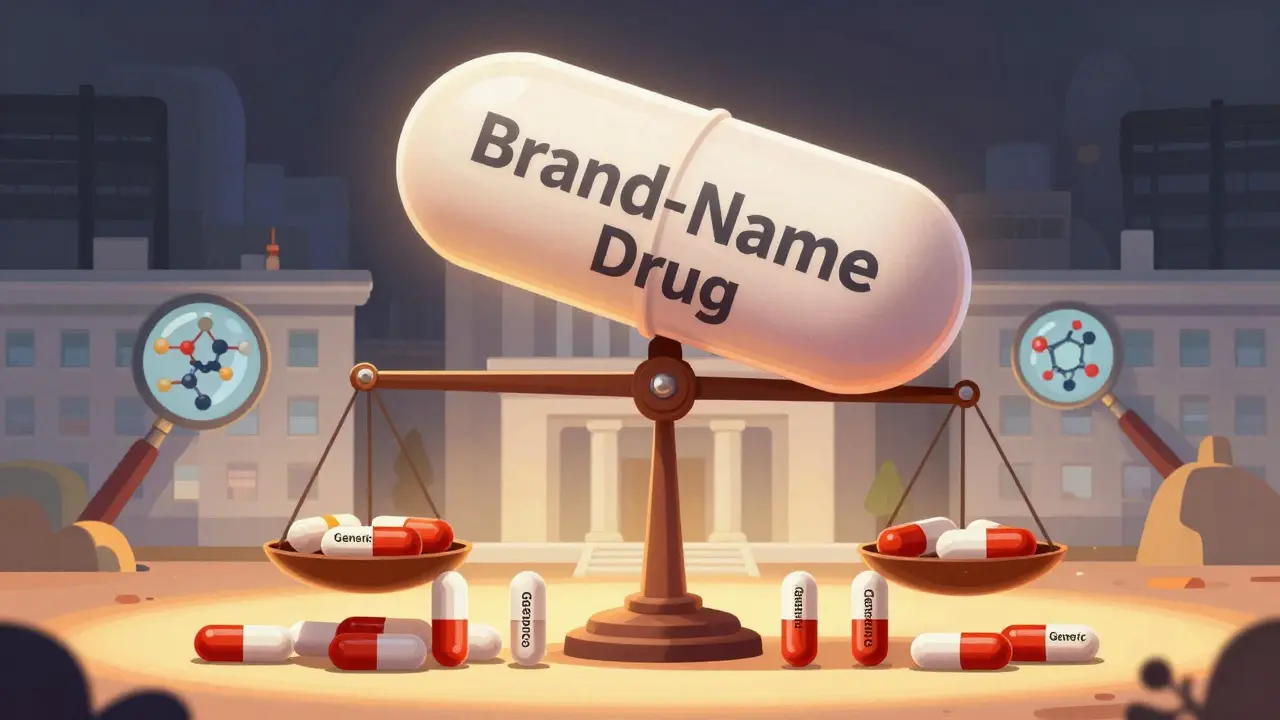
When you pick up a prescription at the pharmacy, there’s a 90% chance it’s a generic drug. That’s not luck-it’s the result of a carefully designed regulatory system called the Abbreviated New Drug Application (ANDA). This process lets companies sell cheaper versions of brand-name medicines without repeating every single clinical trial. It’s how we get pills that work the same but cost a fraction of the price. And it’s been saving the U.S. healthcare system over $370 billion a year since the 1980s.
What Exactly Is an ANDA?
An ANDA is a shortcut. It’s not a full application like the one brand-name drugmakers use. Instead of proving a drug is safe and effective from scratch, generic companies prove their version is identical in performance to the original. The FDA already confirmed the brand-name drug works-so the generic maker just needs to show their version does the same thing in the body. To qualify, the generic must match the brand in four key ways:- Same active ingredient
- Same strength and dosage form (pill, injection, cream, etc.)
- Same way it’s taken (by mouth, injected, inhaled)
- Same intended use (what condition it treats)
How the ANDA Process Works
The ANDA process isn’t quick, but it’s structured. Here’s how it flows:- Submission: The company files electronically through the FDA’s Electronic Submission Gateway. They submit Form FDA-356h and a financial disclosure form. The filing team checks if everything’s there within 60 days.
- Review: Teams of scientists-chemistry, manufacturing, microbiology, labeling, and bioequivalence experts-dig into the data. They check if the generic dissolves the same way, if the manufacturing plant meets standards, and if the labeling matches the brand’s (with minor exceptions).
- Feedback: If something’s missing or unclear, the FDA sends an Information Request (IR). Most companies get at least one. Some get 10, 15, even 20. Each one adds months to the timeline.
- Decision: If everything checks out, the FDA gives either Final Approval or Tentative Approval. Final Approval means the drug can be sold. Tentative Approval means the science is solid, but the brand still has patent or exclusivity protection. The generic can’t ship until that protection expires.
Why the ANDA Process Saves Billions
Brand-name drugs cost an average of $2.3 billion to develop. That includes 10-15 years of research, clinical trials on thousands of patients, and marketing. Generic companies don’t do that. They focus on one thing: proving bioequivalence. That usually costs between $1 million and $5 million. That’s why, within a year of a generic hitting the market, the price drops to about 15% of the brand’s cost. By 2023, generics made up 90% of all prescriptions filled in the U.S.-but only 23% of total drug spending. The savings? Over $370 billion in 2021 alone. This isn’t just about money. It’s about access. A patient who can’t afford a $500 brand-name pill can often get the generic for $10. That’s the whole point.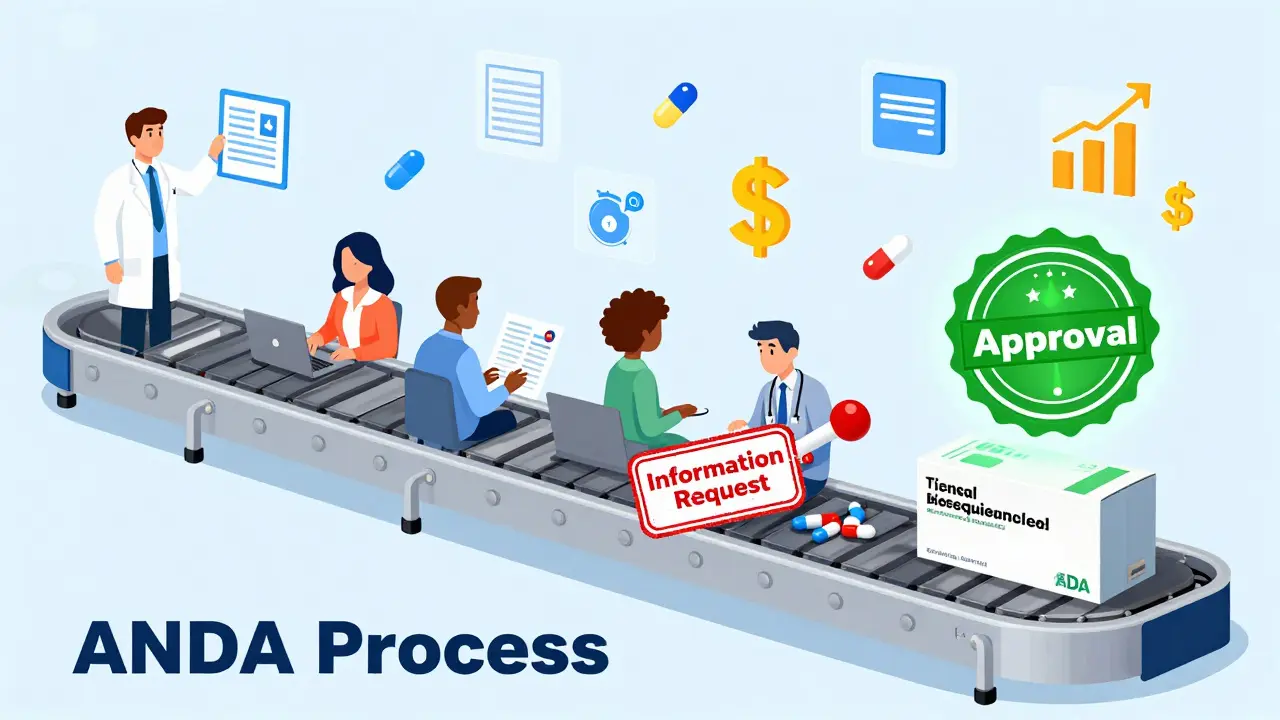
Where the ANDA Process Gets Complicated
For simple pills-like metformin or lisinopril-the ANDA process works smoothly. But for complex products? It gets messy. Topical creams, inhalers, injectables, and transdermal patches are harder to copy. Why? Because how the drug is delivered matters as much as what’s in it. A cream’s texture, a spray’s particle size, an injection’s pH-all affect how the drug behaves in the body. That’s why 35% of Complete Response Letters from the FDA in 2022 cited problems with bioequivalence studies for complex generics. One company spent $1.2 million and three tries to get their topical cream approved. Another waited 14 months because of 17 information requests. Patents and exclusivity rules also slow things down. Even if a generic is ready, it can’t launch until the brand’s patent expires or a legal challenge clears the way. Some companies use legal tactics to delay generics for years-something called “patent thickets.”Who’s Winning in the Generic Market?
The generic drug market is dominated by a few big players. Teva Pharmaceuticals controls about 22% of the U.S. market. Viatris (formerly Mylan) has 15%, and Sandoz holds 12%. Together, these three account for nearly half of all generic sales. But 75% of ANDAs come from companies that already have five or more approved generics. Experience matters. Teva’s regulatory head said after their tenth ANDA, they hit FDA timelines 92% of the time. Newer companies? They’re learning the hard way. The FDA now offers over 2,000 product-specific guidances to help applicants. In 2022 alone, they published 450 new ones. These aren’t suggestions-they’re roadmaps. Skip them, and your application will likely get rejected.What’s Next for Generic Drugs?
The FDA is pushing hard to improve the ANDA process. They’re using AI to speed up chemistry reviews-78% of reviewers now use AI tools to analyze data. They’re also exploring real-world evidence to support approval for complex generics, instead of always requiring new clinical trials. The goal? Faster approvals for drugs that treat shortages or unmet needs. In 2022, the FDA approved 117 priority generics to address drug shortages. That’s a big shift. The agency now treats generic approvals like a public health tool, not just a regulatory box to check. Still, challenges remain. Manufacturing inspections still take too long. Some facilities overseas are hard to access. And patent fights keep dragging on. But the system is evolving-and it’s working.
What This Means for Patients
You don’t need to understand the science behind an ANDA. But you should know this: when your doctor prescribes a generic, you’re getting the same medicine at a fraction of the cost. The FDA doesn’t approve generics lightly. They require proof-hard data-that it works just like the brand. If your pharmacy gives you a generic instead of the name-brand drug, don’t assume it’s inferior. It’s not. It’s the same active ingredient. Same effect. Same safety profile. Just cheaper. And if your generic isn’t working the way you expect? Talk to your doctor. Sometimes, inactive ingredients can cause minor differences in how a drug feels-like a pill dissolving slower or causing a slight stomach upset. But that’s rare. And if it happens, there’s almost always another generic version available.Common Questions About the ANDA Process
What’s the difference between an ANDA and an NDA?
An NDA (New Drug Application) is for brand-name drugs and requires full clinical trials proving safety and effectiveness. An ANDA is for generics and only requires proof that the drug is bioequivalent to an already approved brand. The ANDA skips the expensive, time-consuming trials because the FDA already confirmed the original drug works.
Can a generic drug be different from the brand?
Yes-but only in ways that don’t affect how it works. Generics can have different colors, shapes, fillers, or coatings. But the active ingredient, strength, dosage form, route of administration, and how the body absorbs it must be identical. The FDA tests this with bioequivalence studies to make sure.
Why do some generics take so long to get approved?
The main reasons are complex products (like inhalers or creams), manufacturing issues, and patent disputes. Even if the science is solid, if the factory doesn’t meet FDA standards or if the brand still has patent protection, approval gets delayed. Information requests from the FDA also add months to the timeline.
What is Tentative Approval?
Tentative Approval means the FDA has found the generic meets all scientific requirements but can’t be fully approved yet because of a patent or exclusivity period on the brand-name drug. The company can manufacture the drug, but they can’t sell it until the legal barrier expires.
Are generic drugs as safe as brand-name drugs?
Yes. The FDA requires the same quality, purity, and strength standards for generics as for brand-name drugs. They’re held to the same manufacturing rules (cGMP), and they’re monitored for safety just like any other drug. Millions of people use generics every day without issue.
Alec Stewart Stewart
February 2, 2026 AT 20:30Samuel Bradway
February 3, 2026 AT 23:10Caleb Sutton
February 4, 2026 AT 17:50pradnya paramita
February 6, 2026 AT 07:44Jamillah Rodriguez
February 7, 2026 AT 02:01Susheel Sharma
February 8, 2026 AT 15:36Prajwal Manjunath Shanthappa
February 9, 2026 AT 19:54Alex LaVey
February 10, 2026 AT 10:22Joy Johnston
February 11, 2026 AT 15:49Shelby Price
February 11, 2026 AT 17:53