

When you’re taking medication to control seizures, the last thing you want to worry about is harming a baby you’re planning to have. But for women of childbearing age, this isn’t just a hypothetical concern-it’s a daily reality. Seizure medications can affect fetal development, interfere with birth control, and create dangerous trade-offs between keeping seizures under control and protecting a growing child. The truth isn’t simple. Some drugs are far riskier than others. And many people don’t even know which ones they’re taking-or what those risks really mean.
Some Seizure Medications Are Much Riskier Than Others
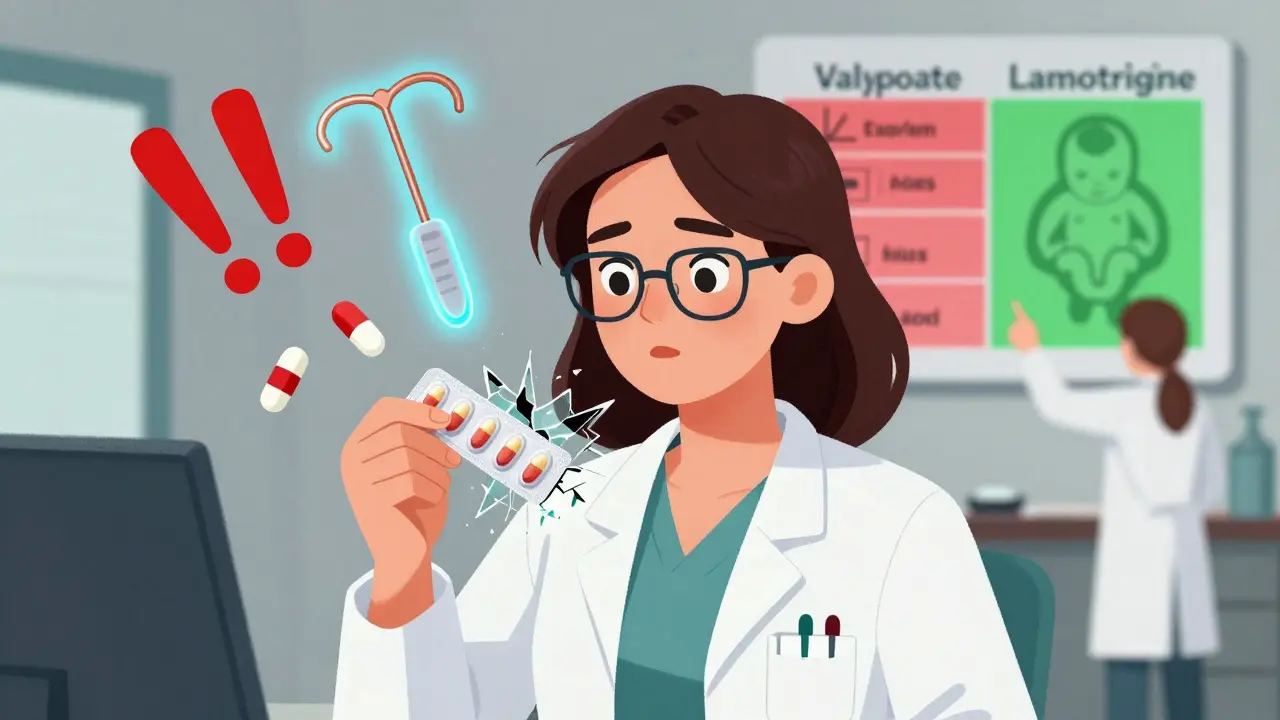
Not all antiseizure drugs are created equal when it comes to pregnancy. The biggest red flag is valproic acid (sold as Depakote, Epilim, or sodium valproate). It’s one of the most effective drugs for stopping seizures, but it’s also one of the most dangerous for unborn babies. About 1 in 10 babies exposed to valproate during pregnancy develop major birth defects-things like spina bifida, heart problems, cleft lip or palate, and microcephaly (a smaller-than-normal head size). That’s more than double the risk seen with most other seizure medications.
Valproate doesn’t just cause physical defects. Children exposed to it in the womb are also more likely to be diagnosed with autism spectrum disorder or ADHD later in life. A 2020 study in Neurology found these kids had nearly twice the risk of ADHD and more than double the risk of autism compared to those exposed to other seizure drugs.
Other high-risk drugs include phenytoin (Epanutin), phenobarbital, carbamazepine (Tegretol), and topiramate (Topamax). These can also lead to heart defects, facial abnormalities, and developmental delays. The risk increases with higher doses. For example, the more carbamazepine a woman takes during early pregnancy, the greater the chance of a major congenital malformation.
But here’s the good news: not all seizure medications carry these risks. Lamotrigine (Lamictal) and levetiracetam (Keppra) are now considered the safest options during pregnancy. Studies tracking over 298 children exposed to these drugs before birth found no significant difference in language development at age two compared to children whose mothers didn’t take any seizure meds. These newer drugs don’t just work-they work without the same level of danger.
The Big Picture: Most Babies Are Still Healthy
It’s easy to feel overwhelmed by the numbers. But remember: over 90% of babies born to women with epilepsy are born without major birth defects. That’s not a small margin-it’s a powerful reminder that with the right care, you can have a healthy pregnancy even while managing seizures.
Between 1997 and 2011, the rate of major congenital malformations dropped by 39%. Why? Because doctors started prescribing safer drugs more often. More women got preconception counseling. More people switched from valproate to lamotrigine or levetiracetam before getting pregnant. This wasn’t luck-it was better medicine.
Still, not everyone benefits from these improvements. A French study found that women with lower incomes or less access to healthcare were more likely to be prescribed high-risk drugs like valproate during pregnancy. This isn’t about personal choices-it’s about systemic gaps. If you’re struggling to get the right care, you’re not alone. But you’re not powerless, either.
Drug Interactions Can Sabotage Your Birth Control
Here’s something many women don’t realize: your seizure medication might be making your birth control useless. Carbamazepine, phenytoin, phenobarbital, oxcarbazepine, and high doses of topiramate can speed up how your body breaks down hormones. That means birth control pills, patches, or rings might not work as well-or at all.
And it goes both ways. Hormonal contraceptives can lower the levels of certain seizure drugs in your blood. Lamotrigine, valproate, zonisamide, and rufinamide can become less effective if you’re on the pill. That means more seizures. More risk. More danger.
This isn’t a minor side effect. It’s a medical emergency waiting to happen. A 2023 study from AESNET found that two out of three women of childbearing age got the wrong advice about these interactions. Some were told their birth control was fine-even though they were on carbamazepine. Others didn’t know their seizure meds could drop in effectiveness.
If you’re using hormonal birth control and taking any of these drugs, talk to your doctor about alternatives. Intrauterine devices (IUDs), especially non-hormonal copper IUDs, are often the safest bet. Implants and injections may also work better than pills. Don’t assume your OB-GYN or neurologist already knows this. Bring it up. Ask specifically: “Could my seizure meds interfere with my birth control?”
Uncontrolled Seizures Are Even More Dangerous
It’s tempting to think: “If these drugs are so risky, I’ll just stop taking them.” That’s the worst thing you could do.
Tonic-clonic seizures-those violent, full-body convulsions-can cause miscarriage, placental damage, broken bones, and even death for both mother and baby. A seizure during labor can lead to oxygen deprivation. Falling during a seizure can cause trauma. The risk isn’t theoretical. It’s real, immediate, and far more common than birth defects from medication.
As Dr. Kelsey Wiggs from Indiana University put it, women face an “excruciating double bind.” You need the medicine to survive. But the medicine might hurt your baby. There’s no perfect answer-only the best possible choice.
The American Epilepsy Society is clear: No seizure medication is as dangerous as uncontrolled seizures. Stopping your meds without medical guidance is never safe. The goal isn’t to eliminate all risk-it’s to minimize the biggest risks.
What You Should Do Before Getting Pregnant
If you’re planning a pregnancy-or even thinking about it-don’t wait. Talk to your neurologist now. Here’s what you need to do:
- Review your current medication. If you’re on valproate, phenobarbital, phenytoin, or high-dose topiramate, ask if switching to lamotrigine or levetiracetam is possible. Many people can make the switch safely with careful monitoring.
- Get your dose optimized. The lowest effective dose is always best. Higher doses mean higher risks. Your doctor should aim for seizure control with the smallest amount of drug needed.
- Check your birth control. If you’re using pills, patches, or rings, ask if they’re still effective with your meds. Consider switching to an IUD or implant.
- Start taking folic acid. At least 0.4 mg daily, and often up to 4 mg if you’re on high-risk meds. Folic acid reduces the risk of neural tube defects like spina bifida.
- Get a preconception counseling appointment. This isn’t optional. It’s essential. Find a specialist who understands epilepsy and pregnancy. Many hospitals have dedicated epilepsy-in-pregnancy clinics.
These steps don’t guarantee a perfect outcome. But they dramatically improve your odds. Women who plan ahead have significantly fewer birth defects and better pregnancy outcomes.
What If You’re Already Pregnant?
If you’re already pregnant and taking a high-risk medication, don’t panic. Don’t stop cold turkey. Call your doctor immediately.
Switching medications during pregnancy is possible-and often safer than continuing a high-risk drug. But it must be done slowly and under close supervision. Abrupt changes can trigger seizures, which are far more dangerous than adjusting your meds.
Your doctor will likely:
- Check your drug levels in your blood
- Adjust your dose gradually
- Monitor your baby with detailed ultrasounds
- Recommend additional prenatal testing if needed
Even if you’ve been on valproate for years, switching to lamotrigine in the first trimester can still reduce the risk to your baby. It’s not too late. But you need to act fast.

The Future Is Getting Safer
The landscape is changing. Newer drugs like cenobamate, ezogabine, and perampanel are still being studied, but early data looks promising. The number of high-risk prescriptions during pregnancy has dropped steadily over the past two decades. More women are being offered safer options. More doctors are asking about family planning.
Stanford neurologist Kimford Meador says women with epilepsy should now feel “better about their opportunities and options for having a child.” That’s a big shift from the 1950s, when women were told not to marry or have kids at all.
But progress isn’t universal. If you’re in a low-income community, or your doctor doesn’t specialize in epilepsy, you might still be stuck with outdated advice. That’s why knowledge matters. You have the right to ask, to demand better, to get the safest possible care.
Frequently Asked Questions
Can I take seizure meds while breastfeeding?
Yes, most seizure medications are safe during breastfeeding. Lamotrigine and levetiracetam pass into breast milk in very small amounts and are generally considered safe. Valproate and phenobarbital are present in higher levels, so they require more caution-but even then, many mothers breastfeed successfully with close monitoring. Always talk to your doctor before making a decision.
Do I need to take more folic acid if I’m on seizure meds?
Yes. Women taking antiseizure medications should take at least 0.4 mg of folic acid daily before conception and during early pregnancy. If you’re on valproate, carbamazepine, or phenytoin, your doctor may recommend 4 mg daily. Folic acid helps prevent neural tube defects like spina bifida, which are more common with these drugs.
Are generic versions of seizure meds just as safe?
Not always. For some drugs-especially phenytoin and carbamazepine-generic versions can cause unpredictable changes in blood levels, which may trigger seizures or increase side effects. If you’re pregnant or planning to be, your doctor may recommend sticking with the brand-name version to keep levels stable. Don’t switch generics without consulting your neurologist.
Can men taking seizure meds affect their partner’s pregnancy?
Current evidence suggests that seizure medications taken by men do not increase the risk of birth defects in their children. The main risks come from the mother’s medication use during pregnancy. However, if a man is on high-dose valproate, some doctors recommend discussing fertility concerns, as it may slightly reduce sperm quality. This is not a major concern for most men, but it’s worth mentioning if you’re planning a family.
What if I can’t switch to a safer medication?
If you’ve tried other meds and they don’t work, your doctor may still recommend staying on a higher-risk drug-but with extra precautions. This includes higher folic acid doses, more frequent ultrasounds, and possibly amniocentesis to check for birth defects. The goal is to minimize risk as much as possible while keeping seizures controlled. Never stop your meds without medical help.
Next Steps: What to Do Today
If you’re a woman of childbearing age taking seizure medication:
- Check your current drug name. Is it valproate, phenytoin, or topiramate? If yes, schedule an appointment with your neurologist this week.
- Review your birth control. Are you on the pill? Patch? Ring? Ask if it’s still effective with your meds.
- Start taking folic acid if you’re not already. Even if you’re not trying to get pregnant now, it’s a simple step that could protect your future.
- Find a specialist. Look for a neurologist who works with epilepsy and pregnancy. Hospitals in Boston, like Mass General and Brigham and Women’s, have dedicated clinics.
- Talk to your partner. This isn’t just your decision. Your support system matters.
Managing seizures during pregnancy isn’t about perfection. It’s about making smart, informed choices. You’re not alone. And with the right care, you can have the healthy pregnancy you deserve.
Emma Hooper
December 31, 2025 AT 17:09I was on Depakote for years and switched to Lamictal before trying to conceive-best decision of my life. My daughter is now 3 and hitting every milestone. Also, folic acid? Non-negotiable. I took 4mg daily like my neuro told me. No regrets. 🙌
Martin Viau
January 1, 2026 AT 22:32Canada’s healthcare system still doesn’t prioritize preconception counseling for epilepsy patients. My sister got stuck on valproate because her neurologist ‘didn’t have time.’ This isn’t medical advice-it’s systemic neglect. We need policy changes, not just blog posts.
Marilyn Ferrera
January 2, 2026 AT 06:22Uncontrolled seizures > medication risks. Always. And folic acid isn’t optional-it’s armor.
Deepika D
January 4, 2026 AT 00:32Hey everyone-just wanted to share my story. I’m from India, diagnosed with epilepsy at 16, and was on phenobarbital for over a decade. When I got engaged, my husband and I were terrified. We didn’t even know about the birth control interactions! But we found a specialist in Bangalore who connected us with a global epilepsy-in-pregnancy network. I switched to levetiracetam, started 5mg folic acid, got a copper IUD, and now I’m 28 weeks pregnant with zero complications. I know it feels overwhelming, but you’re not alone. There are doctors out there who care. Reach out. Ask. Advocate. Your baby deserves a fighting chance-and so do you. You’ve got this. 💪❤️
Branden Temew
January 5, 2026 AT 21:50So let me get this straight-we’re telling women to risk seizures to avoid birth defects… but the real danger is… doctors not knowing the drugs they prescribe? Wow. We really outdid ourselves.
Frank SSS
January 7, 2026 AT 02:34I’ve seen too many women get gaslit by OB-GYNs who think ‘epilepsy meds’ are just ‘regular pills.’ My cousin lost two pregnancies because her doctor told her ‘the pill should still work’ while she was on carbamazepine. Then she got blamed for ‘not being careful.’ No. The system failed her. And it’s still failing thousands.
Paul Huppert
January 8, 2026 AT 06:45Thanks for this. I didn’t know lamotrigine was safe in pregnancy. My neuro never mentioned it. I’ll schedule a consult this week.
Hanna Spittel
January 9, 2026 AT 09:58Valproate = baby destroyer. Also, if your doctor doesn’t know about the birth control thing… RUN. 🚨
Brady K.
January 9, 2026 AT 11:47Let’s be real-this isn’t a ‘medical issue.’ It’s a gendered healthcare failure. Women with epilepsy are expected to optimize their bodies for reproduction while being treated like walking liability reports. The fact that we still need a 5-step checklist to not have our babies genetically sabotaged by outdated protocols? That’s not progress. That’s a damn indictment.