
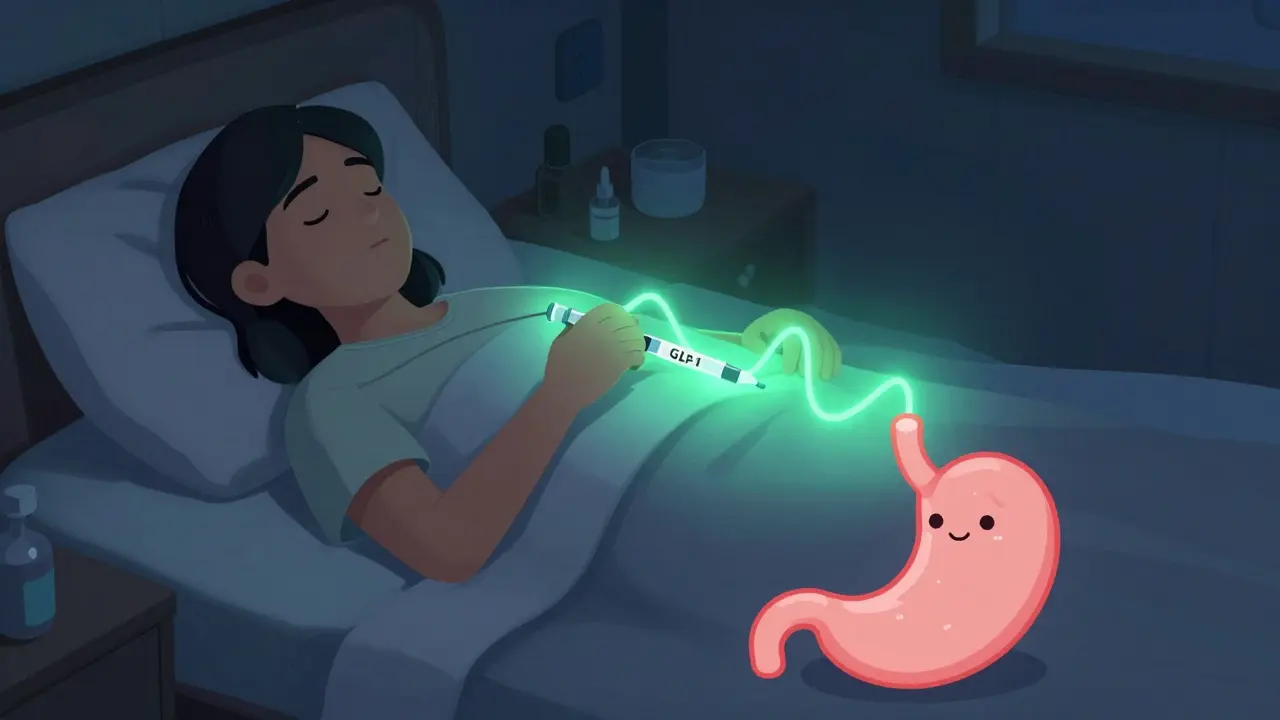
When you start a GLP-1 medication for weight loss, the first thing most people notice isn’t the scale moving - it’s the nausea. It hits hard, often within days of starting, and it’s enough to make people quit before they even see results. But here’s the truth: nausea is temporary for most, and there are proven ways to get through it without giving up. This isn’t just about taking a pill - it’s about learning how your body reacts, adjusting your habits, and sticking with it long enough for the benefits to kick in.
Why GLP-1 Medications Cause Nausea
GLP-1 medications like Wegovy, Ozempic, and Mounjaro work by slowing down how fast your stomach empties. That’s not a bug - it’s the whole point. Slower digestion means you feel full longer, eat less, and your blood sugar stays steadier. But that same mechanism is why nausea happens. Your stomach is literally holding onto food longer than it’s used to. Your brain gets mixed signals: "I’m full," but your body says, "I’m still digesting." That mismatch triggers nausea.
It’s not just about your stomach. These drugs also affect the part of your brain that controls vomiting. Studies show nausea affects 20% to 45% of users, depending on the dose. At the lowest starting dose, it’s usually mild. By the time you hit the full weight-loss dose - 2.4 mg of semaglutide or 15 mg of tirzepatide - nausea becomes more common. That’s why the dosing schedule isn’t random. It’s designed to let your body adapt.
How Dosing Works - And Why It Matters
Most people don’t realize that GLP-1 medications aren’t meant to be started at full strength. Jumping straight to the highest dose? That’s a recipe for misery. The approved schedules are slow for a reason.
- Wegovy (semaglutide for weight loss): Starts at 0.25 mg weekly. After four weeks, it goes to 0.5 mg. Then 1 mg, then 1.7 mg, and finally 2.4 mg at week 17. That’s over four months to get to the top dose.
- Mounjaro (tirzepatide): Begins at 2.5 mg weekly. After four weeks, it goes to 5 mg. Then 7.5 mg, 10 mg, and finally 15 mg - taking about 20 weeks to reach max.
- Ozempic (semaglutide for diabetes): Starts at 0.25 mg, then 0.5 mg, then 1 mg. The 2 mg dose is used for some, but it’s not approved for weight loss.
These schedules aren’t suggestions - they’re clinical protocols. Skipping ahead because you’re impatient? You’re more likely to quit. A Cleveland Clinic survey found that 63% of people who took their dose at bedtime had less nausea. Why? Because when you sleep, your body isn’t processing food. Less food + slower digestion = less nausea.
Real People, Real Nausea - And How They Got Through It
On Reddit’s r/semaglutide community, 1,247 users shared their experiences. Over 68% said they had nausea during dose increases. But here’s what stood out: 72% said it got better within 2 to 4 weeks at each new dose. One user wrote: "The first 4 weeks on 0.25 mg were brutal. I couldn’t eat breakfast. By week 3 at 0.5 mg, I was fine with a small smoothie. Now I’m at 2.4 mg and haven’t felt sick in months."
Dr. Allison L. Rhodes, an obesity specialist, says: "The body adapts. It’s not that the drug stops working - your gut learns to handle it." The Mayo Clinic agrees: don’t stop the medication unless nausea is severe or you’re vomiting. Mild nausea? Keep going. Most people who stick with it lose 5% or more of their body weight.
On TikTok, #GLP1SideEffects has over 2,300 videos. The top advice? Hydrate. Eat small meals. Avoid greasy food. Ginger helps. These aren’t just anecdotes - they’re backed by data. A National Obesity Society survey of 200 specialists found that 78% recommend ginger (tea, capsules, or candies) as a first-line fix.
What Actually Works to Reduce Nausea
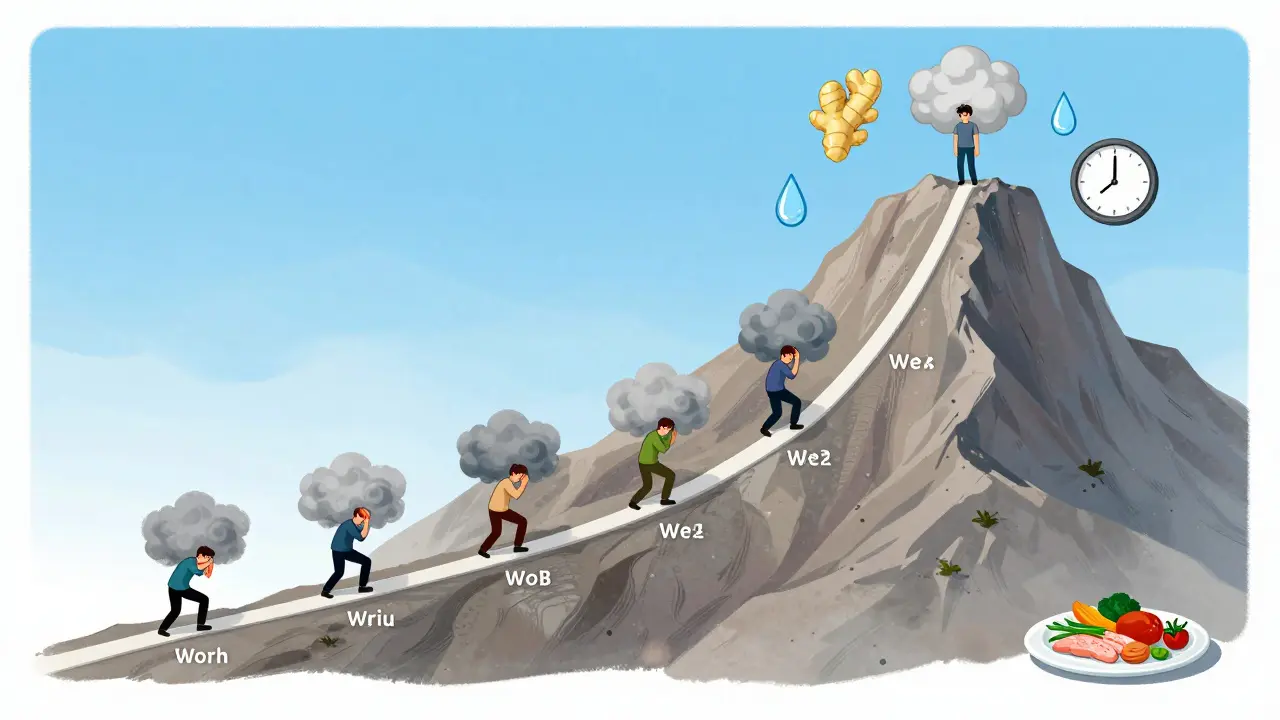
There’s no magic bullet, but here’s what consistently helps:
- Take it at night. Most people report less nausea when they inject before bed. Your stomach is quiet, and you’re not eating for hours.
- Eat smaller, more frequent meals. Instead of three big meals, try five small ones. A handful of almonds, a boiled egg, or Greek yogurt keeps your stomach from getting overwhelmed.
- Avoid high-fat and fried foods. Fats slow digestion even more. That’s the last thing you want when your stomach is already lagging. Stick to lean proteins, vegetables, and complex carbs.
- Stay hydrated. Dehydration makes nausea worse. Aim for 2 liters of water a day. Sip slowly. Chugging water right after your injection? Bad idea.
- Try ginger. Ginger tea, capsules (250-500 mg), or even ginger candies can help. One 2023 study in the Journal of Obesity found that 68% of users saw improvement within 3 days.
- Don’t eat right after your shot. Wait at least 30 minutes. Let the medication settle before food hits your stomach.
Some people swear by peppermint tea or acupressure wristbands. They’re not proven, but if they help you feel better, there’s no harm in trying. The key is to experiment. What works for one person might not work for another.
When to Worry - And When to Pause
Nausea isn’t always normal. If you’re vomiting, losing weight too fast (more than 2 pounds per week), or having dizziness, fainting, or severe abdominal pain - call your doctor. These aren’t typical side effects. They could mean something else.
Some experts say: push through mild nausea. Others say: pause the dose increase until symptoms fade. There’s no universal rule. But here’s what most clinics do: if nausea is mild (a 2/10 on a discomfort scale), keep going. If it’s moderate (5/10 or higher), hold the dose for 1-2 weeks before increasing. Don’t rush. The goal isn’t to get to the top dose fast - it’s to get there without quitting.
And don’t be fooled by the "I’ll just double up next week" mindset. That’s how people end up in the ER. The slow ramp-up exists for a reason. Your body needs time.
Long-Term Outlook - It Gets Better
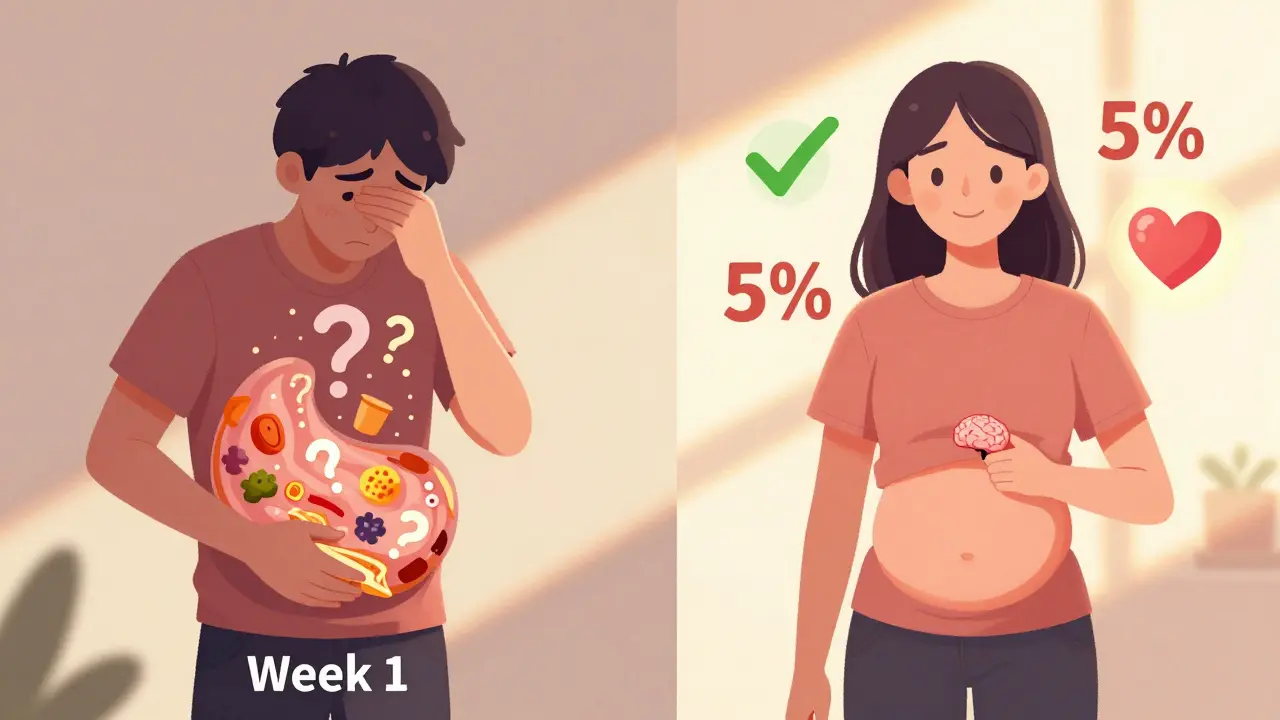
Most people who stick with GLP-1 therapy for six months report nausea is gone or barely noticeable. A 2023 survey by the Obesity Action Coalition found that 89% of those who pushed through the first 12 weeks lost at least 5% of their body weight. Only 47% of those who quit early saw any meaningful loss.
And it’s not just about weight. The 2023 SELECT trial showed semaglutide reduced heart attacks, strokes, and heart-related deaths by 20% in people with obesity - even if they didn’t have diabetes. That’s huge. The nausea might be rough at first, but the long-term health payoff is real.
There’s also new hope on the horizon. Novo Nordisk is developing an oral version of semaglutide, expected in 2025. Early data suggests it causes less nausea than injections. But until then, the injectables are still the most effective tools we have.
What to Do If You’re Struggling
If you’re in the thick of it:
- Don’t panic. This is normal.
- Log your symptoms: when it happens, what you ate, what time you took the shot.
- Reach out to your provider. They can adjust your dose or suggest alternatives.
- Join a support group. Reddit, Facebook, and patient forums are full of people who’ve been there.
- Use manufacturer support programs. Novo Nordisk (Wegovy) and Eli Lilly (Mounjaro) offer free coaching, injection training, and even financial help if you’re uninsured.
Remember: this isn’t a quick fix. It’s a lifestyle shift. The nausea is a sign your body is changing - not breaking. And if you can hang on through the first few months, the rest gets a lot easier.
Is nausea from GLP-1 medications permanent?
No, nausea is not permanent for most people. Clinical data shows that 70-80% of users experience significant improvement within 4 to 8 weeks at each dose level. By the time patients reach their maintenance dose, nausea has resolved or become very mild in the vast majority. The body adapts to the slower gastric emptying. If nausea persists beyond 12 weeks at a stable dose, it’s worth discussing with your provider - but it’s not typical.
Can I skip the starting dose and jump to a higher one to avoid the long wait?
No, skipping the starting dose is not recommended and can be dangerous. The low starting dose is specifically designed to minimize side effects. Jumping to 1 mg or higher without building up increases your risk of severe nausea, vomiting, and dehydration. In fact, the FDA warns that improper dosing can lead to hospitalization. Stick to the schedule. It’s slow for a reason - your body needs time to adjust.
Does taking GLP-1 with food make nausea worse?
It can. Taking the injection right before or right after a meal increases the chance of nausea because your stomach is already working. The best practice is to take the shot at a consistent time - preferably at bedtime - and wait at least 30 minutes before eating. If you must take it in the morning, wait 45-60 minutes before your first meal. Food timing matters more than you think.
Are there alternatives to injections if I can’t handle the side effects?
Yes, but not yet widely available. An oral form of semaglutide is expected in 2025 and may cause fewer gastrointestinal side effects. Right now, the only alternatives are non-GLP-1 weight medications like phentermine or orlistat, but they’re less effective. Some people try compounded versions, but the FDA has warned against them due to inconsistent dosing and contamination risks. Stick to FDA-approved products. They’re safer and better studied.
Why do some people have worse nausea than others?
It varies by genetics, baseline weight, diet, and even gut microbiome. Women tend to report more nausea than men, and people with higher body weight often have stronger reactions. Those who eat high-fat or high-sugar diets before starting are more likely to struggle. It’s not about being weak - it’s about how your body responds to the drug’s effect on digestion. That’s why personalized dosing and diet adjustments are so important.
Sharon Lammas
March 3, 2026 AT 11:55It’s funny how we treat nausea like a failure when it’s just the body recalibrating. I think we’ve been trained to equate discomfort with danger, but growth rarely feels comfortable. The fact that your stomach holds food longer isn’t broken-it’s adapting. Maybe the real side effect isn’t the nausea, it’s our impatience.
Most people don’t realize they’re not fighting the drug-they’re fighting their own expectation of what quick results should feel like. The body doesn’t care about your timeline. It just wants balance.
marjorie arsenault
March 4, 2026 AT 19:22Just wanted to say-you’re not alone. I was at 1.7 mg and thought I’d quit for sure. Started taking it at 11 PM, ate a tiny boiled egg 45 mins later, and drank ginger tea before bed. Week 3? Barely noticed it. Now I’m at 2.4 mg and feel better than I have in 15 years. It’s not easy, but it’s worth every uncomfortable hour.
Keep going. You got this.
Deborah Dennis
March 5, 2026 AT 06:38Shivam Pawa
March 6, 2026 AT 01:23Justin Rodriguez
March 6, 2026 AT 04:09I’ve been on Wegovy for 8 months. Nausea was brutal at 1 mg-couldn’t eat anything solid. Started taking it Sunday night, skipped breakfast, ate only broth and boiled chicken for lunch. By week 2, I could handle a smoothie. Now I eat pizza and don’t feel a thing.
Key thing: don’t eat for 90 minutes after. I used to think that was overkill. It wasn’t. It made all the difference.
Helen Brown
March 7, 2026 AT 04:06John Smith
March 8, 2026 AT 19:33Siri Elena
March 10, 2026 AT 08:52Oh, so we’re now treating nausea like a rite of passage? How quaint. I suppose next they’ll tell us to meditate through the vomiting. How very... holistic.
Let’s be honest: if this were a supplement sold at Whole Foods, we’d be calling it a miracle. But because it’s a $1000/month prescription? Suddenly it’s ‘clinical protocol.’ The real side effect is how easily we’ll pay for anything if it’s wrapped in a white coat.
Divya Mallick
March 10, 2026 AT 18:43And don’t even get me started on the 'sleeping' advice. Sleep? We’ve been sleeping for 5000 years. What’s new?
Alex Brad
March 12, 2026 AT 03:44Callum Duffy
March 13, 2026 AT 02:03It is, perhaps, worth considering the broader physiological context. The human gastrointestinal system evolved under conditions of intermittent caloric availability, not the constant influx of processed carbohydrates that characterize modern diets. The pharmacological modulation of gastric motility, therefore, may be less an intervention and more a restoration of ancestral homeostasis.
That said, the persistence of nausea at higher doses suggests an individual variance in vagal tone and receptor density, which may be influenced by both genetic and epigenetic factors. Further research is warranted.
Richard Elric5111
March 14, 2026 AT 12:16The notion that discomfort is a necessary precursor to transformation is a philosophical construct as old as Nietzsche’s Übermensch. Yet, we have reduced this profound existential truth to a dosing schedule, a protocol, a spreadsheet of milligrams and weeks. The body does not adapt because we demand it. It adapts because it is alive. And to treat this as a mere technical problem-to reduce the nausea to a variable to be optimized-is to forget that healing is not engineering.
We are not machines. We are creatures of rhythm, of silence, of hunger that does not always demand to be filled.
Perhaps the real medicine is not in the injection-but in the pause before you eat.
Dean Jones
March 15, 2026 AT 06:25I’ve been thinking about this a lot. Like, really deeply. The whole GLP-1 thing isn’t just about weight loss. It’s about control. Who gets to decide what’s normal? The FDA? The pharmaceutical reps? The influencers on TikTok? Or the person who’s been living with their body for 40 years and finally says, ‘enough’?
And what does it say about our culture that we’d rather inject a drug than change our breakfast? We’d rather pay $1000 a month than stop eating cereal at 11 p.m. We’ve outsourced our discipline to a syringe.
But here’s the thing-the nausea? It’s not the enemy. The enemy is the belief that we can’t change without a chemical crutch. The body knows how to heal. It’s just been drowned out by advertising, convenience, and the myth that more is better.
I’ve been on this for 10 months. The nausea lasted 3 weeks. The real work? That was learning to sit with hunger. To feel it. Not numb it. Not fix it. Just... let it be. And then, one day, it didn’t matter anymore.
So yeah. Ginger helps. Taking it at night helps. But what really helped? Stopping the story that I needed to be fixed. I just needed to listen.
And that? That’s the hardest dose of all.