
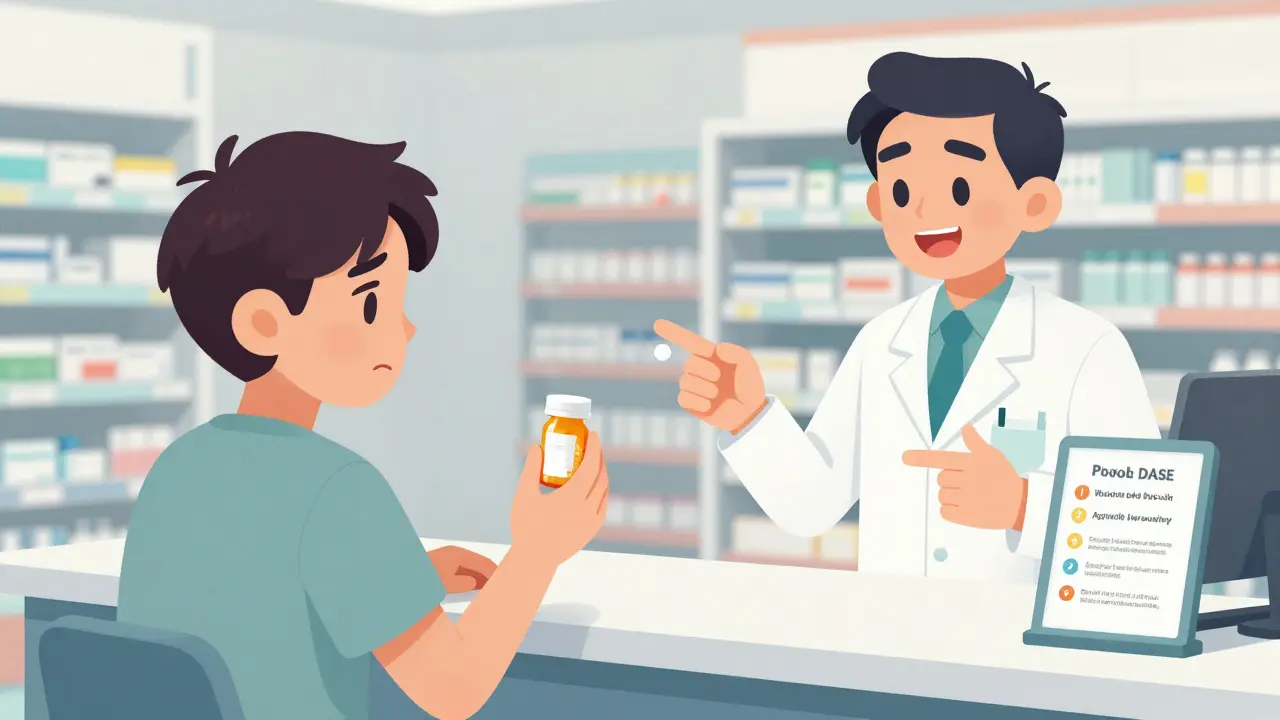
Imagine standing at a pharmacy counter, staring at a pill that looks nothing like the one you took last month. It's a different color, a different shape, but the pharmacist says it's the same medicine. For many Spanish-speaking patients, this moment is where a dangerous gap in communication happens. When you don't have the right words to ask about bioequivalence or cost, it's easy to simply stop taking the medication out of fear. With over 62 million Hispanic people in the U.S., the need for clear, accurate information on generic drugs isn't just a convenience-it's a matter of patient safety.
The core problem is that while generic drugs are chemically identical to brand-name versions, the terminology used to describe them can vary wildly. You might hear "medicamento genérico" in one clinic and something entirely different in another. The goal of using Spanish-language resources on generic medications is to bridge this gap, ensuring that a patient's budget doesn't compromise their health outcomes.
Quick Guide to Top Spanish Medication Resources
Depending on whether you are a patient, a caregiver, or a healthcare provider, different tools will serve you better. Some are designed for quick bedside translation, while others provide deep-dive educational content.
| Resource | Best For | Key Feature | Target Audience |
|---|---|---|---|
| AHRQ "My Medicines List" | Daily tracking | Bilingual tracking sheets | Patients/Caregivers |
| MedlinePlus (Spanish) | Deep research | Bilingual PDF comparisons | General Public |
| Wake AHEC Cards | Quick interactions | Dialogue templates | Pharmacists/Clinicians |
| Spanish Academy Guides | Vocabulary building | Pharmacy-specific terms | Learners/Patients |
Understanding Generic Equivalence in Spanish
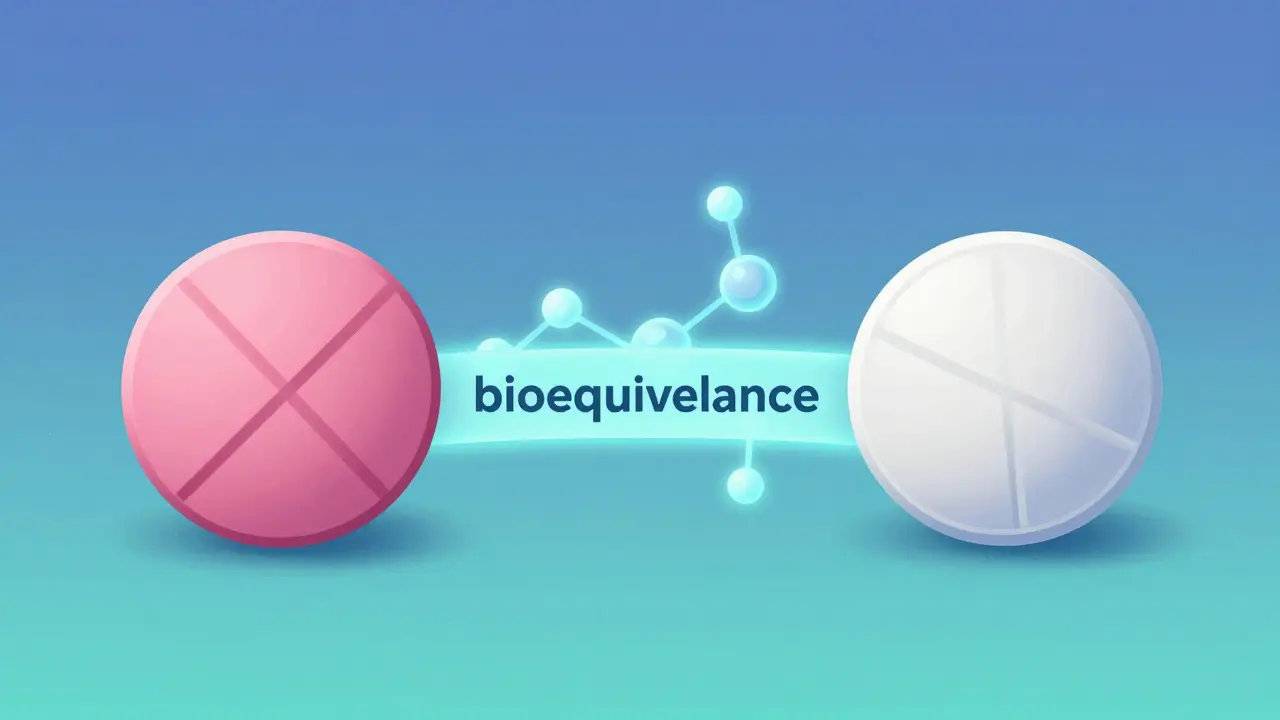
One of the biggest hurdles in patient education is explaining that a generic drug is not a "cheap imitation," but a therapeutic equivalent. In medical terms, this is called bioequivalence. For a patient, this simply means the drug has the same active ingredient, strength, and dosage form as the brand-name drug.
When navigating these resources, look for the term medicamento genérico is a pharmaceutical drug that is chemically identical to a brand-name product but is typically sold at a lower cost . A common point of confusion is the physical appearance of the pill. Because different manufacturers use different fillers or dyes, a generic version of an anticoagulant might be white while the brand name is pink. Resources like the Wake AHEC pharmacy cards help clinicians explain this using phrases like "Esta medicina tiene una apariencia diferente, pero es lo mismo" (This medicine looks different, but it is the same).
Without this specific clarification, patients often experience "generic medication confusion." Data shows that this confusion is one of the top three reasons why Spanish-preferring patients stop taking their meds. If you're managing a loved one's care, using a bilingual list helps you document both the brand name and the generic name to avoid this exact scenario.
Practical Tools for Patients and Caregivers
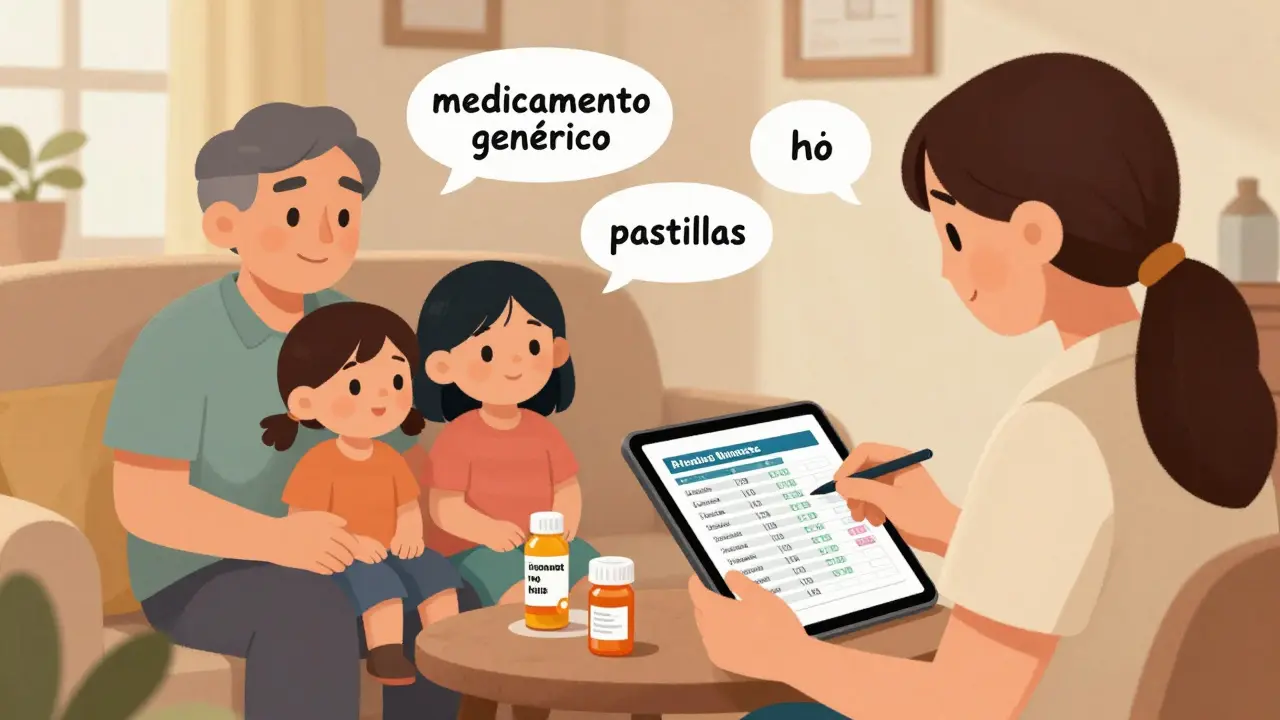
If you are trying to manage medications for a family member, you need tools that are practical and easy to update. The Agency for Healthcare Research and Quality (AHRQ) provides a "My Medicines List" that is specifically designed to be bilingual. It doesn't just list the drug; it asks you to record why the medicine is being taken, the dosage, and the frequency. This prevents the common mistake of confusing a generic drug with a different medication entirely.
For those who prefer digital tools, the "Medicamento Genérico" app launched by the National Institutes of Health is a game-changer. It includes cost calculators and visual identifiers, which are crucial because 63% of Spanish-speaking patients still express concerns about whether generics are as effective as brand names. Seeing a side-by-side image and a price comparison can remove that anxiety.
Another powerhouse is MedlinePlus is a free online health information resource produced by the National Library of Medicine . Their Spanish bilingual PDFs allow users to see the English and Spanish names of drugs side-by-side, which is incredibly helpful when translating a prescription from a doctor's note to a pharmacy request.
The Challenge of Regional Dialects
Here is a truth that many basic translation apps miss: Spanish is not one single language. A resource written for someone from Spain might confuse someone from Mexico or Colombia. This is especially true with pharmaceutical terms.
For example, the term for a basic pain reliever varies. In Spain, you'll likely see "paracetamol," but in Latin America, it's often referred to as "acetaminofén." Even a word as simple as "pastillas" can be tricky; in some regions, it's a general term for pills, while in others, it specifically refers to birth control. This is why "neutral Spanish" is often used by large health systems, though it sometimes lacks the local nuance needed for a patient to feel truly understood.
When using a resource, ask yourself: Was this written for a general audience or a specific region? If you are in a clinical setting, using AI-powered tools-like those being piloted by Epic Systems-can help tailor the explanation to the patient's specific regional background, reducing the risk of medication errors caused by terminology gaps.
Improving Communication at the Pharmacy
Walking into a pharmacy can be intimidating if there's a language barrier. To get the best results, use a specific set of phrases and questions. Instead of just asking for a cheaper drug, use the term "versión genérica." A common and effective phrase is: "¿Tiene la versión genérica de esa medicina? La original es muy cara" (Do you have the generic version of that medicine? The original one is too expensive).
For pharmacists, the focus should be on clarity and pronunciation. Mispronouncing a term like "farmacia" can subtly signal a lack of competence to the patient, which may make them less likely to trust the pharmacist's advice on switching to a generic. Clear, slow communication combined with visual aids-like showing the patient the generic pill next to the brand name-has been shown to reduce confusion by as much as 37%.
Next Steps for Better Medication Management
Whether you are a patient or a provider, the goal is to move from simple translation to actual understanding. Here is a quick checklist to ensure safety when switching to generics:
- Verify the Active Ingredient: Check that the generic name matches the active ingredient of the brand name.
- Confirm the Dosage: Ensure the milligrams (mg) are identical.
- Discuss Appearance: Ask the pharmacist if the color or shape will change.
- Use a Tracking Sheet: Keep a bilingual list of all current medications.
- Ask About Cost: Use specific Spanish terms to inquire about generic savings.
If you encounter a situation where a patient is refusing a generic because it looks different, don't just tell them it's the same. Use a visual aid or a bilingual guide from AHRQ to show them the equivalence. This shift from verbal assurance to documented evidence is what reduces medication errors and improves long-term health outcomes.
Are generic medications in Spanish-speaking countries the same as in the U.S.?
While the active chemical compounds are generally the same worldwide, the brand names and the specific generic names used can vary by country. For instance, a drug might be called one thing in Mexico and another in Spain. Always verify the active ingredient rather than the name of the drug.
Where can I find a free bilingual list to track my medications?
The Agency for Healthcare Research and Quality (AHRQ) offers a free "My Medicines List" available in both English and Spanish. It is designed to help patients track brand and generic names, dosages, and the purpose of each medication.
Why do some Spanish-speaking patients distrust generic medications?
Many patients associate the lower cost of generics with lower quality. Additionally, because generic pills often have a different color or shape than the brand-name version, patients may believe they have been given the wrong medication. This is why visual educational resources are so important.
Does "medicamento genérico" always mean the same thing across Latin America?
Generally, yes, but the terminology surrounding the drug's delivery (like "pastillas" vs "tabletas") can vary. It's always best to use neutral Spanish or region-specific guides when communicating with patients from different countries.
How can I tell if a Spanish resource is reliable?
Look for resources produced by government agencies (like the NIH or AHRQ), established medical libraries (like MedlinePlus), or accredited medical schools. Avoid generic translation apps for medical dosing, as they often miss critical pharmaceutical nuances.