
Prevent Medication Overdose: How to Stay Safe with Prescription Drugs
When you take medication, you trust it to help you—not hurt you. But medication overdose, happens when someone takes too much of a drug, either by accident or mistake, leading to serious harm or death. Also known as drug toxicity, it’s one of the leading causes of preventable hospital visits and deaths, especially with common prescriptions like painkillers, antidepressants, and heart meds. The good news? Most overdoses aren’t random. They’re the result of avoidable errors—like mixing drugs, misunderstanding labels, or ignoring side effects.
One of the biggest risks comes from drug interactions, when two or more medications react in dangerous ways inside your body. For example, combining ADHD stimulants with MAOIs can trigger a deadly spike in blood pressure. Or taking certain antibiotics with warfarin can cause uncontrolled bleeding. Even something as simple as taking too many painkillers with alcohol can overload your liver. These aren’t rare cases—they’re documented in medical records and reported to the FDA every day. Another hidden danger is medication errors, mistakes in how drugs are prescribed, labeled, or taken. Abbreviations like QD and QID have caused people to take four times their intended dose. Expired pills that changed color or texture? They can be just as dangerous as new ones if they’ve broken down into toxic compounds.
Preventing an overdose isn’t about being perfect—it’s about being smart and informed. Know your meds. Read the labels. Ask your pharmacist if a new drug interacts with what you’re already taking. Track your doses. Use a pill organizer if you take multiple pills a day. And if you feel something’s off—dizziness, confusion, rapid heartbeat, nausea that won’t go away—don’t wait. These aren’t just side effects. They could be early signs your body is drowning in medication.
Below, you’ll find real, practical guides from people who’ve been there—whether it’s learning how to spot dangerous changes in expired drugs, understanding why some antidepressants cause nausea but shouldn’t be stopped cold, or how to use an epinephrine auto-injector before it’s too late. These aren’t theoretical tips. They’re the kind of knowledge that saves lives. You don’t need to be a doctor to protect yourself. You just need to know what to look for—and what to ask.
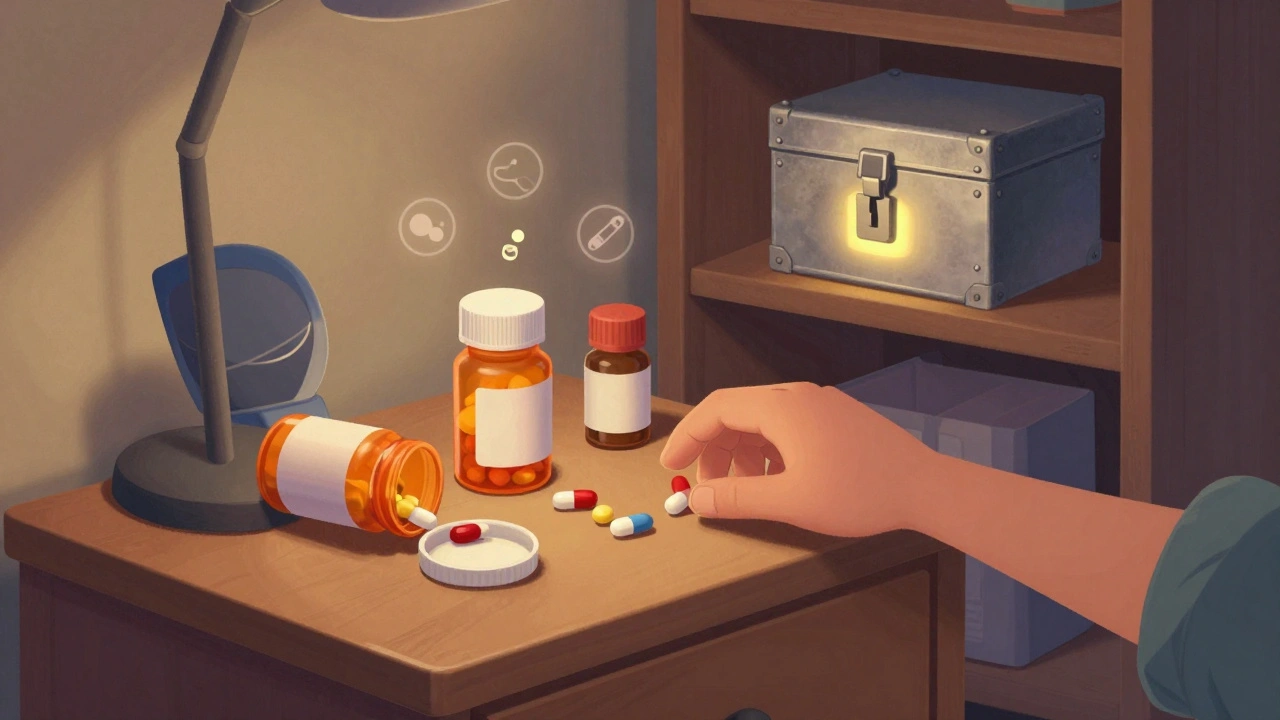
How to Store High-Risk Medications to Reduce Overdose Risk
- by Colin Edward Egan
- on 3 Dec 2025
Learn how to store high-risk medications like opioids and sedatives securely to prevent accidental overdoses in children, teens, and visitors. Simple steps can save lives.