
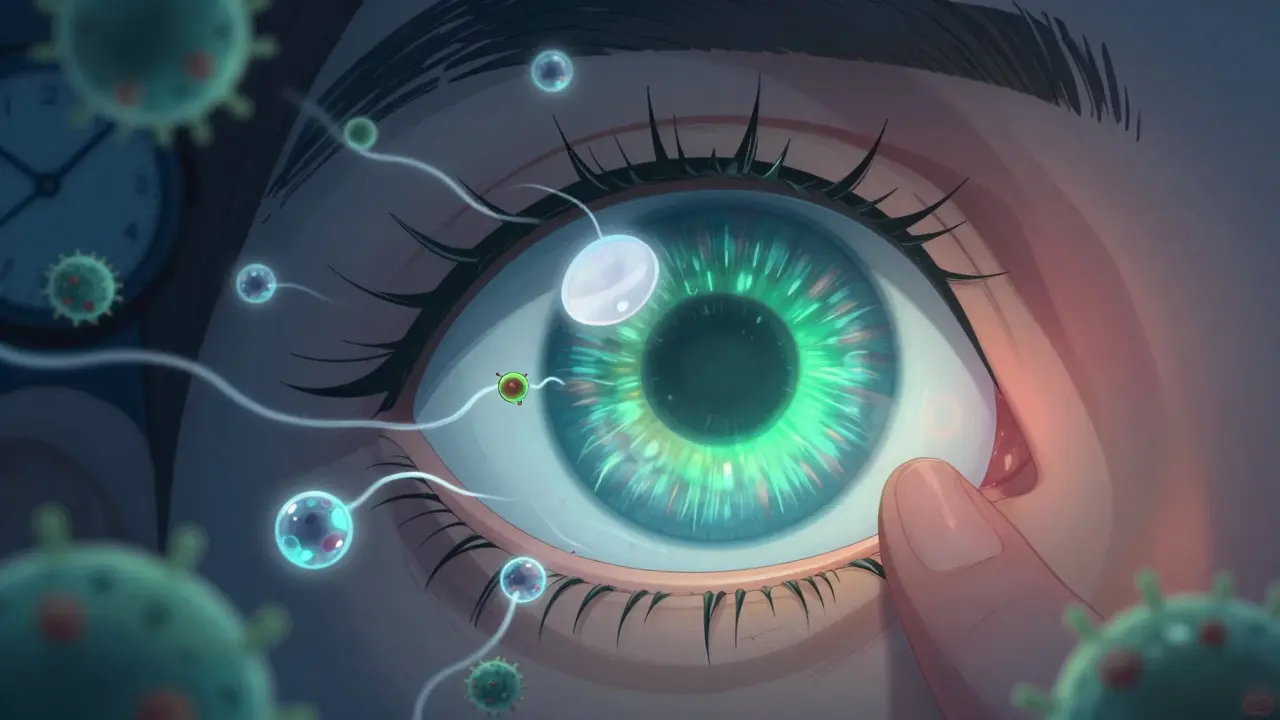
A corneal ulcer isn't just a scratch. It's an open wound on the clear front surface of your eye - and if you wear contact lenses, you're at real risk. This isn't rare. With over 85 million people worldwide using contact lenses, corneal ulcers are one of the most serious eye emergencies tied to lens wear. The good news? Most cases are preventable. The bad news? Waiting even a day to act can cost you vision. If your eye suddenly hurts, looks red, or feels like sand is grinding under your eyelid, don't wait. Don't reach for eye drops you have lying around. Don't try to tough it out. You need professional care now.
Why Contact Lenses Put Your Cornea at Risk
Your cornea doesn't have blood vessels. That means it gets oxygen directly from the air. When you put a contact lens on your eye, especially a soft one worn overnight, you're literally blocking that oxygen supply. This isn't just uncomfortable - it weakens your cornea's natural defenses. Bacteria, fungi, or even tiny amoebas from tap water can get trapped under the lens and start eating away at the tissue. The result? An open sore - a corneal ulcer. The numbers don't lie. If you wear contacts, you're about 10 times more likely to get a corneal ulcer than someone who doesn't. But if you sleep in them? That risk jumps to 100 times higher. That's not a typo. Extended-wear lenses, even ones labeled "safe for overnight use," still create the perfect environment for infection. A scratched lens, dirty hands, or using tap water to rinse your case? Each of those actions adds another layer of danger. It's not just about the lens type. If you have dry eyes, blepharitis (inflamed eyelids), or trouble closing your eyes fully - like with Bell's palsy - your risk goes up. Steroid eye drops, often used for inflammation, can make things worse by suppressing your immune response right where you need it most.What Your Eye Is Trying to Tell You
Corneal ulcers don't sneak up. They scream. Here's what to watch for:- Severe eye pain - not just irritation, but deep, burning, or stabbing pain
- Red, bloodshot eye that doesn't improve with rest
- Blurry or hazy vision - like looking through a foggy window
- Sensitivity to light - even normal indoor lighting feels painful
- Excessive tearing or thick, yellow/green discharge
- A visible white or gray spot on the clear part of your eye
How Doctors Diagnose It
Your eye doctor won't guess. They'll test. First, they'll put a drop of yellow dye called fluorescein in your eye. Under a special blue light, any damaged area glows green - showing exactly where the ulcer is. Then, they'll use a slit lamp, a high-powered microscope with a bright light, to zoom in. This lets them see the depth and shape of the sore. In more serious cases, they'll gently scrape a tiny bit of tissue from the ulcer and send it to a lab. This culture test tells them if it's bacteria, fungus, or something like Acanthamoeba - a hard-to-treat parasite linked to water exposure. Some clinics now use digital imaging to capture photos of the ulcer, helping track its progress and spot changes faster. Vision tests and measurements of your cornea's curve (keratometry) help determine how much damage has been done. This isn't just about diagnosis - it's about deciding how aggressive your treatment needs to be.What Treatment Actually Looks Like
There's no one-size-fits-all fix. Treatment depends on what's causing the ulcer and how deep it is. For most bacterial ulcers - the most common type - doctors start with powerful antibiotic eye drops. Fluoroquinolones like ciprofloxacin or moxifloxacin are the go-to. You'll likely need to apply them every hour or two, day and night, for several days. Even if the pain starts to fade, you keep going. Stopping early lets the infection come back stronger. If it's a virus, like herpes simplex, antiviral drops like acyclovir are used. Fungal ulcers? Those need antifungal drops - and they're harder to treat. In rare cases, oral medications or even hospitalization are needed. If the ulcer is bigger than 2 mm, close to your pupil, or getting worse after 48 hours of treatment, it's considered sight-threatening. That means immediate culture testing and possibly stronger meds. In extreme cases, when the cornea scars badly, a corneal transplant may be the only way to restore vision. Important: Never use steroid eye drops unless your doctor specifically prescribes them. They can calm inflammation - but they also kill your eye's ability to fight infection. Used wrong, they turn a bad ulcer into a disaster.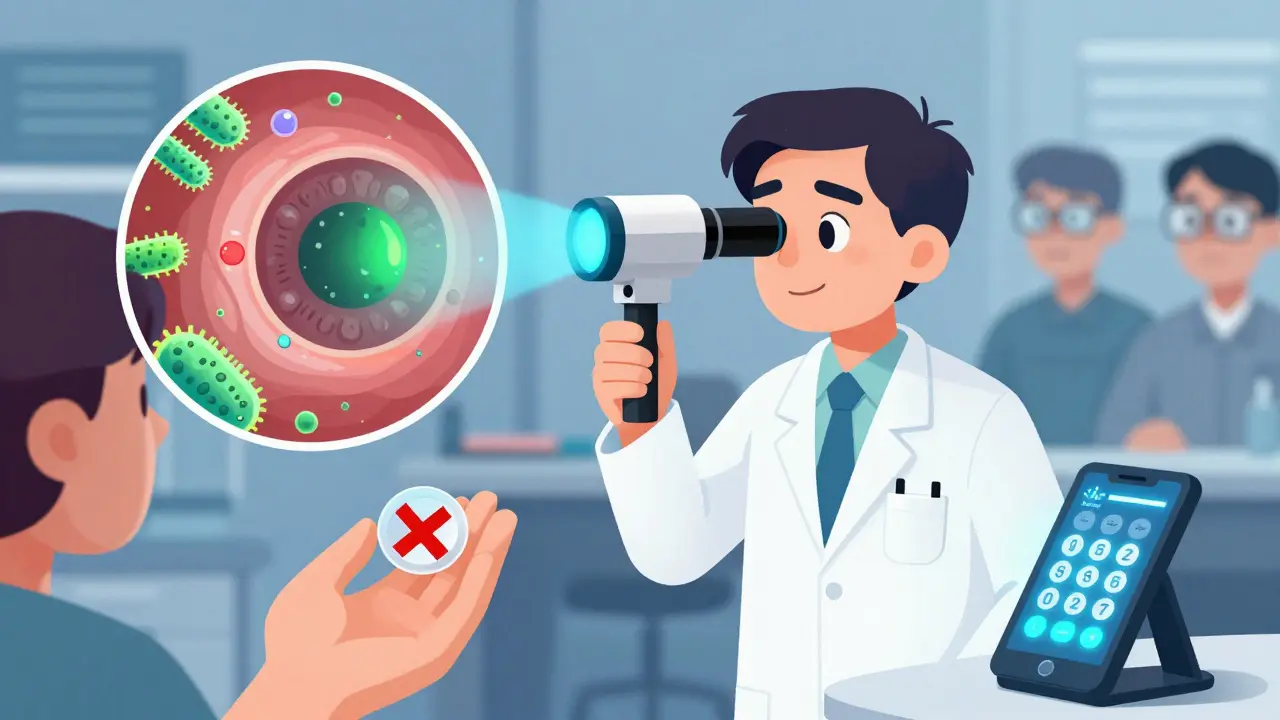
How to Stop This Before It Starts
Prevention isn't about being perfect. It's about being consistent.- Never sleep in your contacts. Even "extended wear" lenses aren't risk-free. This single step cuts your risk by 90%.
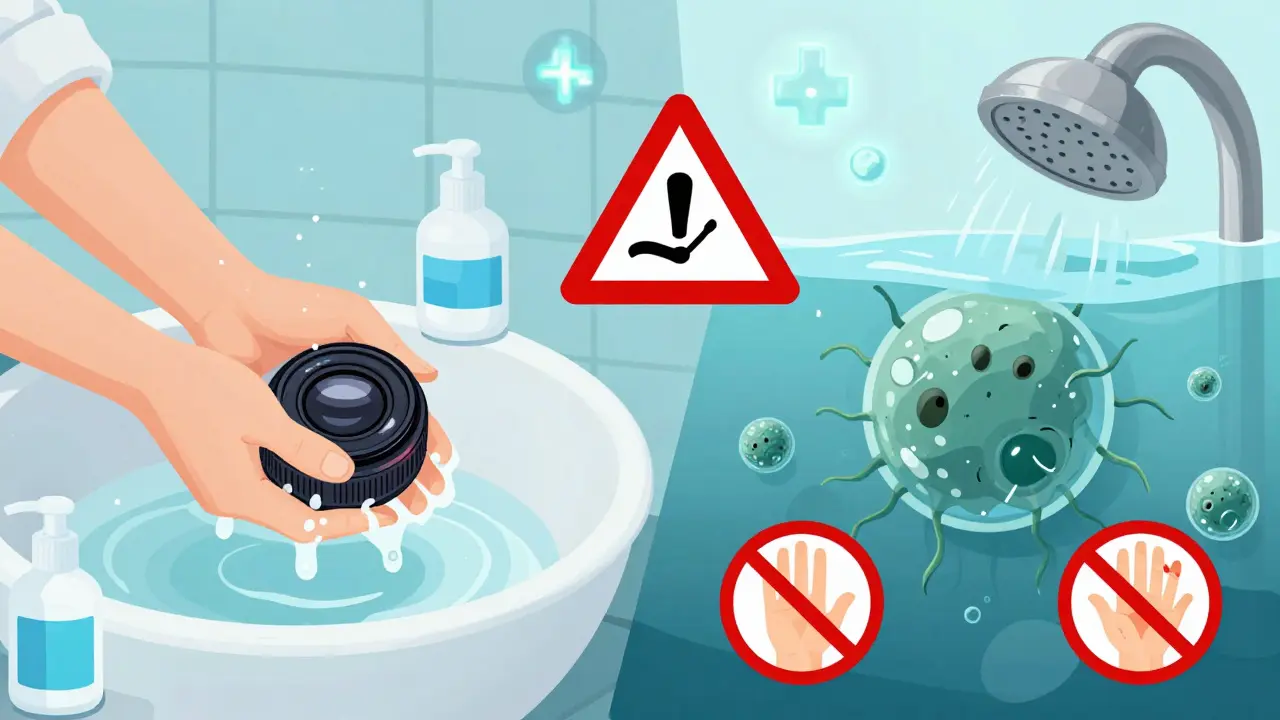
- Wash your hands before touching your lenses. Soap and water. Dry with a clean towel. No exceptions.
- Never use water - not tap, not bottled, not distilled - to rinse lenses or cases. Water carries dangerous microbes. Use only sterile contact lens solution.
- Replace lenses on schedule. Don't stretch a two-week pair to three weeks. Don't reuse daily disposables.
- Replace your case every 3 months. Bacteria build up in the cracks. A clean case doesn't mean a new one - it means a fresh one.
- Take breaks. Give your eyes at least a few hours without lenses each day. Let them breathe.
- Avoid swimming or showering with lenses. If you must, wear tight-fitting goggles.
What to Do Right Now
If you're wearing contacts and feel any of the warning signs:- Remove your lenses immediately.
- Don't put them back in. Don't clean them. Don't try to disinfect them.
- Call your eye doctor or go to an emergency eye clinic today.
- Do not use over-the-counter eye drops unless directed by a professional.
- Do not rub your eye.
Can corneal ulcers cause permanent blindness?
Yes, if left untreated. A corneal ulcer can scar the cornea, which is the eye's main focusing surface. A deep scar can block light from entering the eye properly, leading to permanent vision loss. In the worst cases, the ulcer can cause the cornea to perforate - creating a hole in the eye. That requires emergency surgery and carries a high risk of losing vision entirely. That's why urgent care is non-negotiable.
Are daily disposable contacts safer than monthly ones?
Yes, but only if you follow the rules. Daily disposables reduce the risk because you're not reusing them - so there's no buildup of protein, bacteria, or debris. But if you sleep in them, swim with them, or handle them with dirty hands, you're still at risk. The safety comes from the single-use design, not from assuming they're "risk-free."
Can I use rewetting drops to prevent ulcers?
No. Rewetting drops are designed to relieve dryness - not prevent infection. They don't kill bacteria or replace proper cleaning. Using them as a substitute for lens hygiene is dangerous. If your eyes feel dry, talk to your eye doctor about switching to a better lens material or adding a lubricant that's safe for long-term use.
Why is Acanthamoeba so dangerous?
Acanthamoeba is a tiny amoeba found in tap water, swimming pools, and even soil. It's not killed by standard contact lens solutions. If water gets under your lens - say, from showering or swimming - it can latch onto the cornea and burrow in. It's extremely hard to treat, often requiring months of strong antifungal drops. In many cases, even with treatment, vision is permanently damaged. That's why avoiding water around lenses is critical.
I stopped wearing contacts after getting an ulcer. Can I ever wear them again?
Maybe - but only after your eye has fully healed and your doctor gives you the green light. Many people switch to glasses permanently. If you do return to contacts, your doctor may recommend daily disposables and stricter hygiene rules. Never go back to wearing lenses overnight. You'll likely need to see your eye doctor more often for checkups. Your risk of a second ulcer is higher, so vigilance is key.
Michelle Jackson
March 17, 2026 AT 04:02becca roberts
March 17, 2026 AT 23:56Andrew Muchmore
March 19, 2026 AT 09:46Linda Olsson
March 20, 2026 AT 11:11Ayan Khan
March 21, 2026 AT 17:41Emily Hager
March 21, 2026 AT 17:55Melissa Starks
March 21, 2026 AT 22:38Lauren Volpi
March 23, 2026 AT 01:09Shameer Ahammad
March 24, 2026 AT 10:32Alexander Pitt
March 25, 2026 AT 12:11Manish Singh
March 27, 2026 AT 06:37Nilesh Khedekar
March 28, 2026 AT 16:17jared baker
March 30, 2026 AT 17:14