
Why Storing High-Risk Medications Correctly Saves Lives
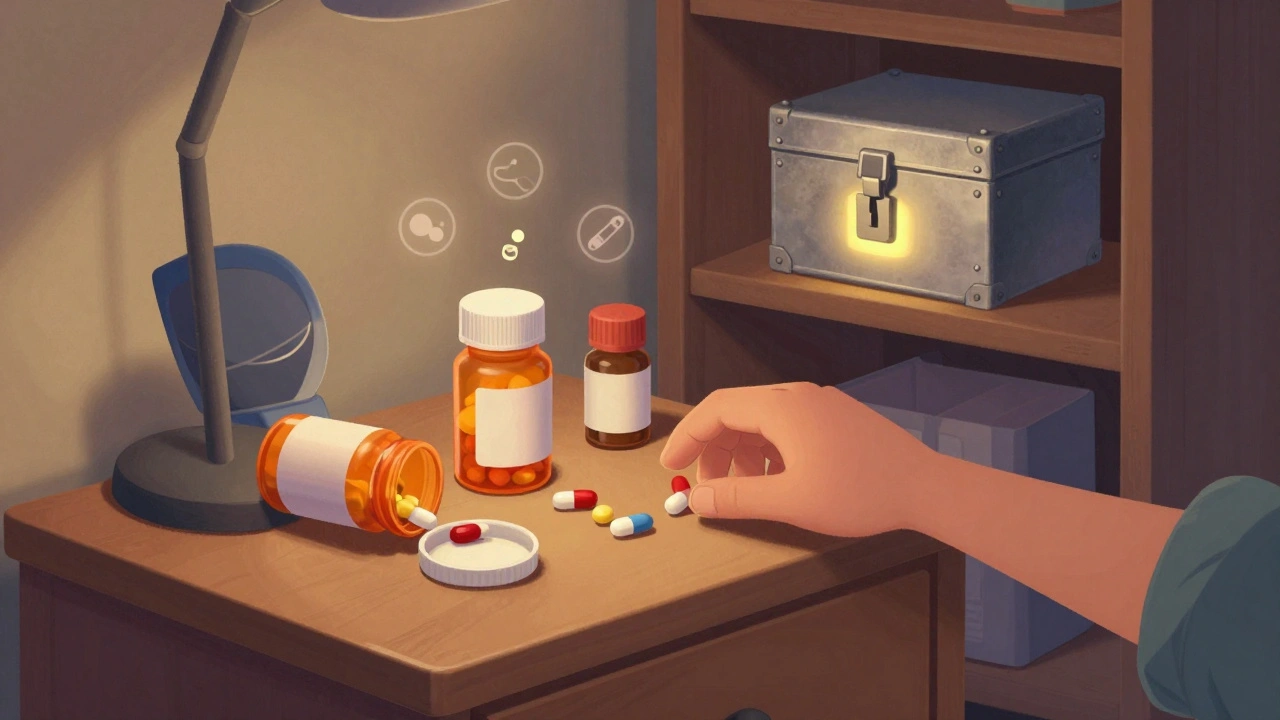
Every year in the U.S., over 90,000 people die from drug overdoses. About 16,000 of those deaths involve prescription opioids - drugs that were meant to help, but ended up hurting because they weren’t stored properly. Most of these tragedies don’t happen to the person who was prescribed the medication. They happen to kids, teens, or even visitors who find pills left out in the open - on a nightstand, in a bathroom cabinet, or tucked behind a cereal box in the kitchen.
The truth is simple: if you have high-risk medications like oxycodone, hydrocodone, fentanyl patches, or benzodiazepines, and you’re not storing them securely, you’re putting everyone in your home at risk. The CDC says 53% of people who misuse prescription opioids get them from friends or family - not dealers. That means the biggest threat isn’t outside your door. It’s inside your medicine cabinet.
What Counts as a High-Risk Medication?
Not all pills need to be locked up. But some do - and you need to know which ones. High-risk medications include:
- Opioid painkillers (oxycodone, hydrocodone, morphine, fentanyl)
- Sedatives and anti-anxiety meds (alprazolam, diazepam, clonazepam)
- Sleep aids (zolpidem)
- Stimulants prescribed for ADHD (adderall, methylphenidate)
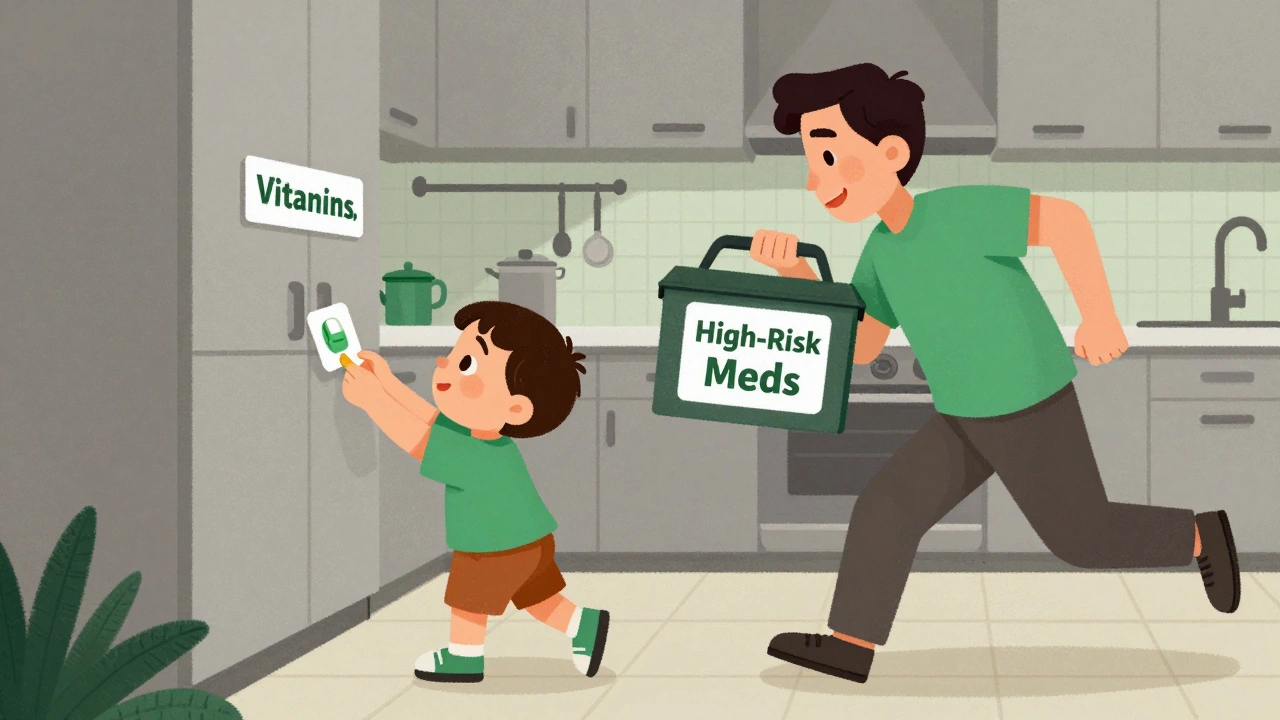
These drugs are dangerous when taken by someone who doesn’t need them. Even one pill can cause breathing to stop, especially in children or people with no tolerance. The FDA requires these medications to come in child-resistant packaging - but that’s just the first step. If the cap is loose, or the bottle is sitting on the counter, it’s not safe.
The Gold Standard: Locked Storage
The most effective way to prevent accidental overdose is to lock your medications away. Not just any lockbox - one that meets ANSI Grade 2 standards. That means it can resist forced entry for at least 10 minutes. Basic plastic lockboxes from the drugstore won’t cut it. Look for metal boxes with a key or combination lock.
Brands like Med-ic Safe and Hero Health offer models designed for home use. Prices range from $15 for a simple combination box to $150 for biometric models that open with a fingerprint. You don’t need the most expensive one. You just need one that works.
Studies show locked storage reduces accidental pediatric ingestions by 87%. That’s not a small number. It means if you have kids or grandchildren visiting, locking up your meds could mean the difference between a routine doctor visit and a trip to the ICU.
Where to Put It - And Where Not To
It doesn’t matter how good your lockbox is if you put it in the wrong place. The CDC recommends storing medications at least 4 feet off the ground. Why? Because most children under 6 can reach up to 36 inches. A nightstand? Too low. A bathroom cabinet? Too easy to open. A kitchen shelf? Too tempting.
The best spot? A high closet shelf, inside a locked bedroom door, or a cabinet in a room kids don’t usually go into. Avoid places with high foot traffic. Don’t store meds next to snacks or vitamins - kids might confuse them. And never leave them in a car. Heat and humidity can break down the medication, and a curious teenager might find them during a ride.
Keep Them in Original Packaging
It’s tempting to dump pills into a pill organizer for convenience. But that’s one of the biggest mistakes people make. When you transfer medication out of its original bottle, you lose the label - and that label has critical info: the patient’s name, the prescribing doctor, dosage instructions, and expiration date.
According to FDA research, 68% of adults remove pills from original containers. But those who keep them in the original bottle with child-resistant caps have 40% fewer accidental ingestions. If you use a pill organizer, keep the original bottle locked up with the pills inside. Use the organizer only for daily doses, and lock it away when not in use.
Track What You Have - And When
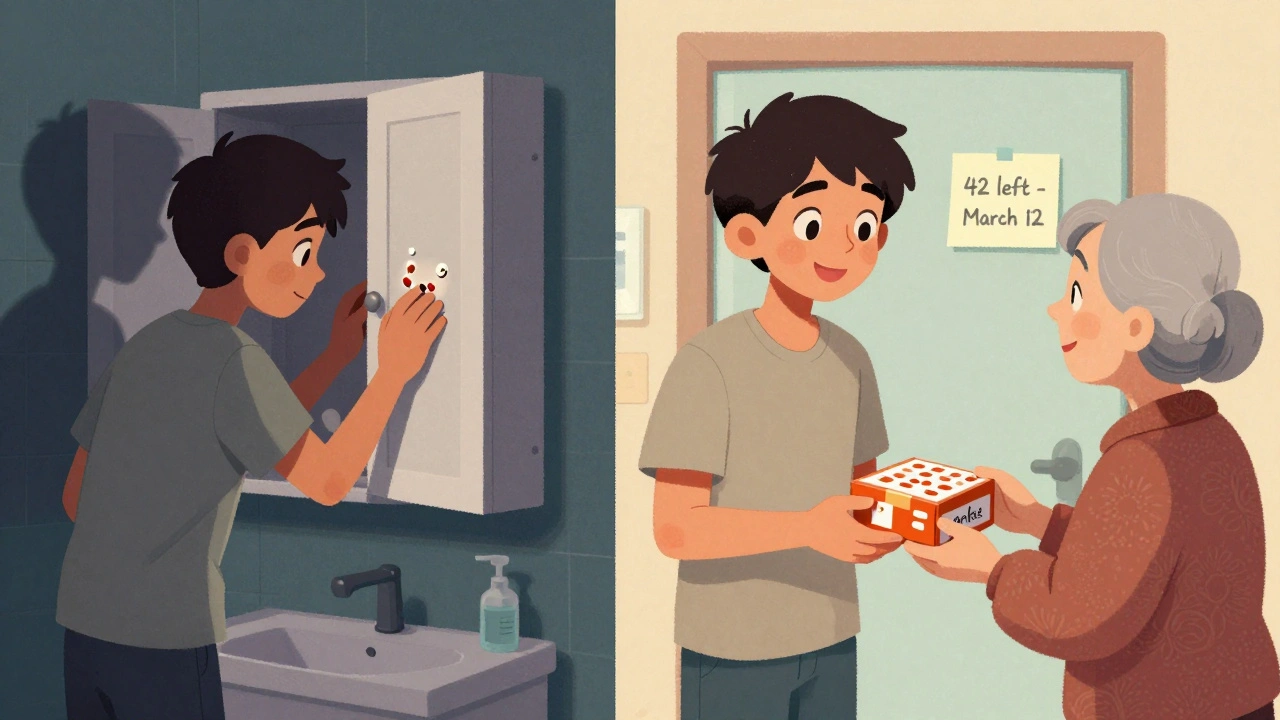
One of the easiest ways to spot if someone’s taking your meds is to count them. Keep a simple log: write down how many pills are left each morning. Example: “42 tablets remaining at 8:00 AM, March 12.”
Connecticut’s health department requires this for patients on high-risk prescriptions. But you don’t need a law to make it smart. Just use a sticky note on your fridge or a note in your phone. If you notice pills disappearing faster than they should, talk to your doctor. It could be a sign of misuse - by you or someone else.
What If You Can’t Open Child-Resistant Caps?
Many older adults or people with arthritis struggle with child-resistant caps. That’s why some lockboxes now come with emergency release codes. The Med-ic Safe Locking Pill Organizer, for example, opens with a 4-digit code - so you can get your meds quickly, but no one else can.
Some pharmacies offer easy-open caps upon request. Just ask your pharmacist. You don’t have to choose between safety and access. There are solutions that work for both.
What About Disposal?
Don’t flush pills down the toilet. Don’t throw them in the trash. That’s how they end up in waterways or get picked up by someone else.
Use a drug take-back program. The DEA runs National Prescription Drug Take Back Day twice a year - next one is October 25, 2025. You can also find permanent drop-off locations at pharmacies, hospitals, or police stations. The DEA lists over 14,600 authorized collection sites across the country.
If you can’t get to a drop-off, mix pills with coffee grounds or cat litter, seal them in a plastic bag, and throw them in the trash. It’s not ideal, but it’s better than leaving them accessible.
Real Stories - What Happens When Storage Fails
A mother in Ohio left her son’s oxycodone in a nightstand drawer. Her 16-year-old found it during a sleepover. He took one pill. He stopped breathing. His friend gave him Narcan - and saved his life.
A grandmother in Washington kept her fentanyl patches on the bathroom counter. Her 3-year-old granddaughter pulled one off and stuck it to her skin. She was rushed to the hospital with dangerously low breathing. She survived - but barely.
These aren’t rare cases. The Washington Poison Center logged 1,247 child exposures to medications in 2022. 89% happened because the drugs were left in plain sight.
Why Most People Don’t Lock Up Their Meds
Only 23% of U.S. households with children use locked storage, even though the CDC recommends it. Why?
- People think, “I don’t have kids - it’s fine.” But visitors, teens, or houseguests might not be so careful.
- Lockboxes cost money - $15 to $150. That’s a barrier for low-income families.
- Doctors rarely mention it. Only 37% of patients get counseling on safe storage when they’re prescribed opioids.
- Some think, “I’m not an addict. I’m just taking my medicine.” But misuse doesn’t always start with addiction. Sometimes, it starts with curiosity.
What You Can Do Today
You don’t need to overhaul your life. Just follow these five steps:
- Inventory: Take out all your medications. Check which ones are high-risk.
- Repackage: Put all high-risk meds back in their original bottles with child-resistant caps.
- Buy a lockbox: Get one that’s sturdy, has a combination or key, and costs under $30. Walgreens, CVS, and Amazon carry them.
- Lock it up: Put it on a high shelf, inside a closet, or behind a locked door. Not the bathroom. Not the nightstand.
- Track it: Write down the number of pills every morning. If something’s missing, call your doctor.
This takes less than an hour. And it could save a life.
When to Ask for Help
If you’re worried someone in your home is misusing medication - or if you’re struggling with your own use - you’re not alone. Call the Poison Help hotline at 1-800-222-1222. They’re available 24/7. They can guide you on what to do next, whether it’s securing your meds, finding treatment, or just getting advice.
Safe storage isn’t about suspicion. It’s about care. It’s about protecting the people you love - even if they don’t realize they’re at risk.
Can I just use a regular lockbox from the hardware store?
Yes, as long as it’s sturdy and can’t be easily pried open. Look for metal boxes with a combination or key lock. Avoid plastic or flimsy containers. The goal is to make it hard for a child or teen to get to the pills in under 10 minutes. ANSI Grade 2 is ideal, but any secure box is better than none.
What if I forget the combination to my lockbox?
Most lockboxes have a backup method - a key, a reset code, or a master override. Check the manual. If you lost it, contact the manufacturer. Some brands offer replacement codes if you register your product. Never write the code on the box itself - that defeats the purpose.
Do I need to lock up all my medications?
No. Only high-risk ones - opioids, sedatives, stimulants, and sleep aids. Things like ibuprofen, allergy pills, or vitamins don’t need to be locked. But if you’re unsure, it’s safer to lock them. Better safe than sorry.
Can I use a smart pill dispenser instead of a lockbox?
Smart dispensers like Hero Health or MedMinder are great for tracking doses and sending alerts, but they’re expensive ($99-$149) and require Wi-Fi and setup. For most people, a simple $20 lockbox is more practical. Use smart devices only if you need help remembering to take your meds - not just to store them.
Is it really necessary if I don’t have kids?
Yes. Teens, houseguests, caregivers, or even visitors might be tempted to try a pill - especially if they’re in pain or stressed. Most overdoses happen because someone thought, “I’ll just try one.” Locking up your meds removes that temptation - and that’s the point.
Abhi Yadav
December 4, 2025 AT 05:29Julia Jakob
December 5, 2025 AT 03:37Nancy M
December 5, 2025 AT 06:07gladys morante
December 6, 2025 AT 23:53Precious Angel
December 8, 2025 AT 06:52Bethany Hosier
December 9, 2025 AT 09:01Krys Freeman
December 11, 2025 AT 05:43Shawna B
December 11, 2025 AT 22:56Jerry Ray
December 13, 2025 AT 11:01