
Genetic Respiratory Disease: Causes, Management, and What You Need to Know
When a lung condition runs in the family, it’s often not just bad luck—it’s genetic respiratory disease, a group of inherited conditions that impair lung function from birth or early childhood. Also known as inherited lung disorder, these diseases aren’t caused by smoking or pollution—they’re written into your DNA. Unlike asthma or COPD, which can develop over time, genetic respiratory diseases show up early, often in infancy or childhood, and don’t go away. They affect how air moves in and out of the lungs, how mucus clears, or how the lungs protect themselves from damage.
Three major types dominate the clinical picture. cystic fibrosis, a disorder that causes thick, sticky mucus to build up in the lungs and digestive system, is the most common. It’s caused by mutations in the CFTR gene and affects about 30,000 people in the U.S. alone. Then there’s primary ciliary dyskinesia, a condition where the tiny hair-like structures in the airways don’t move properly, leading to chronic infections. People with this often have sinus issues from birth and may even have organs on the wrong side of the body. And alpha-1 antitrypsin deficiency, a genetic lack of a protein that protects the lungs from enzyme damage, can cause emphysema in non-smokers as young as their 30s. These aren’t rare outliers—they’re the core of what we see in genetic lung disease.
What ties these together? They all break the body’s natural cleaning system. Healthy lungs use mucus and cilia to trap and sweep out germs and dust. In genetic respiratory disease, that system fails. That’s why infections keep coming back, why breathing gets harder over time, and why standard asthma treatments often don’t help. The real fix isn’t just more inhalers—it’s targeting the root cause, whether that’s gene therapy, specialized enzymes, or daily airway clearance techniques. Some patients need daily chest physiotherapy. Others rely on antibiotics just to stay stable. And for a few, lung transplants become the only option.
The good news? We’re getting better at catching these early. Newborn screening now picks up cystic fibrosis in most states. Genetic testing can confirm alpha-1 antitrypsin deficiency before lung damage starts. And treatments like modulators for CF have turned what was once a childhood death sentence into a manageable chronic condition for many. But knowing your family history matters. If you or a close relative had chronic lung infections as a kid, unexplained liver disease, or bronchiectasis without a clear cause, it’s worth asking about genetic testing.
Below, you’ll find real-world guides on managing symptoms, avoiding dangerous drug interactions, and staying healthy with a genetic lung condition. From how to use airway clearance devices safely to which medications to avoid if you’re on oxygen therapy, these posts are built from patient experiences and clinical evidence—not theory.
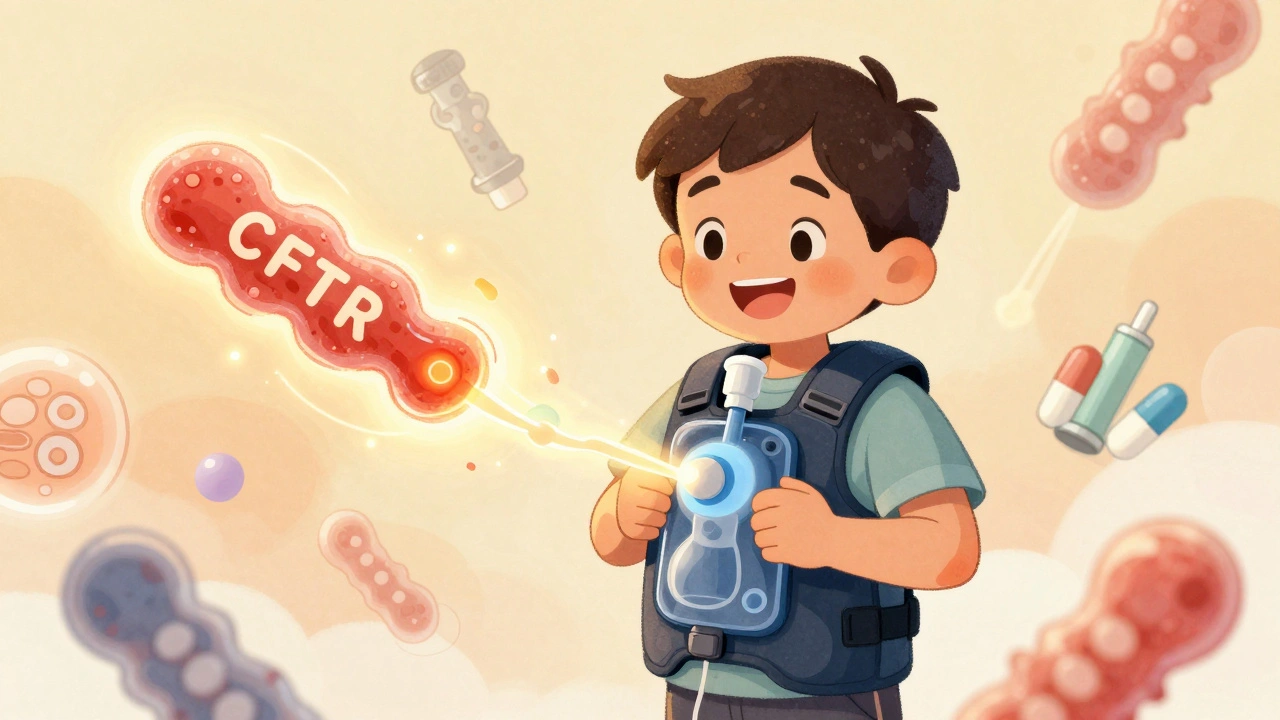
Cystic Fibrosis: Genetic Respiratory Disease and the New Therapies Changing Lives
- by Colin Edward Egan
- on 8 Dec 2025
Cystic fibrosis is a genetic respiratory disease once fatal in childhood. New CFTR modulator therapies have transformed survival rates, with median life expectancy now over 50. But access and cost remain major barriers.