
Drug Patent Expiration: When Generics Hit the Market and How It Affects Your Prescription Costs
When a drug patent expiration, the legal end of a pharmaceutical company's exclusive right to sell a brand-name medication. Also known as patent cliff, it's the moment when other companies can legally make and sell the same drug under its generic name. This isn't just a legal formality—it's when your prescription suddenly becomes a fraction of the price. But the path from patent expiry to affordable pills isn't straight. It's filled with legal battles, strategic delays, and a system designed to balance innovation with access.
Behind every generic drug is a Paragraph IV certification, a legal notice filed by a generic manufacturer challenging the validity of an existing patent before it expires. This is the key tool under the Hatch-Waxman Act, a 1984 U.S. law that created the modern framework for generic drug approval. Also known as Drug Price Competition and Patent Term Restoration Act, it lets generic makers skip costly clinical trials by proving their version is bioequivalent. In return, the first company to file a successful Paragraph IV challenge gets 180 days of exclusive rights to sell the generic—no one else can enter the market during that time. That’s why you sometimes see only one generic version available right after patent expiry, even though dozens could make it.
But not all patents are created equal. Some are for the actual drug molecule—those are hard to challenge. Others are for how it’s packaged, when it’s taken, or even the color of the pill. These are called "secondary patents," and they’re often used to extend market control beyond the original 20-year term. That’s where brand-name drugs, medications sold under a proprietary name by the original developer. Also known as innovator drugs, they rely on these extensions to delay competition. When these tricks are used too often, it keeps prices high and limits access. That’s why the FDA and consumer groups watch these filings closely.
And it’s not just about cost. When a drug’s patent expires, the market shifts. Pharmacists start recommending generics. Insurance plans change their formularies. Doctors switch prescriptions. But here’s the catch: not all generics are the same. Some are made by the original brand company themselves under an authorized generic, a version of the brand drug sold without the brand name, made by the same company, and identical in every way. These can be cheaper than the brand but still cost more than independent generics. And if you’re on a medication like warfarin or a tricyclic antidepressant—where tiny differences in absorption matter—your doctor might still prefer the brand, even after patent expiration.
So when you see your prescription price drop overnight, it’s not magic. It’s a legal race, a regulatory system, and a battle between profit and public health. The system works when generics arrive quickly and reliably. But when companies game the rules, patients pay the price—literally. Below, you’ll find real-world examples of how this plays out: from how antibiotic patents affect INR levels, to why some drugs still cost hundreds even after patent expiry, to how patients use the FDA’s label database to track exactly what changed when generics hit the shelves.
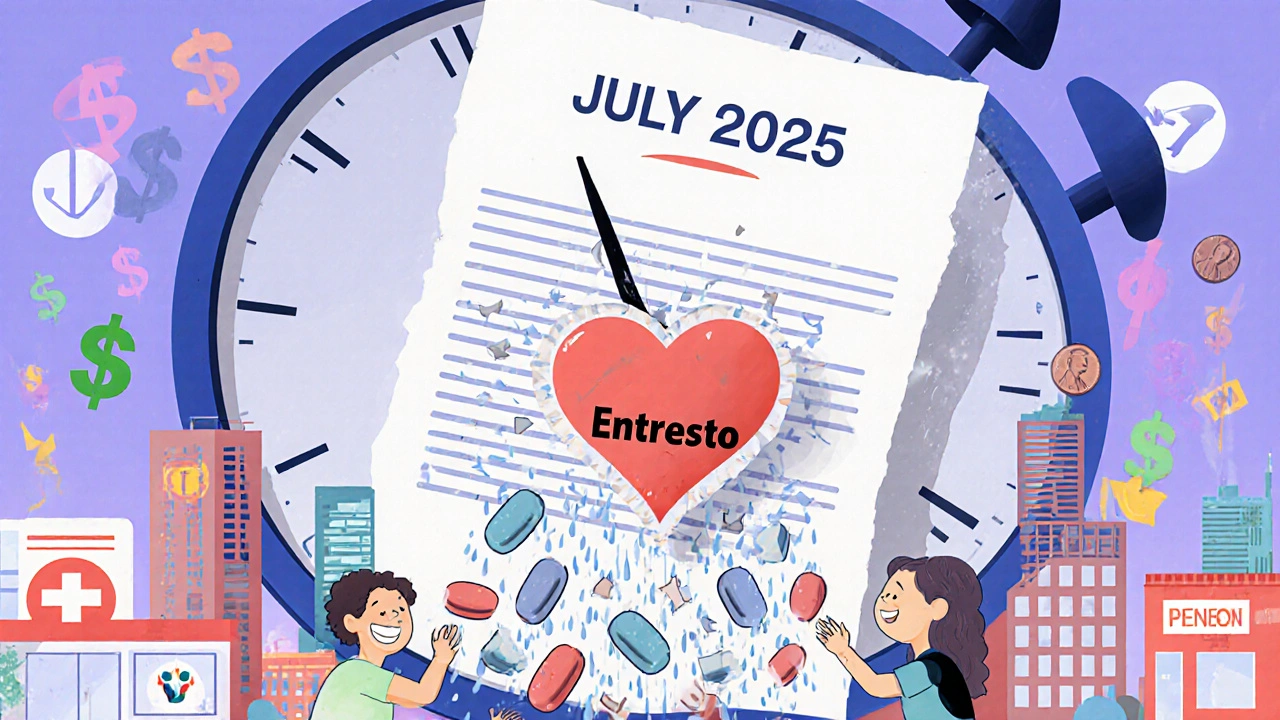
Blockbuster Patent Expirations 2025 and Beyond: What’s Coming and How It Changes Your Medications
- by Colin Edward Egan
- on 27 Nov 2025
Blockbuster drug patents expire in 2025-2030, slashing prices for top medications like Entresto, Eliquis, and Keytruda. Learn which drugs are affected, when generics arrive, and how to save thousands on prescriptions.