

Mirtazapine Weight Gain Estimator
How much weight might you gain?
This tool estimates potential weight gain based on clinical data from studies. Your actual experience may vary.
Key Insights from the Data
- 25% of people Gain 7% or more
- Average gain ~8 lbs over 6 weeks
- 7.5 mg vs 30 mg 42% less gain at lower dose
When you start taking mirtazapine for depression, you’re hoping to feel better - not heavier. But for a lot of people, weight gain is one of the most noticeable, and sometimes unsettling, side effects. It’s not rare. It’s not unusual. In fact, mirtazapine is one of the antidepressants most likely to cause weight gain, and that’s backed by solid clinical data.
Why Does Mirtazapine Make You Gain Weight?
Mirtazapine doesn’t make you gain weight because you’re eating more out of laziness or lack of willpower. It’s biology. The drug works by blocking certain receptors in your brain - especially histamine H1 receptors - and that’s what triggers a cascade of changes in your appetite and metabolism.
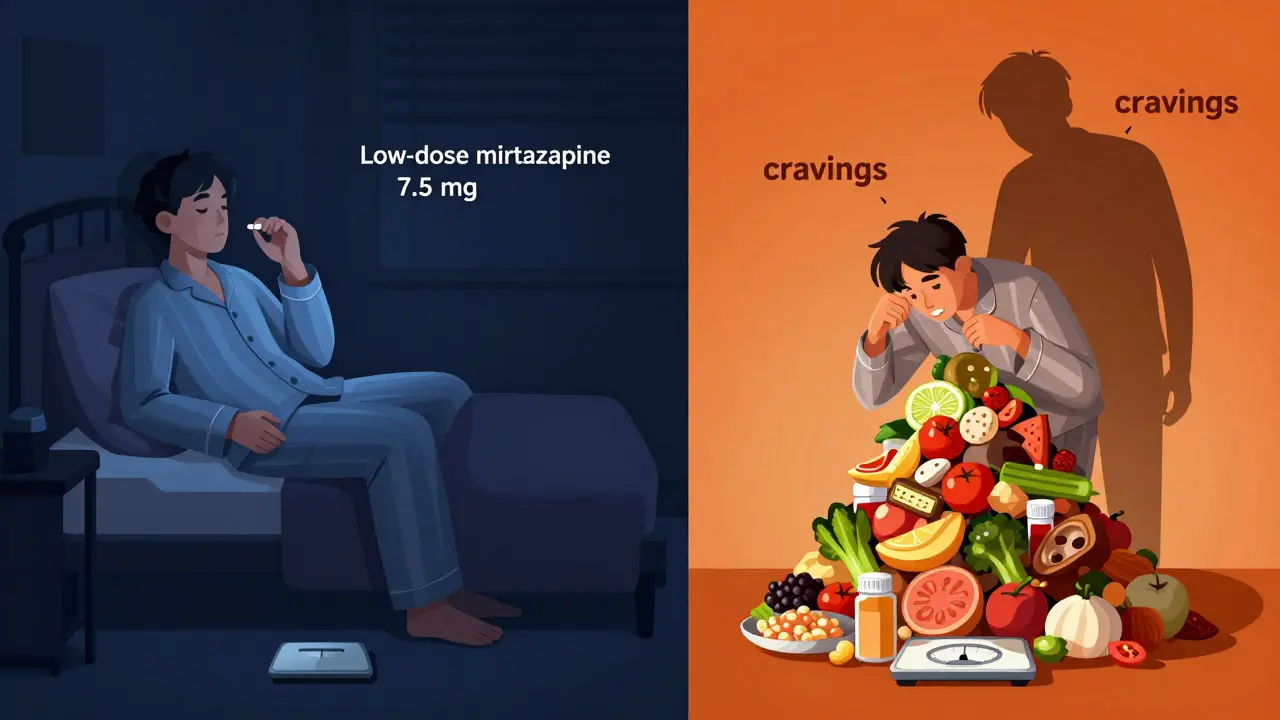
One of the clearest effects? A sudden, strong craving for sweets and carbs. A 2019 study showed that even when people were eating the same number of calories and staying active, those on mirtazapine reported significantly higher hunger levels and a specific urge for sugary foods. This wasn’t just a feeling - their bodies started processing more carbohydrates and storing more fat, even before the scale moved.
It’s not just about appetite. Mirtazapine also slows down how many calories your body burns at rest. Studies using indirect calorimetry show a small but real drop in resting energy expenditure - about 5 to 7%. That means your body becomes slightly more efficient at storing energy, not burning it. Combine that with increased cravings, and it’s easy to see why weight gain happens so quickly for some people.
How Much Weight Do People Actually Gain?
The numbers vary, but here’s what the data shows:
- About 25% of people gain 7% or more of their body weight - that’s 11 pounds for someone who weighs 150 pounds.
- On average, people gain around 8 pounds over six weeks at standard doses (15-45 mg/day).
- But here’s the twist: UPMC’s analysis of 12 clinical trials found that most weight gain happens in the first 8-12 weeks, and then it often plateaus. After that, many people stabilize.
Not everyone gains weight. Some gain just a few pounds. Others gain 30, 50, even 100 pounds. That variability is real, and it’s not just about dose or diet. Genetics, baseline metabolism, and how your body reacts to histamine blockade all play a role.
Interestingly, lower doses - like 7.5 mg - cause about 42% less weight gain than 30 mg. That’s not just a small difference. It’s clinically meaningful. So if you’re worried about weight, starting low and going slow isn’t just smart - it’s evidence-based.
Mirtazapine vs. Other Antidepressants
If weight gain is a major concern, mirtazapine isn’t your best bet compared to other options. A major 2020 study comparing 21 antidepressants ranked mirtazapine second for weight gain - right behind paroxetine.
Here’s how it stacks up:
| Medication | Average Weight Change (12 weeks) | Compared to Mirtazapine |
|---|---|---|
| Mirtazapine | +8.0 lbs (3.6 kg) | Reference |
| Paroxetine | +8.5 lbs (3.9 kg) | Similar or slightly higher |
| Citalopram | +4.0 lbs (1.8 kg) | Significantly less |
| Venlafaxine | +1.1 lbs (0.5 kg) | Significantly less |
| Bupropion | -1.3 lbs (-0.6 kg) | Causes weight loss |
| Sertraline | +1.5 lbs (0.7 kg) | Significantly less |
If your main goal is to treat depression without gaining weight, bupropion is the clear winner. But if you’re also struggling with insomnia or loss of appetite - common in severe depression - mirtazapine’s sedative and appetite-stimulating effects can be a lifesaver.
It’s Not All Bad: When Weight Gain Helps
For some people, gaining weight on mirtazapine isn’t a side effect - it’s the point.
In cancer patients with cachexia (severe muscle and weight loss), mirtazapine is used off-label to boost food intake. A 2024 trial found that patients on 30 mg daily ate nearly 20 grams more protein and 15 grams more fat each day. That’s not just about calories - it’s about survival. For someone too weak to eat, gaining 10-12 pounds in a few months can mean the difference between finishing chemotherapy and having to stop.
Same goes for people with eating disorders or severe depression with anorexia. In these cases, the weight gain isn’t a problem - it’s the treatment.
That’s why doctors don’t just avoid mirtazapine because of weight gain. They weigh the risks against the benefits. For one person, it’s a nightmare. For another, it’s the only thing that brings back their appetite - and their life.
What Can You Do About It?
If you’re on mirtazapine and worried about weight gain, you’re not stuck. There are real, research-backed strategies to manage it.
- Start low. Begin at 7.5 mg instead of 15 or 30 mg. You still get the antidepressant effect, but with far less weight gain.
- Take it at night. Mirtazapine causes drowsiness, so it’s usually taken before bed. That timing helps - because you’re less likely to snack during the day if you’re sleepy.
- Focus on protein. A 2022 pilot study showed that eating 1.2-1.6 grams of protein per kilogram of body weight daily cut weight gain by 63%. Protein keeps you full longer and helps preserve muscle mass.
- Track your weight monthly. The American Psychiatric Association recommends checking weight, BMI, and waist size before starting and then every month for the first three months. Early detection means you can adjust before it becomes a big problem.
- Don’t stop cold turkey. If you’re considering quitting because of weight gain, talk to your doctor first. Stopping abruptly can cause withdrawal symptoms like nausea, anxiety, and sleep problems.
There’s also new research on combining mirtazapine with low-dose naltrexone - a drug used for addiction and obesity - to block the brain’s reward response to sugary foods. Early results show 54% less weight gain without reducing the antidepressant effect. It’s not available yet, but it’s a promising path forward.

Long-Term Risks: More Than Just the Scale
Weight gain isn’t the only concern. Mirtazapine can also affect your blood sugar and fats. Even without noticeable weight gain, studies show it raises fasting triglycerides and lowers HDL (the “good” cholesterol). That’s a red flag for heart disease risk.
One 2023 study found that after just seven days on mirtazapine, people showed a 4.4 mg/dL rise in triglycerides - and a worse triglyceride-to-HDL ratio - even when their weight didn’t change. That means the drug is directly affecting your metabolism, not just your appetite.
That’s why doctors in Europe now require quarterly blood tests for anyone on mirtazapine for more than 12 weeks. In the U.S., it’s not mandatory, but it should be. If you’re on this medication long-term, ask for a lipid panel and fasting glucose test at least once a year.
Final Thoughts: It’s About Balance
Mirtazapine isn’t good or bad. It’s a tool. And like any tool, it works best when used for the right job.
If you’re severely depressed, can’t sleep, and have lost your appetite - it might be exactly what you need. If you’re already overweight, have diabetes, or are worried about your heart health, it might not be the best first choice.
There’s no one-size-fits-all answer. But knowing the facts - how much weight you might gain, why it happens, and what you can do about it - puts you in control. Don’t let fear stop you from getting help. But don’t ignore the risks either. Talk to your doctor. Track your progress. Adjust as needed. Your mental health matters. So does your physical health. You don’t have to choose one over the other.
Does mirtazapine always cause weight gain?
No. While about 25% of people gain 7% or more of their body weight, many others gain only a few pounds, and some gain none at all. Individual responses vary based on genetics, metabolism, dose, and lifestyle. Lower doses (like 7.5 mg) are much less likely to cause significant weight gain than higher doses.
Can I lose weight while taking mirtazapine?
Yes, but it’s harder. Because mirtazapine increases appetite and slows metabolism, you’ll need to be more intentional about your diet and activity. Focus on high-protein foods, avoid sugary snacks, and keep regular physical activity. Some people do lose weight by strictly managing calories, but it requires more effort than usual.
Is 15 mg of mirtazapine likely to cause weight gain?
At 15 mg, weight gain is possible but less common than at higher doses. Studies show that 7.5 mg causes about 42% less weight gain than 30 mg, and 15 mg falls in between. Many people on 15 mg gain only 2-5 pounds over several months. Monitoring your weight monthly is still recommended.
Does switching to another antidepressant help with weight gain?
Yes, if weight gain is a major issue. Bupropion is the most effective antidepressant for avoiding or even causing weight loss. Sertraline and escitalopram also tend to cause minimal weight gain. But switching meds can affect your depression symptoms and sleep. Always work with your doctor to transition safely.
How long does mirtazapine-related weight gain last?
Most weight gain happens in the first 8 to 12 weeks. After that, many people stabilize. Some continue to gain slowly, but dramatic increases after six months are rare. If you’ve been on it for over a year and your weight hasn’t changed, you’re likely past the peak. Maintaining your weight now depends more on diet and activity than the medication itself.
Should I avoid mirtazapine if I’m trying to lose weight?
If weight loss is your top priority and you don’t have severe insomnia or appetite loss, it’s better to choose an alternative like bupropion or sertraline. But if your depression is so severe that you’re not eating or sleeping, mirtazapine might be worth the trade-off. Your mental health is the foundation - you can manage weight later. Don’t delay treatment because of fear of weight gain.
Next steps: If you’re on mirtazapine, schedule a weight and metabolic check with your doctor. Ask for a lipid panel and fasting glucose test. If you’re not yet on it but considering it, ask your doctor about starting at 7.5 mg and whether bupropion or another option might be better for your goals. You have more control than you think.
Ryan Pagan
January 29, 2026 AT 17:40Mirtazapine’s weight gain thing is wild - it’s like your brain turns into a sugar-seeking missile. I’ve seen patients go from lean to chubby in 8 weeks, but here’s the kicker: it’s not laziness. It’s pharmacology. Protein intake is your secret weapon - 1.5g per kg of body weight cuts the gain by over half. Also, take it at night. No midnight snack raids if you’re passed out by 10 PM.
DHARMAN CHELLANI
January 30, 2026 AT 16:26lol u think this is bad? try taking zyprexa. mirtazapine is like a yoga retreat compared to that. also ur doctor probs just wanna keep u docile. wake up.
Robin Keith
February 1, 2026 AT 00:07It’s not merely a pharmacological phenomenon - no, no, it’s a metaphysical recalibration of the self’s relationship to nourishment, to desire, to the very architecture of craving - the histamine blockade doesn’t just stimulate appetite, it unravels the ego’s illusion of control over the body’s primal hungers… and yes, I’ve read the 2019 study… and the 2024 trial… and the lipid panel data… and I still feel… hollow.
Kristie Horst
February 2, 2026 AT 12:37How delightfully ironic that the drug designed to help someone eat again becomes the very thing that makes them hate their reflection. For some, weight gain is survival. For others, it’s a slow betrayal. There’s no moral here - only context. And yet, we still shame the scale, don’t we?
Andy Steenberge
February 3, 2026 AT 17:01For anyone considering mirtazapine: start at 7.5 mg. Seriously. The difference between 7.5 and 30 mg isn’t just statistical - it’s life-altering. I’ve had patients on 7.5 mg get the sleep and mood benefits with barely a pound gained. And yes, bupropion is better for weight, but if you’re too depressed to shower, mirtazapine might be the only thing that gets you out of bed. Prioritize function over the scale - then adjust.
Paul Adler
February 4, 2026 AT 15:15Interesting how the same mechanism that helps cancer patients survive is the same one that makes someone with mild depression feel like they’ve gained 30 pounds. Medicine is never black and white - it’s always a trade-off. I appreciate how this post doesn’t vilify the drug, just lays out the facts. That’s rare.
Keith Oliver
February 6, 2026 AT 10:44Bro, if you’re gaining weight on mirtazapine, you’re just not trying hard enough. Hit the gym, stop eating carbs, and don’t be a baby. I lost 20 lbs on sertraline while working 80-hour weeks. You can too. Stop blaming the pill.
Ryan Pagan
February 7, 2026 AT 03:41Keith - you’re missing the point. This isn’t about willpower. It’s biology. The drug literally rewires your hunger signals and slows metabolism. Telling someone to ‘just exercise more’ when their body is in survival mode? That’s not helpful. That’s cruel. And honestly? You’re the reason people don’t talk to doctors.