
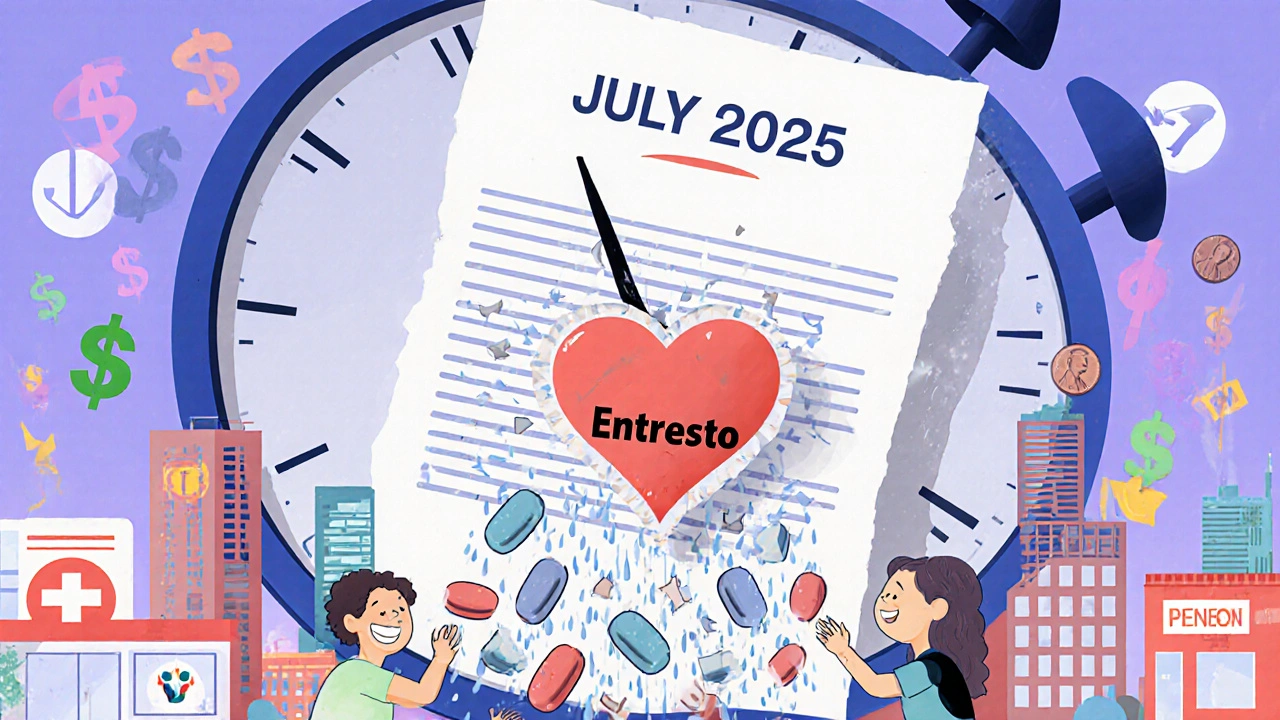
By mid-2025, the cost of some of the most expensive prescription drugs in the U.S. will drop by as much as 85%. This isn’t a rumor. It’s happening. Blockbuster patent expirations are about to flood the market with cheap generics and biosimilars - and the impact will be felt by patients, pharmacies, insurers, and hospitals alike.
What Exactly Is the Patent Cliff?
The term patent cliff refers to the moment when a drug’s legal protection ends, and other companies can legally make and sell identical or similar versions. For decades, pharmaceutical companies held exclusive rights to sell their drugs at high prices - sometimes over $1,000 a month - while they recouped R&D costs and made profits. Once the patent expires, generic manufacturers can step in. They don’t need to repeat expensive clinical trials. They just need to prove their version works the same way. That’s it. And suddenly, the same pill costs $20 instead of $300. The 2025-2030 period is the biggest wave of expirations in modern history. Around $187 billion in annual global sales are at risk. That’s more than the entire annual GDP of countries like Croatia or Sri Lanka. And it’s not spread out - it’s concentrated. Dozens of top-selling drugs are losing protection within just five years.Drugs Set to Lose Protection in 2025-2030
Here’s what’s coming, year by year, with the biggest names first:- July 2025: Entresto (sacubitril/valsartan) - Novartis’ $7.8 billion heart failure drug. The core patent expires. Generics will hit shelves by August.
- November 2026: Eliquis (apixaban) - Bristol Myers Squibb and Pfizer’s $13.2 billion blood thinner. A key crystalline form patent ends. At least 12 generic makers are ready.
- 2027: Ibrance (palbociclib) - Pfizer’s $5.1 billion breast cancer drug. Patent expires in the U.S. and EU.
- 2028: Keytruda (pembrolizumab) - Merck’s $29.3 billion cancer immunotherapy. This is the single biggest patent expiration ever. No small-molecule alternative exists. Biosimilars will take years to catch up.
- 2029: Trulicity (dulaglutide) - Eli Lilly’s $8.4 billion diabetes drug. First GLP-1 drug to face generic competition.
- 2030: Humira (adalimumab) - AbbVie’s $21 billion autoimmune drug. Though its U.S. patent expired in 2023, biosimilars are still ramping up. Full market shift won’t happen until 2030.
These aren’t obscure drugs. They’re the ones doctors prescribe daily. Entresto for heart failure. Eliquis to prevent strokes. Keytruda for lung, melanoma, and kidney cancers. Millions of people rely on them. And soon, they’ll be able to get them for a fraction of the price.
Why This Matters for Patients
If you’re taking one of these drugs right now, your out-of-pocket costs could drop from $150-$300 a month to $20-$40. That’s not speculation. It’s already happened with Humira biosimilars, where patients saw 70-80% price drops within six months of generic entry. A California cardiologist reported on a physician forum that her heart failure patients are already asking if they can switch to the generic version of Entresto when it arrives. Many are paying $200 a month out of pocket - a burden that’s forced some to skip doses. A $40 generic changes everything. But it’s not just about price. It’s about access. For patients on Medicare Part D, the new cap on out-of-pocket spending ($2,000/year starting in 2025) will hit harder if they’re still paying brand prices. Switching to generics could cut their annual drug costs by $3,000 or more. And for the uninsured? It could mean the difference between starting treatment and not starting at all.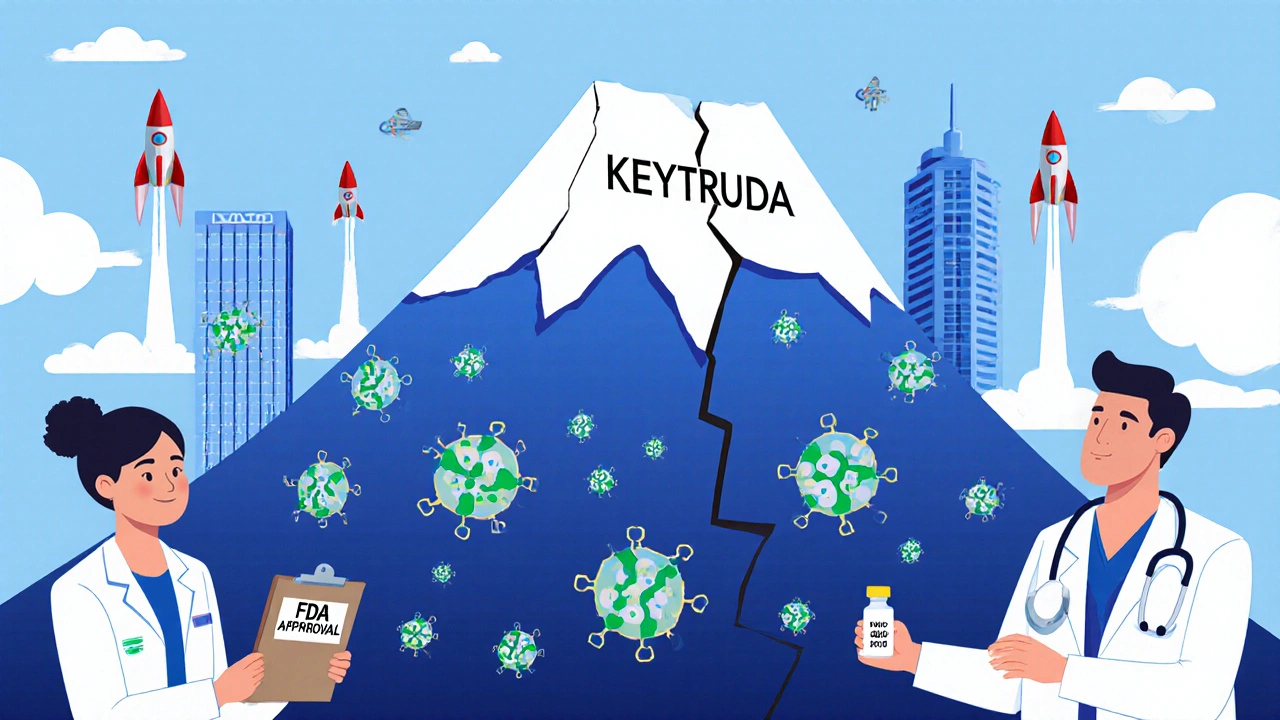
Why It’s Not Simple - The Biosimilar Hurdle
Not all expirations are equal. Small-molecule drugs like Eliquis and Entresto are chemically simple. Generic versions are easy to make and get approved. The FDA can approve them in 6-12 months after patent expiry. But biologics like Keytruda and Trulicity are different. They’re made from living cells - like protein-based drugs. You can’t just copy them. You have to make a biosimilar, which is like a very close cousin, not an identical twin. The FDA requires more testing. It takes 18-24 months to get approval. And even after approval, doctors and patients may be hesitant. Why? Because cancer treatment isn’t like taking a pill for high blood pressure. One small difference in how a drug behaves could affect survival. That’s why, even after biosimilars hit the market, only 30-40% of patients switch in the first year. It takes 3-5 years for biosimilars to reach 75% market share. Keytruda’s 2028 expiration will be the biggest test of this. Merck has spent years defending its patents. They’ve filed over 130 patents around Keytruda - covering delivery methods, dosing schedules, even combinations with other drugs. That’s called a patent thicket. It’s designed to delay competition. But even with that, the FDA has already received over 30 biosimilar applications.Who’s Ready for This?
Generic drugmakers are already moving fast. Teva, Mylan, and Sandoz have dozens of products in development. Teva alone is preparing for 37 of the upcoming expirations. Pharmacies and hospitals are preparing too. According to a survey by the American Society of Health-System Pharmacists, 87% of hospital pharmacy directors are already changing their formularies - the lists of approved drugs - to include generics before they even hit the market. Some hospitals are already switching stable patients to generics early, just to avoid a rush later. Pharmacy benefit managers (PBMs) - the middlemen between insurers and pharmacies - are negotiating 50-60% discounts with generic makers ahead of time. One pharmacy technician posted on a Facebook group: “We’re seeing multiple manufacturers ramping up production. But I’m worried about shortages like we saw with Humira.” That’s a real concern. When Humira’s first biosimilars launched, there were supply chain delays. Some patients waited weeks. That’s why experts are urging manufacturers to build extra capacity now.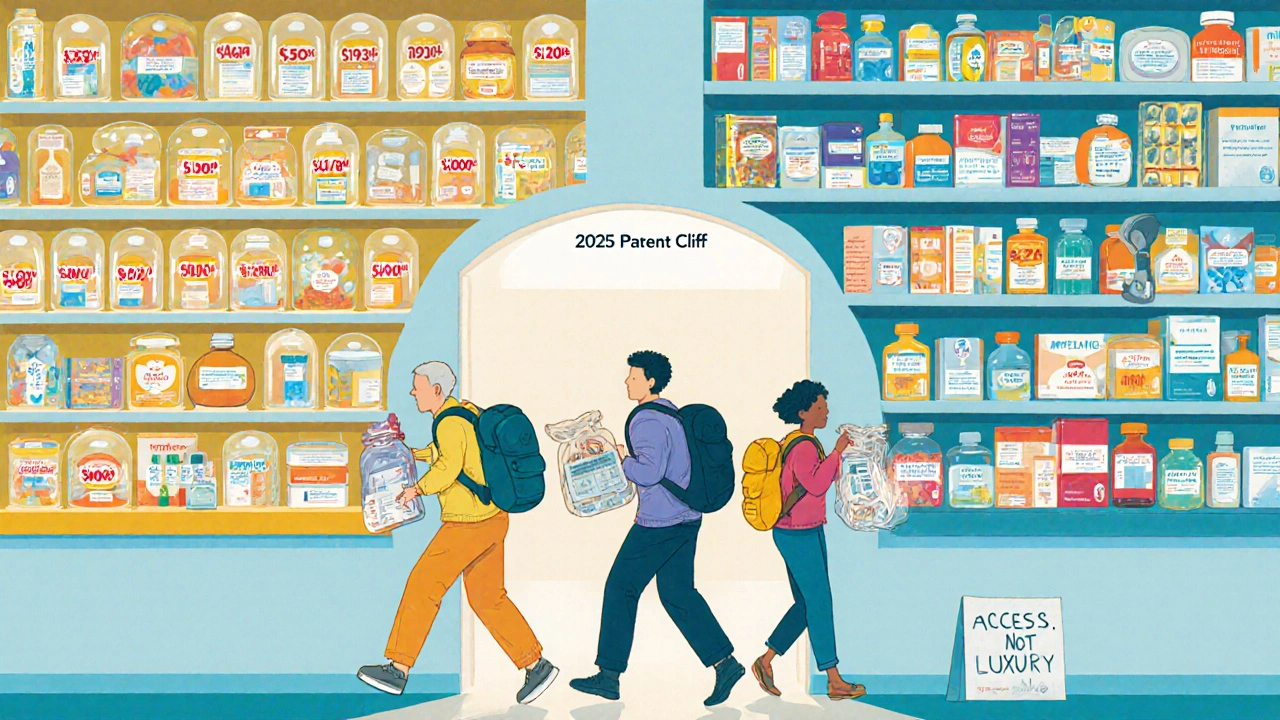
What This Means for Big Pharma
Merck stands to lose up to $31 billion in revenue from patent expirations by 2030. That’s nearly half their current annual sales. So what are they doing? They’re investing $12 billion in next-generation cancer drugs - things like personalized vaccines and gene therapies. Bristol Myers Squibb bought Karuna Therapeutics for $4.1 billion to move into neuroscience, ahead of Eliquis’ 2026 expiration. AbbVie, after Humira, is betting on blood cancer drugs. This isn’t just about replacing lost revenue. It’s about survival. Analysts predict the top 10 drug companies could shrink to 6 or 7 by 2035 as some fail to adapt. But there’s a flip side: innovation. The money saved from generic drugs - an estimated $312 billion over the next decade - will go back into the healthcare system. That’s money that could fund new treatments, lower insurance premiums, or reduce government spending on Medicare.How to Prepare: What You Can Do Now
If you’re on a drug that’s about to lose patent protection:- Ask your doctor: Is there a generic or biosimilar coming? When? Will it be right for you?
- Check with your pharmacy: Are they already ordering generics? Can you switch early?
- Review your insurance: Will your plan cover the generic at a lower tier? Some plans require prior authorization for biosimilars.
- Don’t wait: If you’re paying $300 a month for Entresto or Eliquis, waiting until July 2025 could cost you $1,800 more than necessary.
Pharmacists are legally allowed to substitute generics for brand drugs in most states - but not always for complex drugs like Entresto. Some states still require the doctor to specifically write “dispense as written.” Call your state’s pharmacy board to find out your rights.
What’s Next After 2030?
The 2025-2030 wave is the biggest, but it’s not the last. By 2035, another 40+ blockbuster drugs will be nearing expiration - including new diabetes, Alzheimer’s, and autoimmune drugs. The pattern is clear: every 10-15 years, the industry hits a cliff. The difference this time? The stakes are higher. The drugs are more complex. The patients are more numerous. The question isn’t whether this will happen. It already is. The real question is: Are you ready?What drugs are losing patent protection in 2025?
The biggest drug losing patent protection in 2025 is Entresto (sacubitril/valsartan), a heart failure medication from Novartis with $7.8 billion in global sales. Its core combination patent expires in July 2025, allowing generic versions to enter the U.S. market. Other drugs like Ibrance and certain versions of Humira biosimilars will also see expanded availability in 2025, but Entresto is the highest-value single product expiring that year.
Will generic drugs be as effective as brand-name ones?
Yes. The FDA requires generic drugs to be identical in active ingredient, strength, dosage form, and route of administration. They must also perform the same way in the body. For small-molecule drugs like Entresto and Eliquis, generics are exact copies. For biologics like Keytruda, biosimilars are highly similar - not identical - but must show no clinically meaningful differences in safety or effectiveness. Over 90% of generic drugs in the U.S. are used successfully every day.
How soon after patent expiration will generics be available?
For small-molecule drugs, generics usually appear within 6-12 months after patent expiration. The FDA received over 127 applications targeting 2025 expirations, meaning many will be ready by August 2025. For biologics like Keytruda, it takes longer - typically 18-24 months - because biosimilars require more complex testing and approval. Some companies may delay entry to negotiate with insurers, but most will launch within a year.
Why are drug prices so high before generics arrive?
Drugmakers use patents to legally block competition, allowing them to set high prices without pressure. They often extend protection by filing additional patents on delivery methods, dosing schedules, or formulations - a practice called “evergreening.” In the U.S., there’s no government price control, so companies can charge what the market will bear. Once generics arrive, prices typically drop 80-90% within a year.
Will my insurance cover the generic version?
Almost always. Insurance plans and Medicare Part D prioritize generics because they’re cheaper. You’ll likely pay less out of pocket - sometimes as little as $5-$15 per month. Some plans may even require you to switch to the generic to get coverage. Check your plan’s formulary or call your insurer before your next refill.
What if I can’t afford the brand drug now?
Many manufacturers offer patient assistance programs - even for brand-name drugs. You can also check nonprofit organizations like NeedyMeds or the Patient Access Network Foundation. But don’t wait. If your drug is expiring in 2025 or 2026, ask your doctor about switching to a similar, cheaper alternative now. For example, some heart failure patients on Entresto can temporarily switch to separate generic valsartan and sacubitril if available - though this requires careful monitoring.
Hannah Magera
November 28, 2025 AT 19:58I’ve been on Entresto for two years and pay $220 a month out of pocket. If this generic hits in August and costs $40, I’m gonna cry. Not from sadness. From relief. My dog hasn’t been this happy since I started walking him again.
Austin Simko
November 29, 2025 AT 00:48Big Pharma paid off Congress. This is a controlled demolition. Wait till you see the shortages.
doug schlenker
November 30, 2025 AT 09:54I get why people are nervous about biosimilars for cancer drugs. I lost my mom to lung cancer and she was on Keytruda. But I also saw how the cost broke our family. I’m not saying switch blindly - talk to your oncologist. But if a biosimilar saves someone’s life and costs $50 a month instead of $1,200… that’s not just smart. It’s moral.
Olivia Gracelynn Starsmith
December 2, 2025 AT 00:10For those asking about switching early - if your doctor hasn’t mentioned it yet, ask. Many hospitals are already prepping formularies. Some pharmacies are offering free consultations. Don’t assume you have to wait. Your insurance will thank you. Your wallet will thank you more.
Skye Hamilton
December 2, 2025 AT 03:02generic? more like genericus interruptus. they’ll make it taste like burnt plastic and charge you extra for the ‘premium’ version. next thing you know, your $20 pill comes with a subscription to a wellness app and a mandatory blood test every week. this is how they get you. they always get you.
Maria Romina Aguilar
December 2, 2025 AT 11:39It’s interesting… to consider… the implications… of… biosimilar… adoption… rates… in… rural… communities… where… pharmacy… access… is… already… limited… and… trust… in… pharmaceutical… companies… is… low… and… insurance… paperwork… is… a… nightmare… and… doctors… are… overworked… and… patients… just… want… to… feel… safe…
Brandon Trevino
December 2, 2025 AT 23:15Let’s be precise. The $187B in global sales at risk represents 14% of total pharma revenue. The real disruption is not price erosion-it’s the collapse of R&D ROI models. Merck’s $12B investment in next-gen oncology is a desperate pivot. Their pipeline is thin. Their share price is down 18% YTD. This isn’t a cliff. It’s a controlled implosion. And the only winners will be institutional investors who shorted Humira in 2022.
Denise Wiley
December 4, 2025 AT 12:44Y’all. I just got off the phone with my pharmacist. She said they’re already stocking generic Entresto in the back. They’re letting people who’ve been on it for over a year switch early if they want. No doctor’s note needed in my state. I’m crying. Not because I’m sad. Because I finally feel like the system might be working for me for once. Thank you to whoever wrote this post. You just changed my life.