

Starting vortioxetine (brand name Trintellix) for depression can feel like walking into a storm you didn’t see coming. You’re hoping for relief from low mood, fatigue, and brain fog - but instead, the first few days bring waves of nausea, sometimes vomiting, and a feeling that you can’t keep anything down. It’s not just in your head. About vortioxetine causes nausea in nearly 1 in 3 people during the first week, making it the most common reason people quit the drug before it even has a chance to work.
Here’s the truth: this nausea isn’t a sign you’re doing something wrong. It’s a normal, temporary reaction tied to how the drug works. Vortioxetine boosts serotonin - not just in your brain, but also in your gut. That surge triggers receptors in your stomach and intestines, which send signals to your brain that say, “Something’s off, let’s empty this out.” The result? Nausea, sometimes vomiting, and a lot of anxiety about whether you should keep taking it.
Why Does Vortioxetine Cause Nausea?
Unlike older antidepressants that just block serotonin reuptake, vortioxetine does more. It’s a serotonin modulator and stimulator - meaning it doesn’t just increase serotonin levels, it also tweaks how different serotonin receptors respond. It blocks 5-HT3 receptors (which normally make you feel sick), but in the early days, the sudden flood of serotonin overwhelms those protective mechanisms. The gut gets hit first, and that’s why nausea shows up before any mood improvement.
It’s dose-dependent. At 5 mg a day, about 15% of people feel nauseous. At 10 mg, it jumps to 26%. At 20 mg - the highest dose - nearly 30% of people report nausea. Compare that to 8% on placebo. That’s not random. That’s pharmacology. And while the 5-HT3 blockade should help, the initial serotonin spike is too strong for the body to adjust immediately.
When Does the Nausea Start - and When Does It End?
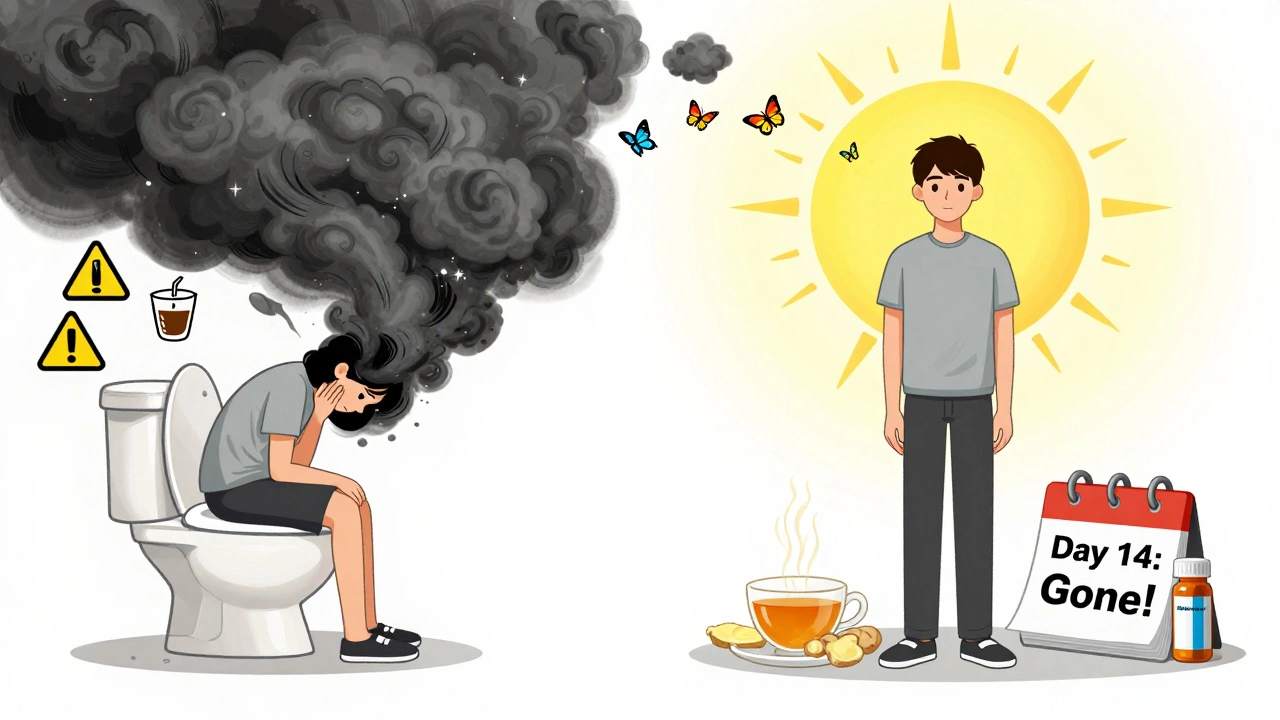
If you start vortioxetine and feel queasy within 24 to 72 hours, you’re not alone. Most people notice it within the first three days. The worst of it usually peaks around day 5. But here’s the good news: for most, it fades. Clinical studies show that 74% of people who experience nausea see it fully resolve within two weeks. By day 14, many say they barely remember it was an issue.
But not everyone. About 6% of people stop taking vortioxetine because the nausea doesn’t go away. That’s why the first two weeks are critical. If you can push through, your chances of long-term success jump dramatically. Real-world data shows that people who make it past the nausea phase have a 68% persistence rate at one year - higher than many SSRIs.
How to Reduce Nausea From Day One
You don’t have to suffer through the first week. There are proven, practical steps that cut nausea by nearly half.
- Start low: 5 mg for the first week. The FDA-approved prescribing guidelines say you can start at 10 mg, but doctors who’ve seen this play out over and over recommend starting at 5 mg. One study showed this simple change reduces nausea-related dropouts by 40%. Take it for 7 days, then increase to 10 mg. Only go to 20 mg if you still have symptoms after four weeks.
- Take it with food. This isn’t just a suggestion - it’s a game-changer. A Cleveland Clinic study found that 63% of people had less nausea when they took vortioxetine with a full meal. Fats and fiber slow absorption, giving your body time to adjust. Avoid greasy or spicy meals, though. Stick with plain toast, oatmeal, or a banana.
- Try ginger. Ginger isn’t just for pregnant women. Taking 1 gram of ginger daily - in capsule form, tea, or even chewable candies - reduces nausea severity by 44% on standard pain scales. It’s safe, cheap, and works faster than most OTC meds.
- Use peppermint oil. Inhaling peppermint aroma for 10 minutes when nausea hits can cut episodes by over 3 per week. Keep a small bottle in your bag. Sniff it when you feel the wave coming.
- Avoid alcohol and caffeine. Both irritate the stomach and make serotonin spikes feel worse. Skip them for the first two weeks.
What If Nausea Doesn’t Go Away?
If you’ve been on 10 mg for 14 days and you’re still throwing up or can’t eat, don’t just tough it out. Talk to your doctor. There are safe, effective options.
First-line: dimenhydrinate (Dramamine). Take 25-50 mg as needed, up to three times a day. It’s OTC, works in 30 minutes, and is effective in 78% of cases. Don’t use it long-term - it can cause drowsiness - but for short-term relief, it’s perfect.
Second-line: ondansetron (Zofran). This is a prescription anti-nausea drug used for chemo patients. At 4 mg twice daily, it’s 89% effective against vortioxetine-induced nausea. It doesn’t cause drowsiness and isn’t addictive. Many psychiatrists now prescribe it for the first 7-10 days as a bridge.
Third-line: prochlorperazine (Compazine). Only if everything else fails. It’s stronger but can cause dizziness and muscle stiffness. Reserve it for severe, unrelenting cases.
One big warning: don’t take vortioxetine with fluoxetine or other strong CYP2D6 inhibitors. These drugs slow down how your body breaks down vortioxetine, making its levels spike by over 200%. That doubles your nausea risk. If you’ve been on fluoxetine, you need a washout period of at least 5 weeks before starting vortioxetine.
How Vortioxetine Compares to Other Antidepressants
Is vortioxetine worse than other antidepressants when it comes to nausea? Not really - but it’s different.
Compared to sertraline (Zoloft), nausea rates are almost identical: 23% vs 25%. But sertraline causes more sexual side effects and insomnia. Vortioxetine wins there.
Compared to duloxetine (Cymbalta), vortioxetine has fewer overall side effect dropouts - 7.2% vs 12.3%. But both cause nausea. The difference? Duloxetine also causes sweating and dizziness, which many find harder to tolerate.
And then there’s vilazodone (Viibryd), a newer drug designed to be gentler on the stomach. It causes nausea in only 5.2% of people - lower than vortioxetine’s 8.4% discontinuation rate. But vilazodone doesn’t have the same cognitive benefits. If brain fog, slow thinking, or trouble concentrating are big parts of your depression, vortioxetine is still the better choice.

Who Should Avoid Vortioxetine?
If you have irritable bowel syndrome (IBS), ulcerative colitis, or chronic nausea from other causes, vortioxetine might not be right for you. Post-marketing data shows nausea rates jump to 41% in people with pre-existing GI issues. That’s too high a risk.
Also, if you’re under 24, you’re at higher risk for suicidal thoughts - that’s the FDA’s boxed warning for all antidepressants. But nausea isn’t worse in teens. In fact, adolescents report nausea at 38% - higher than adults - so extra caution is needed.
Women report nausea 1.7 times more often than men. We don’t fully know why, but hormonal differences in gut sensitivity may play a role. If you’re a woman and you’ve had nausea with other antidepressants, prepare for a rougher start.
Real Stories: What People Actually Experience
On Reddit, users share raw, unfiltered experiences. One person wrote: “Started Trintellix 10mg. Vomited twice. Couldn’t eat. My psychiatrist said, ‘Go back to 5mg, take it with peanut butter toast, and chew ginger candy.’ By day 10, I felt like myself again. The depression didn’t come back.”
Another said: “I took it on an empty stomach. Threw up for a week. Quit. My doctor didn’t warn me. I wish I’d known about ginger.”
On GoodRx, the most common positive review says: “Nausea went away after 12 days. My brain finally felt clear. I’m not crying every morning anymore.”
The negative ones? “Nausea never stopped. I switched to escitalopram. No more stomach issues.”
These stories aren’t outliers. They’re the pattern.
What’s Next for Vortioxetine?
Lundbeck is already working on a solution. In 2023, they submitted a new extended-release version of vortioxetine to the FDA. In trials, it cut nausea from 28% down to 17% - without losing effectiveness. It’s not on the market yet, but it’s coming.
Meanwhile, doctors are starting to use genetic testing. If you’re a slow metabolizer of CYP2D6 (about 7% of the population), you’re more likely to get sick on standard doses. Testing can tell you whether to start at 5 mg or even 2.5 mg.
The bottom line? Vortioxetine isn’t for everyone. But for people with depression that includes brain fog, memory issues, or trouble focusing - it’s one of the few drugs that actually helps. The nausea is real. But it’s temporary. And with the right strategy, you can get through it.
If you’re considering vortioxetine, ask your doctor: “Can we start at 5 mg? Can I use ginger or ondansetron for the first week? Can we check my CYP2D6 status?” That’s how you set yourself up to succeed - not just survive.
How long does nausea from vortioxetine usually last?
For most people, nausea from vortioxetine lasts between 9 and 16 days. It usually starts within the first 3 days, peaks around day 5, and begins to fade by day 10. About 74% of users report it’s gone by two weeks. If it lasts longer than 3 weeks, talk to your doctor - it’s not typical, and there are options.
Can I take ginger with vortioxetine?
Yes, ginger is safe and effective. Taking 1 gram per day - whether as capsules, tea, or chewable candies - reduces nausea severity by 44% according to clinical studies. It doesn’t interfere with vortioxetine’s effectiveness. Many psychiatrists recommend it as a first-line, non-drug option.
Is it better to take vortioxetine in the morning or at night?
Take it in the morning with breakfast. Vortioxetine can cause insomnia in some people, so nighttime dosing might disrupt sleep. Taking it with food also reduces nausea. A full, balanced breakfast helps slow absorption and gives your body time to adjust before your day gets busy.
Does vortioxetine cause weight gain?
Unlike many antidepressants, vortioxetine is not linked to significant weight gain. In clinical trials, less than 2% of users gained more than 7% of their body weight. Some people even lose a little weight early on due to nausea. Long-term, weight stays stable - which is one reason it’s preferred over drugs like paroxetine or mirtazapine.
When will I start feeling better emotionally?
Mood improvements usually begin between weeks 3 and 6. But cognitive benefits - clearer thinking, faster focus, better memory - often show up earlier, sometimes by week 2. That’s why vortioxetine is unique: you might feel mentally sharper before your sadness lifts. Don’t give up if you’re still nauseous at week 2 - the emotional shift is likely coming.
Can I drink alcohol while taking vortioxetine?
Avoid alcohol, especially in the first 4 weeks. Alcohol irritates your stomach and increases the risk of nausea. It can also worsen depression and interfere with sleep - both of which vortioxetine is meant to fix. After you’ve stabilized, occasional light drinking may be okay, but always check with your doctor first.
Saurabh Tiwari
December 3, 2025 AT 12:43Michael Campbell
December 5, 2025 AT 07:46Victoria Graci
December 5, 2025 AT 08:32Saravanan Sathyanandha
December 6, 2025 AT 04:17alaa ismail
December 7, 2025 AT 17:52ruiqing Jane
December 9, 2025 AT 12:47Fern Marder
December 10, 2025 AT 00:39Carolyn Woodard
December 10, 2025 AT 23:56Allan maniero
December 11, 2025 AT 07:32