
Warfarin Bleeding Risk: What You Need to Know About Side Effects and Safety
When you take warfarin, a blood thinner used to prevent dangerous clots in people with atrial fibrillation, artificial heart valves, or deep vein thrombosis. Also known as Coumadin, it saves lives—but only if used carefully. The biggest danger isn’t the clot you’re trying to prevent—it’s the bleeding you might not see coming. Warfarin bleeding risk is real, and it’s not rare. Every year, thousands of people on warfarin end up in the ER because of unexpected bruising, nosebleeds, or worse—internal bleeding. The good news? Most of these events are preventable.
What makes warfarin tricky is how sensitive it is. Your INR, a lab test that measures how long your blood takes to clot needs to stay in a narrow range. Too low, and clots form. Too high, and you bleed. That range changes depending on why you’re on warfarin. A patient with a mechanical heart valve might need an INR of 2.5 to 3.5, while someone with a blood clot might only need 2.0 to 3.0. But your INR doesn’t stay stable. It dips when you eat more leafy greens, spikes when you start a new antibiotic, or goes wild if you drink alcohol regularly. Even something as simple as switching from one brand of vitamin K supplements to another can throw your numbers off.
Drug interactions are another silent threat. antibiotics, especially those like metronidazole or sulfamethoxazole, can boost warfarin’s effect dangerously. So can some antifungals, like fluconazole, and even common pain relievers like ibuprofen. You might not think a cold medicine or herbal supplement matters—but ginger, ginkgo, and garlic can all increase bleeding risk. And it’s not just what you take—it’s what you stop taking. Quitting a medication you’ve been on for months can also shift your INR unexpectedly.
It’s not just about pills. Your diet, your liver health, your age—all play a role. Older adults are more sensitive. People with kidney or liver problems need closer monitoring. Even a fall or head bump can turn into a serious problem if your blood doesn’t clot right. That’s why keeping a log of your INR results, your medications, and any unusual bruising or bleeding is one of the most powerful tools you have. Many patients who avoid serious bleeding don’t just rely on their doctor—they track their own symptoms and speak up when something feels off.
What you’ll find in the posts below isn’t just theory. It’s real-world insight from people who’ve been there—how to spot early signs of bleeding, how to talk to your pharmacist about dangerous combos, how to use tools like the FDALabel Database to check your meds, and why genetic factors can make warfarin behave differently in your body than in someone else’s. This isn’t about fear. It’s about control. With the right knowledge, warfarin can be safe. You just need to know what to watch for—and what to ask for.
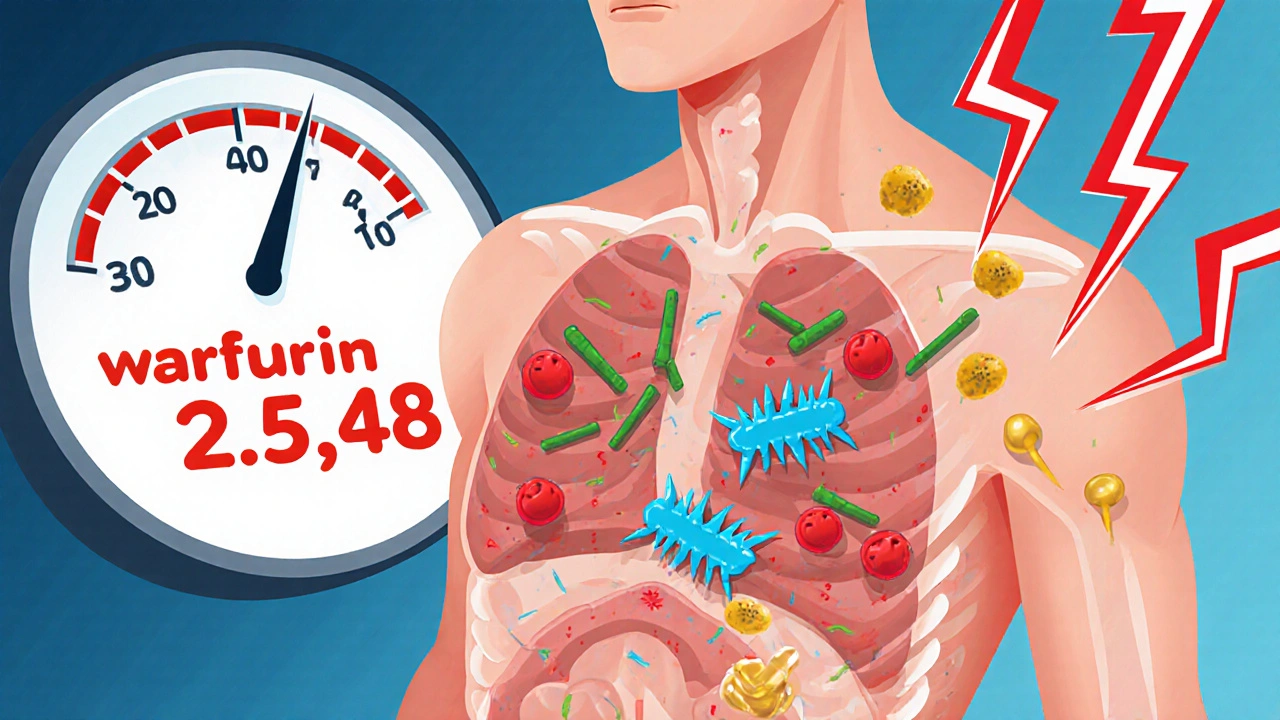
Antibiotics and Warfarin: How to Prevent Dangerous INR Spikes and Bleeding
- by Colin Edward Egan
- on 23 Nov 2025
Antibiotics can dangerously raise INR levels in people taking warfarin, increasing bleeding risk. Learn which antibiotics are most dangerous, how to monitor your INR, and what steps to take to stay safe.