
Statin-Induced Myopathy: Causes, Risks, and What to Do
When you take a statin, a class of cholesterol-lowering drugs like atorvastatin or simvastatin. Also known as HMG-CoA reductase inhibitors, they help prevent heart attacks and strokes by lowering LDL. But for some people, these same drugs trigger statin-induced myopathy, muscle damage caused by statins that ranges from mild soreness to life-threatening tissue breakdown.
This isn’t just about feeling sore after a workout. Statin-induced myopathy can lead to rhabdomyolysis, a condition where muscle cells break down and flood the bloodstream with harmful proteins. That’s when your kidneys start to fail. It’s rare—but it happens. And it’s often linked to medication interactions, like combining statins with certain antibiotics, antifungals, or grapefruit juice. People over 65, those with kidney disease, or taking high doses are at higher risk. Some of it comes down to your genes—like variations in the CYP3A4 or SLCO1B1 genes—that make your body process statins slower, letting them build up and damage muscle tissue.
You might notice stiffness, weakness, or aching in your shoulders, thighs, or lower back. It often gets worse with activity. If you start feeling this way after starting or increasing a statin, don’t ignore it. A simple blood test for creatine kinase (CK) can show if your muscles are breaking down. But don’t wait for that test. If you also have dark urine, extreme fatigue, or fever, get help right away—those are signs of rhabdomyolysis, a medical emergency that can cause kidney failure.
Stopping the statin usually fixes mild cases. But sometimes, switching to a different statin—like pravastatin or fluvastatin, which are less likely to cause muscle issues—or lowering the dose helps. Some people benefit from coenzyme Q10 supplements, though evidence is mixed. What’s clear: you don’t have to suffer through muscle pain just to lower cholesterol. There are alternatives, like ezetimibe or PCSK9 inhibitors, that work without the same muscle risks. The goal isn’t to avoid statins entirely—it’s to find the right one for your body.
The posts below cover real cases and practical steps: how drug combos trigger muscle damage, what blood tests actually mean, how to talk to your pharmacist about side effects, and which alternatives might work better for you. You’ll find advice from people who’ve been there—and the science behind why it happens. This isn’t about fear. It’s about knowing what to watch for, when to act, and how to stay in control of your health without giving up on what works.
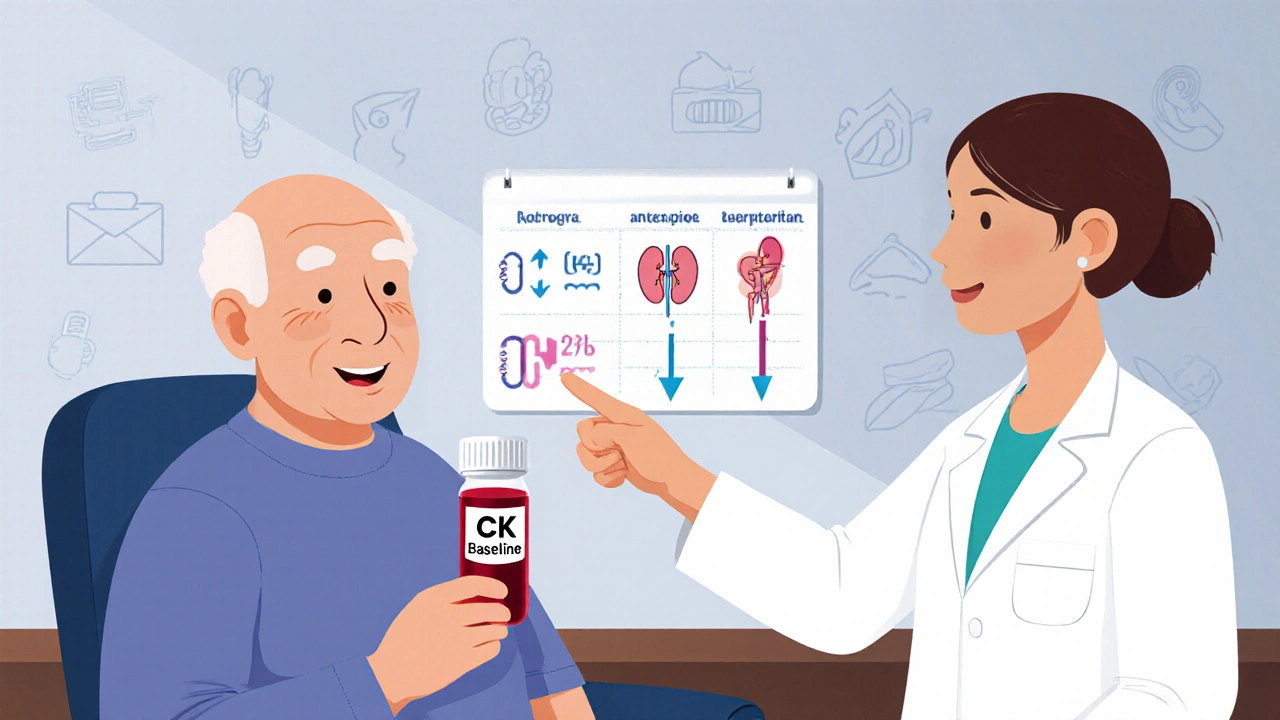
When to Get a Baseline CK Test Before Starting Statins
- by Colin Edward Egan
- on 29 Nov 2025
A baseline CK test before starting statins isn't needed for everyone-but it's critical for those at higher risk of muscle side effects. Learn who should get tested and why the numbers matter.