
Child-Resistant Medication: How Safety Caps Protect Kids and What You Need to Know
When you pick up a prescription or over-the-counter medicine, that tight, hard-to-open cap isn’t just annoying—it’s a child-resistant medication, a safety feature designed to prevent young children from accessing potentially harmful drugs. Also known as childproof packaging, it’s required by law in the U.S. for most oral medications that could cause serious harm if swallowed by a child. Since the Poison Prevention Packaging Act of 1970, this simple design has stopped hundreds of thousands of accidental poisonings. But it’s not foolproof. Kids as young as two can figure out how to open some caps, especially if they’ve seen an adult do it. That’s why child-resistant medication isn’t the same as childproof—it’s a barrier, not a lock.
Not every medicine needs this kind of packaging. Things like insulin, certain inhalers, and some liquid antibiotics often come without child-resistant caps because they’re either used daily by adults or are less dangerous in small amounts. But for painkillers like acetaminophen, antidepressants, heart meds, and even common vitamins with iron, the law says the cap must resist opening by most children under five. The design usually involves pressing down while turning—a motion that’s easy for adults but hard for small hands. Still, many families don’t realize that these caps can fail if left loose, stored in unlocked cabinets, or if kids get their hands on a bottle that’s already been opened. That’s where medication safety, the practice of storing drugs out of reach and sight, even in child-resistant containers becomes just as important as the cap itself.
It’s not just about caps. The real danger often comes from medicine storage, how and where medications are kept in the home. A bottle left on the bathroom counter, a purse with pills in the car, or a drawer in a child’s room—all these are common mistakes. Studies show that over half of accidental pediatric poisonings happen in the home, and most involve medicines that were already opened or improperly stored. Even if you think your child can’t reach it, toddlers climb, crawl, and pull things down. That’s why keeping all meds in a locked cabinet, preferably high up and away from food or toys, is the gold standard. And don’t forget: childproof caps, a common term for child-resistant packaging can be tricky for older adults too. If someone in your home has arthritis or limited hand strength, talk to your pharmacist about easy-open alternatives—they’re legal and available for those who need them.
What you’ll find below are real, practical guides from people who’ve been there—parents who learned the hard way, pharmacists who see the fallout daily, and caregivers who’ve had to act fast. You’ll read about how to spot dangerous pills before they’re swallowed, what to do if a child gets into medicine, why some drugs are more risky than others, and how to make your home safer without turning it into a fortress. These aren’t theory pieces. They’re stories, checklists, and step-by-step fixes from real life. Whether you’re a new parent, a grandparent, or just someone who wants to keep their household safe, the advice here is meant to be used—today, not someday.
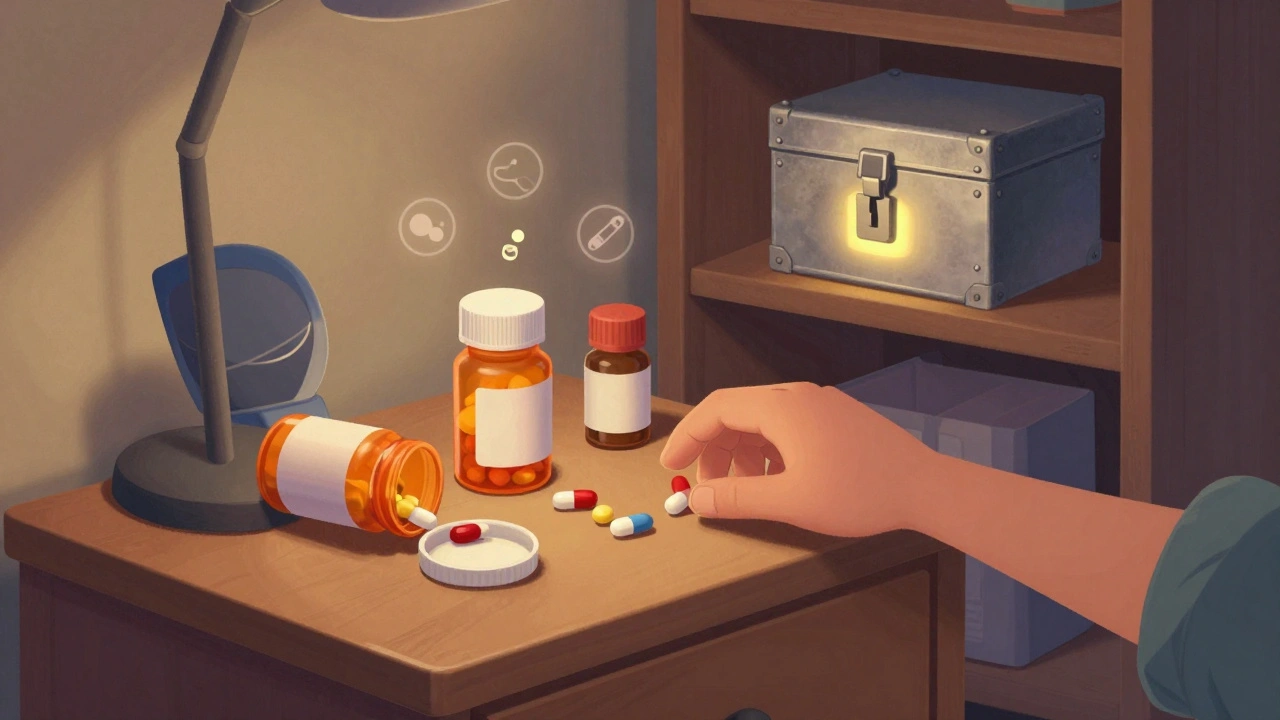
How to Store High-Risk Medications to Reduce Overdose Risk
- by Colin Edward Egan
- on 3 Dec 2025
Learn how to store high-risk medications like opioids and sedatives securely to prevent accidental overdoses in children, teens, and visitors. Simple steps can save lives.