
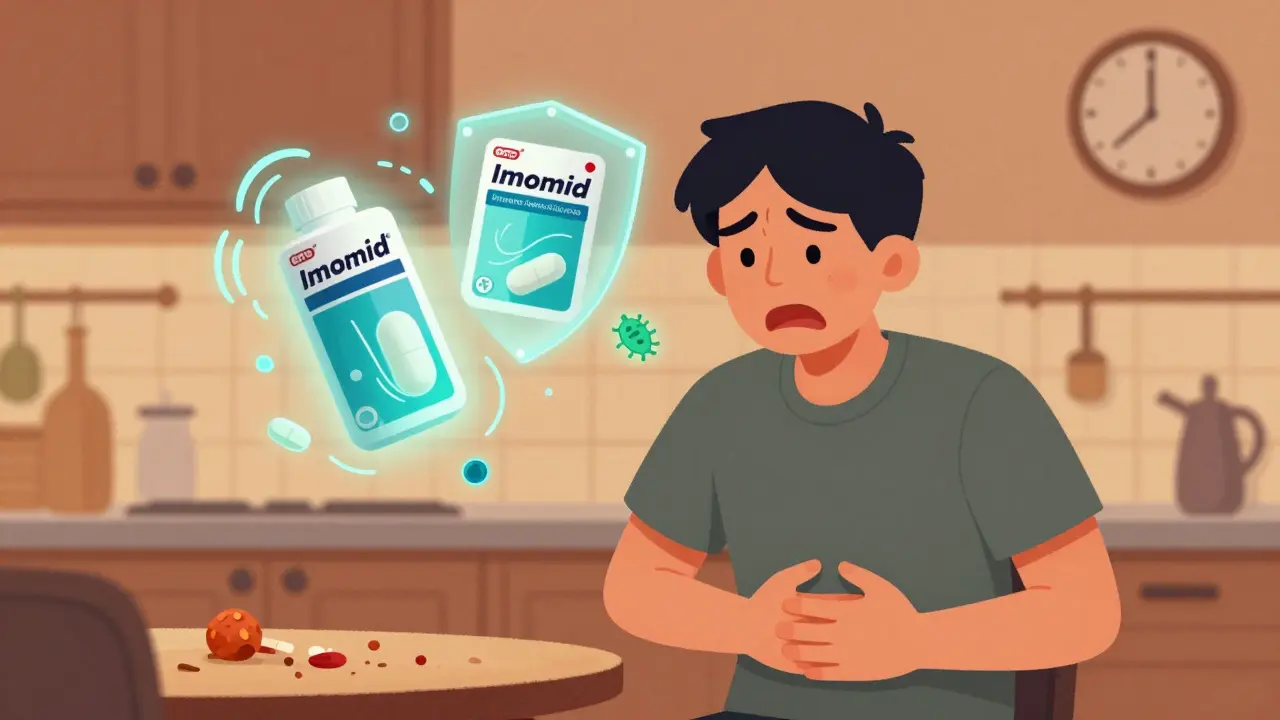
What OTC Diarrhea Treatments Actually Do
You wake up with cramps, feel the urgent need to run to the bathroom, and by noon, you’ve been three times. That’s diarrhea. Most of the time, it’s just your gut reacting to something you ate, a virus, or travel stress. It’s uncomfortable, messy, and disruptive-but OTC diarrhea treatments like Imodium and Pepto-Bismol can help you get through it. These aren’t cures. They don’t kill the bug. They just slow things down so you can function.
Loperamide, the active ingredient in Imodium, works by tightening the muscles in your intestines. Think of it like hitting pause on the rush. It slows how fast food moves through your gut, letting your body absorb more water. That turns loose stools into something closer to normal. Studies show it cuts bowel movements by about 60% in the first 24 hours. Bismuth subsalicylate, found in Pepto-Bismol and Kaopectate, does more than just slow things. It coats your gut lining, soaks up toxins, reduces inflammation, and even kills some bacteria like E. coli. It’s why people swear by it for traveler’s diarrhea.
Both work fast. Loperamide kicks in within 30 to 60 minutes. Pepto-Bismol can ease nausea and cramps too, not just diarrhea. That’s why some people reach for it even when they’re not sure if it’s just diarrhea or full-on stomach flu.
How to Use Them Correctly
Using these meds wrong is how people end up in the ER. The most common mistake? Taking too much.
For loperamide (Imodium): Start with 4 mg after your first loose stool. Then take 2 mg after each loose stool after that. But never go over 8 mg in 24 hours. That’s two caplets of 2 mg each, four times. Don’t double up because you’re still feeling bad. That’s how people get heart problems. The FDA has warned about this since 2016-overdosing on loperamide can cause dangerous heart rhythms, even death. There were 48 documented cases between 1976 and 2015. Some people even use it to self-treat opioid withdrawal, taking 50 to 100 mg a day. That’s not just dangerous-it’s life-threatening.
For bismuth subsalicylate (Pepto-Bismol): The standard dose is 30 mL of liquid or two chewable tablets after each loose stool. Max is 8 doses in 24 hours. That’s 2,096 mg total. You’ll notice your stool turns black. Your tongue might too. That’s normal. It’s not blood. It’s bismuth. But if you’re on blood thinners or have a salicylate allergy (like aspirin), skip it. Also, don’t give it to kids under 12 unless a doctor says so. Children are more sensitive to salicylates, and it can cause rare but serious reactions.
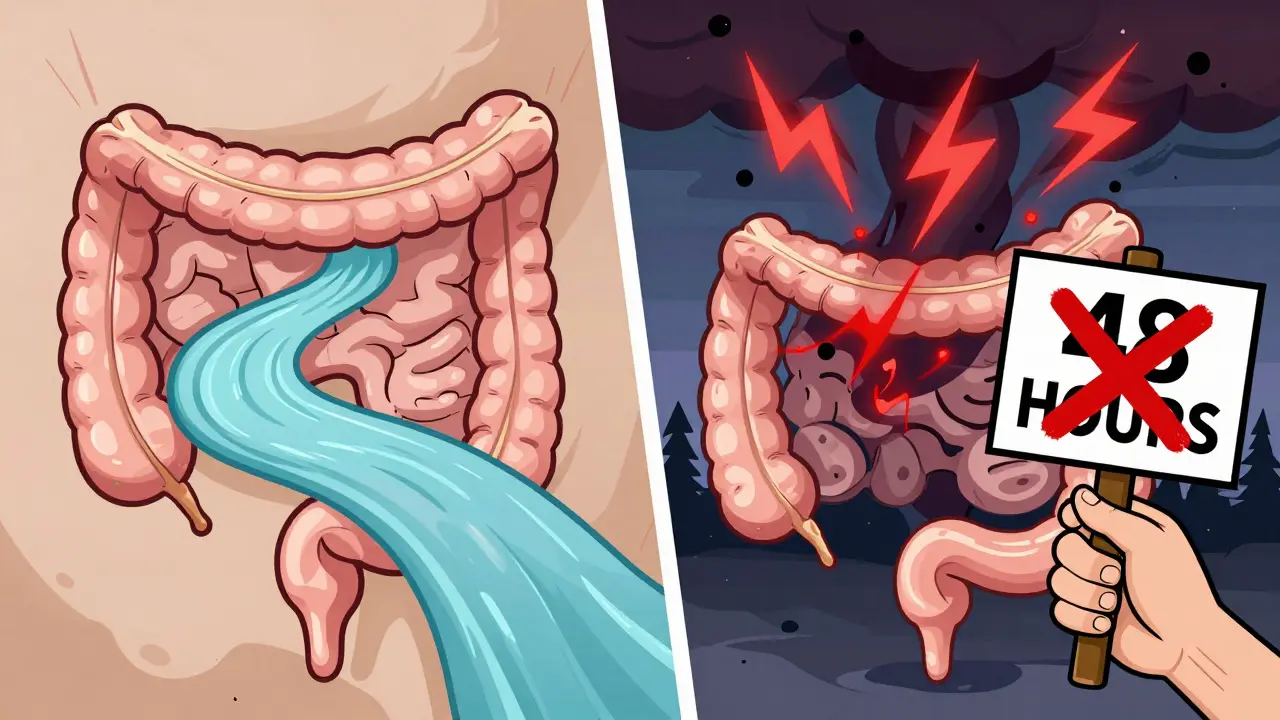
Don’t mix them. Taking Imodium and Pepto-Bismol together increases your risk of side effects without adding benefit. Pick one. Stick to the label. And stop after 48 hours.
When It’s Not Just a Bad Stomach
Diarrhea isn’t always harmless. Sometimes, it’s a sign of something worse. And that’s when OTC meds can make things worse, not better.
Stop taking them and call a doctor if you have:
- Bloody or black stools
- Fever above 101.3°F (38.5°C)
- Severe abdominal pain or swelling
- Signs of dehydration-dry mouth, dizziness, little or no urine, sunken eyes
- Diarrhea lasting more than 48 hours
- Weight loss over 5% of your body weight
These aren’t just warnings from a pamphlet. They’re red flags backed by the Mayo Clinic, CDC, and the American Gastroenterological Association. Bloody stool? That could mean inflammatory bowel disease, an infection like C. diff, or even colon cancer. Fever? Likely bacterial or parasitic. Slowing down your gut with loperamide when you have an infection traps the bad bugs inside. That’s like locking the door while the thief is still inside.
One ER doctor in Boston told a Reddit thread: “I’ve hospitalized three patients this year with QT prolongation from loperamide abuse.” That’s not an outlier. It’s happening more than you think.
What to Do While You’re Sick
Medicine helps, but hydration and diet matter just as much. You lose fluids and electrolytes fast. If you don’t replace them, you’ll feel worse, even if the diarrhea stops.
Drink oral rehydration solutions. These aren’t sports drinks or soda. They’re specially formulated with the right balance of salt and sugar. WHO recommends 75 mmol/L sodium. You can buy them as powders (like Pedialyte or Dioralyte) or make your own: 1 liter of clean water, 6 teaspoons of sugar, half a teaspoon of salt. Sip it slowly, even if you’re not thirsty.
Food? Stick to simple, low-fiber stuff. Bananas, rice, applesauce, toast-the BRAT diet. It’s not magic, but it’s gentle. Avoid dairy, fatty foods, caffeine, and alcohol. They irritate your gut more. And don’t eat big meals. Eat small, frequent bites.
Most people recover in 2 to 3 days. But if you’re still weak, dizzy, or not peeing much after 48 hours, you’re dehydrated. That’s not something you can fix with another pill.
Why Some People Don’t Get Better
Not all diarrhea is the same. Viral? Usually clears in 3 days. Bacterial? Can last longer. Parasitic? Might need prescription drugs. And some cases are just stubborn.
Studies show OTC meds work best for secretory diarrhea-when your gut just pumps out too much fluid. That’s common with viruses or food poisoning. But if your diarrhea is caused by inflammation-like from Crohn’s, ulcerative colitis, or C. diff-slowing your gut won’t help. You need the right diagnosis and treatment.
Also, antibiotic resistance is rising. About 38% of traveler’s diarrhea cases now don’t respond to standard antibiotics. That’s why bismuth subsalicylate is still useful-it doesn’t rely on killing bacteria the same way. It just makes the environment less friendly to them.
And here’s the kicker: 41% of people on WebMD say OTC meds didn’t help much for viral gastroenteritis. That’s because viruses don’t care about loperamide. Your body has to fight it off. All you can do is wait and hydrate.
What’s New and What’s Changing
The OTC diarrhea market is worth over $1.2 billion in the U.S. alone. Imodium owns 58% of it. Pepto-Bismol holds 32%. But things are shifting.
The FDA recently approved a new drug called racecadotril for kids in Europe and Asia. It reduces diarrhea duration by 24 hours with fewer side effects than loperamide. It’s not available here yet. But it’s coming.
Emergency rooms are changing their approach too. The American College of Emergency Physicians now says: don’t give anti-diarrheals routinely. Focus on fluids first. That’s because most cases get better on their own. Medication just makes you feel better faster-not healthier faster.
And in the future, you might not need to guess what’s causing your diarrhea. At-home stool tests are becoming more common. In 2024, you could send a sample to a lab and get a report on whether it’s norovirus, E. coli, or something else-all before you even leave your house. That means fewer blind guesses, fewer wrong meds, and better outcomes.
Final Rule: Listen to Your Body
OTC diarrhea treatments are useful tools. But they’re not magic. They’re not for everyone. They’re not for long-term use. And they’re not a substitute for medical care when you need it.
If you’re young, healthy, and got food poisoning after a bad taco, go ahead and take Imodium. It’ll help you get through the day.
If you’re over 65, have a chronic illness, or your diarrhea came with fever and blood? Don’t wait. Call your doctor. Don’t risk it.
Most people get better without a trip to the clinic. But a few don’t. And for them, the delay caused by self-treating can be deadly.
Can I take Imodium every day for chronic diarrhea?
No. Imodium is only meant for short-term, acute diarrhea. Taking it daily can mask serious conditions like Crohn’s disease, celiac disease, or colon cancer. Chronic diarrhea needs a diagnosis, not a band-aid. If you’ve had loose stools for more than two weeks, see a doctor.
Is Pepto-Bismol safe for kids?
Children’s Pepto-Bismol is approved for ages 12 and up. For kids under 12, avoid regular Pepto-Bismol because it contains salicylates, which can cause Reye’s syndrome-a rare but dangerous condition linked to viral infections. Use pediatric electrolyte solutions instead. Always check with a doctor before giving any OTC medicine to a child.
Why does my stool turn black after taking Pepto-Bismol?
It’s harmless. Bismuth subsalicylate reacts with sulfur in your digestive tract and turns black. This happens in 98% of users. It’s not blood. It won’t stain your clothes permanently. But if you see black, tarry stools and haven’t taken Pepto-Bismol, that could mean internal bleeding. Get checked right away.
Can I use OTC diarrhea meds while pregnant?
Loperamide is considered low-risk in pregnancy when used short-term at recommended doses. Bismuth subsalicylate is not recommended because salicylates can affect fetal development, especially in the third trimester. Stick to loperamide if needed, but always talk to your OB-GYN first. Hydration and diet are your best tools.
What’s better for traveler’s diarrhea-Imodium or Pepto-Bismol?
Pepto-Bismol is often preferred. It doesn’t just slow diarrhea-it reduces the risk of getting it in the first place. Taking two tablets four times a day before and during travel can cut your risk by 65%. It also helps with nausea and cramps. Imodium only helps after symptoms start. For prevention and broader relief, Pepto-Bismol wins.
Can I drink alcohol while taking loperamide?
It’s not recommended. Alcohol can worsen dehydration and irritate your gut, making diarrhea worse. It also increases the risk of dizziness or drowsiness, especially if you’re taking higher-than-recommended doses. Stick to water, broth, or electrolyte drinks while you’re recovering.
How do I know if I’m dehydrated?
Signs include dry mouth, extreme thirst, dark yellow urine, infrequent urination, dizziness, fatigue, and sunken eyes. In babies, check for no wet diaper in 6 hours. In adults, if you haven’t urinated in 8 hours, you’re likely dehydrated. Severe dehydration can lead to kidney failure. Don’t wait until you’re dizzy-start sipping fluids as soon as diarrhea begins.
Is it safe to take loperamide with other medications?
It can be risky. Loperamide can interact with antidepressants, antifungals, antibiotics like clarithromycin, and certain heart medications. These can increase loperamide levels in your blood, raising the risk of heart problems. Always check with a pharmacist before combining it with other drugs. If you’re on any prescription meds, don’t assume it’s safe.
Beth Cooper
January 31, 2026 AT 06:27And don't even get me started on Pepto-Bismol turning your stool black - that's not 'harmless,' that's your body absorbing lead-like compounds. They just call it 'bismuth' to make it sound science-y. Wake up, people.
Melissa Cogswell
January 31, 2026 AT 16:11Also, black stools from Pepto? Totally normal. But if you're over 50 and have a family history of colon cancer? Don't wait. Get a colonoscopy. Don't self-treat symptoms that could be cancer.
Diana Dougan
January 31, 2026 AT 22:34Bobbi Van Riet
January 31, 2026 AT 22:51Hydration is everything. I started making my own rehydration mix: 1L water, 6 tsp sugar, 1/2 tsp salt - same as WHO. I also stopped drinking coffee and dairy. My symptoms dropped 80% in two weeks. No meds. Just listening to my body. If you’ve had this for more than two weeks, please, please, please see a doctor. Don’t be like me and wait until you’re hospitalized.
Holly Robin
February 2, 2026 AT 04:41Shubham Dixit
February 4, 2026 AT 01:08KATHRYN JOHNSON
February 4, 2026 AT 19:14Blair Kelly
February 6, 2026 AT 14:17Rohit Kumar
February 6, 2026 AT 19:30Lily Steele
February 8, 2026 AT 13:49