
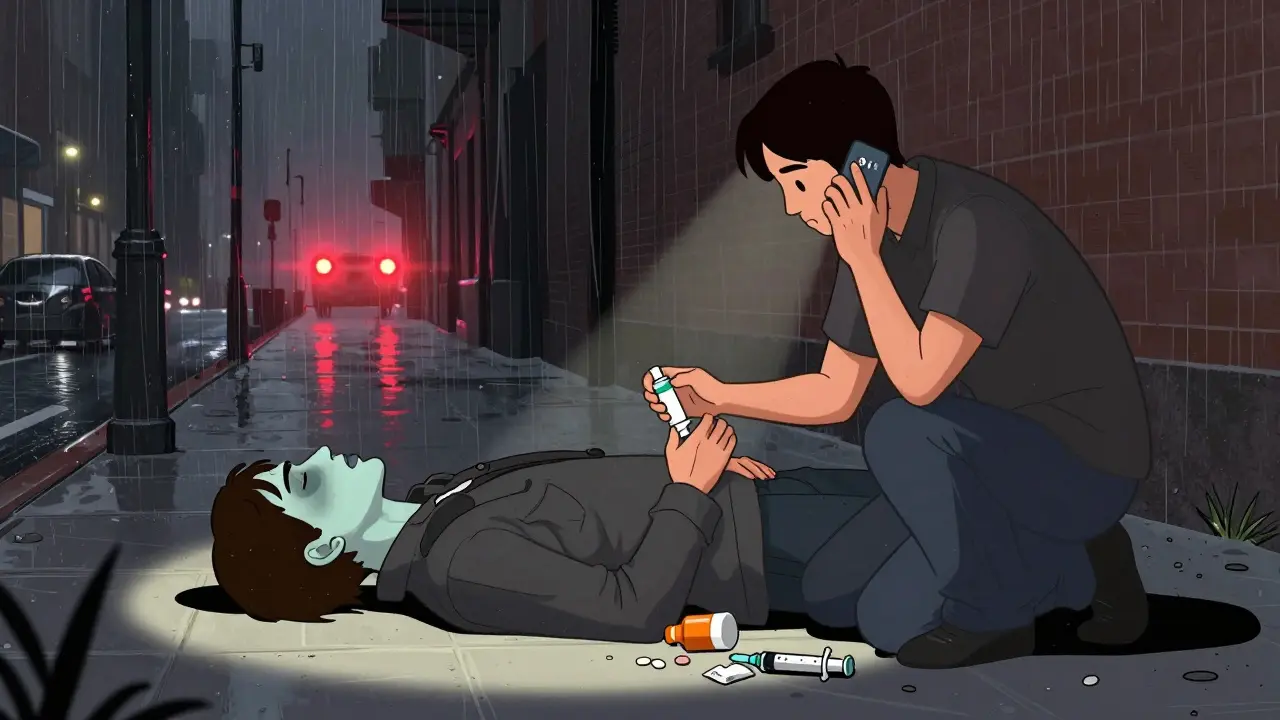
When someone overdoses on opioids, time doesn’t just matter-it’s the only thing that stands between life and death. Breathing slows. Then stops. Skin turns gray or blue. The body goes limp. And if no one acts, the brain starts dying within minutes. This isn’t fiction. It’s happening right now, in homes, alleys, and public spaces across the U.S. In 2023, over 87,000 Americans died from opioid overdoses. Most of these deaths are preventable. And the tool to stop them is simple, safe, and available to anyone: naloxone.
What Happens During an Opioid Overdose
Opioids-whether prescription painkillers, heroin, or fentanyl-bind to receptors in the brainstem that control breathing. When too much enters the system, those signals get drowned out. Breathing becomes shallow, then irregular, then stops entirely. Without oxygen, the brain begins to shut down. Within four minutes, permanent damage can start. After ten, death is likely.The most common opioids involved today aren’t the ones people expect. Fentanyl, a synthetic opioid 50 to 100 times stronger than morphine, is now in nearly 80% of illicit drugs tested. People don’t even know they’re taking it. A pill that looks like a prescription oxycodone might contain enough fentanyl to kill ten people. That’s why overdoses happen so fast-and why so many are fatal.
How to Recognize an Opioid Overdose
You don’t need medical training to spot an overdose. Just look for three key signs:- Unresponsive-Shake the person’s shoulder hard. Yell their name. If they don’t wake up, even slightly, that’s a red flag.
- Abnormal breathing-Look for fewer than two breaths every 15 seconds. Breathing might sound like gasping, gurgling, or snoring. Sometimes, it stops completely.
- Cyanosis-Lips, fingernails, or skin turn blue, purple, or ashen. On darker skin tones, this often looks gray or ashy, not blue.
Other signs include pinpoint pupils, cold and clammy skin, and a limp body. If you see even one or two of these, don’t wait. Don’t assume they’re just asleep or drunk. Assume it’s an overdose-and act.
What Naloxone Does and How It Works
Naloxone, sold under brand names like Narcan and Evzio, is not a cure. It’s a lifesaver. It works by kicking opioids off the brain’s receptors-like a key that fits better than the original. Within 2 to 5 minutes, breathing usually returns. The person wakes up, often coughing or groaning.Here’s the critical part: naloxone only works on opioids. It has zero effect on alcohol, cocaine, meth, or benzodiazepines. That means if you’re unsure whether opioids are involved, give it anyway. It won’t hurt them. It might save them.
Naloxone lasts 30 to 90 minutes. But many opioids, especially fentanyl, last much longer. That’s why someone can wake up after one dose-only to stop breathing again 20 minutes later. You must stay with them until emergency help arrives.
How to Administer Naloxone
There are two main forms: nasal spray and injection. Both work fast. Nasal spray is easier for most people.For Narcan (nasal spray):
- Call 911 immediately. Don’t wait.
- Place the person on their back. Tilt their head back slightly.
- Insert the nozzle into one nostril. Press the plunger firmly until you hear a click.
- Wait 2 to 3 minutes. If no improvement, give a second dose in the other nostril.
- Start rescue breathing if they’re not breathing: pinch the nose, give one breath every 5 seconds until they breathe on their own or help arrives.
For injectable naloxone (1 mg):
- Call 911.
- Inject into the outer thigh-through clothing if needed.
- Wait 2 to 3 minutes. If no response, give a second dose.
- Begin rescue breathing if needed.
You don’t need to be a nurse. You don’t need to be brave. You just need to act. Training takes 20 minutes. Most community centers, pharmacies, and harm reduction groups offer free sessions.

What to Do After Giving Naloxone
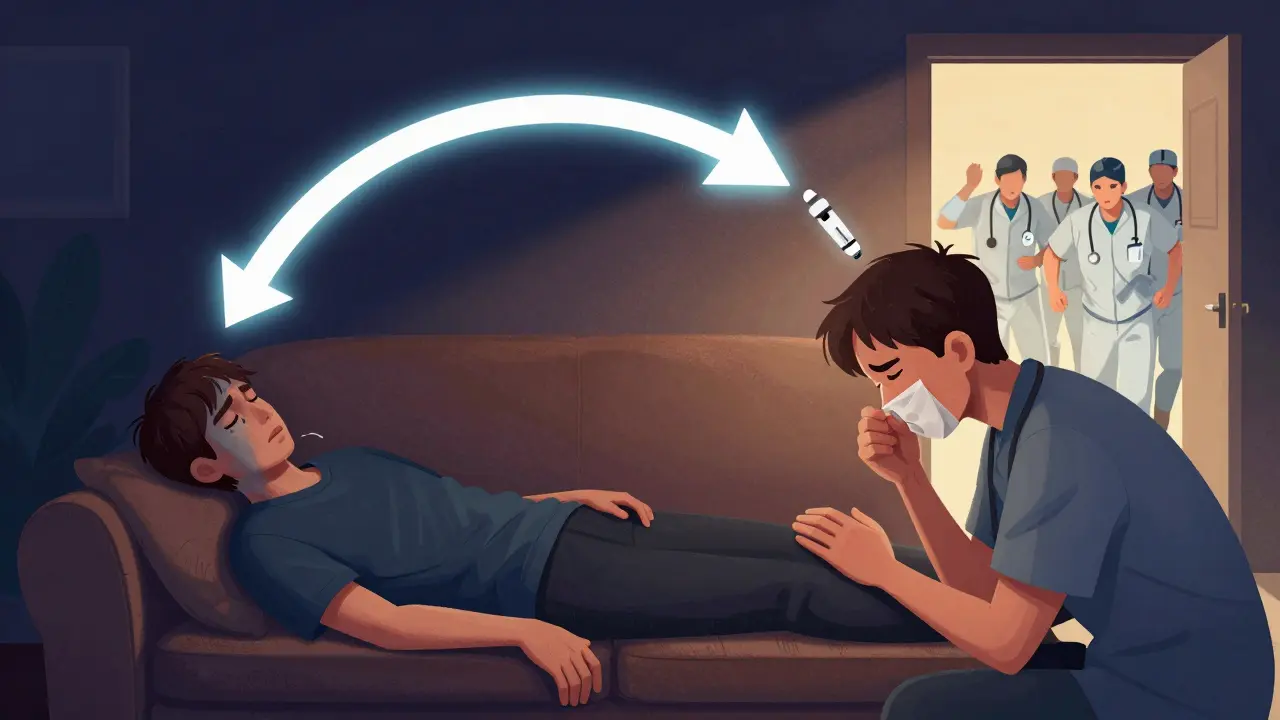
Too many people think: “They woke up. I’m done.” That’s deadly.Naloxone wears off. Fentanyl doesn’t. The person can slip back into overdose. That’s why you must:
- Stay with them until EMS arrives.
- Keep them on their side in the recovery position-if they vomit, they won’t choke.
- Don’t put them in a cold shower, give them coffee, or let them walk it off. Those myths kill.
- Even if they seem fine, they need hospital care. Pulmonary edema, heart stress, and rebound overdose are real risks.
Where to Get Naloxone
In every U.S. state, you can get naloxone without a prescription. Pharmacies like CVS, Walgreens, and Rite Aid keep it behind the counter. Ask for it. You won’t be judged. In many places, it’s free.Prices vary: $25 for a single nasal spray, up to $130 for a two-pack. Generic versions now cost about 40% less than Narcan. Some community groups mail out free kits. Check with your local health department or harm reduction organization.
Store naloxone at room temperature. Don’t leave it in a hot car or freezing garage. Heat above 104°F (40°C) breaks it down. Check the expiration date. Replace it if it’s expired or looks cloudy.
Why This Matters Beyond One Life
Every time someone uses naloxone and survives, it’s not just a win for them. It’s a chance for recovery. Studies show that people who survive an overdose and get connected to treatment are 35% to 50% less likely to die in the next year.Since 2019, naloxone distribution has prevented an estimated 27,000 deaths per year in the U.S. That’s not a statistic. That’s 27,000 parents, siblings, friends, coworkers-people who got another shot.
But naloxone alone won’t end the crisis. It’s a bandage on a gunshot wound. We need better access to medication-assisted treatment-methadone, buprenorphine, counseling. We need safe supply programs. We need to treat addiction as a health issue, not a crime.
For now, though, naloxone is the most powerful tool we have. And it’s in your hands.
Common Myths and Mistakes
- Myth: Naloxone encourages drug use. Truth: No study has ever shown this. People who carry naloxone are more likely to seek help for themselves and others.
- Myth: You need a prescription. Truth: Not in any state. You can walk into a pharmacy and ask.
- Myth: Only addicts need it. Truth: Fentanyl is in everything. Your neighbor, your cousin, your coworker could be using without knowing.
- Mistake: Waiting to call 911 until after giving naloxone. Fix: Call first. Always. Emergency responders can provide advanced care naloxone can’t.
- Mistake: Assuming one dose is enough. Fix: Always prepare for a second dose. Especially with fentanyl.
Real Stories, Real Impact
In Massachusetts, a man named Mark used Narcan on his brother after finding him blue and not breathing. “He woke up coughing,” Mark told a local news station. “The EMTs said if I’d waited five more minutes, he wouldn’t have made it.”In Texas, a woman used her first naloxone kit on her son after he stopped responding. “I was terrified,” she said. “But I remembered the video I watched. I sprayed it. He gasped. I held his hand until the ambulance came.”
These aren’t rare. They’re routine. In 2022, community programs in the U.S. reversed over 70,000 overdoses. Most were done by people with no medical background. Just ordinary people who knew what to do.
Can naloxone be used on children or elderly people?
Yes. Naloxone is safe for all ages, including infants and seniors. The dose doesn’t change based on age or weight. It only works if opioids are present, so there’s no risk of overdose from naloxone itself.
What if I’m not sure if someone overdosed on opioids?
Give naloxone anyway. It has no effect on alcohol, cocaine, or other drugs. It won’t harm someone who didn’t take opioids. But if they did, it could bring them back to life. Better to act than hesitate.
Is it legal to carry naloxone?
Yes. All 50 U.S. states allow naloxone to be sold without a prescription. Many states have Good Samaritan laws that protect people who call 911 during an overdose, even if they’re using drugs. Immunity varies, but calling for help is always protected.
How long does naloxone take to work?
Usually 2 to 5 minutes. If there’s no response after 3 minutes, give a second dose. Fentanyl overdoses often need two or more doses because the drug stays in the body longer than naloxone.
Can I overdose on naloxone?
No. Naloxone has no effect if opioids aren’t present. Even if you give too much, it won’t cause overdose or serious side effects. The worst you might feel is mild nausea or headache-rarely.
Where can I get free naloxone?
Many local health departments, syringe exchange programs, and nonprofits like Next Distro and the National Harm Reduction Coalition offer free kits. Some pharmacies give them away for free under state programs. Call your city’s public health office or search online for “free naloxone near me.”
Next Steps: Be Ready
You don’t need to be a hero. You just need to be prepared. Keep a naloxone kit in your car, your bag, or your home. Know where to find one. Learn how to use it. Practice with a trainer spray-many programs give them out for free.Teach someone else. Talk to your family. Leave a kit with your neighbor. If you’re a parent, teacher, or coworker-you have the power to change a death into a second chance.
The opioid crisis won’t end tomorrow. But every time someone uses naloxone and survives, the tide turns a little. You don’t need to fix everything. Just be ready to act when it matters most.
Joe Bartlett
December 16, 2025 AT 20:12Marie Mee
December 17, 2025 AT 03:20Salome Perez
December 17, 2025 AT 15:49Martin Spedding
December 18, 2025 AT 08:22Raven C
December 20, 2025 AT 05:59Donna Packard
December 21, 2025 AT 19:36Brooks Beveridge
December 23, 2025 AT 02:36Sam Clark
December 23, 2025 AT 13:55Linda Caldwell
December 23, 2025 AT 18:22Michael Whitaker
December 25, 2025 AT 06:39Patrick A. Ck. Trip
December 27, 2025 AT 05:13Brooks Beveridge
December 28, 2025 AT 12:15