
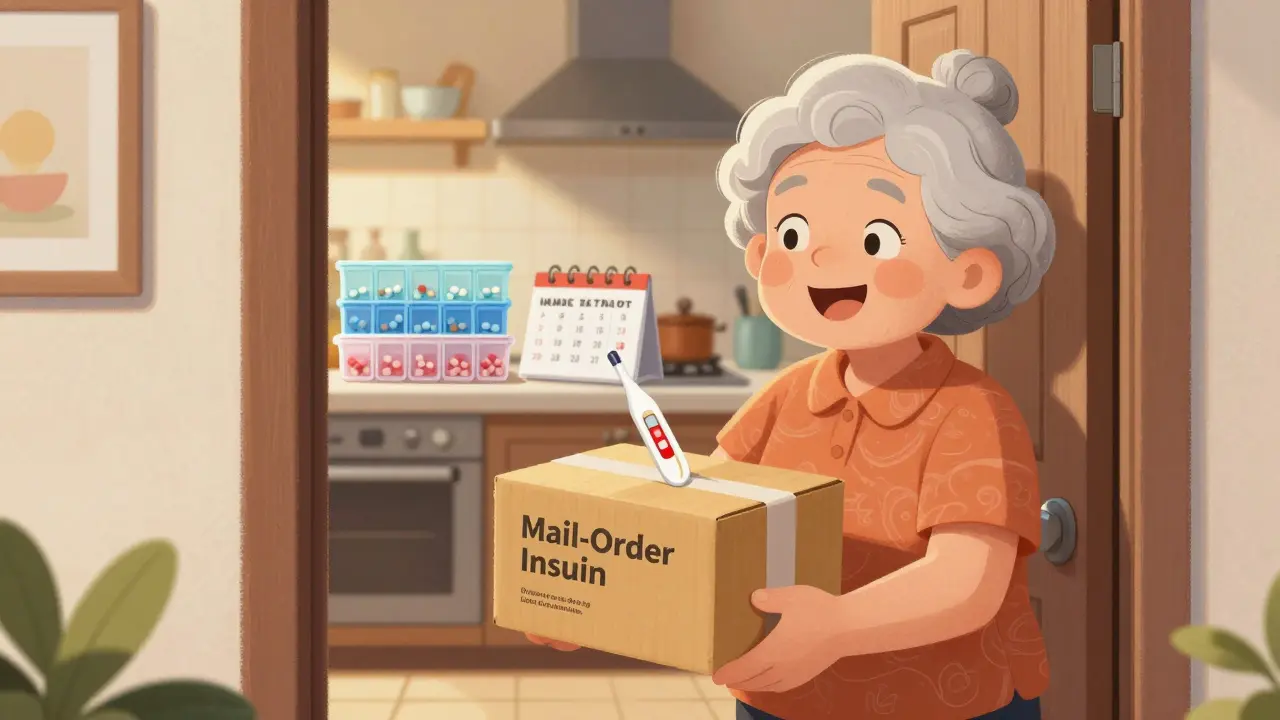
More Americans are getting their prescriptions delivered to their door than ever before. Mail-order generics - the cheap, generic versions of brand-name drugs shipped straight from pharmacies - are now a routine part of managing chronic conditions like high blood pressure, diabetes, and depression. For many, it’s a game-changer: no more driving across town to pick up a 90-day supply, no more waiting in line, and often, a much lower price tag. But behind the convenience lies a system that’s far from perfect. Some people save hundreds a year. Others get damaged medication, delayed refills, or even dangerous mix-ups. This isn’t just about saving money. It’s about safety, reliability, and whether the system is truly working for you.
Why Mail-Order Generics Are So Popular
The rise of mail-order pharmacies didn’t happen by accident. It was built into the structure of U.S. healthcare. When Medicare Part D launched in 2006, it included mail-order as a standard option. That gave a huge boost to companies like Express Scripts, CVS Caremark, and OptumRx - the three giants that now handle nearly 80% of all mail-order prescriptions in the country. Today, about 34% of Medicare Part D users rely on mail-order for their maintenance meds. For people with diabetes or high blood pressure, that number jumps to over 60%.
The main draw? Convenience and cost. Most insurers offer 90-day supplies at a fraction of the cost of three separate 30-day fills. For example, a blood pressure pill that costs $45 at your local pharmacy might only cost $10 through your insurer’s mail-order service. That’s not a gimmick - it’s a structured discount built into pharmacy benefit manager contracts. The math is simple: buying in bulk lowers the per-pill cost, and insurers pass some of that savings on to you.
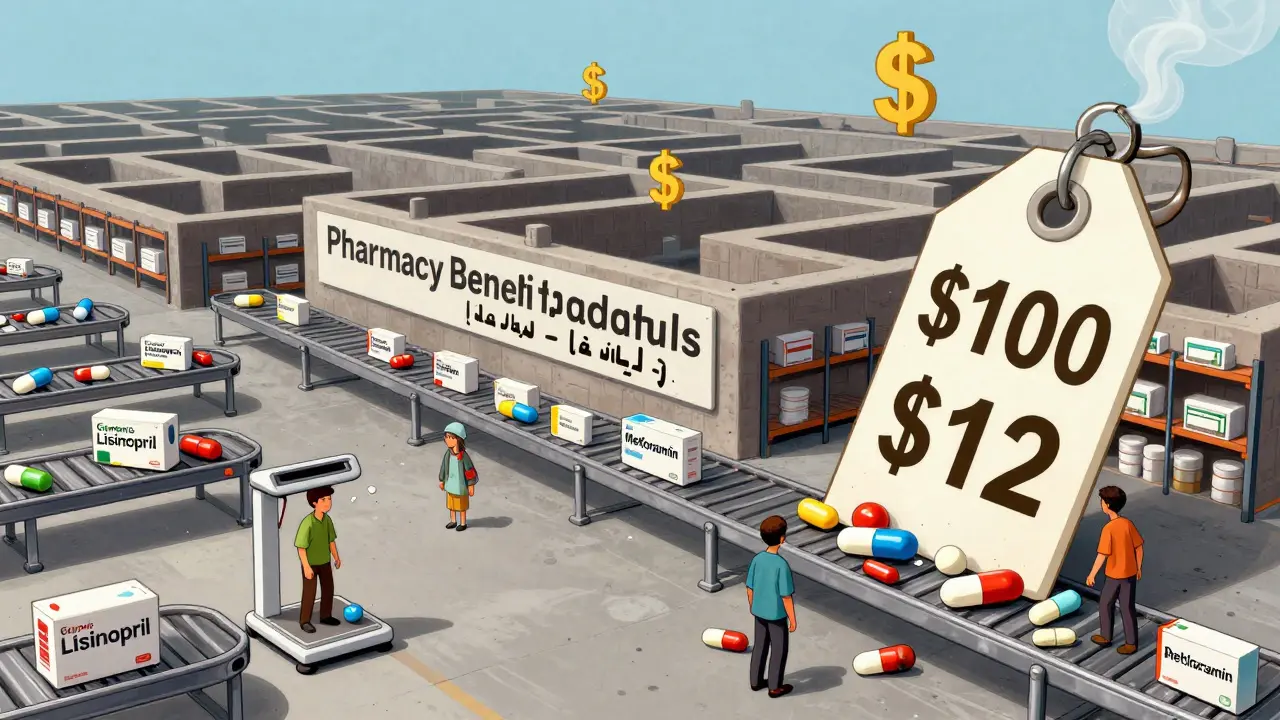
But here’s the twist: while the number of prescriptions shipped has only gone up by 11% since 2013, mail-order sales have more than doubled - from $86 billion to over $206 billion. That means prices per prescription are rising, not falling. Some generic antidepressants that cost $12 at a retail pharmacy are being billed at $100 through mail-order. That’s an 800% markup. The system isn’t always designed to save you money. Sometimes, it’s designed to maximize profits - and you’re the one paying the difference.
When Mail-Order Works Best
Mail-order generics shine when you’re taking the same medication, every day, for months or years. Think statins for cholesterol, metformin for diabetes, or lisinopril for high blood pressure. These aren’t drugs you need right now. They’re long-term tools. That’s exactly why mail-order is ideal: automatic refills, fewer trips to the pharmacy, and consistent dosing. Studies from the National Institutes of Health show that people using mail-order for chronic conditions are more likely to stick with their meds. That’s huge. Skipping doses of blood pressure or diabetes meds can lead to heart attacks, strokes, or kidney failure.
One patient in Boston told me she switched to mail-order for her insulin and saved $120 a month. She set up her refill two weeks before she ran out. No stress. No panic. No last-minute pharmacy runs. That’s the dream. And it’s real - for people who plan ahead and have stable, predictable needs.
But here’s the catch: mail-order isn’t built for emergencies. Need antibiotics for a sudden infection? An inhaler for an asthma flare? A painkiller after surgery? Don’t wait for a package. Mail-order takes about a week to deliver. By then, you could be worse off. Retail pharmacies are still your best bet for acute needs.
The Hidden Dangers
Let’s talk about what doesn’t get advertised.
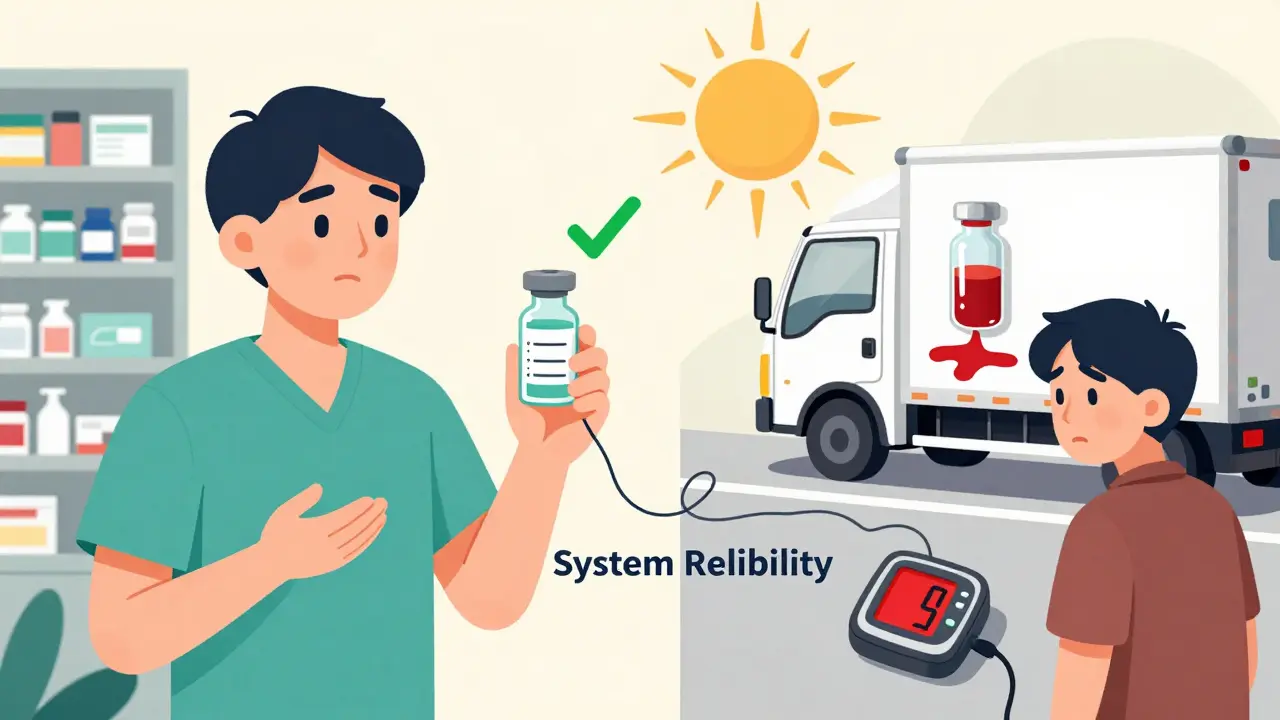
First, temperature control. Many medications - especially insulin, biologics, and some antidepressants - have to stay between 68 and 77 degrees Fahrenheit during shipping. If they get too hot or too cold, they lose potency. A study found that only one-third of mail-order shipments stay within that safe range. There are hundreds of reports to the FDA of insulin arriving melted, pills turning sticky, or tablets crumbling. One Reddit user in Texas described his insulin arriving after a 4-day truck ride in 100-degree heat. The vials were warm to the touch. He didn’t know until his blood sugar spiked. That’s not a rare case. It’s a systemic flaw.
Second, communication gaps. Mail-order pharmacies don’t have pharmacists on-site for face-to-face chats. You can call, sure. But you’re not getting the same level of interaction you’d get at a local pharmacy. A Consumer Reports survey found that 68% of users worry about missing critical advice - like drug interactions, side effects, or dosage changes. If you’re on five different meds, your local pharmacist can spot a dangerous combo. A mail-order system? It might not even flag it.
Third, the switching problem. Generic drugs are supposed to be identical to brand-name ones. But they’re not always the same. Different manufacturers use different fillers, dyes, and coatings. That means a pill you’ve taken for years might suddenly look, taste, or feel different. For some people - especially older adults or those with anxiety - that’s enough to make them stop taking it. One study found patients who switched between generic versions of topiramate (used for seizures and migraines) ended up in the hospital more often. Why? Because they thought the new pill wasn’t working.
Who Gets Left Behind?
Mail-order works great if you have good insurance. But what if you don’t?
Uninsured patients often pay the highest prices. A 30-day supply of semaglutide (a weight-loss drug) might cost $40 at a discount pharmacy. Through a mail-order site, it’s $500. That’s not a discount - it’s a trap. Some online pharmacies lure you in with low prices on common generics, then charge outrageous markups on newer, high-demand drugs. There’s no transparency. No price caps. And no oversight.
Even for those with insurance, complexity is a problem. If you’re on multiple meds, you might need to use three different pharmacies to get the best price on each. One for your blood pressure pill, another for your thyroid med, a third for your antidepressant. That means three different refill schedules, three different shipping times, and three different pharmacists who can’t see your full medication list. That’s a recipe for errors.
What You Can Do
Don’t avoid mail-order. Just use it wisely.
- Use it only for chronic meds. No antibiotics, no inhalers, no rescue meds. Stick to daily pills you’ve been on for months.
- Order at least two weeks early. Don’t wait until your bottle is empty. Delays happen. Weather, holidays, system glitches - all can hold up delivery.
- Check the temperature. If you get insulin or other sensitive meds, open the package right away. Is it warm? Is the vial cloudy? Don’t use it. Call your pharmacy and your doctor.
- Know your generics. If your pill looks different, ask your pharmacist why. Don’t assume it’s the same. Ask if it’s from a new manufacturer.
- Keep a master list. Write down every medication you take - name, dose, frequency - and share it with your primary doctor every six months. Don’t rely on mail-order pharmacies to keep track for you.
And if you’re uninsured or underinsured, don’t trust the first online pharmacy you find. Use GoodRx or SingleCare to compare prices. Sometimes, your local CVS or Walmart will beat the mail-order price - even without insurance.
The Bigger Picture
The mail-order system isn’t going away. By 2027, nearly half of all chronic medication prescriptions in the U.S. will be delivered by mail. That’s not speculation - it’s a projection from McKinsey. The push for convenience, automation, and cost-cutting is too strong.
But right now, the system is a patchwork. It’s great for some, risky for others. There are no federal rules forcing companies to monitor temperature during shipping. No requirement to notify you if your medication might be damaged. No standard for how quickly they must respond if your refill is late.
There’s a bill in Congress right now - H.R. 4892, the Pharmacy Delivery Safety Act - that would require temperature tracking, delivery guarantees, and clearer labeling. It’s still in committee. But it’s a start.
For now, you’re your own best advocate. Know your meds. Know your risks. And never assume that cheaper means safer.
Are mail-order generics as effective as brand-name drugs?
Yes. The FDA requires generic drugs to have the same active ingredients, strength, dosage form, and clinical effect as their brand-name counterparts. The only differences are in inactive ingredients - like fillers or dyes - which don’t affect how the drug works. But some people report feeling different when switching between generic versions because of changes in size, color, or taste. That’s not because the drug is less effective - it’s because the brain associates the old pill with relief. If you notice a change in how you feel after switching generics, talk to your doctor.
Can mail-order medications be damaged during shipping?
Yes, and it’s more common than most people realize. Medications like insulin, epinephrine, and some antidepressants are sensitive to heat and cold. Studies show only about one-third of mail-order shipments stay within the safe temperature range of 68-77°F. If your insulin arrives warm, cloudy, or in a melted vial, don’t use it. Contact your pharmacy and your doctor immediately. The FDA has received over 1,200 reports of temperature-related failures between 2020 and 2023 - and that’s likely just the tip of the iceberg.
Why do some people pay more through mail-order than at the pharmacy?
Because pricing isn’t transparent. Mail-order pharmacies are often owned by insurance companies or pharmacy benefit managers (PBMs). They set their own prices, and those prices aren’t always based on the actual cost of the drug. A generic that costs $12 at Walmart might be billed at $100 through your insurer’s mail-order service. The PBM keeps the difference. This is especially true for newer drugs or those with limited competition. Always compare prices using tools like GoodRx - you might find a better deal at your local pharmacy.
Is it safe to use mail-order if I take multiple medications?
It can be, but it’s riskier. If you use different pharmacies for different meds - say, one for blood pressure, another for diabetes, and a third for cholesterol - none of those pharmacies can see your full list. That means they can’t check for dangerous drug interactions. Your local pharmacist can. If you’re on three or more medications, consider using one pharmacy for everything, or at least share a complete list with your doctor every six months. Don’t rely on automated systems to catch mistakes.
What should I do if my mail-order medication doesn’t arrive on time?
Don’t wait. Call your mail-order pharmacy immediately - don’t rely on email or online chat. Ask for a tracking number and an estimated delivery date. If your refill is late and you’re running out of a critical medication - like insulin, blood pressure, or seizure meds - go to your local pharmacy. They can often fill an emergency prescription, even without a new doctor’s note. Keep a small backup supply on hand if you can. Missing a dose of some meds can be dangerous.
Are mail-order pharmacies regulated?
Yes, but inconsistently. All mail-order pharmacies must be licensed by the state where they’re based and follow FDA guidelines for dispensing. But there are no federal rules requiring temperature monitoring during shipping, no mandatory delivery timelines, and no requirement to notify you if your medication might be compromised. Some states have stronger rules, but most don’t. That’s why consumer advocates are pushing for the Pharmacy Delivery Safety Act - to create national standards for safety and transparency.
Chris Cantey
January 5, 2026 AT 06:07Mail-order generics are a corporate shell game disguised as convenience. They don't save you money-they shift the risk onto you. I've had insulin arrive warm three times. No one apologizes. No one compensates. Just a automated email saying 'your package is on its way.' Meanwhile, the PBM makes bank on every failed delivery.
Abhishek Mondal
January 5, 2026 AT 07:43One must question the epistemological foundations of pharmaceutical accessibility: is convenience truly a proxy for efficacy? The FDA’s bioequivalence standards are statistically derived, yet phenomenologically irrelevant to the patient’s lived experience of altered pill morphology. The placebo effect, when inverted, becomes a nocebo-and this is precisely where the system fails: not in chemistry, but in semiotics.
Terri Gladden
January 6, 2026 AT 20:39OMG I JUST GOT MY BLOOD PRESSURE MEDS AND THE BOTTLE WAS HOT TO THE TOUCH AND I THOUGHT I WAS GONNA DIE LMAO WHY DOES THIS HAPPEN SO MUCH??
Jennifer Glass
January 7, 2026 AT 07:06I’ve been on mail-order for my diabetes meds for five years now. I love the convenience, but I always check the packaging the second it arrives. If the box feels warm or the seal looks off, I call my pharmacist before taking a single pill. I also keep a 7-day backup at home. It’s not paranoia-it’s strategy. The system’s flawed, but you can navigate it if you’re proactive.
And yes, I’ve had generics that looked totally different. I asked my pharmacist, and it turned out the manufacturer switched. The active ingredient was identical, but the coating made me nauseous at first. I gave it two weeks. It’s fine now. Communication matters more than the pill’s color.
Joseph Snow
January 9, 2026 AT 01:11It’s not a coincidence that the three largest pharmacy benefit managers are owned by insurance conglomerates. This is a coordinated extraction mechanism. They inflate prices on generics, then offer 'discounts' to lure you in. The FDA doesn't regulate shipping conditions because they're complicit. The Pharmacy Delivery Safety Act? A distraction. The real solution is nationalizing pharmaceutical distribution. Anything less is theater.
en Max
January 10, 2026 AT 00:37While the structural inefficiencies of the mail-order pharmacy ecosystem are well-documented, one must not overlook the behavioral economics underpinning patient adherence. The reduction in cognitive load-eliminating the need for daily pharmacy visits-significantly enhances compliance metrics. However, the absence of real-time pharmacological consultation introduces a latent risk vector, particularly for polypharmacy patients. The solution lies in tiered digital triage systems, not regulatory overreach.
Temperature control protocols are not merely logistical concerns; they are pharmacokinetic variables. The degradation of biologics under thermal stress is quantifiable, yet unregulated. This represents a critical gap in the standard of care.
Angie Rehe
January 10, 2026 AT 11:08Everyone’s acting like this is a surprise. Of course the system’s broken. These companies are profit machines. They don’t care if your insulin melts-they care if your insurance pays $100 for a $12 pill. And don’t even get me started on how they hide the real price behind 'copay' nonsense. I called my insurer and asked for the actual cost of my med. They refused. That’s fraud. And they know it.
mark etang
January 11, 2026 AT 14:30If you’re taking chronic meds, mail-order is the smartest move you can make-IF you plan ahead. I refill two weeks early, always. I check the temperature. I keep a printed list of every drug I take. I talk to my pharmacist every quarter. It’s not hard. It’s just not passive. Stop blaming the system. Take control. Your life depends on it.
Brendan F. Cochran
January 13, 2026 AT 03:28Why are we letting big pharma and their corporate bots dictate how we get our medicine? This isn’t healthcare-it’s Amazon with pills. And now they’re shipping insulin like it’s a damn pair of socks? I don’t care if it’s cheaper-I want a human to hand me my pills. That’s what America used to be. Now we’re just data points in a spreadsheet.
jigisha Patel
January 13, 2026 AT 12:42Statistically, the rate of medication errors in mail-order systems is 1.7x higher than in retail settings, according to the 2022 JAMA Health Forum analysis. This is not anecdotal. It is systemic. Furthermore, the variance in generic bioequivalence thresholds across manufacturers exceeds FDA tolerance limits in 12% of cases-yet no mandatory batch tracking exists. The absence of regulatory enforcement is not negligence-it is intentional.
Jason Stafford
January 13, 2026 AT 14:26They’re using mail-order to track you. Every pill you take, every refill, every delay-it’s all logged, sold, and used to adjust your insurance premiums. They want you dependent. They want you silent. And if you complain? They’ll 'accidentally' delay your next refill. This isn’t about drugs. It’s about control. The government knows. The FDA knows. But they’re all in on it.
Justin Lowans
January 15, 2026 AT 02:49There’s a quiet revolution happening here: people are learning to be their own pharmacists. Not because they want to, but because the system forced them to. And that’s actually kind of beautiful. You’re not just taking meds-you’re becoming an advocate, a researcher, a detective. You’re learning to read labels, check temperatures, compare prices, and speak up. That’s power. And no corporation can take that away from you.