
When your stomach won’t empty properly, eating becomes a chore-not a pleasure. You eat a small meal, and within minutes, you feel full. An hour later, you’re nauseous. By evening, you’ve thrown up. This isn’t just indigestion. It’s gastroparesis, a condition where the stomach takes too long to move food into the intestines. No blockage. No infection. Just broken signals between your brain and stomach muscles. And for millions of people, especially those with diabetes, it’s a daily battle.
What Gastroparesis Really Feels Like
Most people think nausea and bloating are normal after a big meal. But with gastroparesis, these symptoms don’t go away. They stick around for months. Nine out of ten people with this condition feel nauseous nearly every day. Eight in ten vomit, sometimes multiple times a week. And nearly nine in ten feel full after just a few bites-like their stomach is full of bricks. It’s not just about food. The pain is real. Sixty-five percent report constant abdominal discomfort. Bloating isn’t just uncomfortable-it’s painful. Belching and heartburn add to the misery. And because symptoms flare unpredictably, many stop going out to eat. Some avoid social gatherings entirely. Forty percent can’t hold down a full-time job. One in three develop a fear of eating. That’s not just physical-it’s psychological.Why This Happens: Nerve Damage Is the Main Culprit
Your stomach doesn’t empty because the vagus nerve, which tells your stomach muscles when to contract, is damaged. This happens in about 70% of cases. The nerve gets injured by long-term high blood sugar in diabetes-especially type 1, where up to half of patients develop gastroparesis. Type 2 diabetes isn’t safe either; around 30% of long-term patients face it too. But diabetes isn’t the only cause. About 30% of cases have no known reason-these are called idiopathic. Some happen after stomach surgery. Others link to autoimmune diseases like scleroderma. The result is the same: food sits in the stomach, fermenting, turning into hard lumps called bezoars. These can block the stomach entirely. One in 17 people with gastroparesis ends up needing surgery to remove them.How Doctors Diagnose It
There’s no single blood test for gastroparesis. Diagnosis requires proof that food isn’t leaving the stomach on time. The gold standard is a gastric emptying scan. You eat a meal with a tiny bit of radioactive material. Then, doctors take pictures every 15 minutes for four hours. If less than 40% of the meal has emptied after two hours, it’s gastroparesis. Some clinics use breath tests or wireless motility capsules, but scintigraphy is still the most trusted. The key is ruling out other problems. A tumor, ulcer, or scar tissue can block the stomach too. Those need different treatment. That’s why doctors always do an endoscopy first-just to make sure nothing’s physically blocking the path.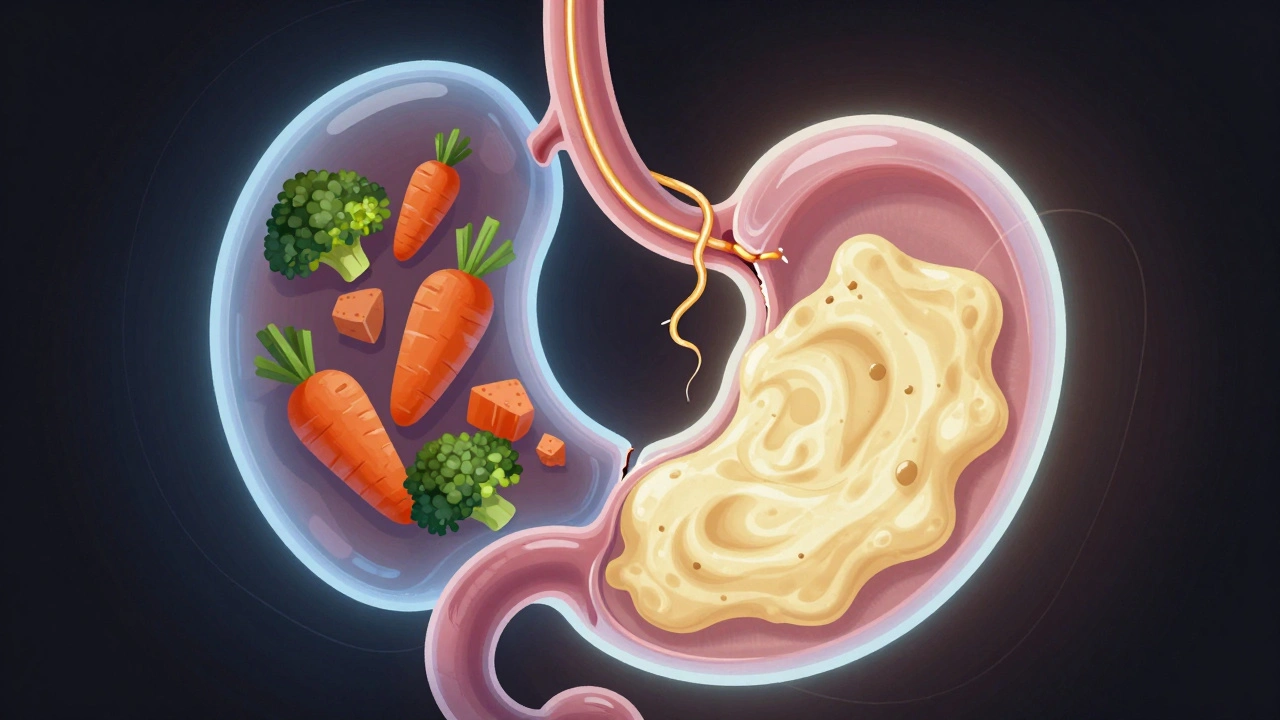
Diet Is the First Line of Defense
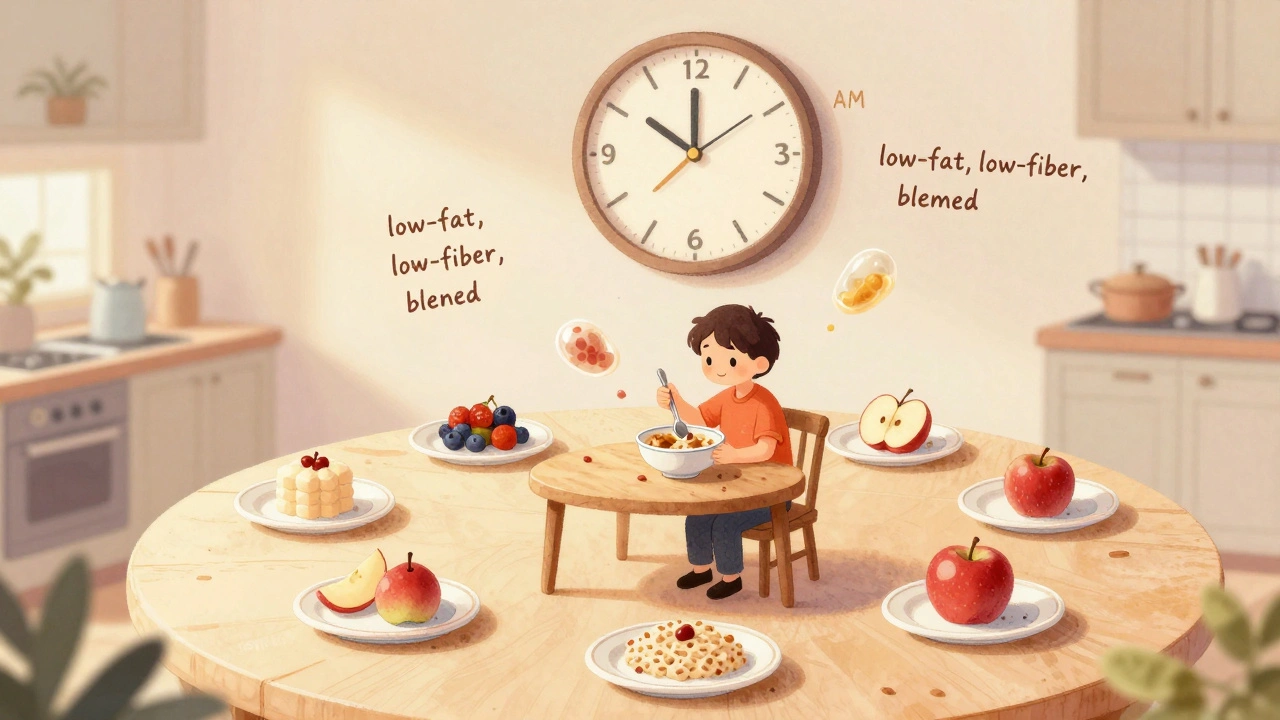
Here’s the truth: no pill works as well as food changes. Sixty-five percent of patients see major improvement just by adjusting what they eat. It’s not about eating less-it’s about eating smarter. Start with liquids. Smoothies, broths, and shakes move through the stomach fastest. Then move to soft, well-cooked foods. Think mashed potatoes, scrambled eggs, applesauce, and oatmeal. Avoid anything tough, fibrous, or raw. No raw carrots, broccoli, or apples. Even cooked vegetables need to be blended. Particle size matters-food should be under 2 millimeters. That’s the size of a grain of sand. Fat slows digestion. High-fat meals delay emptying by 30 to 50%. That means fried food, butter, cheese, and fatty meats are off-limits. Stick to lean proteins: skinless chicken, fish, tofu. Keep fat under 3 grams per meal. Fiber is another enemy. Whole grains, beans, nuts, and skins trap in the stomach. Limit fiber to 15 grams per day. That’s less than one cup of cooked lentils.Meal Timing and Structure Matter
Forget three big meals. Eat six small ones. Each should be 1 to 1.5 cups max. That’s about the size of a coffee mug. Eating too much at once overwhelms the stomach. And don’t drink with meals. Liquids mix with solids and swell the stomach by 40%. Wait 30 minutes after eating before sipping water. Hydration is still critical-but do it right. Take 1 to 2 ounces of water every 15 minutes. That’s a few sips. Don’t chug. Large volumes of fluid stretch the stomach and worsen bloating. If you’re vomiting, sip electrolyte drinks like Pedialyte. Dehydration is common. One in four moderate-to-severe cases ends up in the hospital for it. Blending food isn’t optional-it’s necessary. A study found that 70% of patients improved when they blended everything. Use a high-powered blender. Cook food until it’s falling apart. Strain if needed. You’ll be surprised how much better you feel when your food is smooth.What to Avoid
Carbonated drinks are a trap. Soda, sparkling water, even beer-any gas increases bloating by 25%. Alcohol relaxes the stomach muscles, making things worse. Chocolate, mint, and caffeine can trigger heartburn. And never eat late. Lying down with food in your stomach invites reflux and nausea. Some people swear by ginger tea or peppermint oil. There’s no strong evidence they help. Stick to what’s proven: low-fat, low-fiber, small portions, blended, and spaced out.
When Diet Isn’t Enough
If symptoms persist after 8 to 12 weeks of strict diet changes, it’s time to talk about medication. Metoclopramide is the most common. It speeds up stomach emptying by 20 to 25%. But it carries a serious risk: tardive dyskinesia, a movement disorder that can be permanent. Doctors limit use to under three months. Gastric electrical stimulation (GES) is an option for those who don’t respond. A device implanted in the abdomen sends mild pulses to the stomach. It doesn’t cure gastroparesis, but 70% of patients report fewer vomiting episodes. Half cut their vomiting by more than half. Newer treatments are on the horizon. A pill called relamorelin, approved in 2022, showed a 35% improvement in emptying in trials. Another procedure, per-oral pyloromyotomy, cuts the muscle at the stomach’s exit. It works in 60 to 70% of cases. And research is underway on probiotics and nerve-regenerating stem cells.Complications You Can’t Ignore
Left untreated, gastroparesis can turn dangerous. Bezoars form in 6% of cases. These are rock-hard balls of undigested food. They can block the stomach and require endoscopy or surgery. Malnutrition hits 30 to 40% of chronic patients. Many lose more than 10% of their body weight. For diabetics, it’s a double nightmare. Food sitting in the stomach means unpredictable blood sugar spikes and crashes. Eighty-five percent of diabetic gastroparesis patients struggle to control glucose. Insulin doses become guesswork. That’s why working with a dietitian who knows gastroparesis is non-negotiable. Those who do improve outcomes by 40%.Living With Gastroparesis
This isn’t a condition you cure. It’s one you manage. The goal isn’t perfection-it’s control. You’ll learn your triggers. Maybe it’s broccoli. Maybe it’s almond milk. Keep a food diary. Write down what you eat and how you feel. Eighty percent of patients find their personal problem foods this way. Support matters. Sixty-five percent feel anxious before meals. Fifty percent avoid social events. You’re not alone. Online groups, dietitian-led programs, and counseling help. Some clinics offer cognitive behavioral therapy for eating anxiety. It works. The future is brighter. With better diagnostics, new drugs, and personalized treatment plans, people with gastroparesis are living fuller lives. But right now, the most powerful tool is still your fork. Eat small. Eat soft. Eat often. And don’t give up.Can gastroparesis be cured?
No, there is no cure for gastroparesis. It’s a chronic condition caused by nerve or muscle damage in the stomach. But symptoms can be managed effectively with diet, medication, and sometimes procedures like gastric stimulation. Many people live full, active lives with proper management.
What foods are safe to eat with gastroparesis?
Safe foods are low in fat and fiber, easy to digest, and blended if needed. Examples include: scrambled eggs, oatmeal, mashed potatoes, applesauce, well-cooked carrots, blended soups, lean chicken or fish, tofu, low-fat yogurt, and smoothies made with peeled fruits and no seeds. Avoid raw vegetables, whole grains, nuts, tough meats, fried foods, and carbonated drinks.
How many meals should I eat per day with gastroparesis?
Eat 5 to 6 small meals each day, not 3 large ones. Each meal should be 1 to 1.5 cups-about the size of a coffee mug. Smaller portions are easier for your stomach to handle and reduce bloating and nausea.
Is it okay to drink water with meals if I have gastroparesis?
No. Drinking liquids with meals increases stomach volume by 40%, making symptoms worse. Wait at least 30 minutes after eating before drinking. Sip water slowly throughout the day-1 to 2 ounces every 15 minutes-to stay hydrated without overloading your stomach.
Can gastroparesis cause weight loss?
Yes. Up to 40% of people with chronic gastroparesis develop malnutrition, and 20% lose more than 10% of their body weight. This happens because food doesn’t digest properly, calories aren’t absorbed, and nausea makes eating difficult. Working with a dietitian is essential to prevent this.
Does diabetes make gastroparesis worse?
Yes. High blood sugar damages the vagus nerve, which controls stomach emptying. Up to 50% of people with type 1 diabetes and 30% with type 2 develop gastroparesis. It also makes blood sugar control harder because food moves unpredictably. Tight glucose management is critical to slow progression.
How long does it take to see improvement with a gastroparesis diet?
Most people notice improvement within 8 to 12 weeks of following a strict low-fat, low-fiber, blended diet. Some feel better in days, especially if they stop carbonated drinks and eat smaller meals. Consistency is key-cheating on the diet can undo progress.
Should I see a dietitian for gastroparesis?
Yes. A registered dietitian who specializes in gastroparesis can create a personalized meal plan, help you avoid nutritional deficiencies, and adjust your diet as your needs change. Patients who work with one improve outcomes by 40% compared to those who manage alone.
Nancy Carlsen
December 7, 2025 AT 20:38Just started the blended diet last week and already feel like a new person 😊 No more midnight vomiting sprees. I used to dread dinner-now I actually look forward to my smoothie bowls. You guys are not alone. Keep going, even on the rough days. This stuff works.
Ted Rosenwasser
December 9, 2025 AT 08:10Blended food? Really? You're telling me the solution to a neurological disorder is to turn your meals into baby food? This is the 21st century. We have gastric pacemakers, GLP-1 agonists, even experimental vagus nerve stimulators. You're reducing a complex autonomic dysfunction to a Whole Foods smoothie. Pathetic.
Ashley Farmer
December 9, 2025 AT 10:01I just want to say how much I appreciate this post. It’s rare to see someone explain gastroparesis without sounding like a textbook. I’ve had this for 7 years and no one ever mentioned the fear of eating part-that’s the hardest part. You’re not just feeding a body, you’re fighting anxiety. Thank you for naming it.
Kurt Russell
December 10, 2025 AT 21:40Y’ALL. I was in the hospital last month with a bezoar. I thought I was dying. Then I found this guide. I started blending everything-yes, even my coffee with almond milk. I went from 110 lbs to 138 in 4 months. I’m hiking again. I’m going to my niece’s wedding. THIS IS NOT A DEATH SENTENCE. You can reclaim your life. Do the work. Blend. Sip. Repeat. You got this.
Olivia Hand
December 12, 2025 AT 00:47Interesting how the post treats ‘low-fiber’ as gospel, but ignores the microbiome implications. Fiber isn’t just ‘bulky’-it’s fuel for your gut bugs. If you’re eating nothing but mashed potatoes and applesauce for months, you’re starving your colon. Is there data on long-term dysbiosis in gastroparesis patients on this diet? Or are we just trading nausea for SIBO?
Desmond Khoo
December 12, 2025 AT 01:50Man, I thought I was the only one who avoids restaurants. I used to fake being full just to get out of dinner plans. Now I bring my own blended soup in a thermos. People think I’m weird. I don’t care. I’m alive. And I can eat without crying. That’s victory.
Louis Llaine
December 12, 2025 AT 17:36So let me get this straight. The solution to a nerve damage disease is… eat softer food? Wow. That’s like saying ‘my car won’t start because the battery’s dead’ and the solution is ‘drive slower’. Brilliant. Next you’ll tell me to wear a hat to cure pneumonia.
Jane Quitain
December 12, 2025 AT 18:42OMG I JUST REALIZED I’VE BEEN DRINKING WATER WITH MEALS FOR 5 YEARS 😭 I’M SO SORRY MY STOMACH. I’M GOING TO START SIPPING WATER NOW. THANK YOU FOR THIS. I FEEL LIKE I’VE BEEN DOING EVERYTHING WRONG.
Kyle Oksten
December 14, 2025 AT 13:49It’s funny how we treat gastroparesis like a personal failure of discipline. We say ‘just eat smaller meals’ as if the brain isn’t broken. But what if the problem isn’t the food, but the body’s inability to signal satiety or motility? We’ve turned a neurological disorder into a diet cult. The real tragedy isn’t the bezoars-it’s that we’ve normalized suffering as a lifestyle choice.
Sam Mathew Cheriyan
December 15, 2025 AT 14:26Wait… so you’re telling me the government and Big Pharma don’t want you to know that blending food fixes everything? I bet they’re hiding the real cure-copper coils and lemon water. I had gastroparesis after a flu shot. The docs didn’t even test my EMG. They just gave me pills. I’m 100% sure it’s a vaccine side effect they’re covering up. I’m on a raw garlic cleanse now. It’s working.
Ernie Blevins
December 16, 2025 AT 15:29Yeah, sure. Blend your food. Drink Pedialyte. Whatever. You’re gonna die anyway. Your stomach’s broken. You’re just delaying the inevitable. At least you’re not eating a burger and pretending it’s fine. You’re just a walking time bomb with a blender.
Helen Maples
December 16, 2025 AT 18:25Thank you for the detailed, science-backed breakdown. This is exactly the kind of resource we need. For those dismissing diet as ‘too simple’-it’s not about complexity, it’s about precision. The data is clear: 65% improvement with dietary changes alone. This isn’t anecdotal. It’s clinical. If you’re not trying this first, you’re not being responsible with your health. Start today. No excuses.