
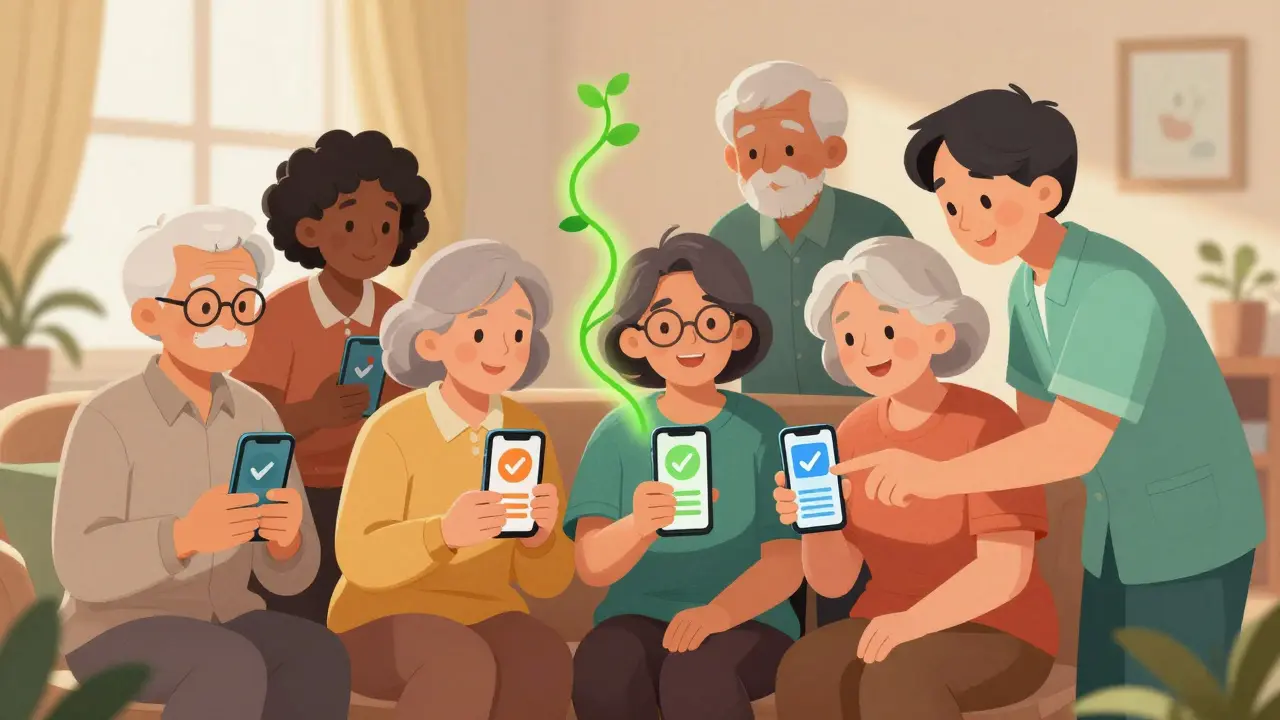
Every year, medication adherence fails for nearly half of all people taking prescription drugs for chronic conditions. That’s not because they don’t care-it’s because remembering to take pills multiple times a day, across different schedules, while juggling work, family, and fatigue, is incredibly hard. The consequences are real: hospital visits, worsening health, and billions in avoidable healthcare costs. But there’s a simple, proven solution: medication reminder apps. These aren’t just fancy alarms. Modern digital tools now track your pills, warn you about interactions, sync with your doctor’s system, and even adapt to your habits. If you or someone you love struggles to stay on track with meds, this is what actually works in 2026.
Why Medication Adherence Still Falls Apart
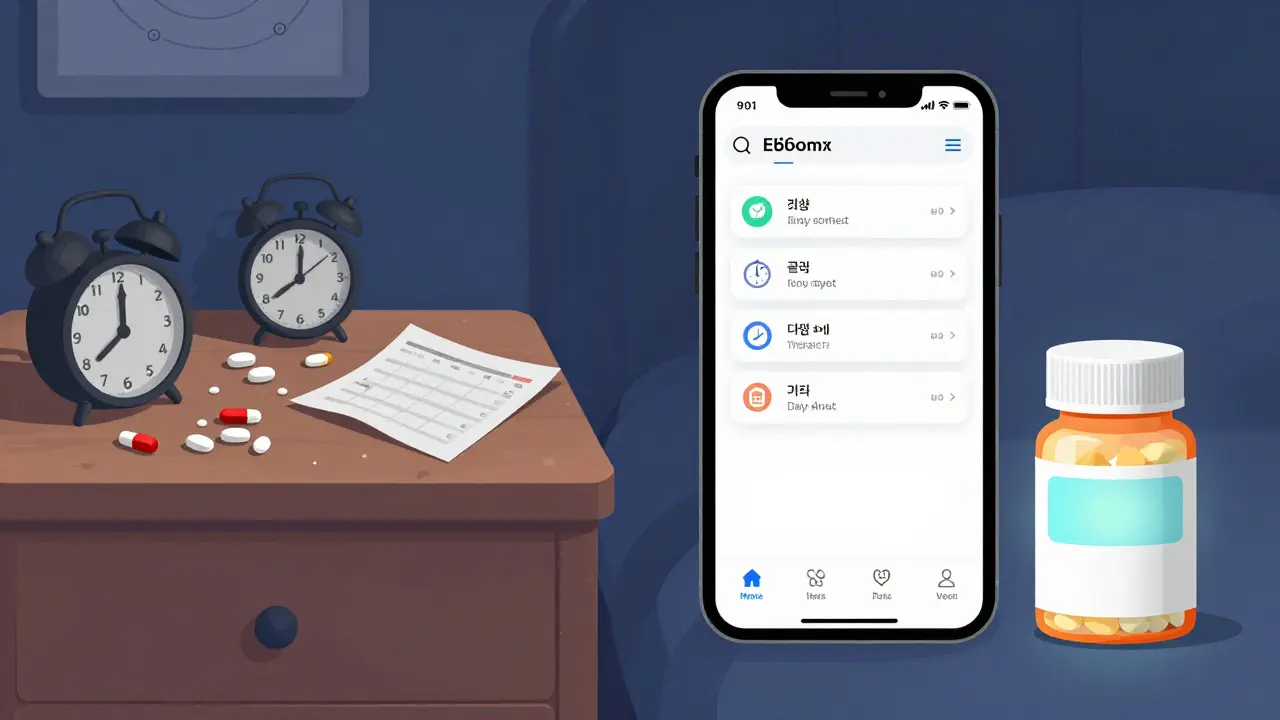
It’s easy to blame patients for forgetting pills. But the truth is, most people aren’t lazy-they’re overwhelmed. A typical 70-year-old with high blood pressure, diabetes, and arthritis might be taking eight different pills at five different times a day. Some need to be taken on an empty stomach. Others must be spaced six hours apart. One requires refrigeration. Another can’t be mixed with grapefruit juice. No wonder people skip doses. The problem isn’t just confusion. It’s forgetfulness. Studies show that even people who are highly motivated to get better miss doses because life gets busy. A 2023 report from the National Community Pharmacists Association found medication non-adherence costs the U.S. between $300 and $350 billion annually in avoidable care. That’s more than the entire annual budget of the Department of Education. And it’s not just about money-it’s about lives lost to preventable complications like strokes, heart attacks, and kidney failure.How Medication Reminder Apps Actually Work
Modern medication reminder apps don’t just beep at you. They’re smart, personalized systems built on years of behavioral science and clinical research. Most work the same way: you input your meds, dosages, and times. The app sends a push notification when it’s time. But that’s just the start. Apps like Medisafe and MyTherapy go further. They track whether you’ve taken your pill-tap a button, and it’s logged. If you miss a dose, they’ll send a gentle follow-up. Some can even alert your caregiver or pharmacist if you haven’t responded after multiple reminders. They sync across your phone, tablet, and sometimes even smartwatches. You can set different sounds for different meds. One for your morning blood pressure pill, another for your nighttime sleep aid. Many now include visual logs. You can scroll back and see exactly how many days you’ve taken everything correctly. That visual feedback is powerful. Seeing a streak of green checkmarks builds motivation. It turns a chore into a small win. The best apps also check for drug interactions. If you add a new medication your doctor prescribed, the app will warn you if it clashes with something you’re already taking. Some even pull data from your pharmacy’s electronic records through secure FHIR APIs, so you don’t have to manually enter every pill.Apps That Deliver Real Results in 2026
Not all apps are created equal. A 2025 review of 14 top apps by JMIR found that only a handful consistently improved adherence. Here are the ones that stand out:- Medisafe: The most widely used app in the U.S. It’s trusted by hospitals and clinics. Its 2025 update added AI that learns your habits-like if you usually take your pill 20 minutes late-and adjusts reminders accordingly. In a 2023 NIH study, users in federally qualified health centers improved adherence by 43%. It also lets you share your progress with family members.
- MyTherapy: Popular for its clean interface and detailed tracking. It logs symptoms, mood, and side effects alongside your meds. This helps users and doctors spot patterns. For example, if you feel dizzy every time you take a certain pill, you can flag it and show your doctor later.
- Round Health: Designed for older adults. Larger buttons, voice-guided setup, and simple navigation. It doesn’t overwhelm users with features. Just reminders, logs, and alerts. It’s been adopted by 12 U.S. senior living communities in the past year.
- CareZone: Goes beyond pills. It organizes your entire medical life: insurance cards, appointment dates, lab results, and even pet meds. Great for caregivers managing multiple people’s health.
- Mango Health: Uses rewards. You earn points for taking meds on time, which you can redeem for gift cards. A 2024 trial showed it improved adherence by 37% in low-income patients-proving incentives work.
What Makes an App Actually Effective?
A 2020 meta-analysis in the Journal of Managed Care & Specialty Pharmacy found that apps with a Cohen’s d effect size of 0.40 significantly outperformed traditional methods like printed pill organizers or phone alarms. But not every app hits that mark. Here’s what separates the good from the forgettable:- Personalization: Can you set different times for each pill? Can you choose vibration, sound, or even a custom voice message? Apps that let you tailor the experience see higher engagement.
- Condition-specific features: Apps built for diabetes, heart disease, or hypertension include tailored education. For example, a hypertension app might explain why skipping your ACE inhibitor raises your risk of stroke. This isn’t just a reminder-it’s a learning tool.
- Integration: Does it connect to your pharmacy or EHR? If your doctor can see your adherence data, they’re more likely to adjust your plan proactively.
- Reliability: If notifications fail or the app crashes, you’ll stop using it. Top apps have 99%+ uptime and work offline.
- Support: Is there a help section? Can you call someone? Medisafe scores 4.2/5 for help resources. Many smaller apps score below 3.0 because they offer no support at all.
Who Benefits the Most-and Who Struggles?
The data shows clear patterns. Adults under 50 are far more likely to use these apps-68% do, according to the 2024 National Health Interview Survey. But the people who need them most-older adults, low-income patients, and those with complex regimens-are less likely to adopt them. Why? It’s not just tech skills. Many seniors worry about privacy. Others don’t own smartphones. Some can’t afford data plans. A 2024 JAMA commentary pointed out that digital access isn’t just about having a phone-it’s about having reliable Wi-Fi, someone to help set it up, and confidence to use it. But here’s the surprise: in a 2023 NIH study of low-income, elderly patients, 87% were able to set up Medisafe after a single 15-minute training session. And attrition was low. People stuck with it. The key? Hands-on help. Not a YouTube video. Not a brochure. A live person sitting with them, tapping the buttons, and answering questions.Real User Feedback: What People Actually Say
Reddit threads from r/medapps in early 2025 are full of honest reviews. One user, u/MedUser2023, wrote: “I take 7 pills a day. Before the app, I’d miss 2-3 doses a week. Now I’m at 98% adherence. The ability to adjust reminder times for my weird schedule saved me.” Another, u/HealthTracker, said: “I love seeing my weekly graph. It’s like a fitness tracker for my meds. I don’t want to break my streak.” But complaints are real too. About 23% of iOS users reported battery drain. 31% of Android users said notifications sometimes didn’t come through. That’s why the best apps let you choose between push alerts, SMS backups, or even automated phone calls if you’re unreachable.What’s Next for Digital Adherence Tools
The next wave of innovation is already here. Apps are starting to connect to smart pill bottles that beep when opened. Some are integrating with wearable devices that track heart rate or sleep to predict when you’re most likely to forget a dose. The Digital Medicine Society predicts 35% of apps will support smart bottle syncing by 2027. AI is making apps smarter too. Medisafe’s new algorithm analyzes your usage patterns and predicts when you’re at risk of missing a dose-then sends a personalized message: “You usually take your statin after breakfast. Today’s your 10th day in a row. Want to keep it going?” Gamification is another trend. The Smart-Meds pilot study used storytelling to help heart attack survivors stay on track. Instead of just logging pills, users completed a narrative journey-each dose unlocked a new chapter. Patients reported higher confidence in managing their health.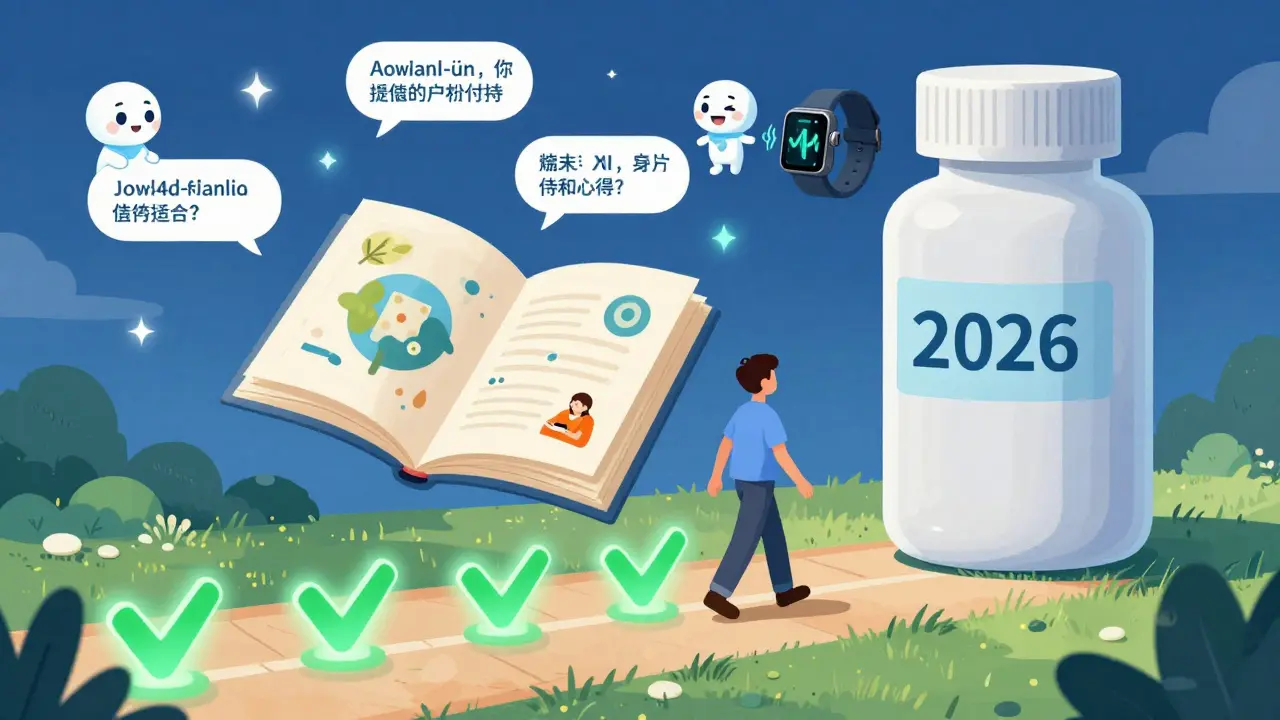
How to Get Started
If you’re ready to try one, here’s how to pick the right one:- Write down your meds: List every pill, dose, time, and special instructions.
- Choose one app: Start with Medisafe or MyTherapy-they’re the most reliable.
- Set it up with help: Ask a family member, pharmacist, or nurse to sit with you for 20 minutes. Don’t try to figure it out alone.
- Enable backup alerts: Turn on SMS reminders too, in case your phone dies.
- Give it 3 weeks: It takes time to build the habit. Don’t quit after a few missed days.
When Apps Aren’t Enough
Apps are powerful-but not magic. If you’re still missing doses, talk to your doctor. Maybe your regimen is too complicated. Maybe you can switch to a combination pill. Maybe you need a pill organizer with alarms built in. Also, don’t rely on apps if you have severe memory issues. For people with dementia or advanced Parkinson’s, caregiver support or home health aides are more reliable than technology.Final Thoughts
Medication adherence isn’t about willpower. It’s about design. A well-built app doesn’t just remind you-it makes taking your medicine easier, more visible, and even a little rewarding. The evidence is clear: people who use these tools are twice as likely to take their meds as prescribed. The real question isn’t whether you should use one. It’s which one will work for you. Start simple. Try one. Give it time. And if it helps-even just a little-you’re not just saving money. You’re protecting your health.Do medication reminder apps really work?
Yes, when used correctly. A 2025 systematic review found that 10 out of 14 clinical trials showed statistically significant improvements in medication adherence. Apps like Medisafe and MyTherapy have been shown to improve adherence by 30-43% in real-world settings, outperforming traditional methods like pill organizers or printed schedules.
Are these apps safe and private?
Top apps like Medisafe, MyTherapy, and CareZone are HIPAA-compliant. They use AES-256 encryption for stored data and TLS 1.2+ for data in transit. Your information is not shared with third parties unless you explicitly allow it. Always check the app’s privacy policy before entering health details.
Can I use these apps if I’m over 65?
Absolutely. Apps like Round Health are specifically designed for older adults with larger buttons, voice prompts, and simple navigation. A 2023 NIH study found that seniors with no prior tech experience could successfully set up Medisafe after just one 15-minute training session. The biggest barrier isn’t age-it’s lack of support during setup.
Do I need to pay for these apps?
Most core features are free. Medisafe, MyTherapy, and CareZone offer free versions with basic reminders and tracking. Premium upgrades ($3-$10/month) unlock features like family sharing, advanced reporting, or integration with pharmacies. You don’t need to pay to see results-many users get full benefit from the free tier.
Can my doctor see my app data?
Only if you share it. Most apps let you export a PDF of your adherence log or send it directly to your provider through secure messaging. Some, like Medisafe, integrate with EHRs via FHIR APIs-but you must give explicit permission. Your doctor won’t see your data unless you choose to share it.
What if I miss a dose? Will the app notify someone?
Some apps let you designate a trusted contact-like a family member or caregiver-who gets notified if you miss a dose and don’t respond to follow-up alerts. This feature is especially helpful for people living alone or with cognitive challenges. Check the app’s settings under “Caregiver Alerts” or “Emergency Contacts.”
Are there apps for specific conditions like diabetes or heart disease?
Yes. Apps like MyTherapy and Medisafe offer condition-specific templates for diabetes, hypertension, heart failure, and more. These include tailored educational content, symptom trackers, and reminders aligned with clinical guidelines. For example, a heart disease app might remind you to take your beta-blocker at bedtime and explain why skipping it increases your risk of arrhythmia.
Can I use these apps without internet?
Yes. All major apps work offline. You can set reminders, log doses, and view your history without Wi-Fi or cellular data. Syncing to the cloud happens automatically when you reconnect. This is critical for users in areas with poor signal or limited data plans.
Do these apps replace my pharmacist?
No. Apps are tools to help you stay on track-they don’t replace professional advice. Always consult your pharmacist or doctor before changing doses, stopping meds, or adding supplements. Many apps even let you message your pharmacy directly for refills or questions.
What if the app stops working or gets discontinued?
Some apps shut down-7 out of 14 in a 2025 review were no longer maintained. Stick with established apps like Medisafe, MyTherapy, or CareZone-they’re backed by companies with long-term funding. Always export your data regularly as a PDF. That way, if the app disappears, you still have your adherence history to share with your doctor.
Ryan Hutchison
January 16, 2026 AT 12:33These apps are fine for tech-savvy millennials but most seniors I know don’t even know what a push notification is. We’re talking about people who still use flip phones and think 'cloud' is a weather thing. The real solution? Pill organizers with big alarms and a damn nurse checking in. Not another app that crashes when you need it most.
Samyak Shertok
January 16, 2026 AT 23:28Oh wow, another Silicon Valley fairy tale wrapped in HIPAA compliance and cherry-picked NIH studies. Let me guess-next you’ll tell me that TikTok cures diabetes. The real problem isn’t forgetting pills-it’s that Big Pharma wants you dependent on 7 different drugs because one pill would cost $3 and actually fix the root cause. These apps are just digital bandages on a bullet wound.
Henry Ip
January 17, 2026 AT 08:29I’ve used Medisafe for 2 years now. My dad has 8 meds and I set it up for him with his pharmacist. He forgets sometimes but the backup SMS saved him twice when his phone died. No magic, just consistency. Start simple, stick with it. It works if you let it.
waneta rozwan
January 19, 2026 AT 02:20Of course you’re recommending apps. Because nothing says ‘I care about elderly patients’ like making them learn another interface while their hands shake and their vision fades. The fact that you think a ‘green streak’ is motivation is pathetic. Real care means someone showing up. Not a notification.
john Mccoskey
January 20, 2026 AT 11:17Let’s deconstruct this. You cite a 43% adherence improvement from Medisafe-but the study had a 22% attrition rate. You mention FHIR integration as if it’s ubiquitous, yet 87% of rural clinics still use fax machines. You praise gamification while ignoring that reward systems work for children, not adults with depression. The data is cherry-picked, the solutions are superficial, and the tone is condescending. This isn’t innovation-it’s tech-washing a systemic failure.
evelyn wellding
January 20, 2026 AT 19:38YES YES YES!! 🙌 I started using MyTherapy after my heart attack and seeing my streak made me feel like I was actually doing something right. I even got my mom on it and now we both get little celebratory animations when we hit 30 days. It’s not perfect but it’s the first thing that made me feel like my health mattered. Thank you for sharing this!! 💪❤️
Chelsea Harton
January 20, 2026 AT 23:13apps dont fix dumb regimens. just sayin.
Corey Chrisinger
January 22, 2026 AT 12:32There’s a deeper truth here: we’ve outsourced responsibility to algorithms because we’re too busy, too overwhelmed, too disconnected to care properly. The app reminds you-but who reminds you to call your mom? To sit with your grandpa while he takes his pills? Technology doesn’t replace humanity. It just makes us forget we need it.
Bianca Leonhardt
January 24, 2026 AT 08:44These apps are a luxury for people who own smartphones, have data plans, and aren’t working two jobs. Meanwhile, my cousin on Medicaid gets her meds from a free clinic that still hands out paper pill cards. You think a ‘gamified streak’ helps someone choosing between insulin and groceries? This is performative tech. Stop pretending.
Travis Craw
January 25, 2026 AT 10:39i tried round health for my dad. it was way easier than the others. he actually used it. the voice thing helped. but we still had to sit with him for 20 mins to get it set up. no one should have to figure this out alone.
Christina Bilotti
January 27, 2026 AT 02:07How quaint. You’ve curated a list of apps that are all owned by venture-backed startups with aggressive privacy policies and zero accountability. You call it ‘personalization’-I call it surveillance capitalism with a side of beta-blockers. The real innovation would be single-pill combinations covered by insurance. But that would hurt profits, wouldn’t it?
brooke wright
January 27, 2026 AT 11:56My aunt used Medisafe but her phone died during a power outage and she missed 3 doses. She cried because she felt guilty. The app didn’t care. The app doesn’t know she’s alone. I had to drive 45 minutes to check on her. No app can fix that. No app.
vivek kumar
January 27, 2026 AT 12:05Interesting that you highlight U.S.-only data. In India, community health workers use low-tech SMS reminders with voice messages in local languages. No app needed. No smartphone required. Why are we assuming digital is the only solution? Sometimes the simplest tech-human connection-is the most scalable.
Nick Cole
January 29, 2026 AT 03:58I work in home care. We’ve seen people go from 30% adherence to 90% with just one thing: a nurse sitting with them for 15 minutes to set up Medisafe. Not a video. Not a pamphlet. A person. That’s the real MVP here. The app is just the tool. The human is the cure.