

When your child is sick, you want them to feel better fast. But giving them a pill meant for adults isn’t just risky-it’s dangerous. Children aren’t small adults. Their bodies process medicine differently. Their kidneys, liver, and nervous systems are still developing. That’s why age-appropriate medications aren’t a luxury-they’re a necessity.
Why Kids Need Different Medicines
It’s easy to assume that if a 150-pound adult takes 500 mg of amoxicillin, a 50-pound child should get one-third of that. But it’s not that simple. A child’s weight matters, yes-but so does their age, organ maturity, and how their body absorbs and breaks down drugs.
For example, newborns can’t process certain antibiotics the way older kids can. Their livers are too immature. That’s why a drug like chloramphenicol, once common, is now avoided in babies under 2 weeks. It can cause a deadly condition called gray baby syndrome. Meanwhile, a 6-year-old with an ear infection needs a different formulation than a 14-year-old. One might need a sweet liquid. The other can swallow a tablet.
The FDA and WHO now recognize six distinct pediatric age groups for drug development: preterm neonates, term neonates (0-27 days), infants (28 days-23 months), children (2-11 years), adolescents (12-16 years), and young adults (17-21). Each has unique needs. A 3-month-old with pneumonia needs a liquid antibiotic with a concentration 50 times lower than what’s used in adults. A 10-year-old with a sore throat can take a chewable tablet. A 16-year-old might handle a standard adult pill.
Common Conditions and Safe Medications
Let’s look at the most common pediatric illnesses and what actually works-safely.
Pain and Fever
For fever and pain, acetaminophen and ibuprofen are the only safe choices for kids under 18. Aspirin is off-limits. It can trigger Reye’s syndrome, a rare but deadly condition that causes brain and liver swelling.
Acetaminophen: Give 10-15 mg per kg of body weight every 4-6 hours. Max daily dose is 75 mg/kg or 3,750 mg, whichever is lower. Too much? Liver damage. Too little? No relief.
Ibuprofen: 5-10 mg/kg every 6-8 hours. Max single dose is 400 mg for kids under 12. For teens, it’s 400-600 mg every 6-8 hours, max 3,200 mg per day. Watch for stomach upset-it’s common. About 5-10% of kids get mild gastritis at therapeutic doses.
Always use the measuring device that comes with the bottle. A kitchen spoon? That’s how 42% of parents make dosing mistakes, according to Children’s Hospital of Philadelphia.
Ear Infections and Antibiotics
Ear infections are the #1 reason kids see a doctor. Amoxicillin is still first-line. It works. It’s safe. It’s cheap.
For kids under 40 kg: 25-35 mg/kg/day, split into two or three doses. Max single dose is 500 mg. For example, a 30-pound (13.6 kg) child gets about 340-476 mg per day. That’s usually 2.5-3.5 mL of a 250 mg/5 mL suspension, twice daily.
Why not azithromycin? It’s easier-just one dose a day. But resistance is high. In some areas, over 40% of the bacteria causing ear infections don’t respond to it. Save it for kids allergic to penicillin.
For kids under 2 years, treatment lasts 10 days. Older kids? 5-7 days. Don’t stop early just because they seem better.
Cough and Cold
Over-the-counter cough and cold meds? Don’t use them in kids under 6. The FDA says they’re ineffective and risky. They can cause seizures, rapid heart rate, even death in toddlers.
Instead: saline drops, a humidifier, honey (for kids over 1 year), and fluids. Honey works better than any syrup for nighttime cough. One study showed it reduced cough frequency by 50% compared to placebo.
Flu
Oseltamivir (Tamiflu) is approved for kids 2 weeks and older. For kids under 40 kg: 2 mg/kg twice daily for 5 days. Max dose per dose is 75 mg. For older kids, it’s 75 mg twice daily.
Here’s the kicker: the bitter taste turns kids off. But the new fruit-flavored suspension? Adherence jumped 58% during the 2022-2023 flu season. Taste matters. A kid who spits out medicine won’t get better.
Medications to Avoid
Some drugs are outright dangerous for kids. The Pediatric Pharmacy Association’s 2025 KIDs List is your go-to guide. It flags 27 medications that should be avoided or used with extreme caution.
Codeine and tramadol? Never. These are opioids metabolized into morphine in the liver. But kids vary wildly in how they process them. Some turn a tiny dose into a lethal overdose. The FDA banned codeine for kids under 12 in 2017. Tramadol? Same rule.
Montelukast (Singulair)? Use with caution under age 18. It’s linked to sleep disturbances, nightmares, and even mood changes. The FDA added a black box warning in 2020. If your child starts acting strange after starting it, talk to your doctor.
Angiotensin receptor blockers (like losartan)? Avoid in babies under 1 month. They can cause kidney failure. Fluoroquinolones (like ciprofloxacin)? Skip them in kids under 18 unless it’s a life-threatening infection. They can damage growing cartilage.
And don’t fall for “natural” remedies like ivermectin for colds. It’s not safe for kids. The KIDs List removed it in 2025 after new safety data showed risks outweighed any unproven benefits.
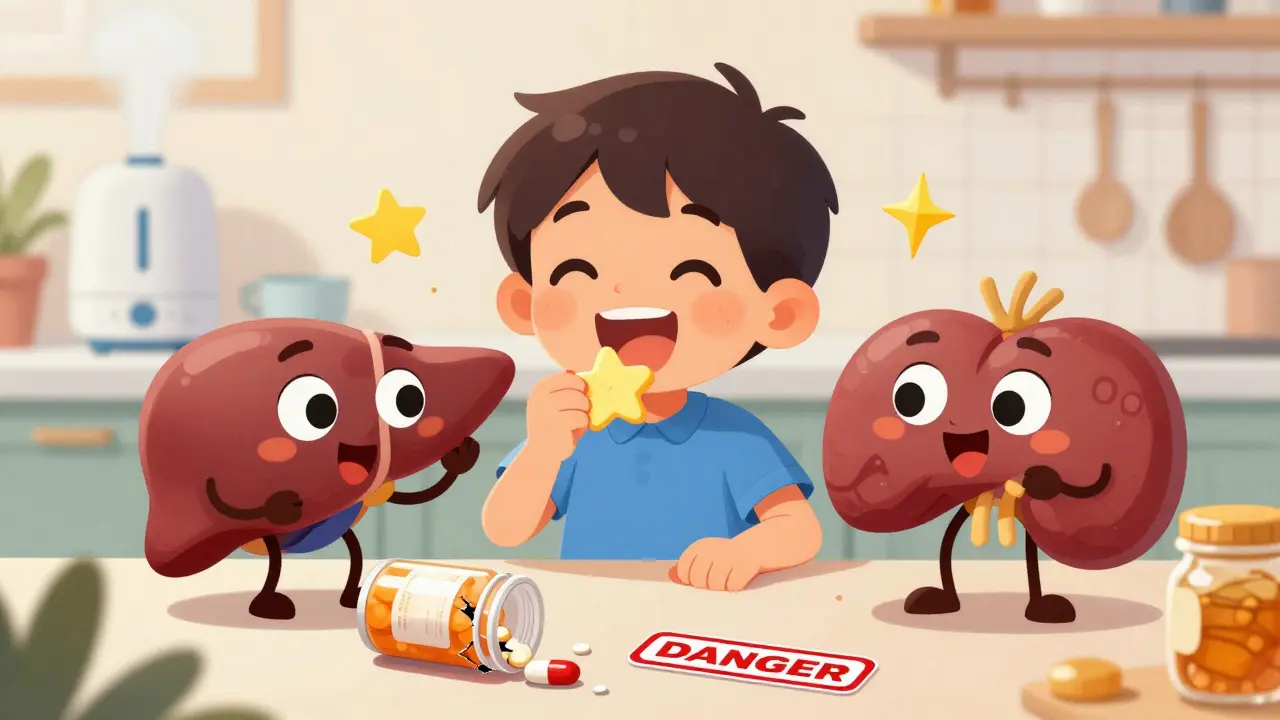
Formulations Matter More Than You Think
A pill that works for an adult might be useless-or dangerous-for a child. That’s why formulation is just as important as dosage.
Under age 5? Liquid, chewable, or orally disintegrating tablets. No adult pills. No crushed tablets. Crushing can change how the drug is absorbed. Some pills are time-release. Crush them, and you get a dangerous overdose.
For toddlers, taste is everything. A 2.5 mL dose of amoxicillin that tastes like rotten fish? Good luck getting it down. That’s why the best pediatric formulations are designed with flavoring, reduced volume, and sweeteners. The WHO says palatability isn’t optional-it’s a core requirement.
And don’t forget the tools. A syringe with clear markings? Essential. A measuring cup? Risky. Most parents use the wrong one. The American Academy of Pediatrics recommends only using the dosing tool that comes with the medicine. No substitutions.
What’s Changing in 2025
The landscape is shifting. More drugs are being tested specifically for kids. Since the Pediatric Research Equity Act passed in 2003, 89% of new drugs now include pediatric studies-up from just 12% in the 1990s.
3D-printed pills? They’re in trials at Cincinnati Children’s Hospital. Imagine a pill that’s custom-sized for your 22-pound toddler. No more splitting tablets or guessing doses.
And nanoparticle delivery systems? They’re being tested to help newborns absorb drugs better. Their guts are still learning how to work. These tiny particles could make a huge difference.
But disparities remain. In low-income countries, only 34% of essential pediatric medicines are available. In the U.S., 92% are. That’s not fair. The WHO’s 2025 Access to Medicines Framework aims to fix that by 2030.
What Parents and Caregivers Can Do
- Always ask: Is this medicine approved for my child’s age?
- Use weight, not age, to calculate doses. If you don’t know your child’s weight in kg, ask your doctor to help convert pounds.
- Never use adult medicine, even if you cut it in half.
- Use only the dosing tool that comes with the bottle.
- Keep a list of all medications your child takes-including vitamins and supplements.
- Ask your pharmacist: Is this formulation safe for a child this age?
And if you’re unsure? Call your pediatrician. Don’t guess. A mistake can cost more than time-it can cost health.
When to Call the Doctor
Call immediately if your child has:
- Difficulty breathing after taking medicine
- Unusual drowsiness or confusion
- Seizures or shaking
- Swelling of the face, lips, or tongue
- Vomiting or diarrhea that won’t stop
These aren’t side effects-they’re red flags. Don’t wait. Get help.
Can I give my child adult ibuprofen if I cut the pill in half?
No. Adult ibuprofen tablets are not designed to be split safely. The dose may not be accurate, and the coating or time-release layer could be damaged, leading to too much medicine hitting the system at once. Always use a pediatric formulation with clear dosing instructions based on weight. If you can’t find the right size, ask your pharmacist for a liquid version.
Why is amoxicillin the first choice for ear infections?
Amoxicillin works well against the most common bacteria causing ear infections, like Streptococcus pneumoniae. It’s safe, affordable, and has a long track record in kids. Other antibiotics like azithromycin are easier to take (one daily dose), but resistance is rising-up to 40% in some areas. So unless your child is allergic to penicillin, amoxicillin remains the best first step.
Are liquid medications less effective than pills?
No. Liquid medications are just as effective-they’re designed to be absorbed the same way. The difference is in delivery. For young kids, liquids are safer and more accurate. For older kids who can swallow pills, tablets may be more convenient. But effectiveness isn’t about form-it’s about correct dosing and adherence. A child who refuses a bitter liquid won’t get better, no matter how good the medicine is.
What should I do if my child spits out or vomits their medicine?
If your child spits out most of the dose right after giving it, you can give the full dose again. If they vomit within 15-20 minutes, give another full dose. If they vomit more than 20 minutes after, wait until the next scheduled dose. Don’t double up unless you’re sure they didn’t absorb any. Always check with your doctor or pharmacist if you’re unsure.
Is it safe to use expired children’s medicine?
No. Liquid antibiotics, in particular, lose potency quickly after the expiration date-even if they look fine. A weakened dose won’t kill the infection and could lead to antibiotic resistance. Solid medicines like acetaminophen may last longer, but it’s still risky. Always dispose of expired pediatric meds safely and get a new prescription if needed.
Medicines for kids are one of the most carefully regulated areas in healthcare. But even with all the guidelines, mistakes still happen. The key is to stay informed, ask questions, and never assume a pill meant for an adult is safe for your child. When in doubt, consult your pediatrician or pharmacist. Your child’s safety depends on it.
jeremy carroll
December 16, 2025 AT 06:06man i wish i had this when my kid got sick last winter. i just guessed with the ibuprofen and used a spoon. thank god nothing bad happened, but now i always use the syringe. this post saved my sanity.
Thomas Anderson
December 17, 2025 AT 05:57seriously, never crush pills. i did it once for my 3-year-old thinking it’d be easier. turned out it was a time-release med. she got way too much all at once. took her to the er. don’t be like me.
Dwayne hiers
December 18, 2025 AT 14:18the pharmacokinetic variability across pediatric age groups is profoundly understudied in real-world clinical practice. while the FDA’s stratification into six cohorts is methodologically sound, real-world adherence to weight-based dosing remains suboptimal due to caregiver literacy gaps and formulation scarcity. the 2025 KIDs List is a critical update, particularly regarding cytochrome P450 polymorphisms affecting codeine metabolism. further, the emerging data on nanoparticle delivery systems targeting neonatal intestinal maturation warrants immediate translational research investment.
Jonny Moran
December 18, 2025 AT 14:31you’re not alone out there. every parent worries about getting it right. the fact that you’re reading this means you’re already doing better than most. keep asking questions. keep double-checking with your pharmacist. you’ve got this.
Tim Bartik
December 19, 2025 AT 09:08so the feds say we can’t give kids aspirin but we can give them tylenol? yeah right. they’re all poison. just look at the big pharma ads. they want you hooked on chemicals. my kid got sick last year and i gave him garlic and honey. he was fine in two days. no pills needed. the system’s rigged.
Alexis Wright
December 19, 2025 AT 15:29let’s be honest-pediatric medicine is a controlled experiment on children by corporations with regulatory capture. the ‘safe’ dosing charts? manufactured consent. the real reason amoxicillin is ‘first-line’ is because it’s cheap and patent-expired. they don’t want you to know that the only reason new formulations exist is because of lawsuits, not science. and don’t get me started on honey-it’s just sugar water masquerading as medicine. the system is designed to keep you dependent.
Daniel Wevik
December 20, 2025 AT 00:29the shift toward pediatric-specific drug development since 2003 is one of the most significant advances in child health in decades. the integration of real-world evidence, pharmacogenomics, and patient-centered formulation design represents a paradigm shift. we’re moving from ‘adults minus weight’ to true developmental pharmacology. this is progress-and it’s worth celebrating. keep pushing for access and equity.
Rich Robertson
December 20, 2025 AT 02:26in south africa, we don’t have the luxury of 92% access. my cousin’s daughter had pneumonia last year. they gave her a liquid antibiotic, but the bottle had no measuring tool. she got too much. ended up in a rural clinic with a fever that wouldn’t break. this post? it’s not just helpful-it’s a lifeline for families who don’t have easy access to info or meds. we need this translated into more languages.
Rulich Pretorius
December 21, 2025 AT 01:34there’s a quiet revolution happening in pediatric dosing. it’s not in the headlines, but it’s real. 3D-printed pills tailored to a child’s exact weight? that’s not sci-fi anymore. it’s happening in Cincinnati. imagine a world where no parent ever has to guess, split, or crush. where every dose is precise, palatable, and safe. that future is closer than we think. we just need to demand it.
Natalie Koeber
December 21, 2025 AT 08:59they say honey works for coughs… but did you know honey is secretly used by the government to track children’s immune responses? it’s in the sugar crystals. they’re monitoring us. don’t trust the ‘natural’ stuff. the real cure is… well, i can’t say. they’ll come for me if i do.
Daniel Thompson
December 23, 2025 AT 08:25the comment about crushing pills is spot-on. but let’s not forget that many pediatric formulations are deliberately made unpalatable to prevent accidental overdose. the bitter taste? it’s a safety feature. if your child refuses it, that’s not a failure of the medicine-it’s nature’s alarm system. don’t sweeten it with syrup. don’t hide it in juice. find the right formulation. the pharmacy can help.