
Why Proper Wound Care Matters
Most cuts, scrapes, and minor burns heal on their own-but only if you treat them right. Poor wound care doesn’t just slow healing; it raises your risk of infection, increases pain, and leaves worse scars. The CDC says over 6.5 million Americans deal with chronic wounds each year, costing more than $25 billion. The good news? Following simple, evidence-based steps can cut infection rates in half and reduce scarring by up to 70%.
Step 1: Clean the Wound Correctly
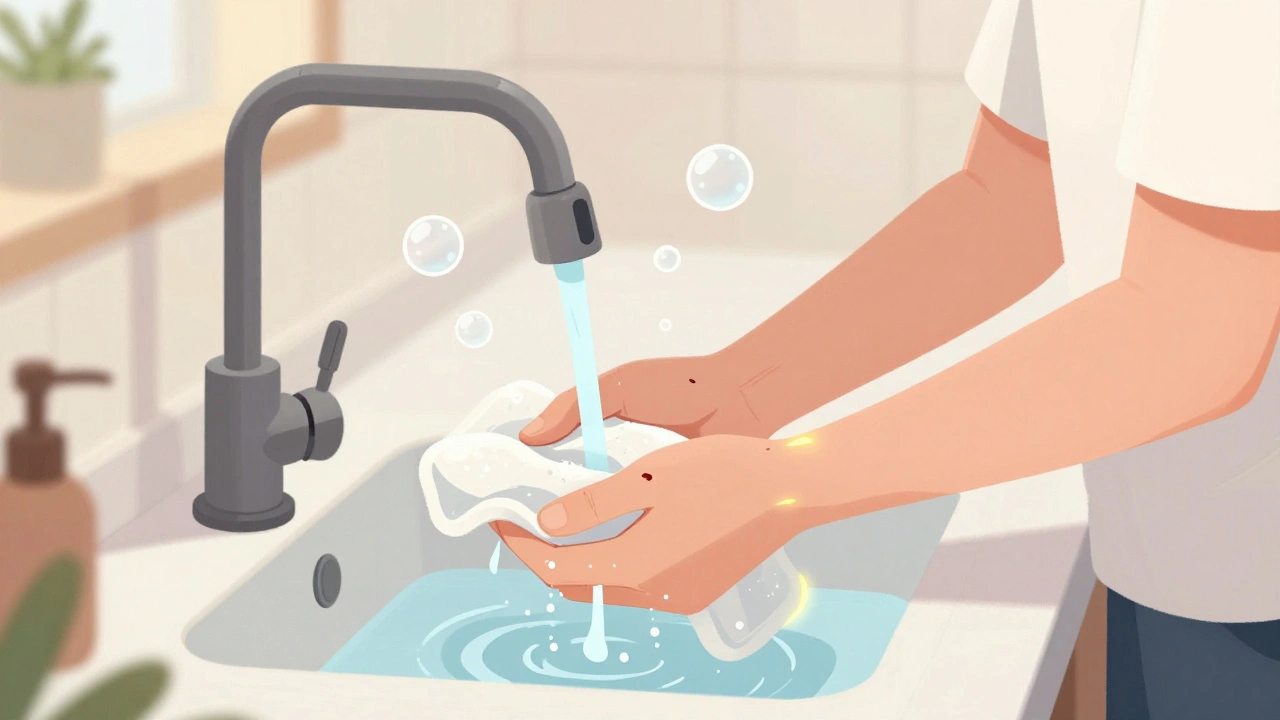
Don’t reach for hydrogen peroxide or rubbing alcohol. These might feel like they’re disinfecting, but they actually kill healthy cells and delay healing by up to 50%. Instead, use mild soap and cool running water.
Hold the wound under running water for 5 to 10 minutes. This gentle flow removes dirt and bacteria without damaging the tissue. The pressure should be light-around 8 to 15 psi. That’s about the force of a normal faucet stream. If there’s debris like gravel or glass, use clean tweezers (wiped with alcohol first) to gently lift it out. Never dig around in the wound.
Wash the skin around the wound with soap, but avoid getting soap inside the open area. Soap residue can irritate healing tissue. After rinsing, pat the area dry with a clean towel-don’t rub.
Step 2: Choose the Right Dressing
Wounds heal best in a moist environment, not a dry one. That’s why leaving a cut uncovered isn’t ideal. But not all bandages are created equal.
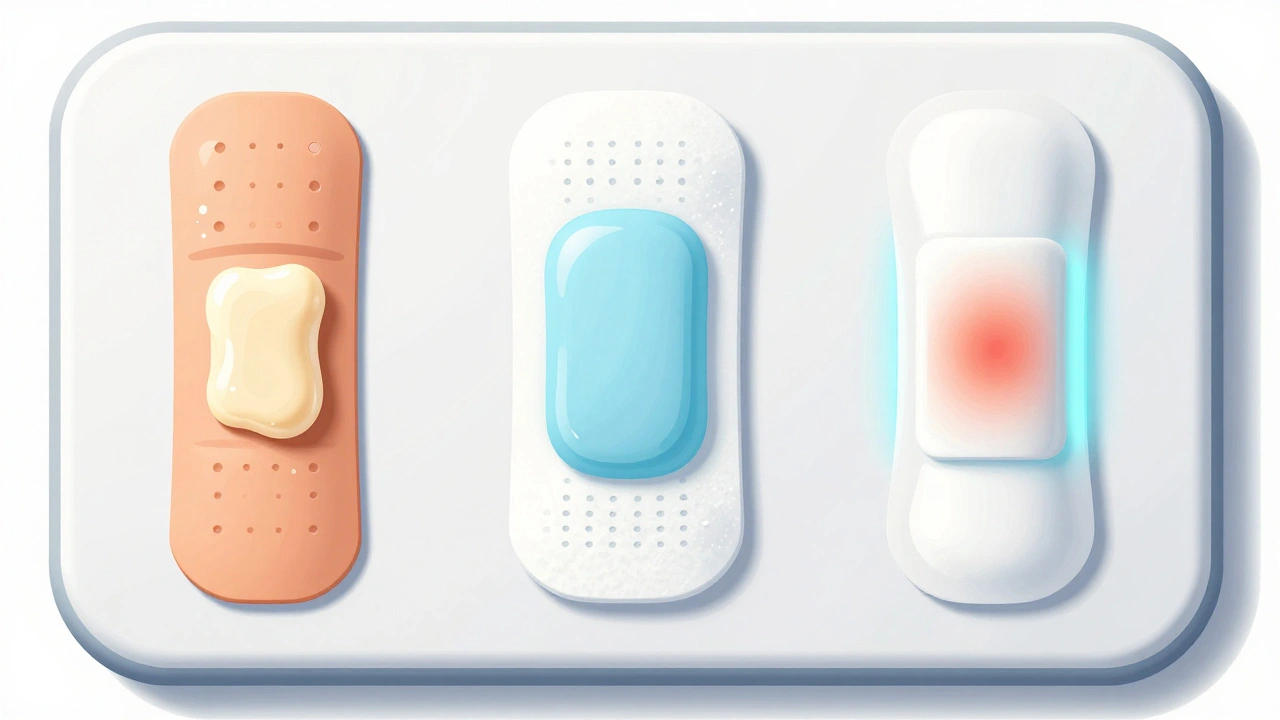
For small, shallow wounds: Use a simple adhesive bandage or gauze pad with petroleum jelly. Petroleum jelly keeps the area moist, prevents scabbing, and reduces itching. It’s just as effective as antibiotic ointments like bacitracin, and you won’t risk an allergic reaction (which happens in nearly 9% of people using antibiotic creams).
For oozing or larger wounds: Use absorbent dressings like foam or alginate. These soak up fluid without sticking to the wound. Hydrocolloid dressings (those gel-like patches) work well for low-drain wounds like blisters or minor burns.
Change the dressing daily-or sooner if it gets wet or dirty. Never pull a dressing off quickly. Wet it gently with saline or water first to loosen it. Pulling it off dry can rip off new skin and restart bleeding.
Avoid tape that wraps completely around fingers, toes, or limbs. That can cut off circulation. Use paper tape or leave the ends loose.
Step 3: Prevent Scars Before They Start
Scars aren’t just cosmetic. Thick, raised scars (called hypertrophic scars) can limit movement and cause discomfort. The best time to prevent them is right after the wound closes.
Keep the area moisturized. Apply petroleum jelly or a plain ointment twice a day for at least two weeks. Studies show this reduces scar formation by 60%.
Once the wound is fully closed (usually after 10-14 days), switch to silicone gel sheets or silicone-based scar creams. These are proven to flatten and fade scars by 50-60%. They work by regulating moisture and reducing collagen overgrowth.
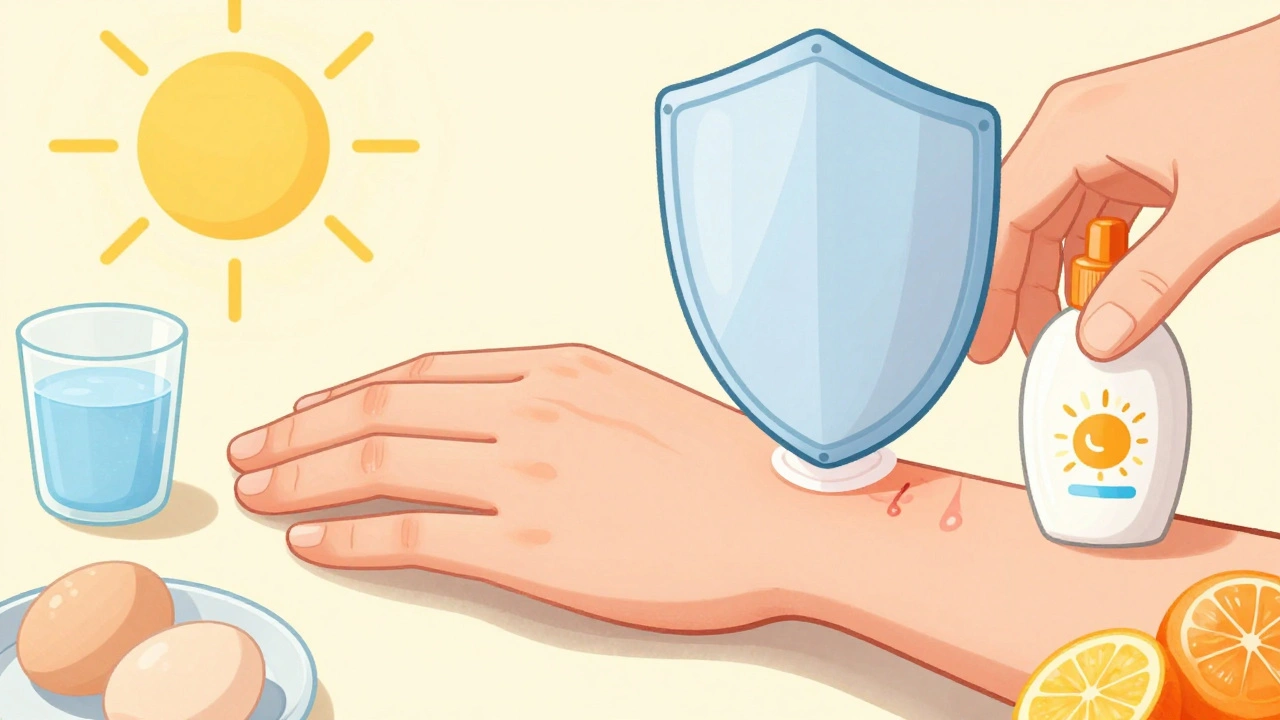
Don’t skip sun protection. Healing skin is extra sensitive to UV rays. Sun exposure can darken scars permanently, making them more noticeable. Use SPF 30+ sunscreen every day for at least 12 months after the injury-even on cloudy days.
What Not to Do
There are a lot of myths out there. Here’s what to avoid:
- Don’t use hydrogen peroxide or alcohol. They damage tissue and slow healing.
- Don’t pop blisters. The fluid inside protects the wound. Breaking them increases infection risk by 35%.
- Don’t use wet-to-dry dressings. These pull off healing tissue when removed. They’re outdated and painful.
- Don’t ignore signs of infection. Redness spreading more than an inch, pus, fever, or no improvement after 7 days means you need a doctor.
Special Cases: Burns, Diabetic Wounds, and Pressure Injuries
Some wounds need extra care.
Burns: Run cool (not icy) water over the area for 10-15 minutes. Don’t apply butter, toothpaste, or ice. Cover with sterile gauze. Leave blisters alone.
Diabetic wounds: People with diabetes heal slower and lose sensation in their feet. A small cut can turn into a serious ulcer. Check your feet daily. If you have a wound that doesn’t improve in 2-3 days, see a provider. Diabetic foot ulcers have a 40% higher complication rate.
Pressure injuries: If you’re bedridden or use a wheelchair, reposition every 2 hours. Use cushions to lift heels off the bed. The National Pressure Injury Advisory Panel recommends a 30-degree side-lying angle to reduce pressure on vulnerable areas. This cuts new pressure injuries by 65%.
When to Call a Doctor
You don’t need to rush to the ER for every scrape. But call your provider if:
- The wound is deeper than 1/4 inch or longer than 1/2 inch
- It’s on your face, hand, or joint and won’t stay closed
- You see red streaks moving away from the wound
- There’s thick yellow or green pus
- You develop a fever over 100.4°F
- The wound hasn’t improved after 7 days
Hydration and Nutrition Help Too
Healing isn’t just about what you put on the wound-it’s what you put in your body.
Drink at least 0.5 fluid ounces of water per pound of body weight each day. For a 150-pound person, that’s about 75 ounces-roughly 9 cups. Dehydration slows healing by 25-30%.
Eat enough protein. It’s the building block of skin. Eggs, lean meat, beans, and dairy help rebuild tissue. Vitamin C (from citrus, bell peppers, broccoli) supports collagen formation. Zinc (found in oysters, pumpkin seeds, chickpeas) aids cell growth.
The Bottom Line
Wound care doesn’t have to be complicated. Clean with water and soap, keep it moist with petroleum jelly, cover with a simple dressing, and protect from the sun. Skip the harsh antiseptics. Don’t pick at scabs. Watch for signs of trouble.
Most minor wounds heal fine with basic care. But when done right, you don’t just heal faster-you heal better. Fewer infections. Less pain. And scars that fade, not stand out.
Lynette Myles
December 5, 2025 AT 12:32James Moore
December 6, 2025 AT 17:57Laura Saye
December 8, 2025 AT 01:51Krishan Patel
December 8, 2025 AT 09:20sean whitfield
December 8, 2025 AT 15:54Carole Nkosi
December 9, 2025 AT 20:40Manish Shankar
December 11, 2025 AT 08:05luke newton
December 13, 2025 AT 00:49an mo
December 14, 2025 AT 16:32aditya dixit
December 15, 2025 AT 04:51Mark Ziegenbein
December 15, 2025 AT 23:25Juliet Morgan
December 17, 2025 AT 07:31Norene Fulwiler
December 18, 2025 AT 05:22Ada Maklagina
December 18, 2025 AT 06:49Harry Nguyen
December 18, 2025 AT 15:24