
Warfarin Monitoring: How to Stay Safe and Avoid Dangerous Interactions
When you take warfarin, a blood thinner used to prevent dangerous clots in people with atrial fibrillation, artificial heart valves, or a history of deep vein thrombosis. Also known as Coumadin, it works by blocking vitamin K, which your body needs to form clots. But getting the dose right is tricky—too little and you risk a stroke, too much and you could bleed internally. That’s why INR testing, a simple blood test that measures how long it takes your blood to clot is the backbone of warfarin monitoring, the ongoing process of adjusting your dose based on lab results and lifestyle changes.
Warfarin doesn’t work the same for everyone. Your dose can swing wildly because of what you eat, what other meds you take, or even a change in your liver function. Foods high in vitamin K—like kale, spinach, and broccoli—can make warfarin less effective. Antibiotics, antifungals, and even some herbal supplements like St. John’s wort can either boost or weaken its effect. That’s why regular INR tests, usually done every 1-4 weeks when you first start, then less often once stable aren’t optional—they’re life-saving. An INR below 2 means you’re not protected enough from clots. Above 3 means you’re at risk of bleeding. For most people, the target range is 2 to 3.
Many people think once they’re on a steady dose, they can relax. But warfarin monitoring isn’t a one-time setup. A new illness, a change in diet, starting a new supplement, or even drinking more alcohol can throw your levels off. That’s why you need to track not just your INR, but also any new symptoms—unusual bruising, nosebleeds, dark stools, or sudden headaches. These aren’t just side effects—they’re warning signs. And if you’re scheduled for surgery or a dental procedure, your doctor needs to know you’re on warfarin. Some procedures require you to pause it temporarily, but never do it on your own.
The posts below cover real-world scenarios you might face while on warfarin: how other drugs like statins or antidepressants can interfere, what to do when your INR spikes unexpectedly, and how genetic differences affect how your body processes this medication. You’ll find practical advice on managing diet, recognizing dangerous interactions, and knowing when to call your doctor. This isn’t theory—it’s what keeps people alive while taking a drug that can be both powerful and unpredictable.
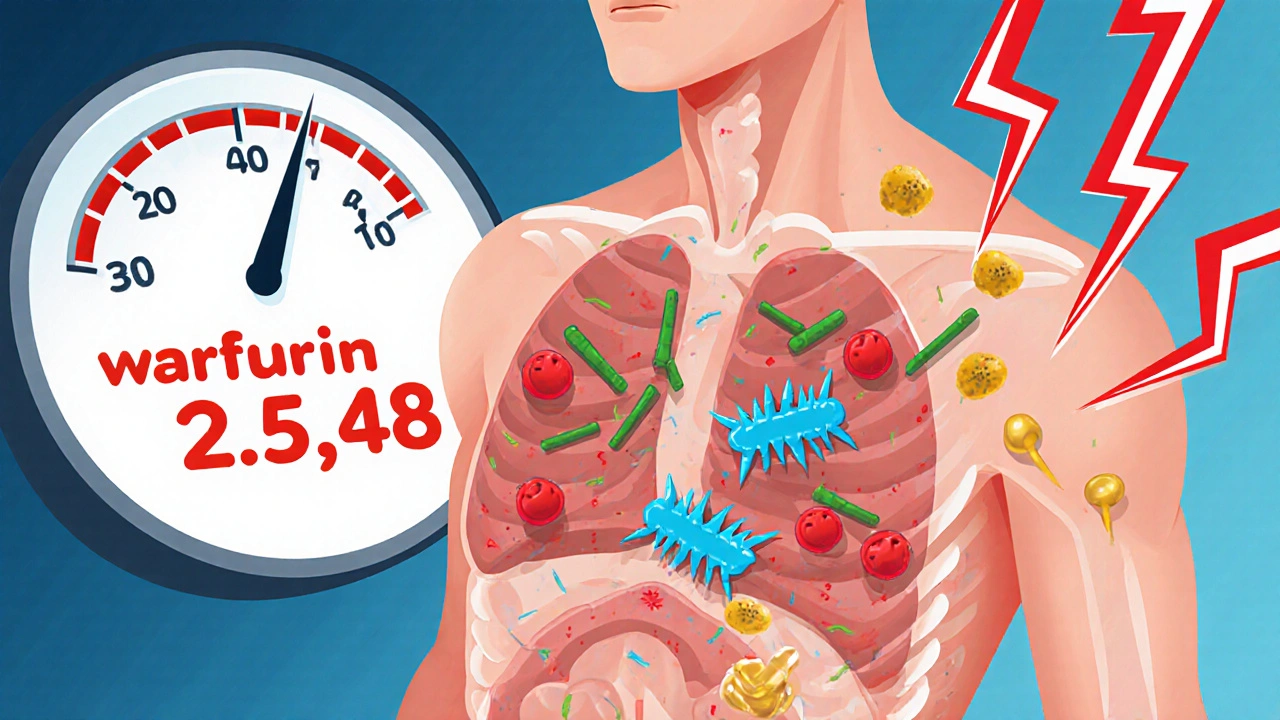
Antibiotics and Warfarin: How to Prevent Dangerous INR Spikes and Bleeding
- by Colin Edward Egan
- on 23 Nov 2025
Antibiotics can dangerously raise INR levels in people taking warfarin, increasing bleeding risk. Learn which antibiotics are most dangerous, how to monitor your INR, and what steps to take to stay safe.