
Warfarin and Antibiotics: Risks, Interactions, and What You Need to Know
When you take warfarin, a blood thinner used to prevent dangerous clots in people with atrial fibrillation, deep vein thrombosis, or artificial heart valves. Also known as Coumadin, it works by blocking vitamin K, which your body needs to make clotting factors. But when you add an antibiotic, a medication used to kill or slow the growth of bacteria, things can go wrong fast. Many antibiotics change how your body handles warfarin—sometimes making it too strong, sometimes weakening it. This isn’t rare. It happens often enough that doctors check your blood levels every time you start or stop an antibiotic.
Why does this happen? Your liver uses enzymes like CYP2C9 to break down warfarin. Some antibiotics, like trimethoprim-sulfamethoxazole and ciprofloxacin, block those enzymes. That means warfarin builds up in your blood, raising your risk of bleeding—bruising easily, nosebleeds, even internal bleeding. Other antibiotics, like rifampin, speed up warfarin breakdown. That leaves you unprotected, increasing your chance of stroke or clot. It’s not just about the antibiotic type—it’s also about your age, diet, other meds, and even your genes. People with certain genetic variants in CYP2C9 or VKORC1 are more sensitive. That’s why two people on the same doses can have totally different reactions.
That’s where INR monitoring, a blood test that measures how long it takes your blood to clot becomes your lifeline. If you’re on warfarin and your doctor prescribes an antibiotic, they should check your INR before you start, again 3-5 days later, and then regularly until the antibiotic is done. You don’t need to wait for symptoms. A sudden bruise, dark stool, or headache could mean your INR is too high. But sometimes, there are no warning signs until it’s too late. That’s why testing matters more than feeling. Even over-the-counter supplements like garlic, ginkgo, or high-dose vitamin E can add to the risk. And don’t forget alcohol—it can mess with your liver’s ability to process warfarin, especially when combined with antibiotics.
What you’ll find in the posts below are real, practical stories and science-backed facts about how drugs like warfarin and antibiotics interact in ways most people don’t expect. You’ll see how antibiotics linked to rhabdomyolysis or QT prolongation can turn a simple infection treatment into a life-threatening situation. You’ll learn how to read drug labels like a pro, spot hidden risks in your pill bottle, and ask the right questions before you swallow anything new. This isn’t theory. It’s about staying alive while taking the meds you need.
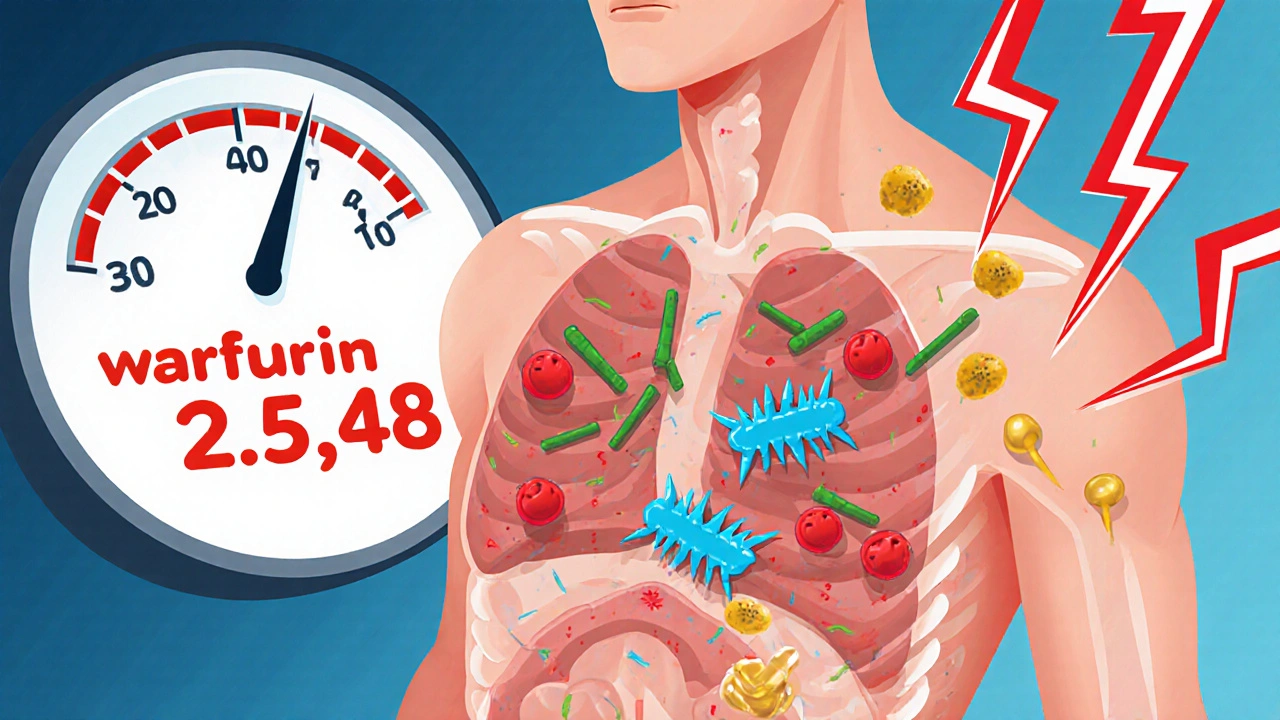
Antibiotics and Warfarin: How to Prevent Dangerous INR Spikes and Bleeding
- by Colin Edward Egan
- on 23 Nov 2025
Antibiotics can dangerously raise INR levels in people taking warfarin, increasing bleeding risk. Learn which antibiotics are most dangerous, how to monitor your INR, and what steps to take to stay safe.