
Safe Prescribing: Avoid Dangerous Drug Interactions and Protect Your Health
When doctors prescribe medication, the goal is to help—not hurt. But safe prescribing, the practice of choosing and managing drugs to minimize harm while maximizing benefit. Also known as rational prescribing, it’s not just about picking the right drug—it’s about knowing what happens when that drug meets others in your body. Too often, patients take multiple medications without realizing one can turn another into a ticking time bomb. A common antibiotic might spike your INR if you’re on warfarin. A statin combined with certain antifungals could trigger muscle breakdown so severe it damages your kidneys. These aren’t rare accidents. They’re preventable failures of safe prescribing.
One of the biggest hidden dangers is QT prolongation, a heart rhythm disruption caused by certain drugs that can lead to sudden cardiac death. Antipsychotics, some antibiotics, even common anti-nausea meds can stretch the heart’s electrical cycle. Combine them, and the risk jumps. Then there’s therapeutic drug monitoring, the process of measuring blood levels of drugs like tricyclic antidepressants to stay within a safe range. Many doctors skip this, but for drugs with narrow safety windows—like amitriptyline—it’s the only way to avoid poisoning. And don’t forget medication interactions, when two or more drugs change each other’s effects in unpredictable, sometimes deadly ways. SAMe with antidepressants? Serotonin syndrome. Warfarin with antibiotics? Internal bleeding. These aren’t theoretical risks. They’re documented in real patients, every single day.
Safe prescribing isn’t just for doctors. It’s something you need to understand too. If you’re taking more than three medications, you’re already in the danger zone. Keep a list. Ask: "Could this interact with what I’m already on?" Use tools like the FDALabel Database to check drug safety info yourself. Know your genetic risks—some people metabolize drugs too fast or too slow because of genes like CYP2D6. That’s not luck. It’s biology. And ignoring it can cost you your life.
Below, you’ll find real-world guides that cut through the noise. Learn how to track antidepressant side effects with simple mood journals. Spot the warning signs of rhabdomyolysis before your muscles start dying. Understand why some generics are safer than others. Find out how to use FDA drug labels like a pro—not to confuse yourself, but to protect yourself. These aren’t theory pieces. They’re survival tools for anyone taking medication. Because in the world of prescriptions, knowing more isn’t just helpful—it’s the difference between healing and harm.
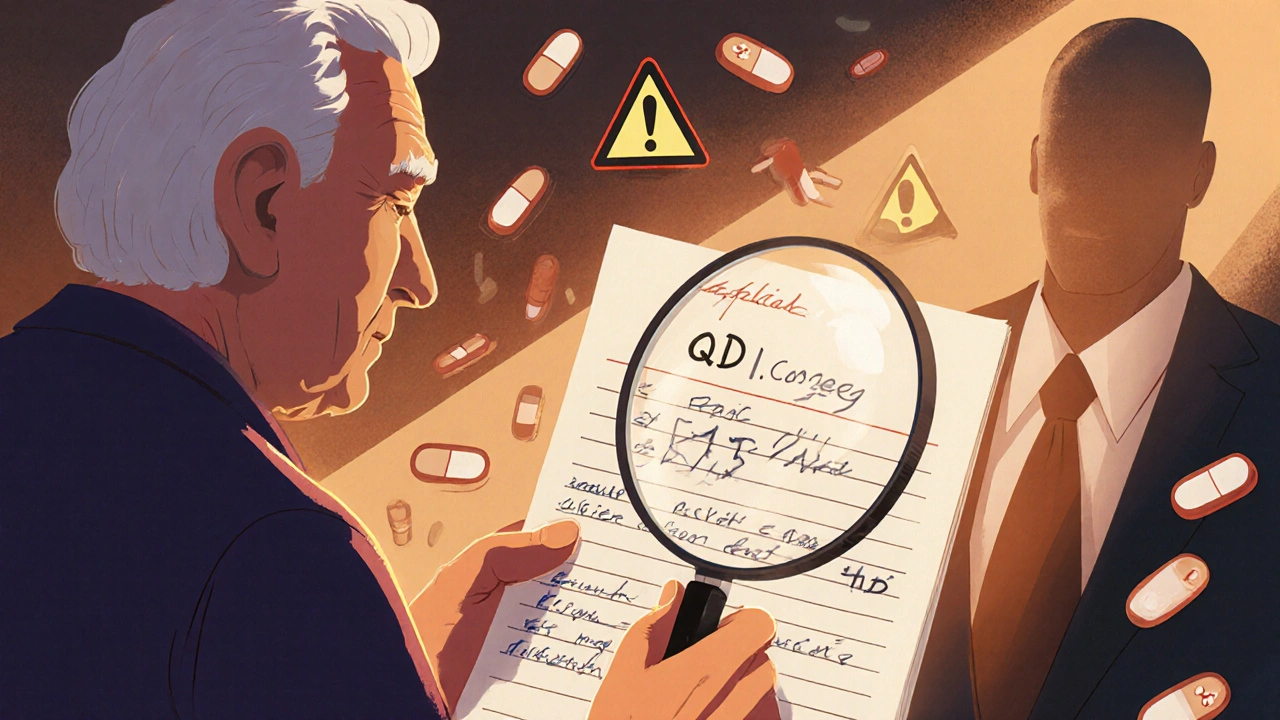
QD vs. QID: How Prescription Abbreviations Cause Dangerous Medication Errors and How to Stop Them
- by Colin Edward Egan
- on 25 Nov 2025
QD and QID are dangerous prescription abbreviations that cause patients to take four times the intended dose. Learn why they're still used, how they lead to deadly errors, and what’s being done to stop them.