
Medication Errors: How Common Mistakes Happen and How to Stop Them
When you take a pill, you expect it to help—not hurt. But medication errors, mistakes in prescribing, dispensing, or taking drugs that lead to harm. Also known as drug-related errors, they’re one of the leading causes of preventable hospital visits in the U.S. These aren’t just pharmacy mix-ups. They’re missed lab tests, ignored warnings, confusing labels, or combining pills that shouldn’t be mixed—like statins with certain antibiotics that can trigger muscle breakdown, or antidepressants with SAMe that might cause serotonin syndrome.
Drug interactions, when two or more medications change how each other works in your body. Also known as pharmacological interactions, it’s not just about brand names. It’s about what’s inside: warfarin and antibiotics causing dangerous INR spikes, antipsychotics stretching the heart’s electrical cycle, or even ketoconazole shampoo affecting liver enzymes when used long-term. These aren’t rare edge cases. They show up in real people every day, often because no one checked the full list of what’s being taken. And when therapeutic drug monitoring, measuring blood levels of drugs to ensure they’re in the safe, effective range. Also known as TDM, it’s used for tricyclic antidepressants, anticonvulsants, and some antibiotics—it’s not optional for high-risk drugs. Yet most patients never hear about it. Without it, you’re guessing your dose. With it, you’re protected.
Adverse drug reactions don’t always feel like emergencies. Sometimes they’re just persistent itching, unexplained fatigue, or a weird rhythm in your chest. But they’re signals. Your body is telling you something’s wrong. The good news? Most medication errors are avoidable. You don’t need to be a doctor to spot red flags. You just need to know what to ask: Is this the right drug for me? Could it interact with anything else I take? Should I get my blood checked? Are there safer alternatives?
This collection doesn’t just list problems—it shows you how real people are solving them. From using the FDALabel database to check drug safety warnings, to tracking mood changes with PHQ-9 journals, to understanding how genetic tests like CYP2D6 can predict side effects, these posts give you the tools to take control. You’ll learn how to read a drug label like a pro, recognize early signs of rhabdomyolysis or QT prolongation, and avoid scams when buying meds online. No fluff. No jargon. Just clear, practical steps you can use today to keep yourself and your loved ones safe.
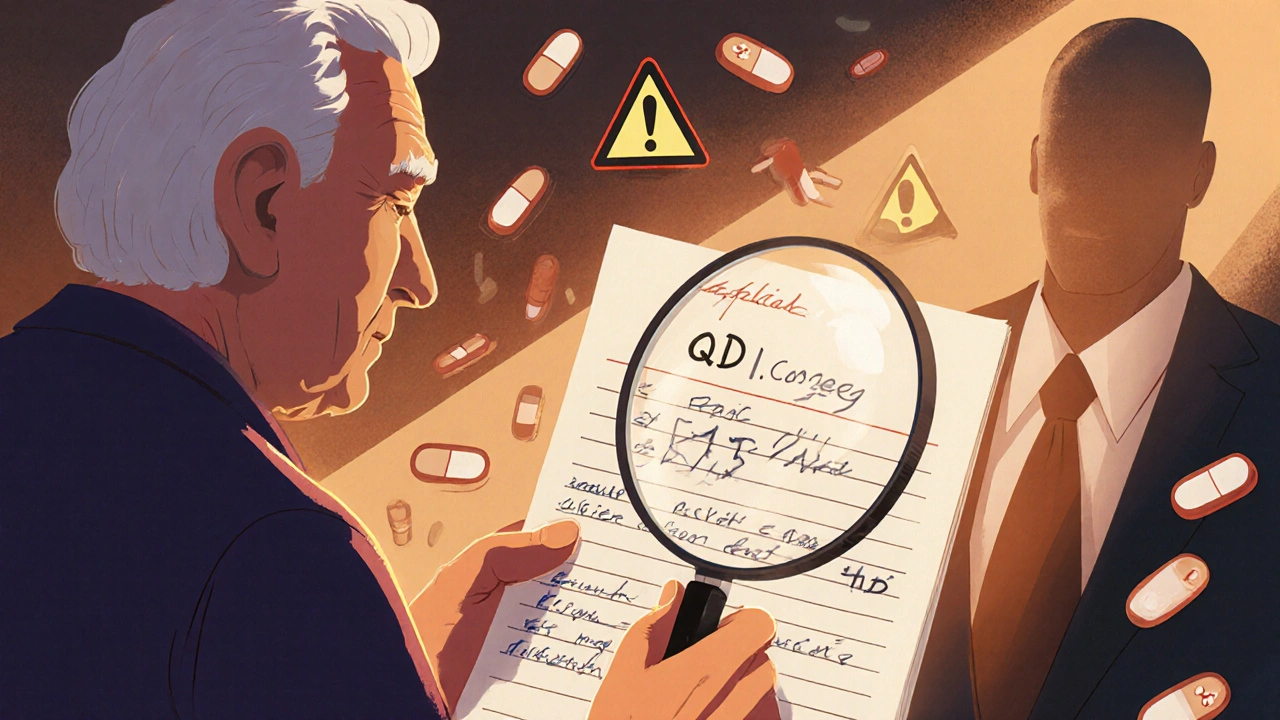
QD vs. QID: How Prescription Abbreviations Cause Dangerous Medication Errors and How to Stop Them
- by Colin Edward Egan
- on 25 Nov 2025
QD and QID are dangerous prescription abbreviations that cause patients to take four times the intended dose. Learn why they're still used, how they lead to deadly errors, and what’s being done to stop them.