
Hypertensive Crisis: Causes, Signs, and Emergency Treatments
When your blood pressure shoots up to dangerous levels—usually above 180/120 mm Hg—you’re facing a hypertensive crisis, a sudden, severe increase in blood pressure that can damage organs and lead to stroke, heart attack, or kidney failure. Also known as hypertensive emergency, this isn’t just a bad day with high numbers—it’s a medical emergency that demands instant action. Unlike routine high blood pressure, which builds slowly over years, a hypertensive crisis happens fast, often without warning. It’s not about feeling stressed or having a headache. It’s about your body’s systems starting to fail.
This kind of crisis usually happens when high blood pressure goes untreated for a long time, or when someone suddenly stops their blood pressure meds. But it can also be triggered by drug interactions, kidney problems, or even illegal stimulants like cocaine. People with existing heart disease, diabetes, or chronic kidney issues are at higher risk. And here’s the thing: you might not feel anything serious until it’s too late. That’s why knowing the red flags matters more than ever. If you suddenly get a severe headache, blurry vision, chest pain, shortness of breath, or confusion—don’t wait. Call 911. These aren’t side effects. They’re signs your brain, heart, or kidneys are under attack.
Emergency treatment for a hypertensive crisis, a life-threatening condition requiring rapid blood pressure reduction in a controlled setting usually happens in the ER. Doctors use IV medications like nitroprusside or labetalol to lower pressure slowly and safely. Too fast, and you risk stroke or organ damage. Too slow, and the damage keeps spreading. It’s a tightrope walk—and only trained teams can do it right. After the crisis is under control, you’ll need a full review of your meds, lifestyle, and underlying conditions. Often, it’s not just one drug that’s the problem. It’s a mix of missed doses, poor diet, or hidden illnesses like sleep apnea or adrenal tumors.
Related to this are hypertensive urgency, a severe rise in blood pressure without organ damage, requiring prompt but not immediate intervention—a gray zone where blood pressure is dangerously high, but you’re not yet in crisis. Many people confuse the two. The difference? Urgency can often be managed with oral meds and close monitoring. Crisis? That’s an ambulance and an ICU. Both need attention, but only one is a true emergency.
What you’ll find below are real, practical guides from people who’ve been there. From how to recognize the earliest warning signs before it’s too late, to which medications are safest in an emergency, to what happens after you survive a crisis. You’ll learn about the drugs doctors actually use, how to avoid triggers that cause spikes, and why some home remedies can make things worse. These aren’t theory pieces. They’re tools built from real cases, real mistakes, and real recoveries. Whether you’re managing your own blood pressure or helping someone who is, this collection gives you what you need to act fast—and stay alive.
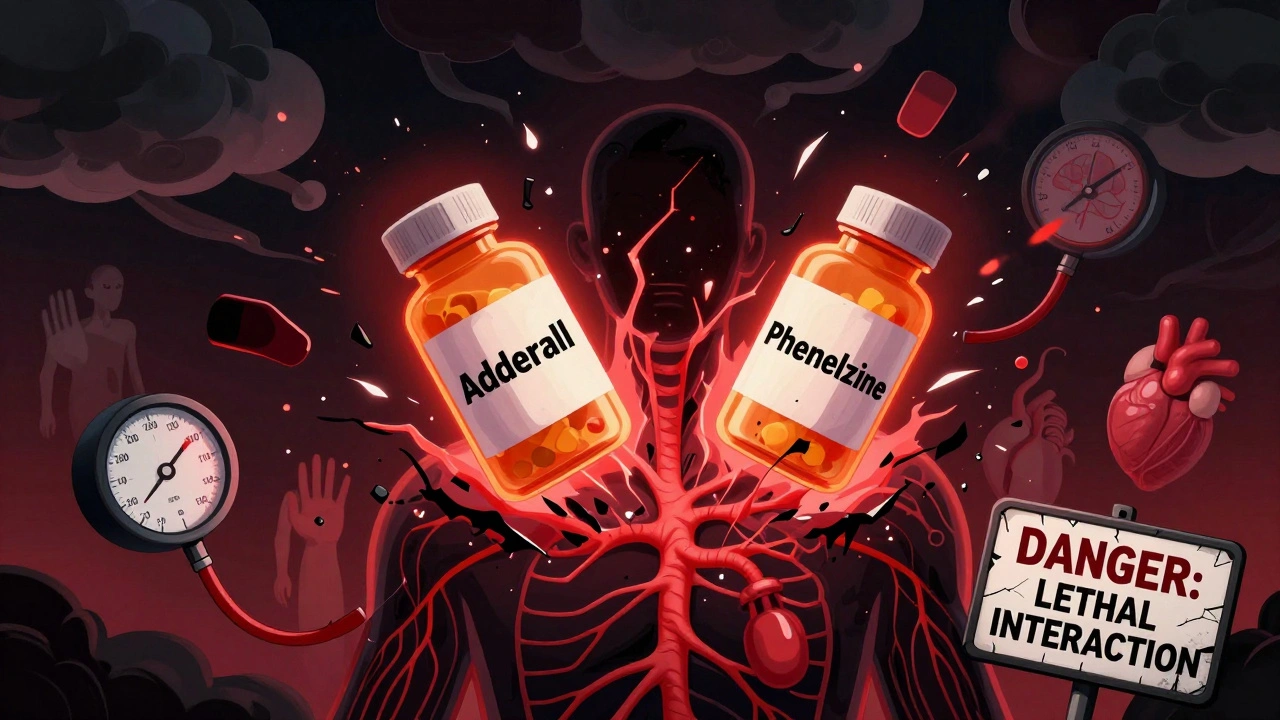
ADHD Stimulants and MAOIs: Understanding the Hypertensive Crisis Risk
- by Colin Edward Egan
- on 4 Dec 2025
Combining ADHD stimulants with MAOIs can cause a dangerous hypertensive crisis. Learn why this interaction is life-threatening, which medications are riskiest, and what safer alternatives exist.