
Antibiotics and Warfarin Interaction: Risks, Signs, and What to Do
When you take warfarin, a blood thinner used to prevent dangerous clots in people with atrial fibrillation, artificial heart valves, or a history of deep vein thrombosis. Also known as Coumadin, it works by slowing down how your body forms clots. But mixing it with certain antibiotics, medicines used to kill or stop the growth of bacteria causing infections like pneumonia, urinary tract infections, or sinusitis can turn a safe treatment into a life-threatening situation. This isn’t just a theoretical risk—it’s a common cause of emergency hospital visits. The problem? Many antibiotics change how your liver breaks down warfarin, making it build up in your blood and thin it too much.
The real danger lies in the INR, a lab test that measures how long it takes your blood to clot. A normal INR for someone on warfarin is usually between 2 and 3. But when certain antibiotics like ciprofloxacin, trimethoprim-sulfamethoxazole, or metronidazole are added, that number can spike to 6 or higher overnight. That means even a small bump or cut could lead to serious bleeding—inside your brain, stomach, or joints. You won’t always feel it coming. Some people notice unusual bruising, nosebleeds that won’t stop, or dark, tarry stools. Others feel dizzy, weak, or have sudden headaches. These aren’t side effects you can ignore. If you’re on warfarin and your doctor prescribes an antibiotic, ask: "Will this change my INR?" and "Do I need a blood test right away?"
Not all antibiotics are risky. Amoxicillin and penicillin usually don’t interfere much. But others, like the ones used for urinary infections or dental work, can be dangerous. Even over-the-counter supplements like garlic or ginkgo can add to the risk. That’s why tracking your INR isn’t optional—it’s essential. Some people check it weekly when starting a new antibiotic. Others need more frequent tests. Your doctor might also adjust your warfarin dose before you even start the antibiotic. And if you’re ever unsure, don’t guess. Call your pharmacist. They see these interactions every day.
Below, you’ll find real-world stories and data from people who’ve faced this exact problem. Some learned the hard way after a minor surgery. Others caught it early because they tracked their symptoms. These posts don’t just list risks—they show you how to protect yourself, what questions to ask, and how to avoid ending up in the ER because of a simple drug combo.
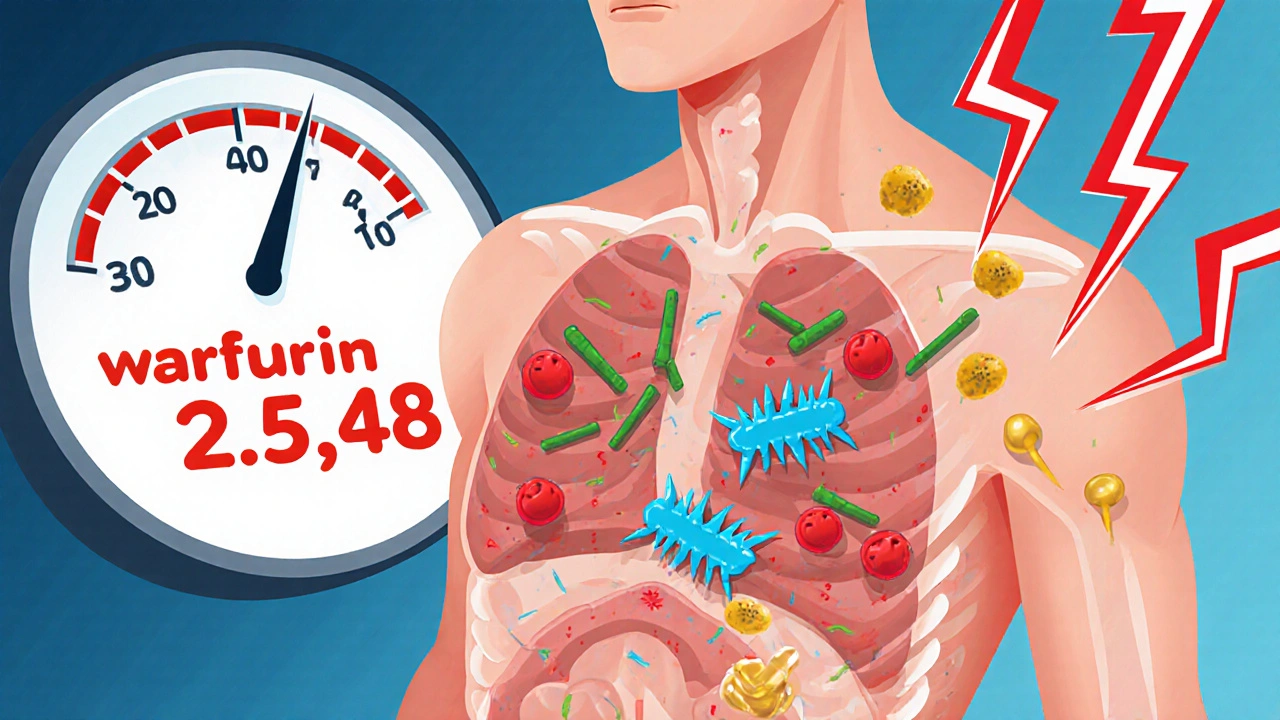
Antibiotics and Warfarin: How to Prevent Dangerous INR Spikes and Bleeding
- by Colin Edward Egan
- on 23 Nov 2025
Antibiotics can dangerously raise INR levels in people taking warfarin, increasing bleeding risk. Learn which antibiotics are most dangerous, how to monitor your INR, and what steps to take to stay safe.