
ADHD Stimulants: What They Are, How They Work, and What You Need to Know
When people talk about ADHD stimulants, prescription medications that increase focus and reduce impulsivity in people with attention deficit hyperactivity disorder. Also known as central nervous system stimulants, they are the most studied and widely used treatment for ADHD in both children and adults. These aren’t energy boosters or party drugs—they’re carefully dosed medicines that help balance brain chemicals like dopamine and norepinephrine, which are often out of sync in people with ADHD.
Two main types dominate the market: methylphenidate, a stimulant found in Ritalin and Concerta that slows down the reabsorption of dopamine in the brain, and amphetamine, the active ingredient in Adderall and Vyvanse that increases dopamine release. Both work similarly but differ in how long they last, how quickly they kick in, and how they affect people differently. Some respond better to one than the other—not because of strength, but because of how their brain chemistry reacts.
ADHD stimulants don’t cure ADHD. They help manage symptoms so daily life becomes more manageable. A kid can finish homework. An adult can show up to meetings on time. A parent can stop feeling like they’re constantly nagging. But they’re not magic. Side effects like trouble sleeping, reduced appetite, or jitteriness happen—and they’re why working with a doctor matters. You can’t just pick one off the shelf. Dosing is personal. Timing matters. And sometimes, you need to try a few before finding the right fit.
Many people worry about addiction, but studies show that when taken as prescribed, ADHD stimulants don’t lead to substance abuse—in fact, they may lower the risk. The real danger comes from misuse: crushing pills, taking someone else’s, or using them to stay awake for exams. That’s not treatment. That’s risk.
There’s more to ADHD than stimulants. Non-stimulant options like atomoxetine or guanfacine exist. Behavioral therapy helps. Lifestyle changes matter. But if you’re starting out, stimulants are where most treatment journeys begin—and for good reason. They work fast, they’re well understood, and millions have found relief because of them.
What you’ll find below are real stories and clear facts about how these medications affect people, how to handle side effects, what to watch out for, and how to talk to your doctor about what’s working—and what’s not. No fluff. No marketing. Just what you need to know to make smarter choices.
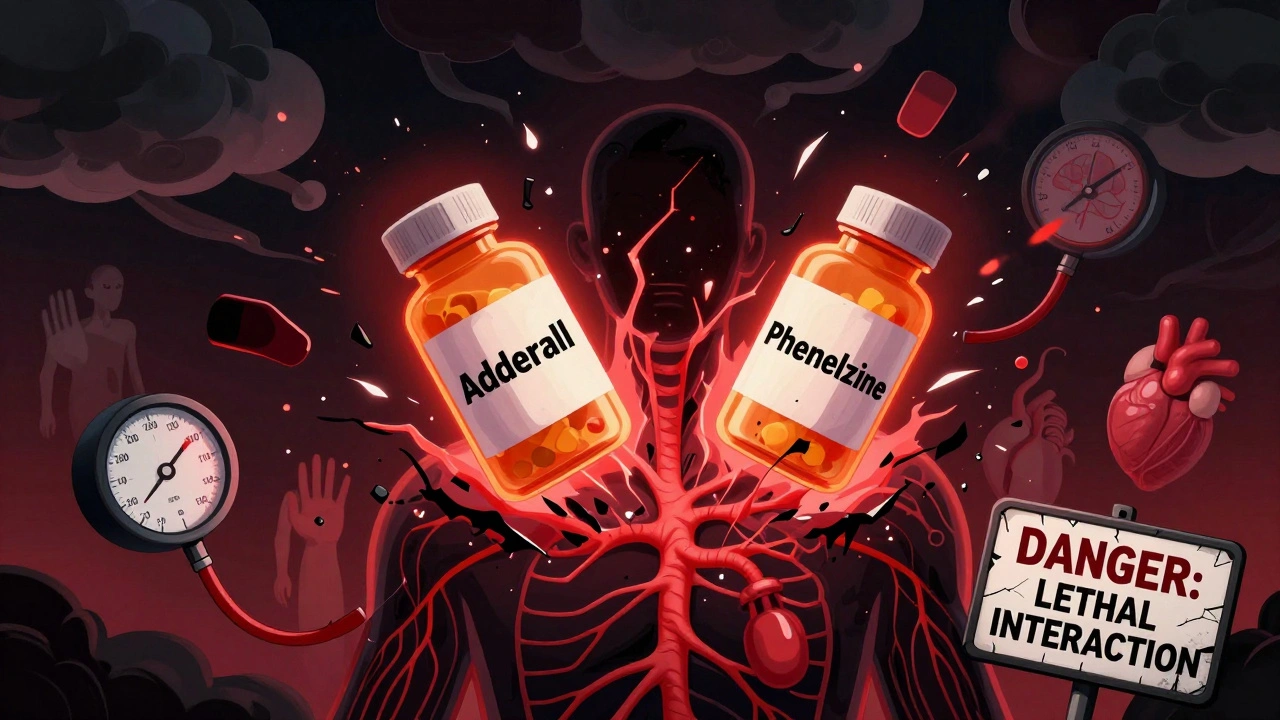
ADHD Stimulants and MAOIs: Understanding the Hypertensive Crisis Risk
- by Colin Edward Egan
- on 4 Dec 2025
Combining ADHD stimulants with MAOIs can cause a dangerous hypertensive crisis. Learn why this interaction is life-threatening, which medications are riskiest, and what safer alternatives exist.