
Photosensitivity Risk Calculator
Calculate Your Safe Sun Exposure Time
While taking doxycycline or TMP-SMX, your skin becomes highly sensitive to UV rays. This calculator estimates how long you can safely be exposed to the sun based on your protection measures.
Your results will appear here after calculation.
Note: This is an estimate. If you notice skin redness or discomfort, leave the sun immediately. Always follow your doctor's specific recommendations.
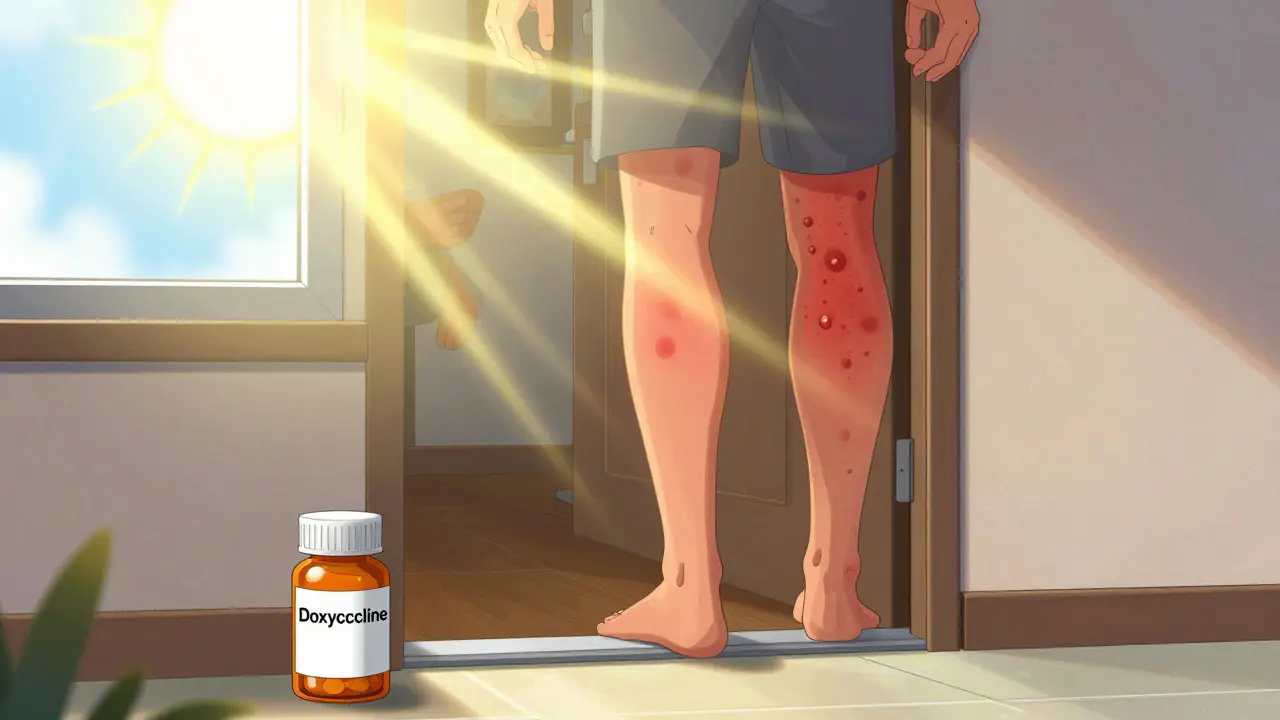
When you’re prescribed doxycycline or TMP-SMX (Bactrim, Septra), your doctor focuses on killing the infection. But there’s another, less talked-about side effect that can ruin your day-or even your skin: photosensitivity. This isn’t just a mild sunburn. It’s your skin reacting violently to sunlight you didn’t think would hurt you. Even a quick walk to the mailbox, sitting by a window, or driving in the car can trigger a painful, blistering reaction. And it’s more common than you think.
What Exactly Is Antibiotic Photosensitivity?
Photosensitivity means your skin becomes abnormally sensitive to ultraviolet (UV) light because of a drug. With doxycycline and TMP-SMX, this isn’t rare. About 20% of people taking doxycycline at standard doses (200 mg daily) develop phototoxic reactions, according to a 2021 study in PMC8459281. For TMP-SMX, reactions can happen even after minimal sun exposure. These aren’t allergies in the traditional sense. They’re chemical burns triggered by sunlight. There are two types:- Phototoxic reactions (95% of cases): These look like a bad sunburn-red, hot, sometimes blistering. They show up within 30 minutes to 24 hours after sun exposure. No immune system involvement. Just chemistry.
- Photoallergic reactions (rare): These look like eczema-itchy, bumpy, spreading. They take 24 to 72 hours to appear and involve your immune system. These can last longer and sometimes persist after stopping the drug.
Why Doxycycline and TMP-SMX Are High-Risk
Not all antibiotics do this. Penicillin? Minimal risk. But tetracyclines like doxycycline and sulfonamides like TMP-SMX are among the worst offenders. Doxycycline absorbs UVA rays (320-400 nm), which penetrate deep into your skin and even through glass. That means you can get burned sitting next to a sunny window. Studies show patients on doxycycline have a 50% lower threshold for sunburn. One 1960s study found 27 out of 108 patients on demeclocycline (a similar drug) got severe sunburns-every single one cleared up after stopping the drug. TMP-SMX works differently. Its sulfamethoxazole component reacts to UV light and creates free radicals that damage skin cells. The reaction can last for weeks after you stop taking it. The Skin Cancer Foundation warns: "Even weeks after finishing a course of Bactrim, the skin can still react strongly to sun."How Bad Can It Get?
People often underestimate this. They think, "I’m only outside for 10 minutes." But here’s what happens:- You take doxycycline for a sinus infection.
- You walk to your car in the afternoon.
- By dinnertime, your neck and arms are burning red.
- Next day, peeling skin, pain, and blisters.
Who’s Most at Risk?
Anyone taking these antibiotics can be affected, but some are more vulnerable:- People with fair skin, light eyes, or a history of sunburns
- Those taking higher doses (like 200 mg doxycycline for acne or Lyme disease)
- Patients on long-term therapy (e.g., acne treatment for months)
- Anyone who doesn’t know this risk exists
What You Need to Do: Sun Safety Rules
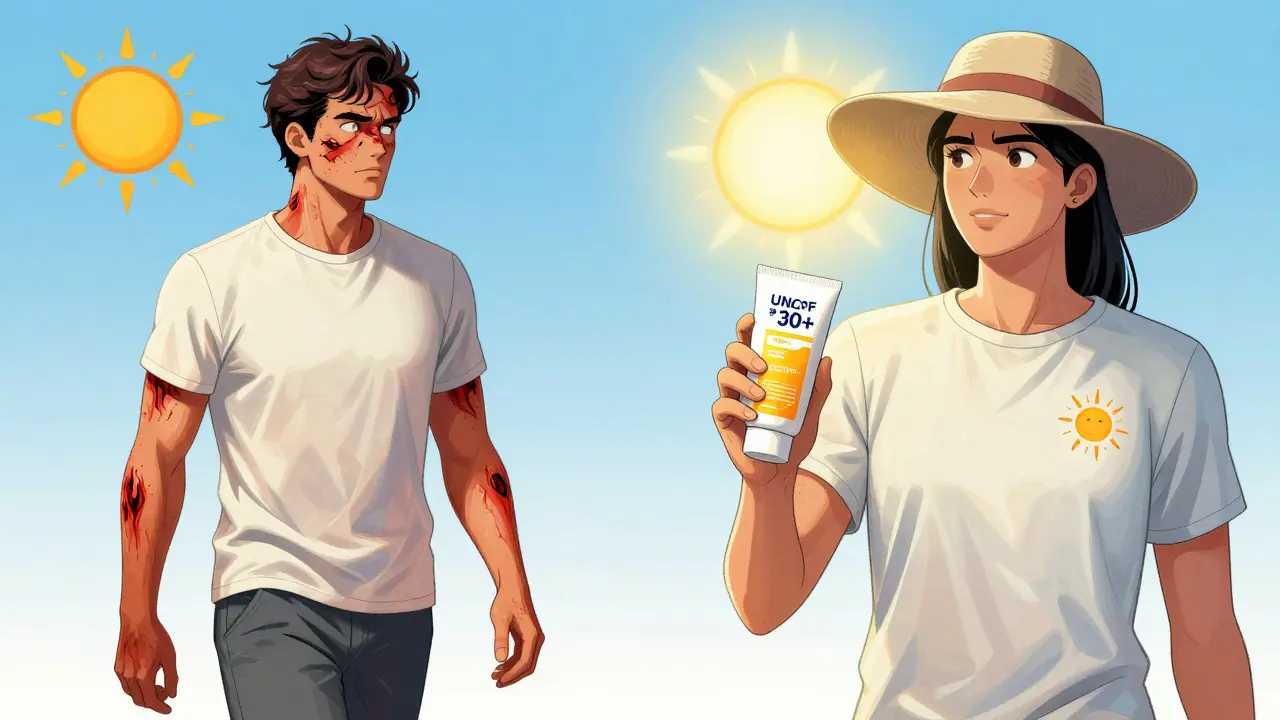
If you’re on doxycycline or TMP-SMX, treat your skin like it’s made of tissue paper. Here’s what actually works:- Use broad-spectrum SPF 30+ sunscreen every single day-even if it’s cloudy. Reapply every two hours if you’re outside. Look for zinc oxide or titanium dioxide. Chemical sunscreens (like avobenzone) can sometimes irritate photosensitive skin.
- Wear UPF 30+ clothing. Regular cotton t-shirts only block about UPF 5-10. That’s not enough. Buy sun-protective shirts, pants, and wide-brimmed hats. They’re not expensive, and they work.
- Avoid the sun between 10 a.m. and 4 p.m. That’s when UVA is strongest. Plan errands for early morning or evening.
- Protect yourself indoors. UVA rays go through windows. If you sit by a sunny window at home or in your car, you’re still exposed. Use window film or keep curtains closed.
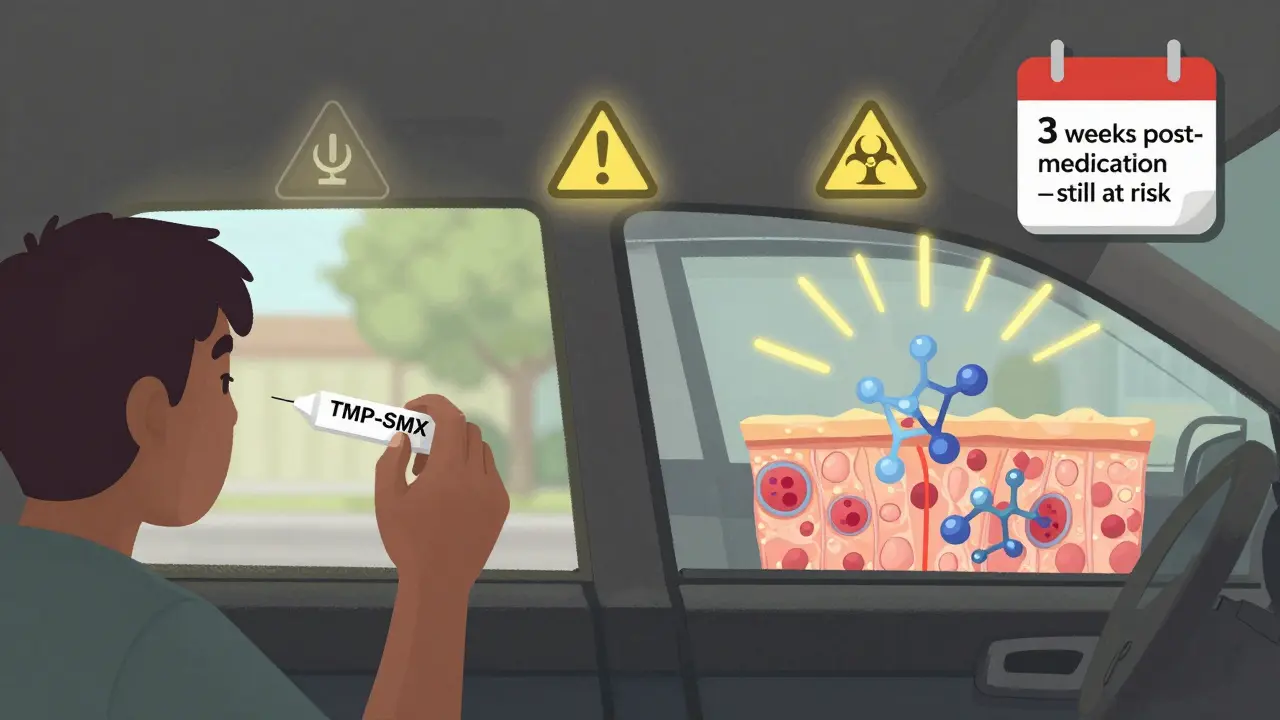
- Don’t skip protection after finishing the antibiotic. With TMP-SMX, risk can last for weeks. With doxycycline, it fades faster-but still wait at least 3-5 days after your last dose before assuming you’re safe.
What Doesn’t Work
A lot of "tips" you hear online are wrong:- "Just use a higher SPF." SPF 100 isn’t 3x better than SPF 30. It gives a false sense of security. Reapplication matters more than the number.
- "I’m tan, so I’m protected." Tanning is skin damage. It doesn’t shield you from phototoxic reactions.
- "I only go out for a few minutes." Phototoxic reactions can start in under 30 minutes. You don’t need hours of exposure.
What to Do If You Get Burned
If your skin turns red, hot, or starts peeling:- Get out of the sun immediately.
- Apply cool compresses or aloe vera gel (no alcohol-based products).
- Take ibuprofen to reduce inflammation and pain.
- Stay hydrated.
- Call your doctor if blisters form, fever develops, or the rash spreads.
Alternatives to Consider
If you’re prone to sunburns or spend a lot of time outdoors, ask your doctor about alternatives:- For acne: Minocycline (lower phototoxic risk than doxycycline), or non-antibiotic options like topical retinoids.
- For UTIs: Nitrofurantoin or fosfomycin (low photosensitivity risk).
- For respiratory infections: Amoxicillin or azithromycin (minimal risk).
Why This Matters More Than Ever
Since 2018, dermatology clinics have seen a 15% yearly increase in photosensitivity cases. Why? More antibiotic prescriptions, especially broad-spectrum ones like doxycycline, used for everything from Lyme disease to acne. And with more people working from home near windows or taking outdoor walks, exposure is higher than ever. The FDA updated its guidelines in 2023 to stress that photosensitivity warnings must be clear on prescription labels. But the burden still falls on you. If no one tells you, you won’t know.Final Thought: Protect Your Skin Like Your Health Depends on It
It does. Antibiotics save lives. But if you don’t protect your skin while taking them, you could end up with more than just an infection. You could end up with permanent skin damage, scarring, or a higher cancer risk. The solution isn’t complicated. It’s consistent. Sunscreen. Clothing. Shade. Awareness. Don’t wait until your skin burns. Start protecting yourself the day you begin your antibiotic. Your future self will thank you.Can you get sunburned through a window while taking doxycycline?
Yes. Doxycycline reacts to UVA rays, which penetrate glass. Sitting near a sunny window at home, in your car, or at your office can trigger a phototoxic reaction. You need sunscreen or window film even indoors.
How long does photosensitivity last after stopping TMP-SMX?
For TMP-SMX (Bactrim), photosensitivity can last for weeks after you stop taking it. Some patients report reactions up to three weeks post-treatment. Continue sun protection until your skin returns to normal and your doctor confirms it’s safe.
Is doxycycline more photosensitizing than other antibiotics?
Yes. Among antibiotics, doxycycline is one of the most photosensitizing. Studies show 20% of users develop phototoxic reactions at standard doses. Other high-risk antibiotics include demeclocycline and ciprofloxacin. Penicillins and macrolides like azithromycin have very low risk.
Can I still go outside if I’m on these antibiotics?
Yes-but you must be protected. Avoid direct sun between 10 a.m. and 4 p.m. Wear UPF 30+ clothing, a wide-brimmed hat, and broad-spectrum SPF 30+ sunscreen. Reapply every two hours. You don’t need to become a hermit, but you need to be smart.
Should I stop taking the antibiotic if I get a sunburn?
No, don’t stop without talking to your doctor. Stopping early can make your infection worse. Instead, contact your provider. They may recommend switching to a less photosensitizing antibiotic or adjusting your treatment plan while you heal.
Are there any foods or supplements that make photosensitivity worse?
Yes. Certain foods like celery, parsley, limes, and figs contain psoralens, which can increase sun sensitivity. Avoid excessive amounts while on these antibiotics. Also, some herbal supplements like St. John’s wort can increase photosensitivity. Always tell your doctor about everything you’re taking.
Can I use tanning beds while on doxycycline or TMP-SMX?
Absolutely not. Tanning beds emit concentrated UVA and UVB radiation. For someone on these antibiotics, this can cause severe, blistering burns within minutes. Tanning beds are dangerous for anyone, but they’re medically unsafe for patients on photosensitizing antibiotics.
Chris Buchanan
December 23, 2025 AT 11:57So let me get this straight-I take doxycycline for acne, walk to my car, and suddenly my neck looks like I got into a fight with a blowtorch? And nobody told me this was a thing? I thought sunburns were for idiots who forgot sunscreen, not people trying not to die of a sinus infection.
Also, why is this not on every prescription bottle in neon lights? Like, if you’re gonna give me a drug that turns my skin into a human sundae, at least slap a warning that says ‘DO NOT EXPOSE TO SUN OR WINDOWS.’
Wilton Holliday
December 24, 2025 AT 01:07Y’all need to hear this: I’m a nurse, and I’ve seen this happen way too often. A 19-year-old girl came in with second-degree burns on her shoulders… just from sitting by her window while scrolling TikTok on her laptop. She had no idea. No one told her.
Do the thing. Sunscreen. UPF shirt. Window film. Even if it’s ‘just a quick errand.’ Your skin doesn’t care how ‘low-key’ you think your exposure is. This isn’t fearmongering-it’s physics. And biology. And common sense. 😊
Rachel Cericola
December 24, 2025 AT 12:57Let’s be real-this post is one of the most important things I’ve read all year. And I say that as someone who once thought ‘sunscreen is for beach days’ until I spent three weeks peeling like a snake after a 15-minute walk to the mailbox while on TMP-SMX.
People think ‘I’m tan, I’m fine’-no, you’re not. Tanning is DNA damage with a golden glow. People think ‘I’m indoors, I’m safe’-nope. UVA punches through glass like it’s air. People think ‘I’ll just use SPF 15’-lol, no. SPF 30+ with zinc, reapplied like your life depends on it (because it kinda does).
And don’t even get me started on how doctors gloss over this. It’s not ‘just a side effect,’ it’s a full-on chemical burn waiting to happen. If your doctor doesn’t mention this, ask them. Demand it. Because if you’re not warned, you’re not protected. And that’s negligence wrapped in a white coat.
Also, psoralens in celery? I love my guacamole. Now I’m terrified of limes. Thanks, science.
And yes-I bought UPF clothing. It’s cute. I look like a hiking influencer now. Worth it.
Paula Villete
December 25, 2025 AT 23:27Wow. Someone finally wrote the truth without sounding like a corporate ad. I’m impressed. Also, I just realized I’ve been ‘sunburned’ three times on antibiotics and thought I was just ‘sensitive.’ Turns out I was just being slowly cooked by my own meds.
And yes, I did use tanning beds once while on doxycycline. I’m not proud. It was a Tuesday. I’m still scarred. Literally and emotionally. Please don’t be me.
Joe Jeter
December 27, 2025 AT 06:03Everyone’s acting like this is some new revelation. Newsflash: this has been documented since the 1960s. You’re not special. Your skin isn’t unique. You just didn’t read the pamphlet.
Also, ‘UPF clothing’? That’s a scam. Buy a long-sleeve cotton shirt from Target for $8. Same protection. Same cost. Less marketing. Stop falling for wellness capitalism.
And why is everyone so obsessed with zinc oxide? Titanium dioxide works just fine. Stop being so picky. Also, window film? That’s for people who can’t open curtains. Just close the damn blinds.
siddharth tiwari
December 28, 2025 AT 01:56u think this is bad? wait till u hear about the gov’t putting UV sensors in phones to track your sun exposure… they’re using this to build a global health database. they already know if you’re on doxycycline. they know if you went outside. they know if you wore sunscreen. they’re watching. they’re always watching. #shadowban
suhani mathur
December 28, 2025 AT 14:41So… you’re telling me I can’t have my morning coffee by the window anymore? 😭
Also, I’m from India, and we all know sun = life. But this? This is wild. I took Bactrim last year and got burned after 10 minutes outside. Thought I was just unlucky. Turns out I was just ignorant.
Now I wear a scarf like it’s fashion. And I don’t care what you think. My skin’s worth more than your opinion.
Diana Alime
December 29, 2025 AT 15:35I took doxycycline once. Got burned. Cried. Called my mom. She said ‘you’re just weak.’ So I stopped the meds. Got worse infection. Now I’m on azithromycin. But my skin? Still traumatized. I now have a ‘sun anxiety’ disorder. I check the UV index like it’s my horoscope. I’m not okay. I need therapy. And a sunhat.
Jeffrey Frye
December 31, 2025 AT 07:04Interesting how everyone’s treating this like it’s a life-or-death emergency. Let’s not forget: antibiotics are overprescribed. The real problem is that doctors are prescribing doxycycline for sinus infections that don’t even need it. You’re not protecting your skin-you’re protecting a flawed medical system that treats every sniffle like a bioterrorism threat.
Also, ‘UPF clothing’? That’s just merch for people who think they’re eco-warriors. You’re not saving the planet. You’re just buying a $40 shirt to feel better about your life choices.
Andrea Di Candia
December 31, 2025 AT 17:46I’ve been thinking about this a lot. We’re so quick to fear the drug, but we forget it’s saving us. The antibiotic isn’t the villain. The sun is. The ignorance is. The silence from doctors is.
Maybe the real lesson here isn’t just about sunscreen-it’s about asking questions. About being curious. About not assuming your doctor knows you care about your skin. About telling your friends. About sharing this post.
Because knowledge isn’t power. Shared knowledge is protection.
And hey-if you’re reading this and you’re on antibiotics right now? I’m proud of you for being here. You’re already doing better than most.