
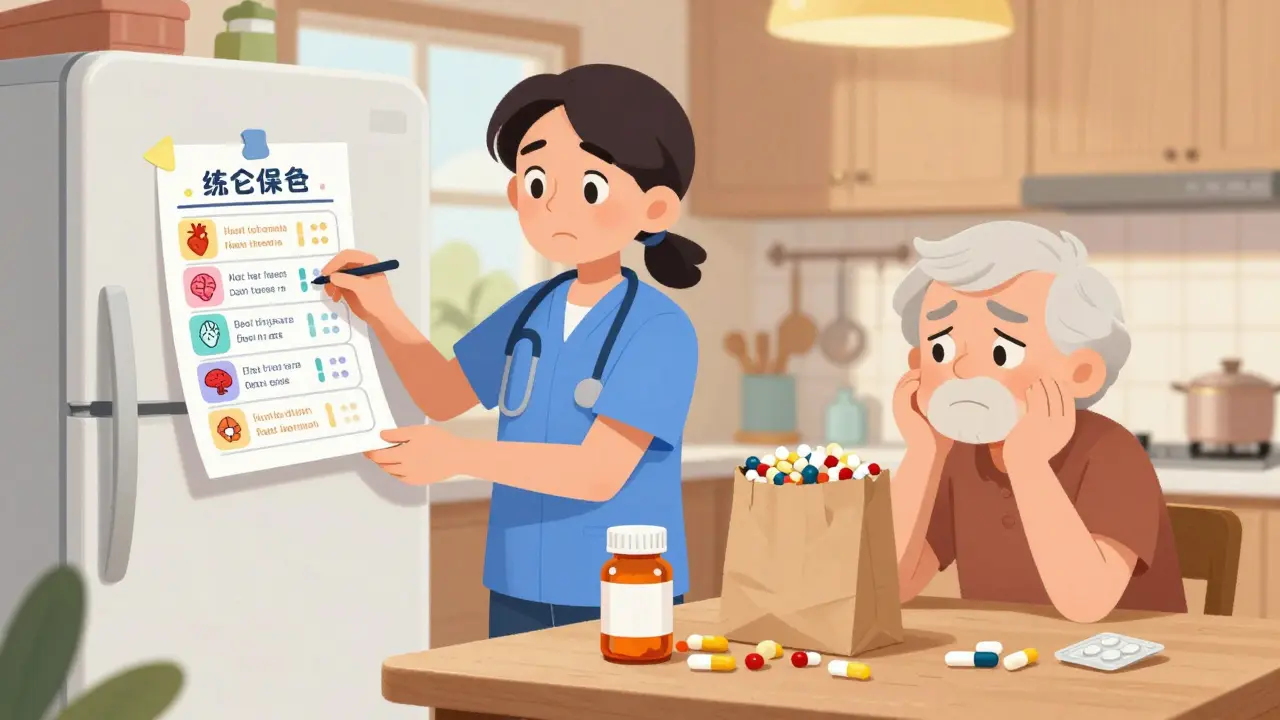
Why a Medication List Matters More Than You Think
Imagine this: your parent is rushed to the ER after feeling dizzy. The doctors ask what medications they’re taking. You pull out a crumpled note, a half-empty pill bottle, and a memory that’s fuzzy on doses and times. That’s not just stressful-it’s dangerous. Over 40% of older adults in the U.S. take five or more medications daily. That’s called polypharmacy, and it’s one of the biggest risks to their safety. A simple, accurate medication list isn’t a nice-to-have-it’s the difference between getting the right care and ending up back in the hospital.
Medication errors cause about 7,000 deaths in the U.S. every year, and nearly half of those happen at home because caregivers don’t have a clear, updated record. The FDA, AHRQ, and top geriatric experts all agree: if someone is managing multiple meds, a written list is non-negotiable. It’s not about being organized-it’s about preventing mistakes that could be fatal.
What Every Medication List Must Include
A good list doesn’t just say “blood pressure pill.” It gives the full picture. Here’s exactly what to write down for every single medication, whether it’s prescription, over-the-counter, or a supplement:
- Medication name - Both brand (Lipitor) and generic (atorvastatin)
- Dosage - 10mg, not “one pill”
- Frequency - “Once daily at bedtime,” not “every day”
- Purpose - “For high cholesterol,” “for sleep,” “for joint pain”
- Special instructions - “Take with food,” “Do not crush,” “Avoid alcohol”
- Start date - When did they begin taking it?
- Prescribing doctor - Name and clinic
- Pharmacy name and phone - The one filling the script
- Side effects to watch for - Dizziness? Swelling? Confusion?
- Allergies - List every reaction, even mild ones
- Stop date - For meds meant to be temporary
- NDC number - The 11-digit code on the bottle (helps pharmacists avoid errors)
Don’t skip the “why.” Many caregivers don’t know why their loved one is on a certain drug. That’s a red flag. If you can’t explain it, ask the pharmacist. A 2022 study found 92% of errors happen because people don’t know how or when to take a med-or why.
Paper vs. Digital: Which One Works Better?
There’s no single right answer. The best system is the one you’ll actually use.
Paper lists are still used by 63% of caregivers. They’re simple, don’t need batteries, and can be grabbed fast in an emergency. Many hospitals still ask for a physical list. A laminated, color-coded chart with photos of each pill (like one caregiver on Reddit did) cuts errors by 65%. The “brown bag method”-bringing all meds to appointments in a bag-is used by 89% of caregivers who say it’s extremely helpful.
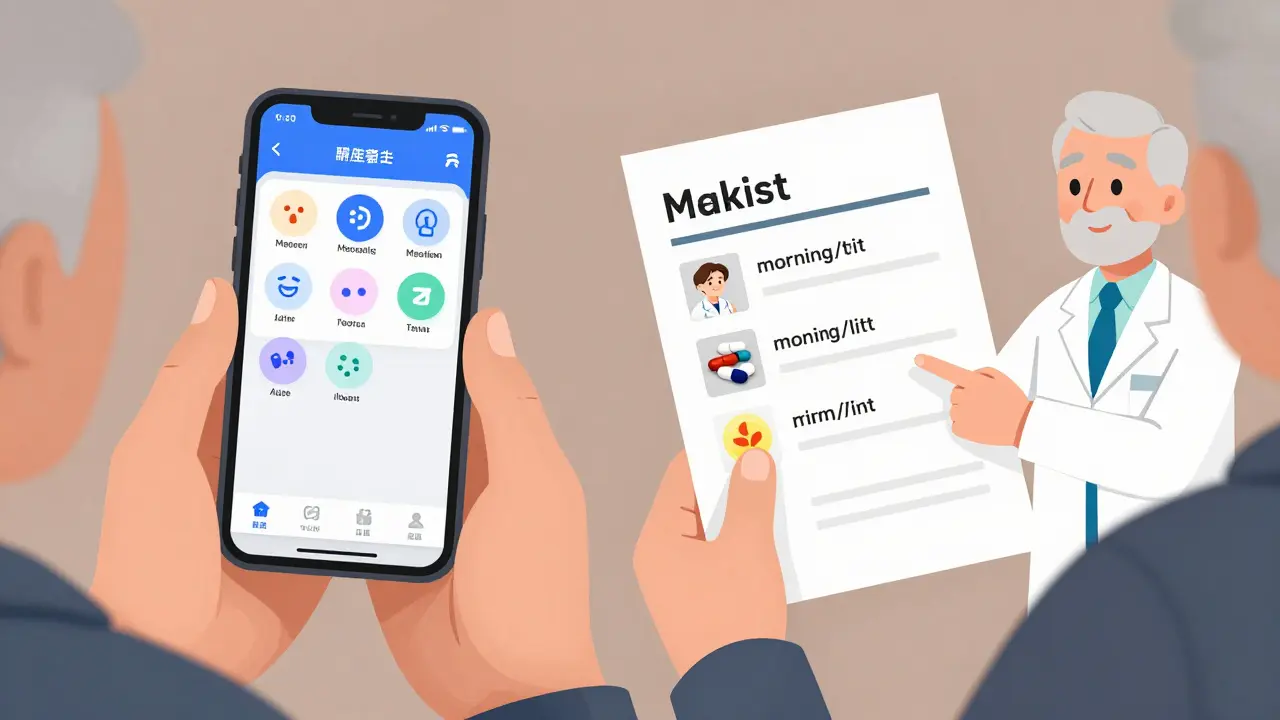
Digital tools like Medisafe, MyMeds, or pharmacy apps (CVS, Walgreens) can sync refills, send reminders, and update automatically. For regimens with four or more meds, digital tools reduce errors by 42%. But here’s the catch: 71% of caregivers abandon apps within three months. Why? Too complicated. Too many clicks. Too hard for older users. Pew Research says 62% of caregivers over 65 struggle with digital tools.
The smart move? Use both. Keep a printed, laminated master list taped to the fridge or kept in a wallet. Use a digital app as a backup that updates automatically. If your pharmacy offers free medication synchronization (CVS and Walgreens do), sign up. It cuts update time by 75%.
How to Build Your List: A Simple 6-Step Plan
You don’t need to be a nurse. Just follow these steps:
- Gather everything - Go through every drawer, cabinet, and bedside table. Collect every pill bottle, patch, inhaler, and supplement. This takes 2-3 hours. Don’t skip anything-not even gummy vitamins or herbal teas.
- Write it down - Use the 12-point checklist above. Spend at least 10 minutes per medication. If you’re unsure about a pill, call the pharmacy. Don’t guess.
- Organize by time - Group meds by when they’re taken: morning, noon, evening, bedtime. Use color-coded sticky notes or highlighters to make it easy to scan.
- Make two copies - One for home, one for your phone or cloud. Share a copy with the primary doctor and any specialist.
- Set a weekly update time - Every Sunday evening, check for changes. Did the doctor change a dose? Did they add a new med? Update immediately. Only 13% of caregivers who update weekly have medication errors.
- Review with a pharmacist - Every three months, take the list to your pharmacist. They’re trained to spot dangerous interactions, duplicate meds, or drugs that shouldn’t be taken by seniors. The American Geriatrics Society says this cuts inappropriate prescriptions by 27%.
It’s not about perfection. It’s about consistency. The average caregiver makes 4.7 mistakes in the first month. That’s normal. Keep going.
Handling the Hard Parts
Some situations are trickier. Here’s how to handle them:
- “As needed” meds - Like painkillers or sleep aids. Create a separate “PRN log” next to the main list. Note the date, time, dose, and reason (e.g., “3/12/25, 8pm, 5mg oxycodone-severe back pain”).
- Multiple doctors - If your loved one sees five specialists, pick one provider (usually the primary care doctor) to be the “medication coordinator.” They’re the one who reviews the full list and tells others what to change.
- Over-the-counter meds - Treat them like prescriptions. Tylenol, ibuprofen, antacids, and even fish oil can interact. A 2023 study found 41% of seniors take OTC meds without telling their doctor.
- Medication changes after hospital stays - This is the #1 cause of confusion. When your loved one is discharged, get a new written list from the hospital. Compare it to your current list. If they don’t match, call the doctor immediately. 58% of caregivers report mismatched lists after hospital visits.
What to Do When Things Go Wrong
Even with the best system, mistakes happen. If you notice:
- Confusion, dizziness, or falls after a med change
- Pills disappearing faster than they should
- Missing doses or double-dosing
Stop. Don’t guess. Call the pharmacist. Or go to urgent care. Don’t wait. Many adverse reactions can be reversed if caught early.
Also, keep a “medication emergency card” in your wallet or phone. It should say: name, date of birth, primary doctor, pharmacy, and list of 3 most critical meds and allergies. If you’re ever unable to speak, someone else can.
What’s Changing in 2025
Medication management is getting smarter. The FDA’s new “My Medicines” template now includes QR codes that link to videos showing how to take each pill. CVS and Walgreens automatically update digital lists when refills are processed. By 2025, all Medicare Advantage plans must offer medication reviews for anyone taking eight or more drugs. And by 2026, voice-activated assistants (like Alexa or Google Home) will be able to read back your loved one’s med schedule on command.
But here’s the truth: no app or voice assistant replaces a clear, printed list you can hold in your hand. Technology helps. But the human system-written down, reviewed weekly, shared with everyone-still saves lives.
Final Tip: Make It a Habit, Not a Chore
Successful caregivers don’t treat this like a task. They treat it like a routine-like brushing teeth. Sunday night. Five minutes. Check the list. Update it. Put it back. That’s it.
And remember: you’re not doing this to impress anyone. You’re doing it because someone you love depends on it. The most powerful tool in caregiving isn’t a high-tech gadget. It’s a simple piece of paper-with the right information-updated every week.
Teresa Marzo Lostalé
December 28, 2025 AT 07:01And yes, the brown bag method? Still the gold standard. I brought all her bottles to her last cardiologist visit and he literally gasped. 'Where'd you get this list?' I said, 'From her kitchen.' He wrote it down. No joke.
Bradly Draper
December 28, 2025 AT 15:59Vu L
December 29, 2025 AT 14:52Celia McTighe
December 31, 2025 AT 03:46ANA MARIE VALENZUELA
December 31, 2025 AT 06:46Sydney Lee
December 31, 2025 AT 12:27oluwarotimi w alaka
January 2, 2026 AT 09:37Hakim Bachiri
January 3, 2026 AT 15:21Gran Badshah
January 4, 2026 AT 06:54Ellen-Cathryn Nash
January 5, 2026 AT 11:40Samantha Hobbs
January 6, 2026 AT 21:45Nicole Beasley
January 8, 2026 AT 10:14sonam gupta
January 8, 2026 AT 12:09Ryan Touhill
January 8, 2026 AT 16:13