

When your big toe suddenly swells up, turns red, and feels like it’s on fire - even the weight of a bedsheet is unbearable - you’re not just having a bad night. You’re having a gout attack. And if this has happened more than once, it’s not luck. It’s your body signaling that something’s off with how it handles uric acid.
Gout isn’t just ‘painful arthritis.’ It’s a direct result of too much uric acid in your blood. When levels hit 6.8 mg/dL or higher, uric acid starts forming sharp, needle-like crystals in your joints. These crystals don’t just sit there. They trigger your immune system like an alarm. Macrophages rush in, activate the NLRP3 inflammasome, and release interleukin-1β - a powerful inflammatory signal that brings swelling, heat, and pain. This isn’t a coincidence. It’s biology. And it’s why gout hits harder than almost any other type of arthritis.
Why Do You Have Too Much Uric Acid?
Most people assume gout comes from eating too much meat or drinking too much beer. That’s part of it - but not the whole story. About 90% of gout cases happen because your kidneys aren’t clearing uric acid properly. Only 10% are from your body making too much.
Your kidneys have special transporters - SLC2A9 and SLC22A12 - that decide how much uric acid gets reabsorbed or flushed out. If these genes are faulty (and they often are), your body holds onto uric acid like it’s gold. Genetics explain about 60% of why your levels are high. That means if your dad or uncle had gout, you’re not just ‘lucky’ - you’re at higher risk.
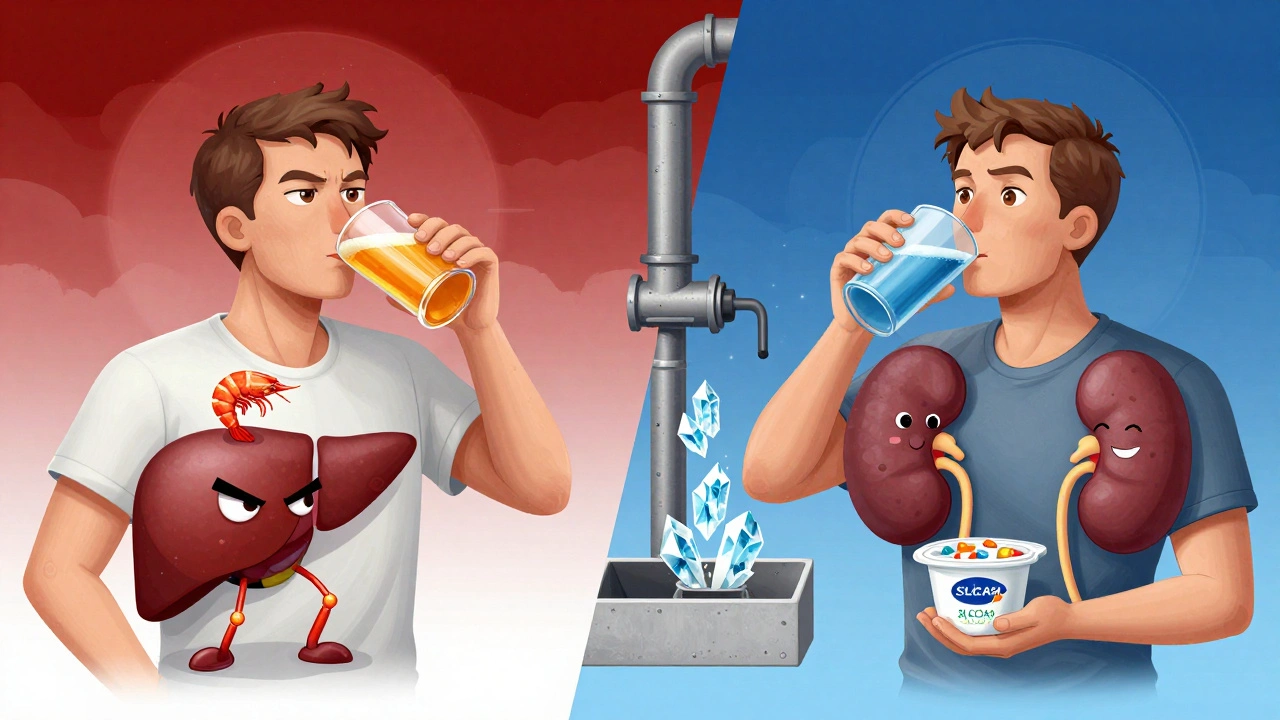
Some medications make it worse. Thiazide diuretics (commonly used for high blood pressure) can raise your uric acid by 30-50%. Low-dose aspirin, even just one baby aspirin a day, does the same. And alcohol? Beer is the worst offender. A 12-ounce serving raises your risk by 49%. Spirits? 15%. Wine? Almost no effect. Why? Beer has purines - the building blocks of uric acid - and also slows down kidney excretion.
Fructose is another silent culprit. Sugary sodas, sweetened teas, and even fruit juices spike uric acid by 20-30% because your liver breaks down fructose and uses up ATP, releasing purines in the process. One study showed people who drank two or more sugary drinks a day had an 85% higher risk of gout than those who avoided them.
What Triggers a Gout Attack?
You can have high uric acid for years and never have an attack. Then, something changes - and boom. A flare hits. What sets it off?
- Rapid changes in uric acid levels - whether up or down. Starting a urate-lowering drug like allopurinol? You’re likely to get a flare in the first few months. That’s not the drug failing. It’s the crystals shifting.
- Dehydration - less urine means less uric acid flushed out. If you’re drinking less than 1.5 liters of water a day, you’re in danger zone.
- Joint injury - even a small bump or twist can dislodge crystals from tophi (the chalky lumps that form in joints over time) and trigger inflammation.
- Medical stress - surgery, infection, or sudden illness can destabilize uric acid balance.
- High-purine meals - organ meats like liver or kidney have 300-500 mg of purines per 3-ounce serving. Shellfish like shrimp and mussels are next on the list.
Here’s the twist: lowering uric acid too fast can trigger flares. That’s why doctors now know you can’t just treat the pain - you have to plan ahead.
How to Treat a Gout Attack
When the pain hits, you need fast relief. There are three main options, all backed by the American College of Rheumatology guidelines:
- NSAIDs - like indomethacin (50 mg three times a day for 3-5 days). These reduce inflammation and pain quickly. But they’re not safe for people with kidney disease, ulcers, or heart failure.
- Colchicine - 0.6 mg three times a day for 4-7 days. It blocks the immune response to crystals. Side effects? Diarrhea in 10-20% of people. Lower doses (0.6 mg once or twice daily) are now preferred for long-term use.
- Corticosteroids - oral prednisone (30-40 mg daily for 5 days, then tapered) or a joint injection. Great for people who can’t take NSAIDs or colchicine. Works just as well.
Don’t take painkillers like ibuprofen or acetaminophen expecting them to stop a gout flare. They don’t touch the inflammation driving the pain. You need drugs that target the immune response - not just numb the symptoms.
Long-Term Strategy: Lowering Uric Acid for Life
After a flare, the real work begins. If you have two or more attacks a year, have tophi (visible lumps under the skin), or joint damage on imaging - you need lifelong urate-lowering therapy.
The goal? Keep your serum uric acid below 6 mg/dL. For severe cases with tophi, aim for 5 mg/dL. Why? Because below 6 mg/dL, crystals start to dissolve. Below 5 mg/dL, they vanish - and tophi shrink or disappear completely. One 2023 study showed 70% of patients with chronic tophaceous gout cleared all tophi after 12 months at 5 mg/dL. At 6 mg/dL? Only 30% did.
First-line drug? Allopurinol. Start at 100 mg daily. Increase by 100 mg every 3-4 weeks until you hit your target. Most people need 300-600 mg daily. Some need up to 800 mg. It’s safe, cheap, and effective - but only if you take it every day. Stop it for a week? Uric acid jumps back up. Attacks return.
If you can’t take allopurinol (allergy, rash, liver issues), use febuxostat (40-80 mg daily). It’s stronger but carries a slightly higher heart risk, so it’s not first choice for people with heart disease.
For people with normal kidney function, probenecid (250-2000 mg daily) helps the kidneys flush out more uric acid. But it doesn’t work if your kidneys are already damaged.
The Hidden Key: Preventing Flares When Starting Treatment
This is where most people fail. When you start allopurinol or febuxostat, your body is adjusting. Crystals are dissolving - and that triggers inflammation. Up to 40% of patients get flares in the first six months.
That’s why guidelines now say: Start anti-inflammatory prophylaxis from day one. Low-dose colchicine (0.6 mg once or twice daily) cuts flare risk by 50-75%. You don’t need to be in pain to take it. You take it to prevent pain.
Take it for at least six months. Some people need it for a year. Don’t stop just because you feel fine. The crystals are still dissolving beneath the surface.
Diet and Lifestyle: What Actually Works
You don’t need to go vegan. But you do need to make smart swaps.
- Drink more water - aim for 2-3 liters a day. Helps your kidneys flush uric acid.
- Choose low-fat dairy - one serving a day (milk, yogurt) cuts gout risk by 43%. Casein and lactoglobulin help the kidneys excrete uric acid.
- Avoid beer and sugary drinks - beer is the worst. Sugary sodas are almost as bad.
- Limit red meat and shellfish - replace with plant proteins like tofu, lentils, and beans. Studies show plant purines don’t raise gout risk the same way animal purines do.
- Keep your weight stable - rapid weight loss can spike uric acid. Lose slowly, if needed.
And yes - cherries help. Some studies show eating a few servings a week lowers flare risk. It’s not magic. It’s antioxidants reducing inflammation.
What Not to Do
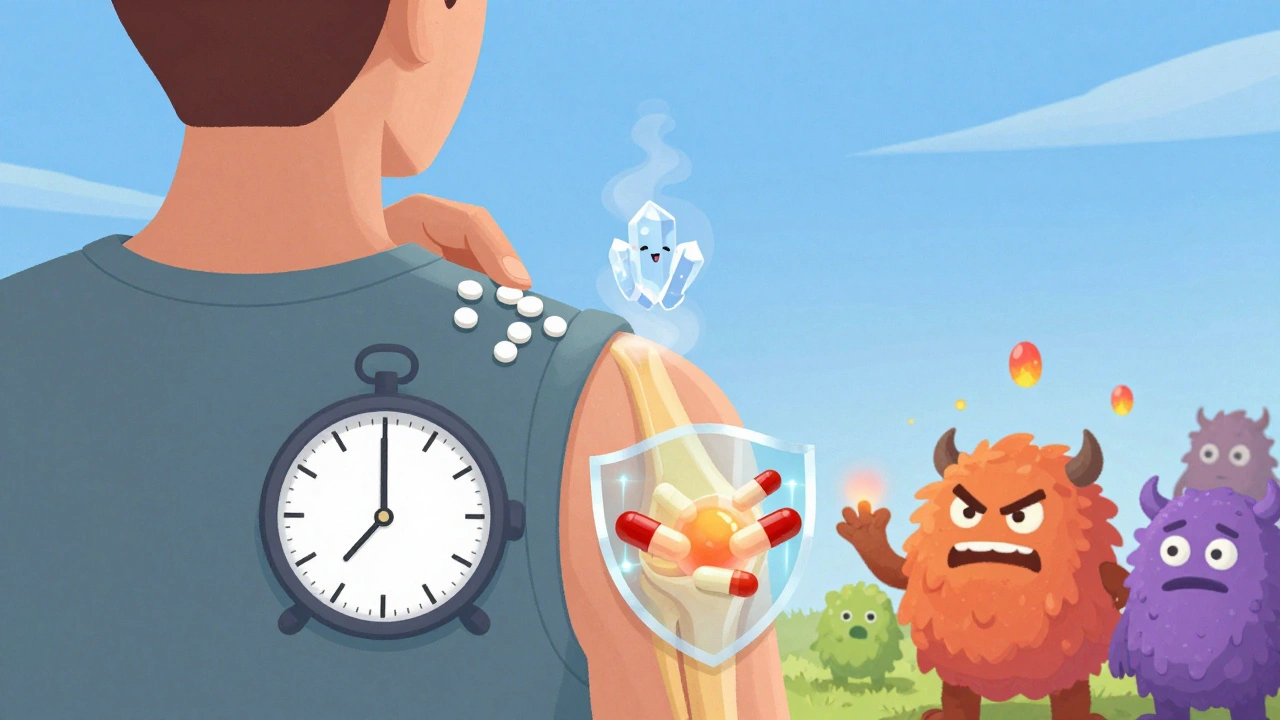
Don’t stop your urate-lowering drug when you have a flare. That’s the #1 mistake. Allopurinol isn’t causing the flare - the changing crystals are. Stopping it lets uric acid rise again, making future flares worse and longer.
Don’t rely on ‘natural remedies’ like apple cider vinegar or baking soda. No good evidence they work. And baking soda can raise blood pressure and cause electrolyte problems.
Don’t ignore your numbers. Get your serum uric acid tested every 2-5 weeks while adjusting your dose. Then every 6 months once you’re stable. If your level is above 6 mg/dL, you’re not done.
What’s New in Gout Treatment?
Research is moving fast. For the first time, drugs are targeting the NLRP3 inflammasome - the exact immune switch that turns on gout inflammation. Dapansutrile, a new oral drug, cut flare duration by 40% in phase III trials. It’s not approved yet, but it’s coming.
Scientists are also looking at the gut microbiome. Early studies suggest certain probiotics may help break down purines in the intestines, lowering uric acid by 10-15%. It’s early, but it’s promising.
And the message from experts is clear: gout isn’t just about pain. It’s about crystals, inflammation, and long-term damage. Treat the uric acid. Protect the joints. Prevent the flares. Do all three - and you can live without gout.
Can gout be cured?
Gout can’t be ‘cured’ like an infection, but it can be completely controlled. If you keep your serum uric acid below 6 mg/dL (ideally 5 mg/dL) for years, crystals dissolve, tophi disappear, and flares stop. You don’t need to live with pain - but you do need to stay on treatment. Stopping medication means uric acid rises again, and flares return.
Why does gout happen at night?
Gout flares often start at night because body temperature drops slightly during sleep, which makes uric acid crystals more likely to form. Dehydration overnight and lower cortisol levels (which normally help suppress inflammation) also play a role. It’s not random - it’s physiology.
Is gout hereditary?
Yes. Genetics account for about 60% of why some people have high uric acid. Mutations in genes like SLC2A9, SLC22A12, and ABCG2 affect how your kidneys handle uric acid. If a close relative has gout, your risk is higher - but lifestyle choices still determine whether you ever have a flare.
Can I drink alcohol with gout?
Beer is the worst - one 12-ounce serving increases risk by 49%. Spirits increase risk by 15%. Wine has little to no effect. If you have gout, avoid beer completely. Spirits should be limited to rare occasions. If you must drink, choose wine - and never on an empty stomach. Always drink water alongside alcohol.
What’s the best way to monitor gout?
Regular blood tests. Check your serum uric acid every 2-5 weeks while adjusting your medication. Once you’re stable, test every 6 months. Don’t wait for pain. If your level is above 6 mg/dL, you’re still at risk for joint damage - even if you feel fine. Imaging (ultrasound or dual-energy CT) can also detect crystals before they cause pain.
Next Steps: What to Do Today
If you’ve had one gout attack:
- Start tracking your triggers - what you ate, drank, or did before the flare.
- Drink at least 2 liters of water daily.
- Replace beer and sugary drinks with water, coffee, or low-fat milk.
- Ask your doctor for a serum uric acid test - even if you feel fine now.
If you’ve had two or more attacks:
- Ask your doctor about starting allopurinol - and ask about starting low-dose colchicine at the same time.
- Get imaging (ultrasound) to check for crystals or tophi.
- Don’t stop your meds during a flare. That’s how gout gets worse.
Gout isn’t a life sentence. It’s a condition you manage - like high blood pressure or diabetes. The tools are here. The science is clear. You just need to use them - consistently.
Yasmine Hajar
December 6, 2025 AT 02:49So many people think gout is just a rich man’s disease from too much steak and beer. Truth is, my dad had it bad and he lived on beans, rice, and veggies his whole life. Genetics hit him hard. SLC2A9 mutation confirmed. No alcohol, no sugar, still ended up with tophi by 52. This post nailed it - it’s not about willpower, it’s biology.
Karl Barrett
December 6, 2025 AT 03:38The NLRP3 inflammasome activation cascade is the real star here. IL-1β isn’t just a cytokine - it’s the molecular detonator. Most clinicians still treat the symptom, not the mechanism. That’s why colchicine, despite its GI side effects, remains gold standard - it directly inhibits microtubule-dependent NLRP3 assembly. New drugs like dapansutrile targeting this pathway? Game changer. We’re finally moving from palliation to pathophysiology.
val kendra
December 6, 2025 AT 19:38Allopurinol at 100mg daily then titrate up. That’s it. No magic. No detoxes. No cherry juice miracles. Just consistent dosing. I’ve seen patients quit after one flare because they thought it was ‘fixed.’ Nope. Uric acid climbs back. Crystals reform. Pain returns. Stay on it. Even if you feel fine. Your joints aren’t lying.
John Filby
December 8, 2025 AT 02:42Just started allopurinol last week and took colchicine as advised. No flare yet. Felt like I was prepping for war. Also swapped soda for sparkling water with lime. Life’s better. Thanks for the clarity.
Elizabeth Crutchfield
December 9, 2025 AT 16:31i had a gout attack last month and thought it was just a sprained toe… turns out i was drinking 3 sugary teas a day. who knew??
Ashley Elliott
December 10, 2025 AT 17:09Love how this breaks down the science without making you feel guilty. I used to think ‘eating clean’ would fix it. Turns out my kidneys just suck at filtering - and that’s okay. Knowledge > shame. Thanks for the practical steps.
Isabelle Bujold
December 12, 2025 AT 10:33One thing no one talks about enough is how dehydration during sleep contributes to nighttime flares. Your body’s temperature drops, urine output decreases, and uric acid concentration spikes. That’s why drinking 500ml of water before bed isn’t just a tip - it’s preventative medicine. I started doing it after my third attack and haven’t had one in 14 months. Simple, cheap, and backed by renal physiology. Also, low-fat yogurt every morning - the lactoglobulin helps. Not hype. Science.
George Graham
December 13, 2025 AT 12:02My uncle had gout for 30 years. Took him 20 to realize stopping his meds during flares made it worse. He finally got it after a doc showed him a joint ultrasound with crystals glowing like little stars. Now he’s on allopurinol, drinks 3L of water, and eats tofu. No more hospital visits. You can beat this. Just don’t quit.
Jake Deeds
December 14, 2025 AT 00:28It’s funny how people will spend $200 on a ‘gout cure’ supplement but won’t take a $5 generic pill every day. The pharmaceutical industry doesn’t profit from allopurinol. That’s why you don’t see ads for it. Meanwhile, someone’s selling ‘gout detox tea’ made from dandelion and wishes. Wake up. This isn’t witchcraft. It’s pharmacology.
Shofner Lehto
December 14, 2025 AT 18:29Reading this reminded me of my cousin who refused to get her uric acid tested because she thought it was ‘just a toe thing.’ Two years later, she had a tophus on her elbow. Got diagnosed after it burst. Now she’s on meds and drinks water like it’s her job. Don’t wait for it to explode. Get tested. Even if you’re ‘fine.’
Ben Choy
December 16, 2025 AT 01:04Cherries helped me a ton. Not magic, but I eat a cup every other day. Also, coffee. Black, no sugar. Two cups a day cut my flare risk in half. And yes - I still drink wine. Just not with pizza. Balance, not deprivation. 🙌
Chad Handy
December 17, 2025 AT 04:54Okay but why do people keep saying ‘avoid purines’ like it’s a diet? The body makes 80% of uric acid internally. So if your kidneys are broken, eating a steak once a week isn’t the problem. It’s the genetic transporter defect. And yet everyone still blames the burger. We need to stop the moralizing. This isn’t about discipline. It’s about biology. And if you’re telling someone to ‘just eat better’ - you’re part of the problem.
Emmanuel Peter
December 19, 2025 AT 00:29So you’re telling me I can’t have a beer at the game? And I have to take a pill every day for the rest of my life? And I have to get blood tests every 6 months? And if I miss one, I’m back to screaming in pain? Cool. So what’s the point of living? I’m just gonna eat the whole wheel of cheese and die happy. At least I’ll go out with flavor.