
Statin Side Effects: What You Need to Know Before You Take Them
When you take a statin, a class of drugs used to lower LDL cholesterol and reduce heart attack risk. Also known as HMG-CoA reductase inhibitors, they’re among the most prescribed medications in the world — but not everyone knows what they actually do to your body. Statins work by blocking an enzyme your liver needs to make cholesterol. That sounds simple, but your body isn’t just making bad cholesterol — it’s also making vital compounds like CoQ10, which your muscles and heart rely on. That’s where many side effects come from.
One of the most common complaints is muscle pain, a dull ache or weakness that can range from mild to disabling. It’s not always in the legs — some people feel it in their shoulders or back. Studies show about 10% of people on statins report this, but many more stop taking them because they think it’s the drug, when it could be something else. Your doctor can check your CK levels to see if your muscles are breaking down. If they are, switching to a different statin or lowering the dose often helps. Another real but rare risk is liver damage, shown by elevated liver enzymes on blood tests. This doesn’t mean your liver is failing — it’s usually mild and goes away if you pause the drug. The FDA says you only need to check liver enzymes once before starting and then if symptoms appear. No need for monthly tests unless you’re high risk.
Statin side effects aren’t just about your muscles or liver. Some people get digestive issues, like nausea, diarrhea, or constipation. Others report memory fog or trouble sleeping — though evidence linking statins directly to brain changes is weak. What’s more important is how statins interact with other drugs. If you’re on warfarin, a blood thinner, or certain antibiotics like clarithromycin, your statin levels can spike dangerously. That’s why your pharmacist should always review your full list of meds. And if you’re taking supplements like CoQ10, often used to ease statin-related muscle pain, know that it doesn’t always work — but it’s safe to try.
Here’s the truth: most people tolerate statins just fine. The real danger isn’t the side effects — it’s skipping the drug because you’re scared of them. Heart attacks don’t wait. But if you’re feeling off, don’t ignore it. Track your symptoms: when did the pain start? Did it get worse after a dose change? Did you start a new supplement? Bring that info to your doctor. You don’t have to suffer through side effects. There are different statins, lower doses, and even non-statin options like ezetimibe or PCSK9 inhibitors that work differently. The goal isn’t to take the strongest pill possible — it’s to find the one that keeps your heart safe without wrecking your quality of life.
Below, you’ll find real patient experiences and clinical insights on how to spot dangerous reactions, manage discomfort, and make smarter choices with your cholesterol treatment — without guessing what’s normal and what’s not.
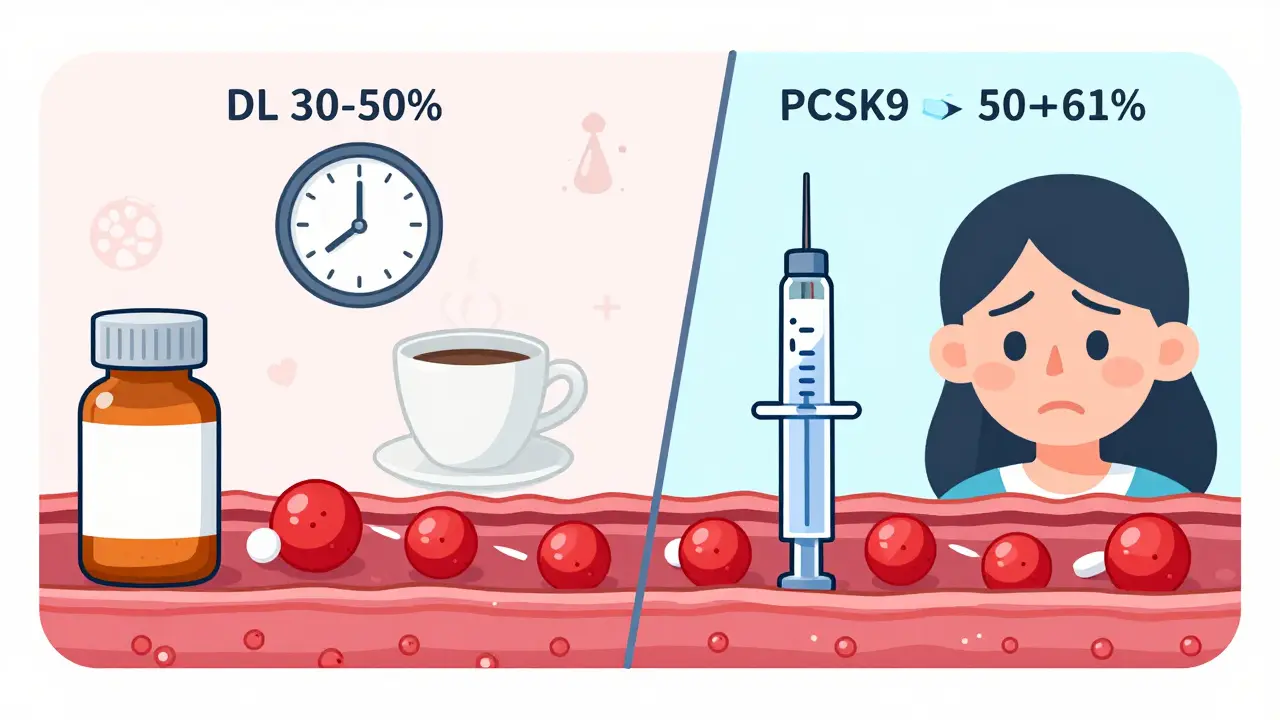
PCSK9 Inhibitors vs Statins: Side Effects and Outcomes
- by Colin Edward Egan
- on 21 Dec 2025
PCSK9 inhibitors and statins both lower LDL cholesterol but differ in effectiveness, side effects, and cost. Statins are first-line and affordable; PCSK9 inhibitors offer stronger LDL reduction without muscle pain but require injections and are much more expensive.
Rhabdomyolysis from Medication Interactions: How Common Drugs Can Cause Muscle Breakdown
- by Colin Edward Egan
- on 22 Nov 2025
Rhabdomyolysis from medication interactions is a life-threatening condition where muscle tissue breaks down, often due to dangerous drug combos like statins with antibiotics. Learn the signs, risks, and how to prevent it.