
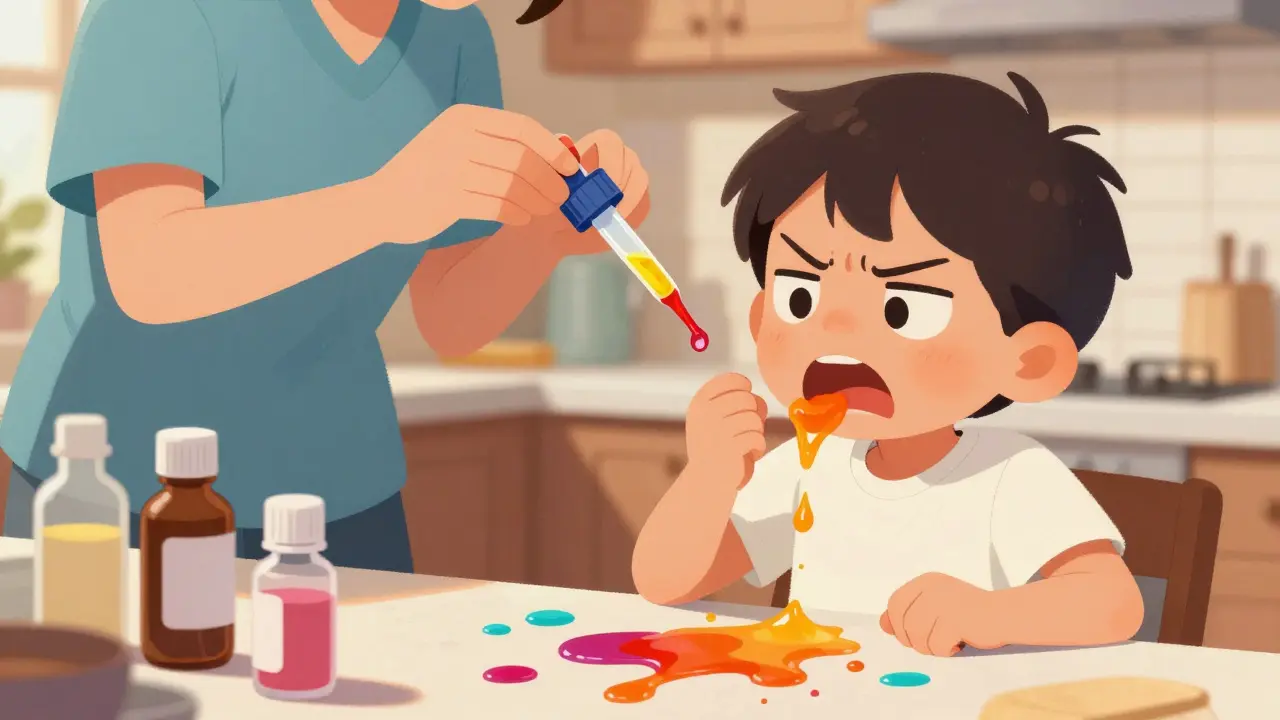
You know the struggle. You're trying to give your child their evening medicine, and the syringe slips. There's syrup all over the counter, down the front of their shirt, and half of it is missing. Then comes the taste complaint-grumpy faces, spitting, refusal to take the next dose. For many parents and caregivers, the battle isn't just about health; it's about the logistics of administering Liquid Medications, which are fluid pharmaceutical preparations designed to be swallowed directly, typically requiring precise measurement tools. These syrups and suspensions have long been the standard for pediatric patients, especially those aged two to twelve years. However, a shift is happening. More families are asking if they can switch to solid forms that look more manageable.
The move from a dropper bottle to a Chewable Tablets, defined as solid oral dosage forms specifically engineered to be masticated before swallowing to ensure proper drug release. This isn't just about convenience. It changes how the drug enters your body. Before you grab the nearest bottle from the shelf, you need to understand the risks and the rules. A direct swap without medical oversight can lead to dosing errors or even therapeutic failure. This guide walks you through the safety checks, the math, and the mechanics of making this switch effectively.
Key Takeaways
- Bioequivalence Matters: Just because the mg looks the same doesn't mean the absorption will be identical; always confirm with a pharmacist.
- Dose Precision: Chewable tablets reduce measurement errors by up to 20% compared to liquid measuring cups.
- Mastication is Critical: Swallowing a chewable whole can delay drug release significantly, potentially causing treatment gaps.
- Check Stability: Solids often last longer (up to 36 months) versus liquids (12-18 months) without refrigeration.
- Assess Swallowing Ability: Not every child or adult can safely manage a solid dose; dysphagia screening is essential.
Understanding the Formulation Differences
When we talk about switching, we aren't just talking about swapping containers. We are dealing with different chemical engineering. Liquid medications come pre-dissolved. When you swallow a suspension, the active ingredient is already available for absorption in your stomach. The average time for peak concentration (Tmax, the time it takes for a drug to reach maximum concentration in the bloodstream.) for a liquid is usually around 15 to 30 minutes. Chewable tablets require mechanical breakdown first.
Technically, these pills contain excipients like sodium starch glycolate and microcrystalline cellulose. These ingredients control how hard the pill feels. Experts document that optimal chewability requires hardness values between 4 to 8 kiloponds. If it's too soft, it crumbles in the bottle. Too hard, and a child might gag or refuse to chew it. When transitioning, you need to verify that the new form matches the old one in terms of how much drug actually gets into the blood. This concept is called bioequivalence.
Regulatory bodies like the FDA mandate that for a switch to be safe, the new product must show 80 to 125% equivalence in Area Under the Curve (AUC) compared to the reference product. In plain English, if the liquid gets 10 units of medicine into the system, the chewable must get somewhere between 8 and 12.5 units. Without this confirmation, you risk underdosing or overdosing the patient.
The Case for Switching: Stability and Adherence
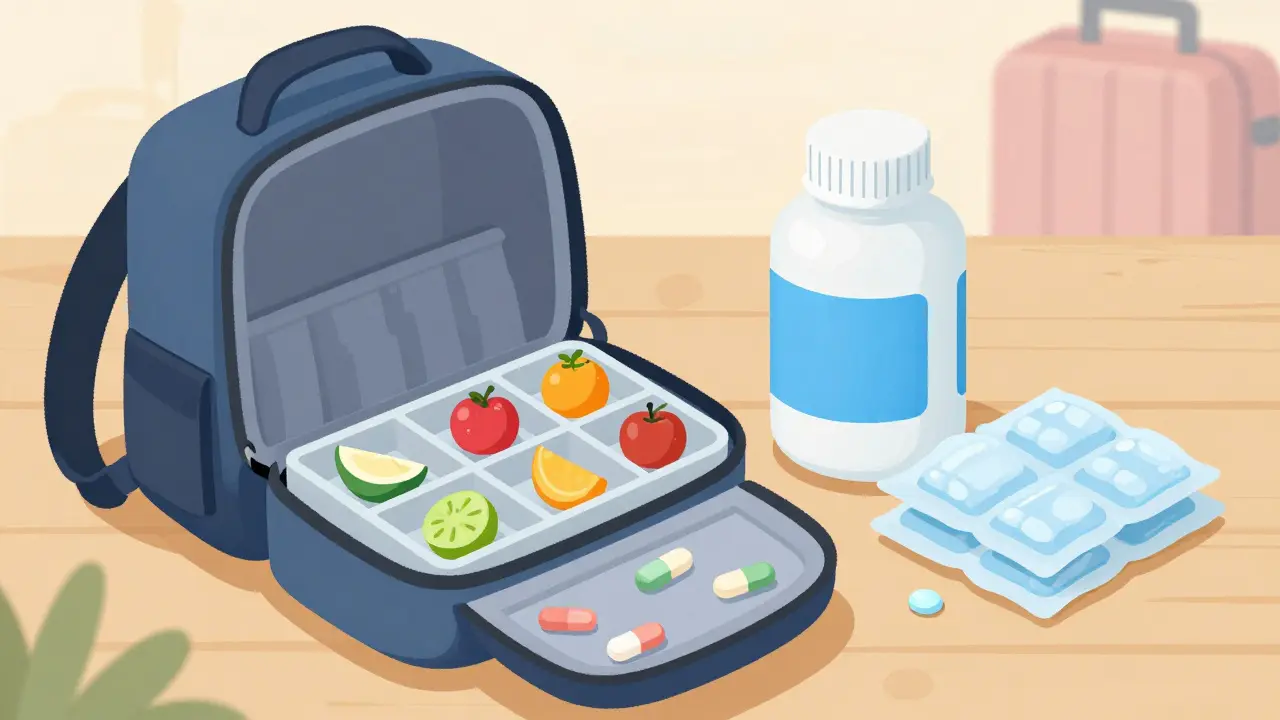
Why would you want to make this change? It comes down to three main drivers: storage, taste, and adherence. Liquid medicines are often unstable. Research indicates that approximately 68% of pediatric liquids require refrigeration to maintain potency after opening. That means when you travel, you need ice packs. If you leave them in a hot car for too long, the chemical bonds break, and the medicine stops working.
Chewables generally offer superior stability. They can withstand temperatures up to 25°C with 60% relative humidity for 24 to 36 months. This makes travel significantly easier. No more worrying if the backpack got left in a parked car during a road trip. Furthermore, taste aversion is a massive issue. Studies show compliance rates drop to as low as 40% for children who hate the flavor of liquid meds. Chewable variants often use fruit flavors like grape or strawberry that are masked behind a waxy coating, improving willingness to take the dose.
| Feature | Liquid Suspension | Chewable Tablet |
|---|---|---|
| Dosing Error Rate | 15-20% (User Measurement) | <2% (Fixed Dose) |
| Shelf Life | 12-18 Months | 24-36 Months |
| Storage Requirements | Often Refrigeration (2-8°C) | Room Temp (25°C) |
| Absorption Speed | Faster (15-30 mins) | Slightly Slower (30-60 mins) |
| Portability | Bulky, Leak Prone | Compact, Stable |
Step-by-Step Transition Protocol
You cannot simply swap the prescription bottle yourself. You need a systematic approach to ensure safety. Follow this five-step verification process before making the switch permanent.
- Confirm Bioequivalence: Ask your pharmacist to check the FDA Orange Book. It lists approved generic equivalents. Ensure the active pharmaceutical ingredient (API) and strength match exactly.
- Assess Swallowing Capability: Does the patient have Dysphagia, a medical condition characterized by difficulty swallowing? If yes, a solid might pose a choking hazard. Even for chewables, some people swallow them whole by accident. If a tablet lacks disintegrants, swallowing it whole could mean the drug never releases in time.
- Calculate the Exact Dose: Liquids are measured by volume (mL), while solids are mass (mg). A common error happens here. For example, Tylenol Children's Suspension is 160mg/5mL. If you are switching to 160mg chewables, a 12-17 lb child gets 80mg. This equals half a teaspoon of liquid or half a tablet. Always weigh this out before dispensing.
- Educate on Chewing Technique: Teach the user to chew until the texture becomes powdery. Research suggests a minimum of 15 to 20 seconds. Less time means larger particles, which slows absorption.
- Schedule a Follow-Up: Contact the clinic within 72 hours of starting the new form to report any side effects or reduced symptom relief.
Common Pitfalls and How to Avoid Them
Even with the best intentions, things can go wrong. One frequent issue is the "forgot to chew" error. In hospital settings, nurses have reported cases where patients switched from liquid potassium chloride to solid forms and experienced gastric distress because they swallowed the pill whole. The tablet did not dissolve fast enough, leading to irritation.
Another trap involves hidden sugars. Chewable tablets often need sweeteners to mask the bitter API. While delicious to kids, these can impact diabetic patients. Some formulations contain 20-30% more sucrose than the liquid counterpart. Check the label for sugar alcohols like sorbitol, which can cause loose stools if taken frequently.
Size matters, too. A 500mg chewable can be physically large for a young child or an elderly person with dentition issues. If the tablet is bigger than a nickel, ask your doctor if there is a lower strength option or if you can split the tablet (though splitting chewables is risky unless scored).
Emerging Technologies and Future Trends
The industry is addressing these problems with new tech. By late 2023, companies were testing "intelligent" chewable tablets. These change color when the tablet has been sufficiently chewed, signaling the user to swallow. Clinical trials showed adherence improvements of 92% with this technology. Additionally, 3D printing allows for personalized doses. Instead of buying a 500mg pill and cutting it, manufacturers could print a precise 240mg tablet tailored to a child's weight.
As of early 2026, regulations are tightening. The European Medicines Agency and FDA are pushing for mandatory in vitro mastication testing. This simulates a child's jaw strength (which is weaker than an adult's) to ensure the tablet breaks apart correctly. Always look for products that mention compliance with dissolution standards like USP <701>.
When NOT to Switch
There are scenarios where staying on liquid is the safer bet. Extended-release medications often cannot be crushed or chewed. Immediate-release versions exist, but they work differently in the gut. Also, if a child is dehydrated or has a fever, a liquid works faster. The Tmax difference of 15 minutes matters in high-fever situations. Finally, for infants under age two, solid forms are rarely appropriate due to choking risks and inability to masticate effectively.
Practical Tips for Caregivers
If you decide to proceed, keep a logbook. Track the time you give the med and when symptoms improve. Compare this with your experience on the liquid. Keep the new medication away from moisture; humidity ruins chewables just like heat ruins liquids. Use a dedicated container rather than storing loose pills in a kitchen drawer where they might be mistaken for candy.
Also, involve the child. If they helped choose the flavor (cherry vs. orange), they are statistically more likely to comply. Turn it into a routine activity. Consistency is the biggest factor in long-term success.
Frequently Asked Questions
Can I crush a regular tablet to make it liquid-like?
You should never crush a regular tablet unless the packaging explicitly says it is allowed. Crushing extended-release tablets can dump the entire dose at once, causing toxicity. Always ask your pharmacist for a safe method to split or dissolve the medication.
Do chewable tablets work as fast as liquid medicine?
Generally, no. Liquids are pre-dissolved and absorb faster (15-30 minutes). Chewables require chewing and digestion, taking closer to 30-60 minutes to reach peak levels. For emergencies, liquids remain superior.
What if my child accidentally swallows the chewable whole?
Most modern chewables have disintegrants that help them break down in stomach acid eventually. However, it may take up to 2 hours instead of 30 minutes. Monitor for effectiveness. If symptoms persist, consult a doctor.
Are there specific brands that are known for safe transitions?
Major manufacturers like Pfizer (Advil) and McNeil Consumer Healthcare (Tylenol) have rigorous quality controls for their chewable lines. These brands meet stricter dissolution standards. Stick to reputable brands with clear expiration dates.
Does insurance cover the cost of chewable versions?
Coverage varies by plan. Sometimes chewables are classified as OTC and require self-pay, even if a liquid version was previously covered under a pharmacy benefit. Call your insurance provider to check coverage tiers.
Philip Wynkoop
March 27, 2026 AT 21:45Glad someone finally wrote down the bioequivalence stuff because most folks just guess at home :)
Monique Ball
March 29, 2026 AT 01:55It is absolutely crucial that we understand the stability issues involved here! Many parents do not realize how quickly liquid medicines degrade without refrigeration! You simply cannot risk your child taking ineffective medication when they are sick! The shelf life difference is genuinely staggering when you look at the data! Chewables offer a level of protection against humidity that liquids just cannot provide! We need to prioritize safety above all else in these decisions regarding dosing! Furthermore, the taste aversion aspect plays a huge role in adherence rates! Children are far more willing to take a flavored tablet than bitter syrup! You have to consider the logistics of travel when planning these switches! Leaving medicine in a hot car destroys the chemical bonds pretty fast! Stability testing shows solids last up to three years under proper conditions! Refrigeration is a hassle nobody wants to deal with while on vacation! We must verify the hardness values so kids do not choke on pills! Mastication is absolutely necessary for the drug release profile to work! Always consult a professional before making any changes to the regimen! 🛑🧪💊
gina macabuhay
March 30, 2026 AT 04:58The average parent lacks the expertise required to judge bioequivalence standards effectively! Ignorance leads to therapeutic failure and that is entirely their own fault! Regulatory mandates exist for a reason and ignoring them is negligent behavior! One should never assume solid forms behave identically to suspensions in the human body!
Debra Brigman
March 31, 2026 AT 18:36There is a certain poetry to the engineering of pharmaceutical delivery systems we rarely acknowledge. The shift from fluid to solid feels like moving from water to stone in terms of perception. Stability becomes the silent guardian protecting health during chaotic family moments. Flavor masking hides the medicine within a sweet deception that tricks young palates into compliance. Mechanics matter profoundly when determining how much active ingredient actually reaches the bloodstream.
Tommy Nguyen
April 1, 2026 AT 23:46I agree totally with that thought process 😊 It really helps reduce stress for everyone involved and saves money too
Monique Louise Hill
April 2, 2026 AT 13:44You need to stop assuming children are incapable of swallowing tablets properly immediately! 🛑 Parents push limits way too much in this scenario. Some adults refuse to read the label instructions regarding mastication requirements. Safety barriers are being dismantled by laziness in the household dynamic. Your negligence could cause genuine harm to a vulnerable patient later on! 💔 Everyone deserves access to clear guidance but many choose convenience over care. It is morally wrong to skip the pharmacist consultation step here! Respect the science involved in formulation chemistry instead of guessing! ❤️🔥
Sarah Klingenberg
April 3, 2026 AT 20:56Hey there, I get where you are coming from regarding safety standards :) It is important we all support each other on this journey without judgment though. Community helps us learn more about the right ways to handle meds. Thanks for sharing your perspective on the seriousness of things.
Richard Kubíček
April 4, 2026 AT 06:14Bioequivalence is a concept often overlooked yet critical for treatment efficacy. We navigate complex choices daily without realizing the mathematical precision behind them. The balance between absorption rates and formulation stability dictates outcomes significantly. Perhaps we should view these transitions as opportunities for education rather than burdensome tasks.
Devon Riley
April 4, 2026 AT 20:54This perspective really resonates with the struggles many families face daily. Understanding the science empowers caregivers to make better informed decisions confidently. Keep exploring these vital topics because knowledge truly is power for health management. 🌟🧠
Austin Oguche
April 5, 2026 AT 03:45Cultural differences in medication habits vary widely across regions. Standardization remains key for international safety protocols though. Travel considerations are significant for global families.