
Medication Interactions: What You Need to Know to Stay Safe
When you take more than one medication, your body doesn’t just see them as separate pills—it sees a medication interaction, a change in how one drug affects another when taken together. Also known as drug interaction, it can make a treatment work too well, too weakly, or even turn it toxic. This isn’t rare. One in five adults takes five or more medications, and many don’t realize that their daily aspirin, herbal supplement, or even grapefruit juice could be quietly messing with their heart, liver, or brain chemistry.
Some interactions are life-threatening. For example, mixing certain antibiotics, drugs used to fight bacterial infections with blood thinners like warfarin can cause dangerous INR spikes, a sudden rise in blood clotting time that increases bleeding risk. Others, like combining SAMe, a supplement often used for mood support with antidepressants, can trigger serotonin syndrome, a rare but deadly condition caused by too much serotonin in the brain. Even something as simple as an antifungal shampoo or a common eye drop can interact with your heart medication if you have a genetic variation that slows how your body breaks down drugs.
It’s not just about what you take—it’s about who you are. Your genes, age, liver health, and even what you eat can change how a drug behaves. Someone with a CYP2D6, a gene that controls how the body processes many common medications variant might turn a normal dose of an antidepressant into an overdose. Others might be at risk for QT prolongation, a heart rhythm problem that can lead to sudden cardiac death if they take two drugs that stretch the heart’s electrical cycle, like certain antipsychotics and antibiotics. That’s why doctors use therapeutic drug monitoring, a process of measuring drug levels in the blood to ensure safe dosing for some medications, especially older antidepressants or antifungals that have narrow safety margins.
You don’t need to memorize every possible combo. But you do need to know the red flags: new itching, dizziness, irregular heartbeat, confusion, or unexplained bruising after starting a new pill. Keep a simple list of everything you take—including vitamins, supplements, and over-the-counter meds—and bring it to every appointment. The right questions can save your life. Below, you’ll find real cases, clear explanations, and practical tools that help you spot hidden dangers before they become emergencies.
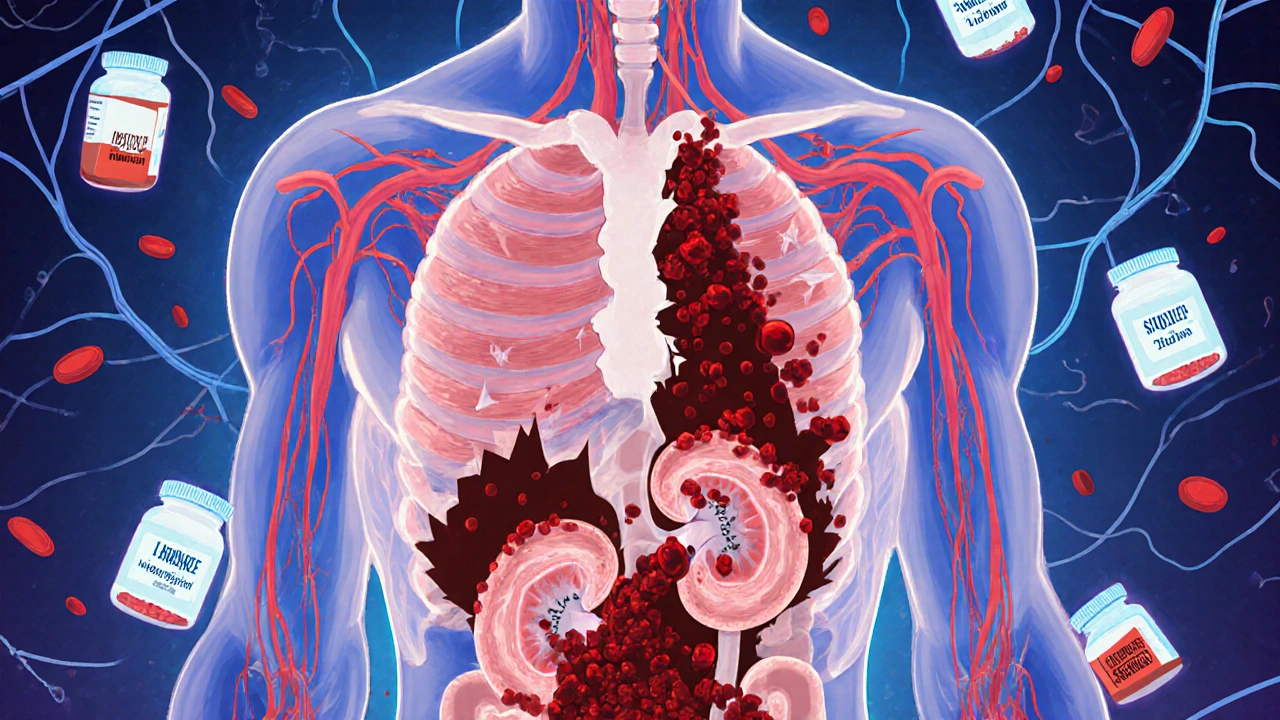
Rhabdomyolysis from Medication Interactions: How Common Drugs Can Cause Muscle Breakdown
- by Colin Edward Egan
- on 22 Nov 2025
Rhabdomyolysis from medication interactions is a life-threatening condition where muscle tissue breaks down, often due to dangerous drug combos like statins with antibiotics. Learn the signs, risks, and how to prevent it.