
Why Antidepressants Can Kill Your Sex Drive
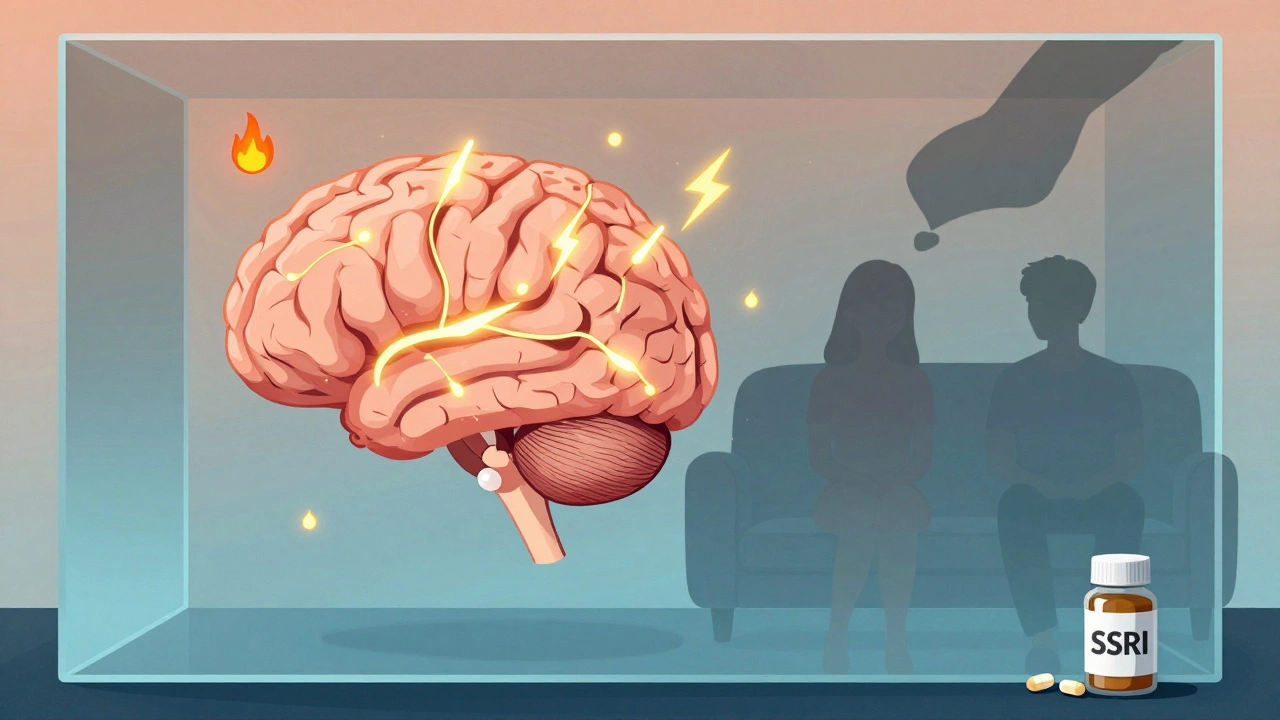
It’s not just you. If you’re on an antidepressant and noticing your libido has vanished, or sex feels like a chore, you’re far from alone. About 35-70% of people taking SSRIs like sertraline or fluoxetine report sexual side effects - and some studies say it’s as high as 80% when patients are directly asked. These aren’t rare glitches. They’re predictable, well-documented biological responses.
The problem isn’t depression itself. While untreated depression can lower sex drive, antidepressants make it worse. SSRIs work by flooding your brain with serotonin, which helps stabilize mood. But serotonin doesn’t just affect emotions - it shuts down dopamine and norepinephrine, the very chemicals your body needs to feel arousal, maintain an erection, or reach orgasm. Think of it like turning down the volume on your entire sexual response system.
What the Side Effects Actually Look Like
Men and women experience these effects differently, but both are deeply disruptive.
- Men: 64% report reduced libido, 58% struggle with erectile issues, and 53% experience delayed or absent ejaculation.
- Women: 61% feel less desire, 52% have trouble getting lubricated, and 49% can’t reach orgasm at all.
These aren’t just inconvenient - they strain relationships, damage self-esteem, and sometimes make people quit their meds entirely. A 2022 GoodRx analysis found that 23% of patients stop SSRIs within 90 days because of sexual side effects. Women are 1.7 times more likely than men to cite this as their reason for quitting.
Not All Antidepressants Are Created Equal
If you’re on paroxetine (Paxil), you’re at the highest risk. It’s the worst offender among SSRIs for sexual dysfunction - with one study showing that for every 2-5 people switched off it, one avoids sexual side effects. Sertraline (Zoloft) and citalopram (Celexa) are also high-risk. Fluoxetine (Prozac) is slightly better, but still problematic.
But here’s the good news: not all antidepressants do this. Bupropion (Wellbutrin) stands out as the clear winner. Multiple trials show it causes far fewer sexual side effects than SSRIs - in fact, it often improves libido. One 2019 study found that adding bupropion to an SSRI helped 58% of women regain sexual function. Another showed it caused less dysfunction than sertraline in head-to-head comparisons.
Other lower-risk options include:
- Mirtazapine (Remeron): Often used for sleep and appetite, it has minimal sexual side effects.
- Nefazodone (Serzone): Effective for depression, but rarely used now due to rare liver risks.
- Agomelatine (Valdoxan): Used in Europe, it works on melatonin receptors and doesn’t touch serotonin the same way.
SNRIs like venlafaxine (Effexor XR) are about as bad as SSRIs. Tricyclics like clomipramine? Also high risk. So if you’re stuck on an SSRI and struggling, switching isn’t just an option - it’s a proven fix.
What to Do If You’re Already on an Antidepressant
Don’t quit cold turkey. Stopping abruptly can cause dizziness, nausea, brain zaps, and even worsen depression. But you don’t have to suffer forever. Here’s what actually works:
1. Switch Medications
This is the most effective strategy. Studies show 68% of patients improve after switching from an SSRI to bupropion. The key is doing it right: a 2-4 week cross-taper. For example, slowly reduce your SSRI while slowly increasing bupropion. This avoids withdrawal symptoms - especially important if you’re on paroxetine, which leaves your system fast.
2. Add a Boost
If switching isn’t possible, adding another medication can help:
- Sildenafil (Viagra): Helps 65-70% of men on SSRIs with erectile issues. Placebo? Only 25%.
- Bupropion (as an add-on): Even if you’re staying on your SSRI, adding 150mg of bupropion daily can restore sexual function in many women.
- Cyproheptadine: An old antihistamine, taken at 4mg nightly, helped 52% of women with SSRI-induced anorgasmia in a 2021 study.
3. Try a Drug Holiday
Some people take a short break from their antidepressant - say, Friday night to Sunday morning - to allow sexual function to return. This works best with long-acting drugs like fluoxetine. But it’s risky. For people with severe depression, even a few days off can trigger relapse. Only try this under your doctor’s supervision.
The Dark Side: When Side Effects Don’t Go Away
Most people’s sexual function returns after stopping their antidepressant. But for a small group - about 0.5-1.2% - the problems stick around. This is called Post-SSRI Sexual Dysfunction (PSSD). Symptoms include persistent low libido, genital numbness, and inability to orgasm - even months or years after quitting.
It’s rare, but real. Since 2010, over 28 peer-reviewed case reports have documented it. The cause isn’t fully understood, but it may involve long-term changes in serotonin receptors. There’s no approved treatment yet, but some patients report partial recovery with bupropion, cognitive behavioral therapy, or time.
Don’t panic - this isn’t common. But if you’re experiencing lingering issues after stopping, talk to your doctor. You’re not imagining it.
What Your Doctor Should Be Asking You
Most doctors don’t bring up sex unless you do. That’s a problem. The American Psychiatric Association recommends screening for sexual side effects at your first visit and every follow-up. The best tool? The Azona Sexual Experience Scale (ASEX). It’s simple - five questions about desire, arousal, orgasm, satisfaction, and distress. It catches dysfunction with 89% accuracy.
If your doctor doesn’t ask, ask them. Say: “I’ve noticed my sex drive has dropped since starting this med. Is this common? Are there alternatives?”
New Hope on the Horizon
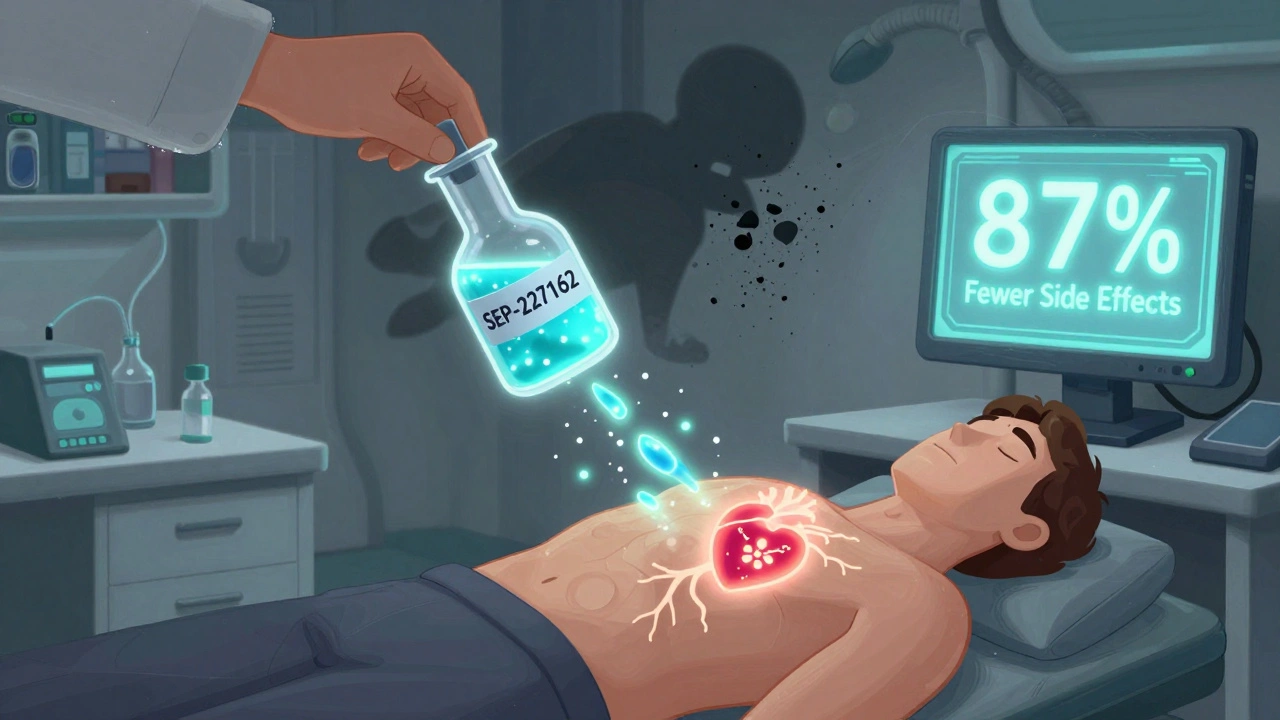
Research is moving fast. One experimental drug, SEP-227162, is a serotonin modulator that doesn’t block dopamine like SSRIs do. In early trials, it caused 87% fewer sexual side effects than sertraline. It’s in Phase II now - meaning it could be available in the next few years.
Another option gaining attention is esketamine (Spravato), a nasal spray approved for treatment-resistant depression. In trials, only 3.2% of users reported sexual side effects - far lower than SSRIs. But it’s expensive ($880 per dose) and requires clinic visits with monitoring.
Cost and Accessibility
Switching to bupropion isn’t just better for your sex life - it’s cheaper. Generic bupropion XL 150mg costs about $15.72 a month. Brand-name Zoloft? $57.84. That’s a 73% savings. And since bupropion is often covered by insurance, the switch is financially easy.
Even Viagra, when generic, is under $10 per pill at many pharmacies. Add-ons like cyproheptadine cost pennies. Treatment doesn’t have to be expensive.
What You Should Do Right Now
1. Don’t stop your med on your own. Talk to your doctor first.
2. Track your symptoms. Write down what’s changed: libido, arousal, orgasm, satisfaction. Use the ASEX scale if you can find it online.
3. Ask about bupropion. It’s the most studied, safest, and cheapest alternative.
4. Ask about add-ons. Sildenafil for men, bupropion or cyproheptadine for women.
5. Give it time. If you switch, it can take 2-4 weeks to feel the full effect.
Final Thought
Antidepressants save lives. But if they’re costing you your intimacy, your confidence, or your relationships, that’s not a trade-off you should accept. There are better options. You deserve to feel better - in every way.
Adam Everitt
December 13, 2025 AT 05:02wendy b
December 15, 2025 AT 04:40Lawrence Armstrong
December 16, 2025 AT 15:08Donna Anderson
December 16, 2025 AT 18:27sandeep sanigarapu
December 18, 2025 AT 09:08Robert Webb
December 18, 2025 AT 11:25Audrey Crothers
December 19, 2025 AT 02:38Stacy Foster
December 20, 2025 AT 02:23Reshma Sinha
December 21, 2025 AT 16:47nikki yamashita
December 23, 2025 AT 05:55Rob Purvis
December 24, 2025 AT 07:35Laura Weemering
December 25, 2025 AT 03:44Levi Cooper
December 26, 2025 AT 15:26Ashley Skipp
December 28, 2025 AT 09:11