
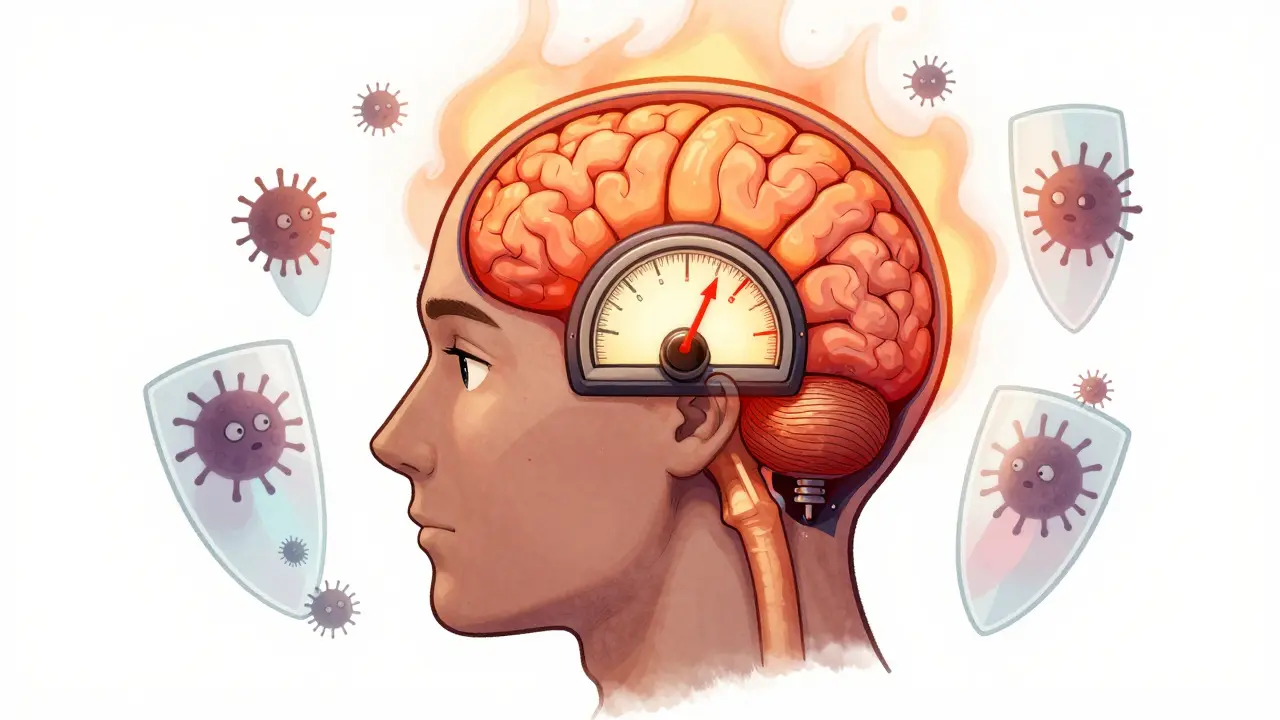
There is nothing quite as unsettling as waking up in the middle of the night with a sudden flush of heat that makes your skin feel paper-thin and your muscles ache deeply. You grab the thermometer, see the number creep past the usual baseline, and immediately panic sets in. Is this something dangerous? Do I need to drive to the emergency room tonight? Or should I just sleep it off? Most adults experience this confusion at some point because we are taught to fear fevers, even though they are often just a helpful signal from our bodies. While a rising temperature can indicate an infection, it is also a sign that your immune system is working hard to fight back.
The truth is, a fever itself rarely kills you, but ignoring the warning signs accompanying it can lead to serious complications. Knowing exactly when to call a doctor versus when to wait it out saves money, reduces stress, and ensures you get help before a minor issue turns into a major one. We need to stop guessing and start using precise data to guide our decisions.
Key Takeaways
- Definition: A medically recognized fever in adults starts at 100.4°F (38°C).
- Critical Threshold: Contact a provider if the temperature hits 103°F (39.4°C).
- Emergency Zone: Go to the ER immediately for temperatures exceeding 104°F to 105°F (40°C+).
- Duration Rule: If the fever persists beyond 48 to 72 hours, seek professional evaluation.
- Vulnerable Groups: Seniors and immunocompromised patients should seek care at lower thresholds (101°F).
Understanding the Physiology of Fever
To know when to worry, you first have to understand what a fever actually is. It is not a disease; it is a reaction. Specifically, your brain regulates body temperature through a region called the hypothalamus. When pathogens like bacteria or viruses invade your system, your brain receives chemical signals telling it to raise the thermostat setting. Think of this like turning up the heat in your home to create an environment where the intruder cannot survive. This process creates a physiological defense mechanism that helps your immune cells work more efficiently.
While a normal baseline for many adults is cited as 98.6°F (37°C), studies from institutions like Mass General Brigham suggest this number varies significantly between individuals. Some people naturally run cooler, while others run hotter. This is why knowing your own normal range helps you recognize a deviation. However, regardless of your baseline, a reading that consistently exceeds 100.4°F (38°C) is classified medically as a fever. This distinction is important because treating a normal fluctuation with unnecessary medication can mask symptoms you actually need a doctor to see.
Fever is primarily triggered by infections-such as influenza, bacterial pneumonia, or viral illnesses-but it can also stem from inflammatory conditions like rheumatoid arthritis, drug reactions, or certain cancers. According to guidelines documented in Harvard Health's February 2023 publication, most fevers are self-limiting, meaning they resolve on their own within 48 to 72 hours. The goal of medical management is not always to suppress the fever completely, but to manage comfort levels and monitor for underlying issues that might require antibiotics or other interventions.
Temperature Thresholds and Severity Grades
Medical professionals categorize fevers based on severity to determine the appropriate level of care. You don't need to memorize complex charts, but understanding three distinct ranges helps you make faster decisions.
| Category | Temperature Range (°F) | Temperature Range (°C) | Action Required |
|---|---|---|---|
| Low-Grade | 99.1 to 100.4 | 37.3 to 38.0 | Monitor at home; hydration |
| Moderate-Grade | 100.6 to 102.2 | 38.1 to 39.0 | Rest; OTC meds if uncomfortable |
| High-Grade | 102.4 to 105.8+ | 39.1 to 41.0+ | Contact provider; ER if >104°F |
The most critical boundary lies around 103°F (39.4°C). Current medical consensus across major healthcare institutions including Penn Medicine specifies contacting a healthcare provider immediately for adults with fever at or above this mark if it persists or escalates. When you cross 104°F (40°C), you enter a zone where protein denaturation can occur, potentially causing neurological damage. This is why fevers exceeding 104°F warrant immediate physician consultation according to Harvard Health.
If the thermometer reads 105°F (40.6°C), you should head straight to the Emergency Department. This benchmark aligns with guidelines from Mass General Brigham and Mission Health. It isn't just about the discomfort of feeling sick; it is about preventing heat injury to the body's tissues. Even healthy adults can tolerate short spikes to 103°F or 104°F without problems, as noted by emergency medicine physician Joseph W. Kopp, MD, but sustained levels at that height require vigilance.
The Importance of Duration
Sometimes, the number on the thermometer isn't the only variable; time plays an equally massive role. A low-grade fever that lasts six weeks is often more concerning than a 102°F spike that resolves in 24 hours. Evidence-based practice standards established by the American College of Physicians note that 90% of viral infections causing fever resolve within 72 hours.
This statistical reality drives the "48-to-72 Hour Rule." Doctor on Demand's November 2023 clinical guidelines specifically recommend urgent care for fevers lasting more than 48 hours that don't improve with over-the-counter medications. If your fever stays elevated after three days of rest and antipyretics, the probability shifts from a standard viral bug to a potential bacterial infection requiring prescription intervention. Furthermore, recurrent fevers cycling for one week or longer-even if they never breach 103°F-warrant provider consultation per Penn Medicine's patient education materials.
Delaying evaluation increases risk significantly. Community healthcare data reveals that approximately 30% of adult fever cases presenting to urgent care centers involve patients who waited too long. A multi-center 2023 study by the Society of Hospital Medicine found that patients presenting after 96 hours of persistent fever had 2.3 times higher likelihood of requiring hospitalization compared to those seeking care within 72 hours. Early assessment prevents the transition from manageable illness to severe dehydration or systemic failure.
Red Flag Symptoms Requiring Immediate Care
A fever combined with specific symptoms constitutes a medical emergency regardless of the exact number shown on the device. You must recognize these patterns quickly because they signal that the infection has spread or impacted vital organs. Penn Medicine's 2023 emergency criteria list several absolute indications for calling 911 or rushing to the ER.
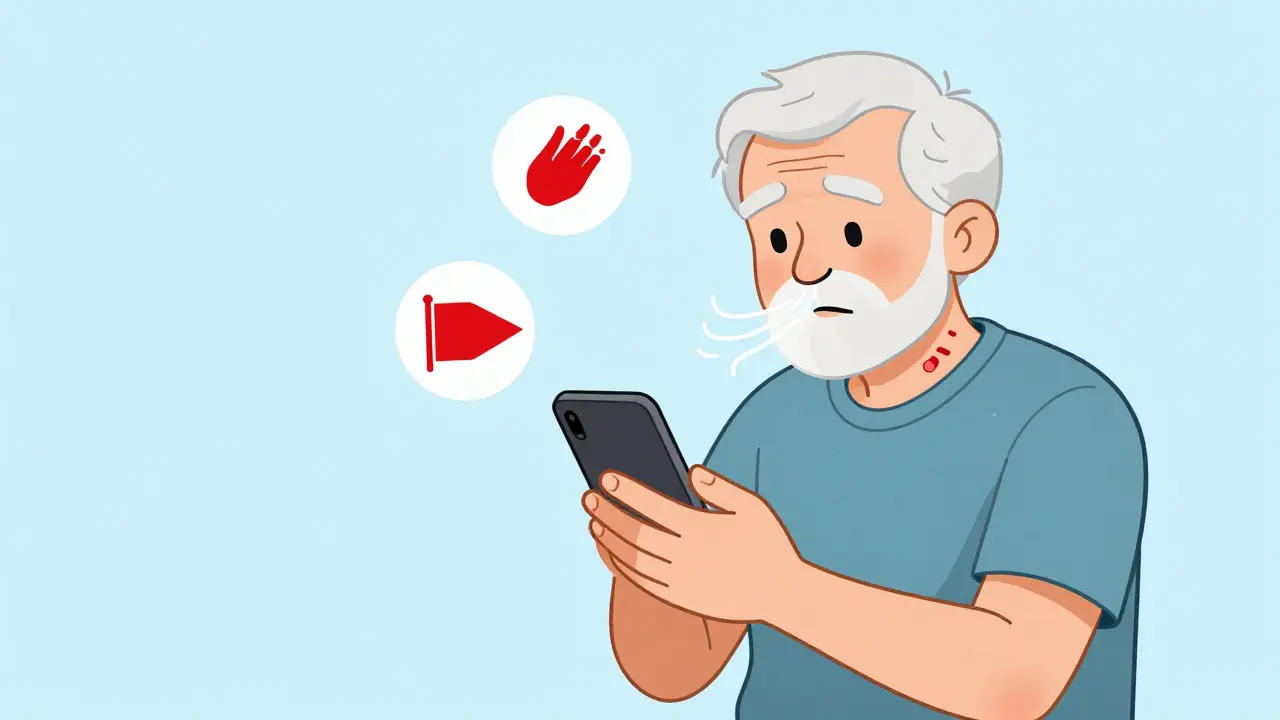
Neurological changes are among the most dangerous signs. If you experience confusion, inability to awaken, or seizures, the fever is affecting your brain function directly. Similarly, respiratory distress such as difficulty breathing or cyanosis (blue lips or tongue) means your oxygen levels are dropping, which requires life support. Severe pain anywhere in the body, particularly in the abdomen or chest, combined with fever, suggests internal inflammation or organ involvement that needs imaging and diagnosis.
Stiffness in the neck is another classic red flag indicating possible meningitis, an infection of the protective membranes covering the brain and spinal cord. This condition progresses rapidly and demands IV antibiotics immediately. Skin manifestations matter too. A new rash development alongside fever could indicate serious conditions like Rocky Mountain spotted fever or toxic shock syndrome, which have high fatality rates if untreated. If you notice vaginal discharge with a foul odor accompanied by fever, this suggests a pelvic infection needing urgent attention. Loss of consciousness or painful urination also qualifies as reasons to go to the ER immediately.
Special Considerations for Vulnerable Populations
Not every adult fits the standard profile. Older adults and those with weakened immune systems operate under different rules. As we age, our physiological responses change, and our ability to mount a robust fever response can diminish, yet the risk of complications increases drastically. Because of this, experts like Jae Hyun Shim, M.D., emphasize context-specific evaluation. Immunocompromised adults or those aged 65+ should seek evaluation at lower thresholds-specifically 101°F (38.3°C) or higher according to Hackensack Meridian Health's December 2024 update.
Why the lower limit? Patients with cancer undergoing chemotherapy, HIV/AIDS, organ transplant recipients, or those on chronic steroids have immune defenses that may be suppressed. Their bodies might not show extreme fever numbers until an infection is already advanced. Additionally, anyone with serious comorbidities-including heart conditions, sickle cell anemia, diabetes, cyst fibrosis, COPD, or other chronic lung diseases-should seek evaluation at lower fever thresholds due to increased complication risks. These pre-existing conditions can spiral into crisis much faster than in a healthy individual.
Pandemic-era lessons reinforce the need for proactive monitoring. The CDC's Morbidity and Mortality Weekly Report highlighted that delayed fever evaluation in vulnerable populations contributed to preventable hospitalizations during the peak of recent respiratory virus seasons. Therefore, if you fall into these high-risk categories, having a lower tolerance for waiting periods is the safest approach to your health.
Accurate Measurement Techniques
Bad data leads to bad decisions. If you rely on sticking a hand to a forehead or using an uncalibrated device, you might miss a critical window for care. Mass General Brigham's March 2023 publication emphasizes that digital oral thermometers provide the most accurate readings for adults. These devices take a direct measure of the core body temperature via blood vessels near the mouth.
Temporal artery (forehead) thermometers offer acceptable alternatives though with slightly reduced precision compared to the oral method. They are convenient but can be thrown off by sweating or cold drafts. Environmental factors also play a trick on the readings. Recent exercise, hot showers, or ambient heat can temporarily elevate readings by 1-2°F. To get a true picture, retest after 30 minutes of rest in climate-controlled environments before applying evaluation thresholds.
Knowing how to measure correctly removes the guesswork. Don't eat or drink anything hot or cold right before checking your temperature, as this skews the oral reading. Wait at least 15 minutes. Place the probe under your tongue, breathe through your nose, and keep your mouth closed until the device signals completion. Following these steps ensures that when you see 103°F, it truly is 103°F and not a measurement error caused by a sip of coffee.
Frequently Asked Questions
Is a temperature of 100°F considered a fever?
No, strictly speaking, a fever begins at 100.4°F (38°C). A reading of 100°F is often considered a low-grade elevation or normal variance depending on your personal baseline. Monitor it, but it does not usually require a doctor visit unless symptoms worsen.
How long should I wait before calling the doctor?
For a typical adult, wait 48 to 72 hours. If the fever has not improved or broken within this timeframe, contact your provider. If you feel extremely weak or have other red flag symptoms, do not wait.
Can a fever be too high to treat at home?
Yes. Any fever reaching 104°F (40°C) or higher is generally considered a medical emergency requiring immediate evaluation. Fevers above 105°F should result in a trip to the Emergency Department.
Should I take Tylenol or Ibuprofen to lower my fever?
These medications help with comfort and reduce the temperature set point. However, lowering the fever doesn't necessarily cure the infection. Use them if you feel miserable, but do not mask symptoms so effectively that you ignore other warning signs.
Are there specific symptoms that mean I need the ER?
Call 911 or go to the ER if the fever is accompanied by confusion, stiff neck, trouble breathing, inability to walk, loss of consciousness, or severe pain. These indicate systemic issues beyond a simple infection.
Beccy Smart
March 31, 2026 AT 21:53Just kidding everyone knows how fevers work 🤦♀️😂
Amber Armstrong
April 1, 2026 AT 10:50My grandmother taught me everything about health during her later years.
She was very careful with how she monitored her temperature readings daily.
Often she would get worried if the number went above a hundred and a degree.
I remember sitting by her bedside watching the thermometer fluctuate slowly.
It felt really scary because she looked so weak and pale in the sheets.
We did not have access to internet guides like this one way back then.
Instead we relied on feeling the skin and guessing the situation mostly.
Now reading through these specific thresholds brings me so much comfort actually.
Knowing the exact line where you should drive to the hospital helps immensely.
It stops the endless cycle of anxiety that parents go through constantly.
Hydration is definitely key when you are dealing with high heat spikes.
I try to keep electrolyte drinks on hand just in case I get sick.
It is also important to rest and not force yourself to push through work.
Listening to your body is better than ignoring pain signals completely.
Thank you so much for putting all these facts together in one place here.
It really does help to stop panicking so much when things feel wrong.
Victor Ortiz
April 1, 2026 AT 20:09You people are clearly misreading the data presented here.
The baseline isn't universal for every person regardless of genetics.
Stop relying on generic charts without consulting proper medical history.
It is insulting to suggest everyone fits into these buckets perfectly.
I bet most of you cannot even calibrate your devices correctly anyway.
Why do you trust a blog post over actual clinical trials?
emma ruth rodriguez
April 2, 2026 AT 03:44While individual variance exists the guidelines remain statistically significant.
It is crucial to understand the aggregate safety margins involved here.
We cannot diagnose everyone personally through an internet forum thread.
Please consider that the standards are set for general public protection.
Your skepticism might delay necessary care for vulnerable populations.
Medical literature supports the thresholds mentioned in the original text.
Ruth Wambui
April 2, 2026 AT 22:27I think big pharma loves the panic button behind these charts.
They want you terrified so you buy more pills for normal stress responses.
The mercury in the older thermometers was actually better than digital lies.
Trust your gut not the corporate funded statistics on display today.
Wake up sheeple before you let them dictate your internal biology.
Michael Kinkoph
April 4, 2026 AT 07:05You are displaying a profound lack of scientific literacy again!!
The pharmaceutical industry does save millions of lives annually!
Ignoring medical consensus leads to preventable tragedies unfortunately!
Please educate yourself before spewing nonsense on this platform!!
There is no such thing as a corporate lie in medicine!
Brian Yap
April 5, 2026 AT 12:42Fair dinkum this is a useful read mate.
We deal with similar issues down under with the heat waves hitting hard.
Keep your fluids up and don't sweat the small stuff unless it gets nasty.
Good luck to anyone reading this in the cold north hemisphere winters.
Jonathan Sanders
April 6, 2026 AT 13:46Oh wonderful another fear mongering article for the chronically anxious crowd.
Sure lets assume we all need the ER for a warm forehead.
I am sure the hospitals love the free publicity from these articles.
Go ahead and clog up the emergency room for a low grade spike.
Just don't blame the doctor when your insurance runs out first.
Rick Jackson
April 8, 2026 AT 08:00I understand the frustration but safety first is still the best approach.
It is okay to feel overwhelmed by all these medical warnings honestly.
We just want people to be safe when things start getting dangerous.
Thanks for voicing your perspective on the system though.
sanatan kaushik
April 9, 2026 AT 05:03Doctors are liars most of the time.
They profit from your sickness constantly.
Listen to your body not their books.
Strong immune system heals without expensive labs.
Debbie Fradin
April 10, 2026 AT 10:17Wow what a bold take considering antibiotics exist for a reason.
Are you going to pray away your pneumonia next weekend?
I hope you get to test your amazing theories soon enough.
Because waiting until death usually ends badly for patients.
Jonathan Alexander
April 10, 2026 AT 16:46I nearly passed out from a fever spike once in college.
The world was spinning and I thought I was dying instantly.
It was the scariest night of my entire adult life ever.
I rushed to the ER and they barely gave me a glance.
Turned out I just needed sleep and some cold compresses.
Charles Rogers
April 12, 2026 AT 02:48True health comes from discipline and not medication intervention.
Weaklings seek drugs while strong bodies fight infection alone.
Build resilience by walking barefoot in winter snow mornings.
Medicine is a crutch for the undisciplined masses of society.
Katie Riston
April 12, 2026 AT 14:02There is wisdom in listening to the body's natural defenses deeply.
Yet there is also wisdom in knowing when external aid is required.
Life is a balance between self-reliance and accepting community support.
We cannot ignore the reality of modern pathogens entirely either.
Perhaps the middle path offers the safest journey forward.