
QTc Interval: What It Is, Why It Matters, and How Medications Affect Your Heart
When your heart beats, it goes through a cycle of electrical activity — firing, contracting, then resetting. The QTc interval, the corrected time it takes for the heart’s ventricles to electrically recharge between beats. Also known as corrected QT interval, it’s a key measure doctors use to spot dangerous heart rhythm risks. A normal QTc is under 450 milliseconds for men and under 460 for women. But when it stretches beyond that, your heart becomes vulnerable to a life-threatening arrhythmia called torsades de pointes, a chaotic, fast heart rhythm that can lead to sudden cardiac arrest. This isn’t rare — it happens when common drugs interfere with the heart’s electrical system.
Many medications — from antibiotics and antidepressants to antipsychotics and even some antifungals — can delay the heart’s reset phase. For example, antipsychotics, drugs used to treat schizophrenia and bipolar disorder like haloperidol or ziprasidone, are known QT prolongers. So are certain antibiotics, especially macrolides like clarithromycin and fluoroquinolones like moxifloxacin. Even some antidepressants, like citalopram or escitalopram, carry warnings. The risk spikes when you combine two or more of these drugs. It’s not just about the dose — it’s about the combo. Someone on a statin for cholesterol might be fine alone, but add an antibiotic like erythromycin and suddenly their QTc could jump into danger zone.
People with existing heart conditions, low potassium or magnesium, or genetic traits that slow drug metabolism are at higher risk. That’s why doctors sometimes check blood levels of certain drugs — like tricyclic antidepressants — or order an ECG before starting a new treatment. It’s not just about side effects; it’s about hidden electrical dangers that don’t show up as dizziness or nausea. You might feel fine, but your heart could be on the edge.
This is why knowing your meds matters. If you’re on more than one prescription, especially for mental health, infection, or heart issues, ask your doctor or pharmacist: "Could any of these affect my QTc?" It’s a simple question that can prevent a cardiac emergency. The posts below cover real cases where drug interactions stretched the QTc interval — from antipsychotics mixed with antifungals to antidepressants combined with supplements like SAMe. You’ll find practical advice on how to track your risk, recognize early warning signs, and talk to your care team before it’s too late. No fluff. Just what you need to keep your heart safe.
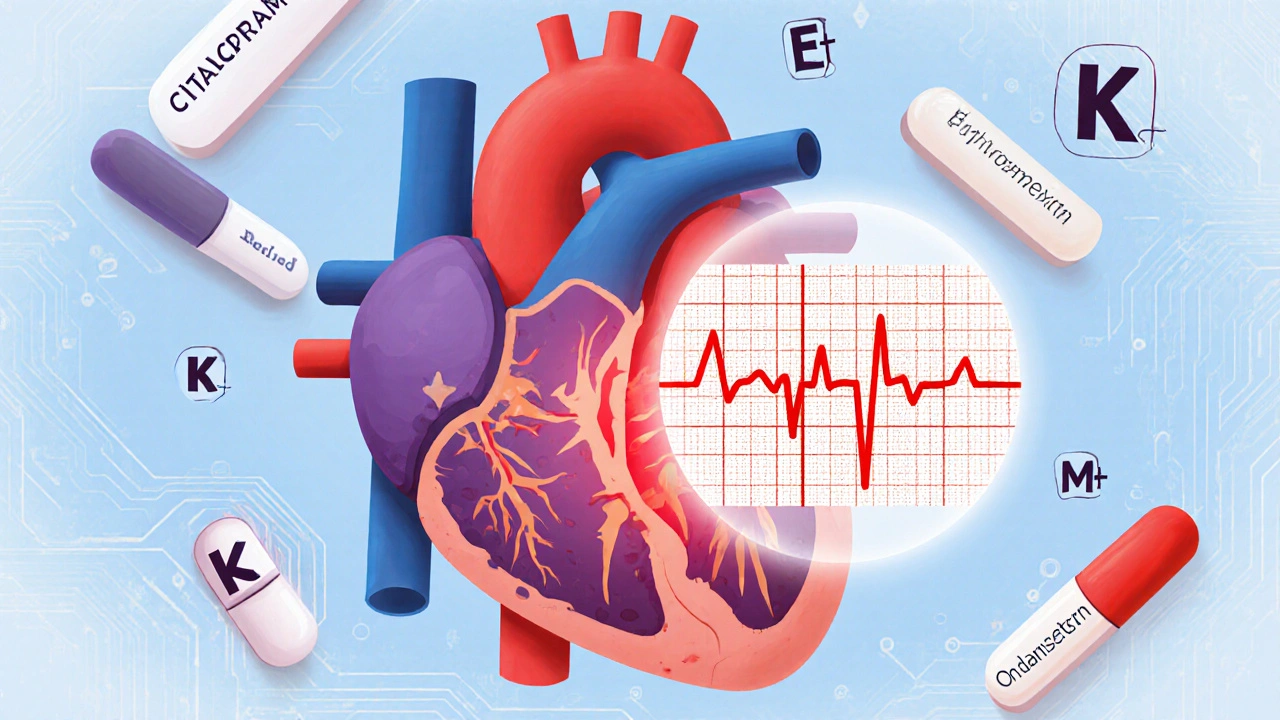
QT Prolongation and Sudden Cardiac Death from Medications: What You Need to Know About Risk Factors
- by Colin Edward Egan
- on 21 Nov 2025
QT prolongation from medications can lead to sudden cardiac death. Learn the key risk factors, which drugs are most dangerous, and how to protect yourself with simple checks and safer alternatives.