
PPIs: What They Are, How They Work, and What You Need to Know
When you hear PPIs, proton pump inhibitors are medications that block acid production in the stomach. Also known as proton pump inhibitors, they’re the go-to treatment for frequent heartburn, GERD, and ulcers. But they’re not just harmless daily pills—taking them long-term can change how your body digests food, absorbs nutrients, and even protects itself from infections.
PPIs work by shutting down the tiny acid pumps in your stomach lining. That sounds good if you’re burning from too much acid—but your stomach needs acid to kill bad bacteria, break down protein, and absorb things like calcium, magnesium, and vitamin B12. That’s why people on long-term PPIs sometimes end up with bone fractures, low magnesium, or even intestinal infections like C. diff. And it’s not just about side effects: many people take PPIs way longer than they need to. Studies show over half of users could stop safely if they tapered properly.
Related to PPIs are other treatments for acid-related issues. GERD, gastroesophageal reflux disease is a chronic condition where stomach acid backs up into the esophagus is the main reason PPIs are prescribed. But not everyone with GERD needs a PPI—lifestyle changes like losing weight, avoiding late meals, or cutting out caffeine can help just as much. Then there’s acid reflux, the symptom of stomach acid rising into the chest or throat, which can be occasional and harmless. If you only have it once in a while, an antacid or H2 blocker might be enough. PPIs are powerful, but they’re not always necessary.
Looking at the posts here, you’ll see how PPIs connect to real-world problems: gastroparesis, nausea from antidepressants, medication safety, and even how expired drugs can behave differently when your stomach acid levels are artificially low. Some people take PPIs for years without knowing why they started. Others use them short-term but don’t know how to get off them safely. This collection gives you the facts—not the hype—on when PPIs help, when they hurt, and what alternatives actually work.
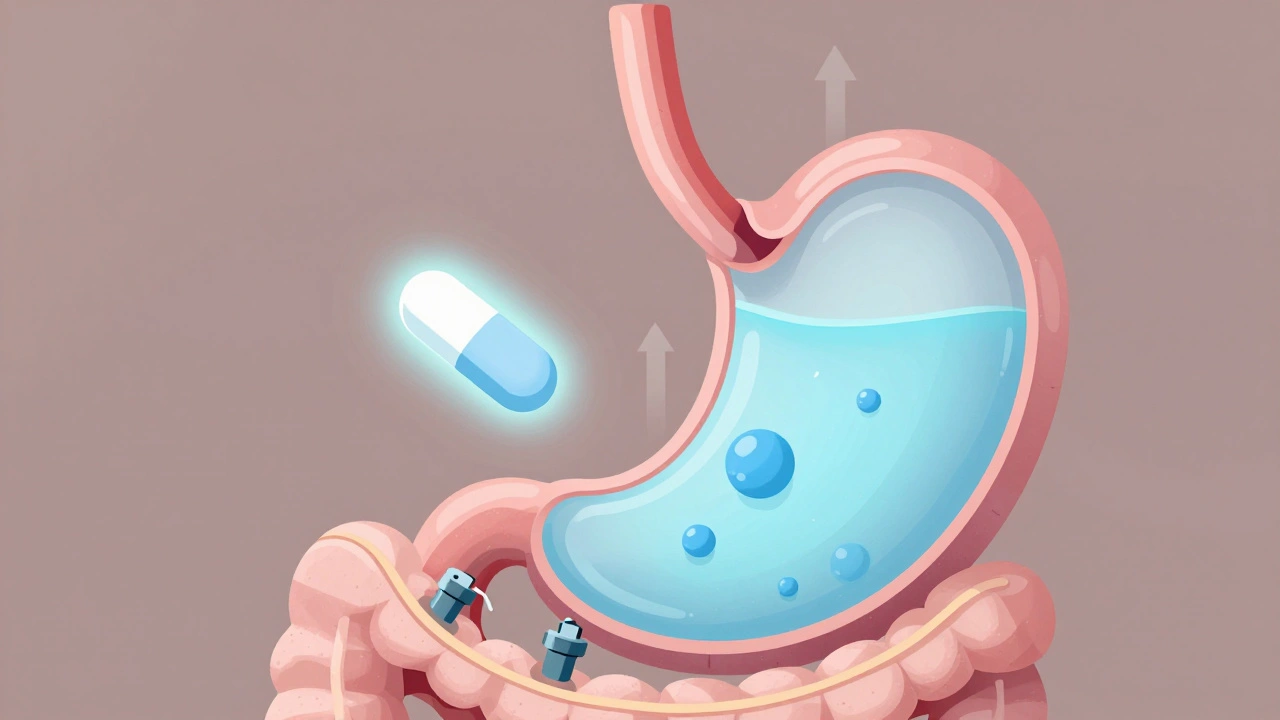
Levothyroxine and Proton Pump Inhibitors: What You Need to Know About Absorption Interactions
- by Colin Edward Egan
- on 9 Dec 2025
Levothyroxine and proton pump inhibitors (PPIs) can interact, reducing thyroid hormone absorption. Nearly 2.7 million Americans on both drugs may need dose adjustments or alternatives like liquid levothyroxine or H2 blockers.