
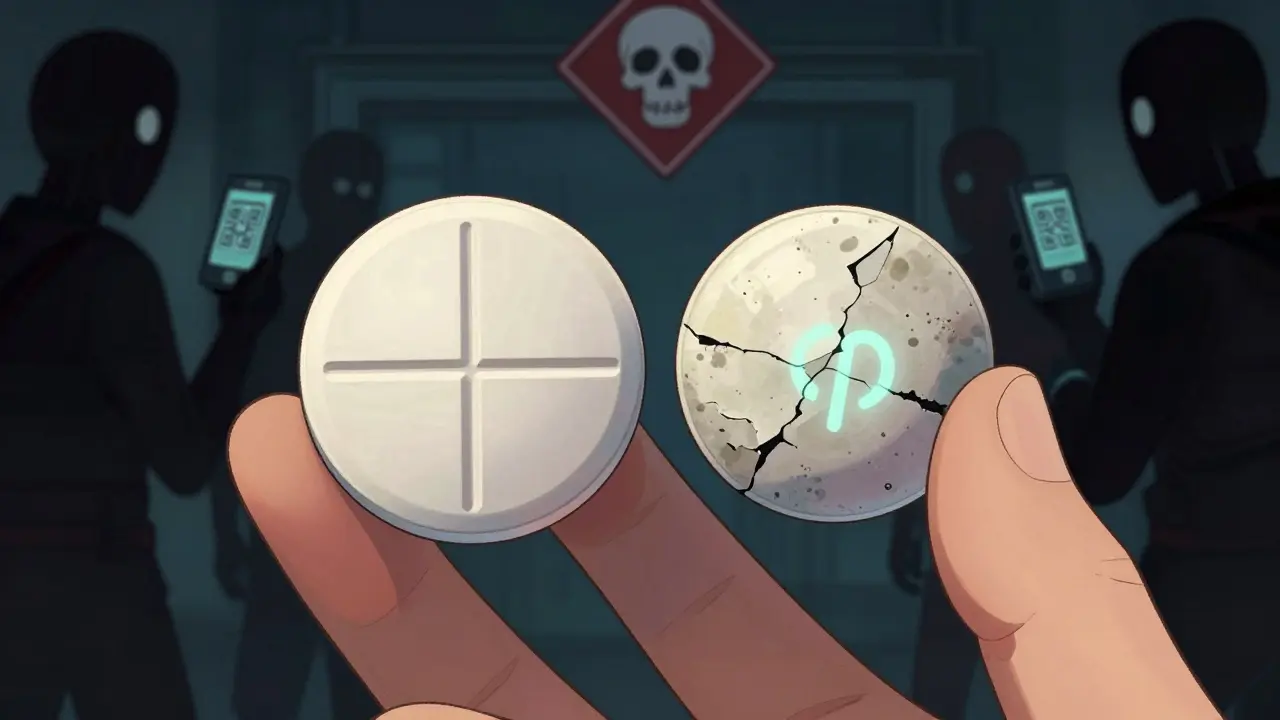
Buying medicine should be simple. You get a prescription, fill it at the pharmacy, and take it as directed. But what if the pill in your hand isn’t what it claims to be? Counterfeit medications are more common than most people realize-and they’re killing people. The counterfeit meds problem isn’t just about getting ripped off. It’s about waking up with no idea you’ve swallowed poison.
What Exactly Is a Counterfeit Medication?
A counterfeit drug is fake. Not just poorly made-intentionally forged. These aren’t expired or damaged pills from a bad batch. They’re made in secret labs, often overseas, and designed to look exactly like real prescriptions. They might say “Adderall,” “Xanax,” or “Oxycodone,” but inside? It could be fentanyl, methamphetamine, chalk, or even rat poison. The World Health Organization says these are deliberately mislabeled to trick you. And they’re getting better at it.Physical Signs: What the Pill Looks Like
Your first clue might be in the pill itself. Legitimate pharmaceutical companies manufacture pills with extreme precision. Every tablet is the same size, color, weight, and shape. If something feels off, it probably is. Look for:- Cracks, bubbles, or crumbling edges
- Uneven coloring-too dark, too light, or patchy
- Wrong imprint or faded letters (like “L484” instead of “L484” with crisp edges)
- Smell that’s weird-chemical, plastic, or sour
- Tablets that are too heavy or too light compared to your usual prescription
- Spelling mistakes (“Oxycodone” spelled “Oxycodin”)
- Mismatched fonts or logos
- Missing holograms or security strips
- Expiry dates that look altered or smudged
- Seals that don’t match-tape that’s been resealed or a cap that doesn’t click right
When the Medicine Doesn’t Work
One of the most common signs you’ve taken a fake drug? Nothing happens. You take your blood pressure pill, and your headache doesn’t go away. You take your anxiety med, and you’re still shaking. You take your diabetes medicine, and your sugar is still sky-high. Eli Lilly reported that in 89% of counterfeit drug complaints from 2022, patients said their medication had “zero effect.” That’s not just inconvenient-it’s dangerous. If you’re taking a drug to control a chronic condition and it suddenly stops working, don’t assume you’ve built up a tolerance. Assume the pill is fake.Strange or New Side Effects
This is where things get scary. Fake pills often contain dangerous substances you weren’t expecting. If you start experiencing:- Sudden dizziness or fainting
- Extreme drowsiness or confusion
- Pinpoint pupils (tiny dots in your eyes)
- Slow or shallow breathing
- Uncontrollable vomiting or diarrhea
- High fever (over 104°F)
- Racing heart (over 120 beats per minute)
- Seizures or muscle stiffness
Counterfeit Antidepressants, Antibiotics, and More
It’s not just painkillers and anxiety meds. Fake antibiotics are common. You take them for an infection, and it gets worse. Why? Because they contain no active ingredient. The WHO found that 42% of counterfeit antimalarials have too little medicine to work. That means you’re not curing the disease-you’re letting it spread. Fake insulin? That’s a death sentence. Fake cholesterol meds? Your heart could fail without warning. Fake birth control? You could get pregnant. Even eye drops can be deadly. In 2023, the FDA warned about counterfeit Muro 128 eye ointment. Seventeen patients lost vision after using it. The fake version had no active ingredient-and carried harmful bacteria.Where Are These Pills Coming From?
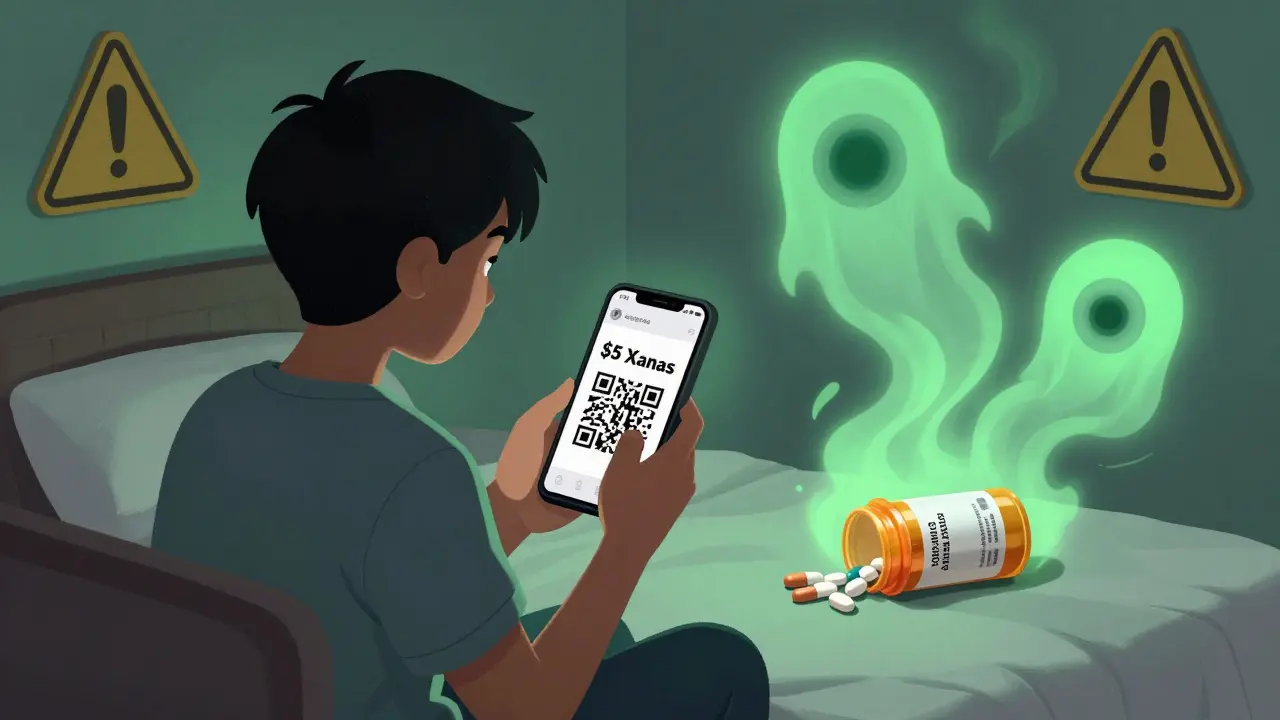
Most counterfeit drugs enter the U.S. through online pharmacies. The DEA says 96% of websites selling prescription drugs are illegal. And 89% of those sell fake pills. You might find them on social media-Instagram, Snapchat, TikTok. Someone posts a picture of a pill with “$5 Xanax” and a QR code. Or a text message: “Need oxy? DM me.” Even pharmacies you’ve never heard of-“PharmaFast,” “MedWorldExpress”-look legit. They have fake licenses, fake addresses, and fake customer reviews. The FDA says 80% of people who buy meds online don’t realize they’re buying fakes.What to Do If You Suspect a Fake
Don’t panic. But don’t ignore it either. 1. Stop taking the medication. Immediately. 2. Save the pill and packaging. Don’t throw it away. Take a photo. Keep it in a sealed bag. 3. Call your pharmacist. They can check the lot number against manufacturer databases. Eli Lilly, Pfizer, and Merck all have free verification tools on their websites. 4. Contact the FDA. Report it through MedWatch. The more reports they get, the faster they can track and shut down these operations. 5. Get medical help if you feel sick. Even if symptoms seem mild. Fentanyl can kill in under 30 minutes. Tell the ER you think you took a fake pill. That changes how they treat you.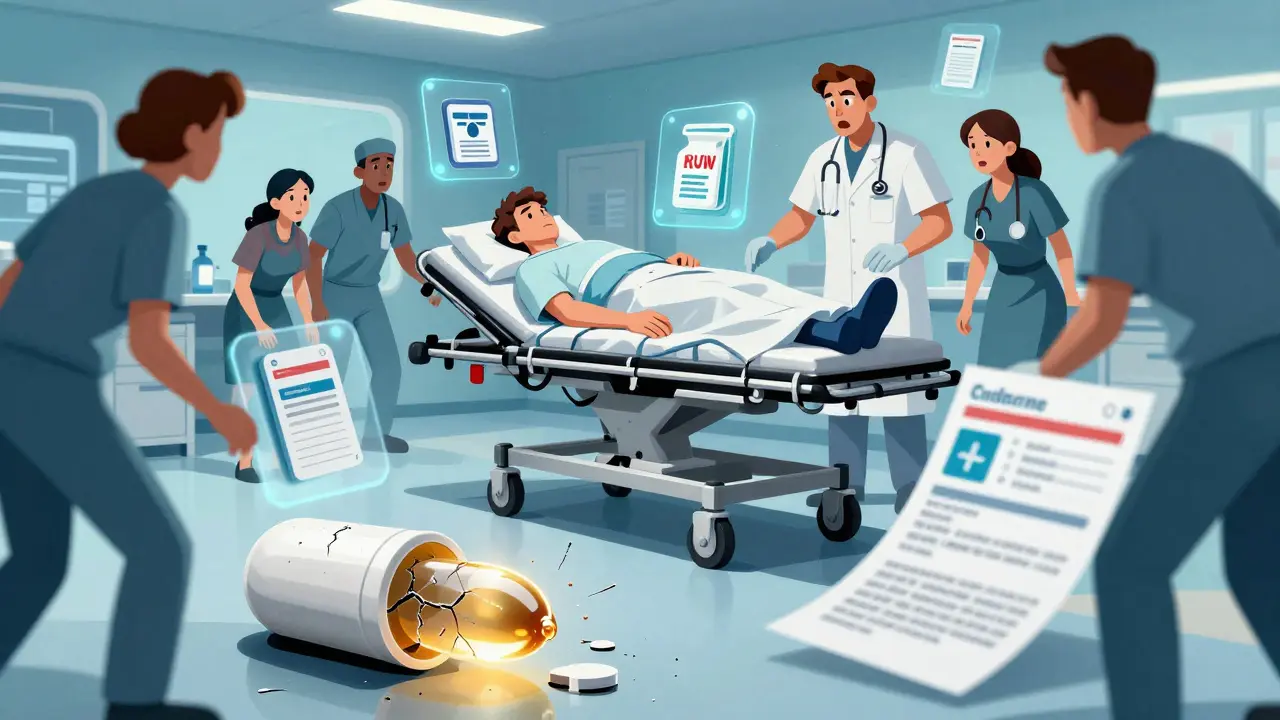
How to Protect Yourself
- Only buy medicine from licensed U.S. pharmacies. Look for the VIPPS seal (Verified Internet Pharmacy Practice Sites). - Never buy pills from social media, Craigslist, or strangers. - Compare your new prescription to your last one. If the pill looks different, ask your pharmacist why. - Use the FDA’s “Medication Guide” app to check if your drug has been recalled or flagged as counterfeit. - Talk to your doctor about where you get your meds. If they’re not sure, ask for a refill from a trusted pharmacy.It’s Not Just About Money
People think counterfeit drugs are a problem for the rich or the reckless. But they’re not. They’re a problem for anyone who takes medication. A grandparent on blood pressure pills. A student with ADHD. A veteran with chronic pain. All of them could be one click away from a deadly mistake. The criminals don’t care who they hurt. They’re selling poison because it’s cheap to make and easy to disguise. And they’re getting smarter. Merck now puts microscopic DNA tags in Zetia bottles. Pfizer embeds nanotech threads in Viagra packaging. But you can’t see those. You have to know the signs.Final Warning
If your medication doesn’t work, makes you feel weird, or looks different-don’t brush it off. Don’t assume it’s “just a bad batch.” Don’t wait to see if it gets better. Your life might depend on noticing the difference.How can I tell if my pill is fake just by looking at it?
Check for cracks, uneven coloring, faded or smudged lettering, or a strange smell. Compare it to your last refill-if the size, shape, or imprint is different, it could be fake. Packaging should have no spelling errors, consistent fonts, and intact seals. Missing holograms or altered expiry dates are major red flags.
Can fake pills kill you even if you’ve taken the real version before?
Yes. Many counterfeit pills contain fentanyl, which is 50 to 100 times stronger than heroin. Even if you’ve taken oxycodone or Xanax safely before, a fake pill with fentanyl can cause respiratory failure in minutes. Your body doesn’t build up a tolerance to something you’ve never taken.
What should I do if I think someone I know took a fake pill?
Call 911 immediately if they’re unconscious, having trouble breathing, or having seizures. If they’re alert but feeling off, get them to an ER and bring the pill and packaging. Tell medical staff you suspect a counterfeit drug-this changes how they respond. Don’t wait for symptoms to get worse.
Are online pharmacies ever safe?
Only if they’re VIPPS-certified (Verified Internet Pharmacy Practice Sites). Look for the seal on the website. Avoid any site that sells prescription drugs without a valid prescription, offers “discounts” that seem too good to be true, or ships from outside the U.S. The FDA says 96% of online pharmacies are illegal.
Can I test my pills at home to see if they’re real?
No. There’s no reliable home test for counterfeit drugs. Only a lab can confirm what’s inside. That’s why it’s critical to report suspicious pills to your pharmacist or the FDA. They can send samples to labs for analysis. Don’t try to test it yourself-handling unknown substances can be dangerous.
Why are counterfeit pills so common now?
They’re cheap to make, easy to ship, and in high demand. Criminals use social media to target teens and young adults looking for painkillers or stimulants. With the rise of encrypted messaging and dark web marketplaces, it’s easier than ever to distribute fake pills without getting caught. The WHO predicts counterfeit drug sales will grow 25% per year through 2025.
What’s being done to stop counterfeit drugs?
The FDA is rolling out a national track-and-trace system to verify every drug from manufacturer to pharmacy. Companies like Pfizer and Merck are embedding invisible security features-nanotech threads and DNA markers-into packaging. The CDC launched the “Know Your Source” campaign to warn teens about fake pills on social media. But the biggest defense is awareness: knowing the signs and speaking up when something looks wrong.
Himanshu Singh
December 31, 2025 AT 09:53man i just found out my cousin bought pills off snapchat last year… thought they were adderall for finals. turned out to be fentanyl. he’s lucky he made it. never thought i’d see something like this in my family. stay safe out there lol
Jasmine Yule
December 31, 2025 AT 23:08THIS. I work in ER. Saw a 17-year-old come in last month-no history of drug use, just bought ‘xanax’ off tiktok. He was in respiratory arrest. His mom didn’t even know he was taking anything. These aren’t ‘bad batches.’ They’re murder. 🚨
Greg Quinn
January 1, 2026 AT 08:55It’s terrifying how normalized this has become. We treat counterfeit meds like a joke-‘oh, it’s just a fake pill’-but it’s not. It’s a silent war on public health, waged by people who don’t care if you live or die. The fact that we’ve built entire economies around trusting invisible systems… and those systems are being hacked by criminals with 3D printers? That’s the real horror story.
We used to worry about contaminated water. Now we worry about the color of a pill.
Lisa Dore
January 3, 2026 AT 04:14My grandma takes blood pressure meds and she’s terrified to refill because she says the pills look ‘different’ now. She’s not paranoid-she’s observant. We took the bottle to the pharmacist and they confirmed it was a fake batch. She’s 78. She shouldn’t have to be a detective just to stay alive. Please, if you’re reading this-ask your elders about their meds. They might not say anything until it’s too late.
Sharleen Luciano
January 4, 2026 AT 09:44It’s frankly pathetic that we’ve reached a point where pharmaceutical integrity is a public safety concern. The FDA’s track-and-trace initiative is a band-aid on a hemorrhage. The real issue? The commodification of human vulnerability. These counterfeiters aren’t criminals-they’re predators exploiting the collapse of trust in institutional medicine. And let’s be clear: if you’re buying pills off Instagram, you’re not ‘saving money.’ You’re participating in a necro-economy.
And before you say ‘but I’ve never seen anyone die from it’-you’re not looking hard enough. The CDC doesn’t report every death as ‘counterfeit drug-related’ because the bureaucracy is too slow. But the autopsies? They’re there. You just have to know where to look.
Henriette Barrows
January 5, 2026 AT 18:21My sister has anxiety and she was buying meds off a ‘pharmacy’ on Reddit because her insurance wouldn’t cover them. She felt weird after taking them-dizzy, nauseous. She didn’t tell anyone because she was embarrassed. I found the bottle and took it to the pharmacy. Turns out it was chalk and sugar. She cried for an hour. We’re going to a new doctor this week. No more online shortcuts. This isn’t worth the risk.
Teresa Rodriguez leon
January 7, 2026 AT 05:09I’ve been on antidepressants for 12 years. Last month, I got a new refill and the pill was a different shade of blue. I didn’t say anything. I just stopped taking them. I didn’t want to be ‘that person’ who’s ‘overreacting.’ Then I read this post. I feel like an idiot. I almost killed myself by accident.
Nisha Marwaha
January 8, 2026 AT 02:27The pharmacovigilance framework in emerging markets is critically under-resourced. Counterfeit pharmaceuticals exploit systemic gaps in supply chain integrity, particularly in regions with inadequate regulatory oversight. The WHO’s 2023 report on substandard and falsified medical products highlights that 10-30% of medicines in low- and middle-income countries are counterfeit. This isn’t anecdotal-it’s a public health crisis with epidemiological implications. We need blockchain-enabled traceability, not just awareness campaigns.
Paige Shipe
January 8, 2026 AT 03:21People who buy pills online are just asking for trouble. You think you're saving money? You're risking your life. And if you're dumb enough to trust a QR code from a stranger on Snapchat, you deserve what you get. This isn't a conspiracy-it's basic common sense. The FDA isn't lying to you. The internet is full of idiots who think they're smarter than science. Wake up.
David Chase
January 8, 2026 AT 05:13AMERICA IS BEING INFILTRATED BY FOREIGN COUNTERFEITERS!!! THEY’RE USING CHINA AND MEXICO TO KILL OUR KIDS!!! THIS IS A WAR!!! WHY ISN’T THE GOVERNMENT DOING MORE??? WE NEED MILITARY RAID ON THESE DARK WEB SERVERS!!! I SAW A VIDEO OF A KID DYING ON TIKTOK-THEY’RE LAUGHING WHILE THEY SELL POISON!!! WE NEED TO BAN ALL ONLINE PHARMACIES-EVERY SINGLE ONE!!! 🇺🇸🔥💣💊