
Muscle Breakdown: Causes, Risks, and How Medications Can Trigger It
When your muscles start breaking down, it’s not just soreness—it’s a medical event called rhabdomyolysis, a serious condition where damaged muscle tissue releases harmful proteins into the bloodstream. Also known as muscle breakdown, it can lead to kidney failure, heart rhythm problems, or even death if ignored. This isn’t rare. It happens more often than people realize, especially when certain medications are mixed, misused, or taken long-term without monitoring.
One of the biggest triggers? statins, cholesterol-lowering drugs like atorvastatin and simvastatin that are among the most prescribed in the world. They work well for most people, but in some, they cause muscle cells to leak a protein called creatine kinase. High levels of this protein signal damage—and if it builds up, your kidneys can’t filter it out. Other drugs linked to muscle breakdown include certain antibiotics, antifungals like voriconazole, and even some antidepressants when combined with supplements like SAMe. It’s not always about dosage; genetics play a role too. People with certain gene variants, like CYP2D6 or SLCO1B1, break down these drugs slower, letting them build up to toxic levels.
What makes muscle breakdown sneaky is that early signs are easy to miss. You might think you’re just tired, sore from the gym, or dehydrated. But if you’re taking one of these drugs and suddenly feel deep muscle pain, weakness, or notice dark, tea-colored urine, it’s not normal. That’s your body screaming for help. Doctors check for it with a simple blood test—creatine kinase levels—and sometimes urine tests. The key is catching it before your kidneys get damaged. Even small changes in medication, like adding a new antibiotic or increasing a statin dose, can tip the balance.
Some cases come from overexertion, heat stress, or trauma—but medication interactions are a growing concern. Think about someone on warfarin who gets prescribed an antibiotic, or a person taking cabergoline with other drugs that affect liver enzymes. These combinations don’t always show up on basic drug interaction checkers, but they can quietly wreck muscle tissue over time. That’s why knowing your meds inside and out matters. You don’t need to stop treatment—you need to be aware, track symptoms, and ask the right questions.
What you’ll find below isn’t just a list of articles. It’s a collection of real-world stories, clinical insights, and practical tools that show how muscle breakdown connects to medications you might be taking right now. From how statins affect muscle cells to how genetic testing can predict your risk, these posts give you the facts you need to protect yourself—not guesswork, not fear, just clear, actionable knowledge.
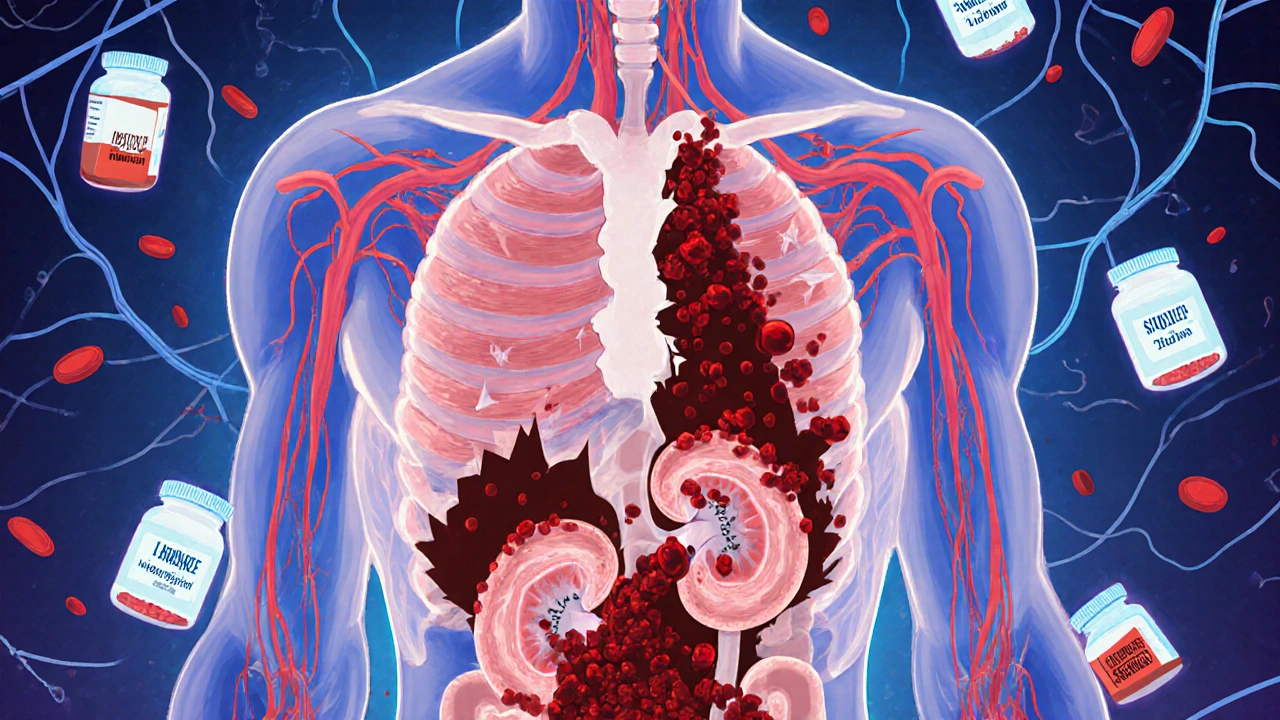
Rhabdomyolysis from Medication Interactions: How Common Drugs Can Cause Muscle Breakdown
- by Colin Edward Egan
- on 22 Nov 2025
Rhabdomyolysis from medication interactions is a life-threatening condition where muscle tissue breaks down, often due to dangerous drug combos like statins with antibiotics. Learn the signs, risks, and how to prevent it.